REVIEW · TOKYO
10 kinds Sake Tasting Experience in Tsukiji with local!!
Book on Viator →Operated by nomuno · Bookable on Viator
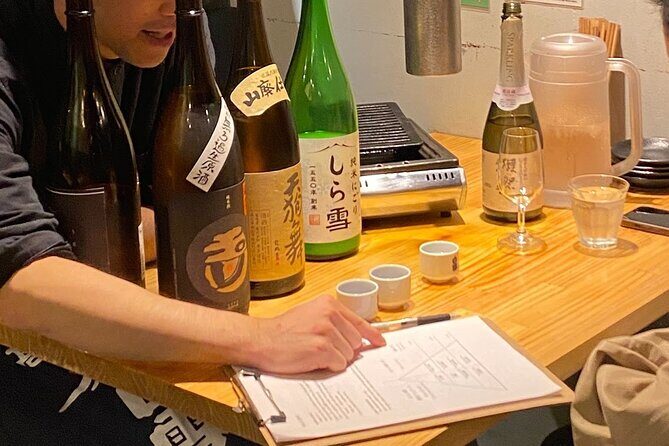
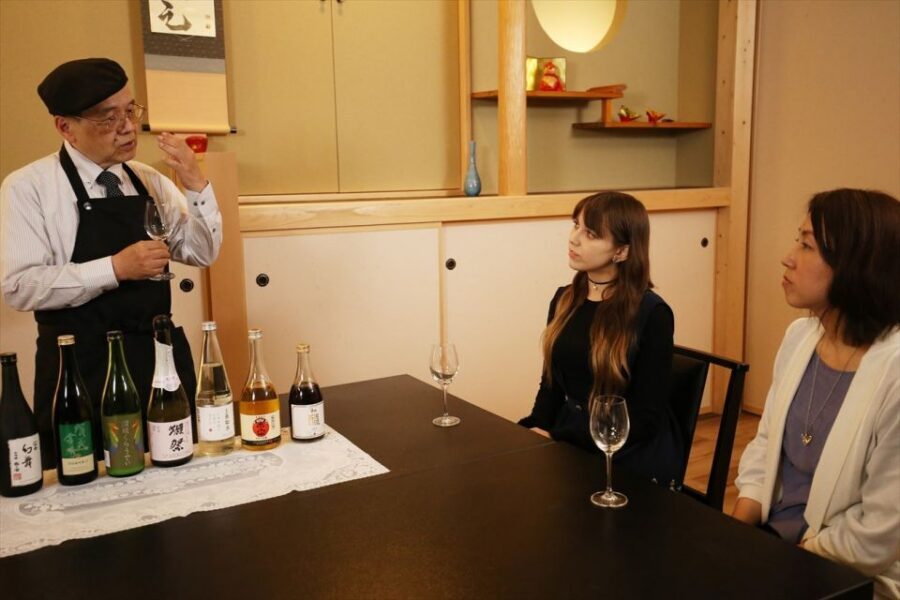
If you want your sake education to taste good, this works. In a relaxed, private 1.5-hour session in the Tsukiji area, you sample around 10 different sakes with a local guide, learning what makes each style distinct. I like the hands-on format because it turns theory into flavor, and I also like that the guide focuses on real tasting skills, etiquette, and the major quality categories like Junmai and Daiginjo.
The biggest drawback to keep in mind: this is a tasting with multiple pours, so you’ll want to pace yourself. If you’re sensitive to alcohol or not great with lots of samples, plan to go slow and avoid any big plans right after.
In This Review
- Key Things You’ll Notice on This Tsukiji Sake Tasting
- Why Tsukiji-Style Tokyo Food Culture Makes Sake Click
- The 1.5-Hour Game Plan: 10 Sakes, One Tasting Flow
- Your Guide’s Teaching Style: Practical Sake Basics Without the Snobbery
- Tasting “From Part of Japan” in a Way You Can Remember
- How Drinking Etiquette Shows Up in Real Sipping
- What You Actually Get Served: Snacks and the Pace of the Room
- Price and Value: Is $62.40 Worth It?
- Logistics That Matter: Finding the Place and Showing Up Ready
- Who This Tour Is Best For (And Who Might Want Something Else)
- Should You Book This Tsukiji 10-Sake Tasting?
- FAQ
- How long is the sake tasting experience?
- Is this a private tour or a group activity?
- How many sake varieties will I taste?
- What will I learn during the tasting?
- Do I need to speak Japanese?
- Are there snacks included?
- Where does the experience start?
- Can I cancel and get a full refund?
Key Things You’ll Notice on This Tsukiji Sake Tasting
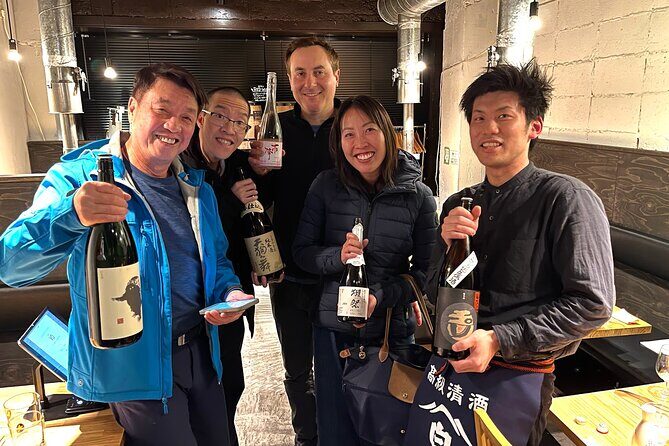
- About 10 varieties of sake, typically walked through from lighter, simpler profiles toward higher-quality styles
- Clear drinking etiquette taught as you go, not as a lecture
- Sake classifications explained (like Junmai / Daiginjo) with tasting comparisons
- A local guide who handles language barriers, plus conversation that feels casual
- Snacks during the tasting, including items like nuts and soybeans in some sessions
- Private format, so you can ask questions without competing for attention
Why Tsukiji-Style Tokyo Food Culture Makes Sake Click
Tokyo has a way of mixing old traditions with everyday life, and this experience fits that pattern. You’re not just sampling sake in a vacuum. The whole vibe is built around how Japanese people actually drink and talk about alcohol: with food nearby, with manners in mind, and with lots of questions.
I especially like that the session connects sake to choices you can taste right away. You’ll hear about brewing methods and then immediately compare what that means in your cup. It’s one of the fastest ways to start understanding why two sakes with different labels can taste completely different.
One more practical reason this area works: you’re in central Tokyo and near public transportation. That matters after 1.5 hours of sipping and learning, when you want to get back to dinner or your next stop without stress.
You can also read our reviews of more food & drink experiences in Tokyo
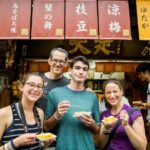

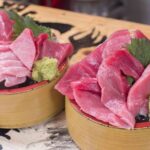
The 1.5-Hour Game Plan: 10 Sakes, One Tasting Flow
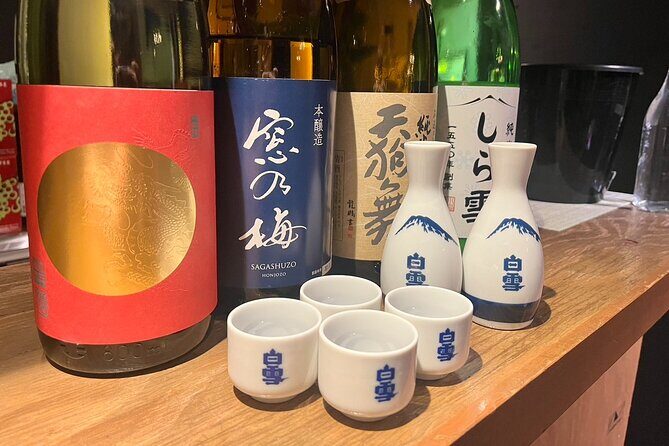
The session runs about 1 hour 30 minutes, and it’s paced to keep the tasting understandable. Instead of random pours, you’re guided through a sequence of sakes—often discussed as a ladder from lower to higher quality. That structure helps your brain group flavors in a useful way.
Here’s the core idea you’ll follow: learn a concept, then taste it. You’ll pick up basics on how to drink sake properly, then you’ll compare styles that represent different quality classifications and regional tendencies. The guide’s goal is simple—make you able to tell the difference between styles on your own, even after the tour ends.
Also, because it’s private, the flow can feel more like a chat with a teacher than a scripted group event. Reviews specifically highlight strong conversation, and that’s a big part of why this experience earns perfect scores.
Your Guide’s Teaching Style: Practical Sake Basics Without the Snobbery
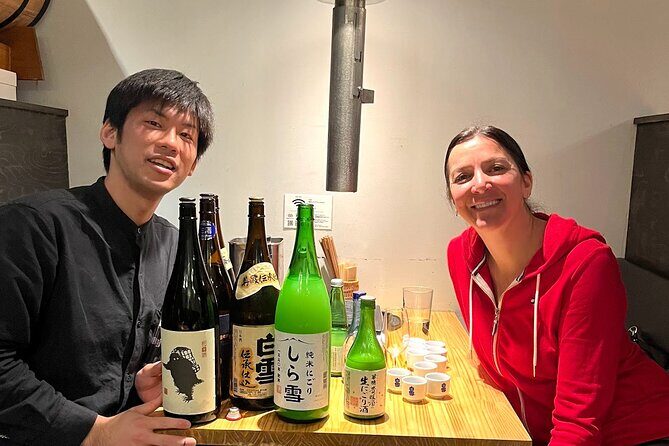
A lot of sake information online gets technical fast. This session keeps the learning human. You’ll start with basics: how to drink sake, what the labels mean, and what to pay attention to when you taste.
The guide also explains the quality classifications in plain terms, including categories such as Junmai / Daiginjo. Those names can feel like alphabet soup at first, but in a guided tasting, they become real. You taste how the style behaves—smoothness, aroma, and how it sits on the palate—then you connect it back to what the label is trying to communicate.
One review mentions handouts and a booklet with basic information. Even better, the guide doesn’t just hand you paper and go quiet. For example, a guest reported being led by Matsu and finding the explanations thorough while still easy to follow. If you like structured learning, that handout support is a plus.
Tasting “From Part of Japan” in a Way You Can Remember
Regional differences are one of the most interesting parts of sake culture, but only if you can actually notice them. This session is designed to help with that. You’ll taste sakes from different areas of Japan and learn how geography and brewing choices can show up in the glass.
You should expect discussions like this: what changes when the rice, polishing, or brewing approach differs. Then you taste the result. The guide’s explanation gives you a framework, but the real learning happens when you compare the same moment across multiple samples.
I like this approach because it makes regional sake feel less like trivia. It becomes a tasting skill—something you can reuse when you order sake in a restaurant later.
How Drinking Etiquette Shows Up in Real Sipping
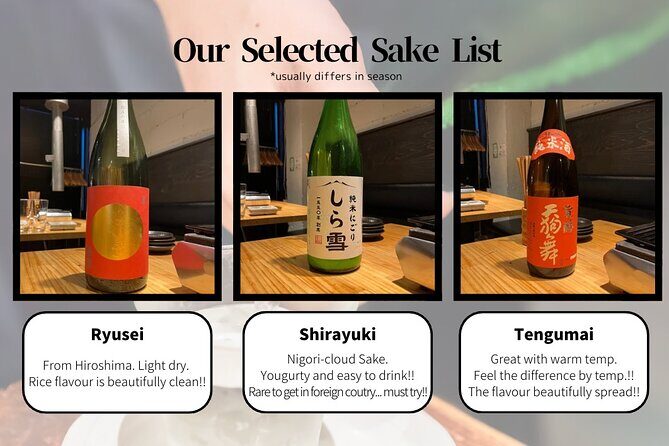
Japanese drinking etiquette can sound strict on paper. In this experience, it’s taught in context while you taste. You’ll learn basic manners and the right way to drink, which helps you avoid the common mistake of treating sake like just another alcoholic beverage.
You might notice how the guide guides your attention: small cues like temperature, aroma, and how each sake transitions across sips. That kind of coaching matters, because sake changes quickly depending on how you taste it and how warm or chilled it is.
And since it’s private, you can ask follow-up questions if something doesn’t make sense. One review notes the guide spoke English very well, which reduces the friction when you’re learning terms you might not know yet.
You can also read our reviews of more drinking tours in Tokyo


What You Actually Get Served: Snacks and the Pace of the Room
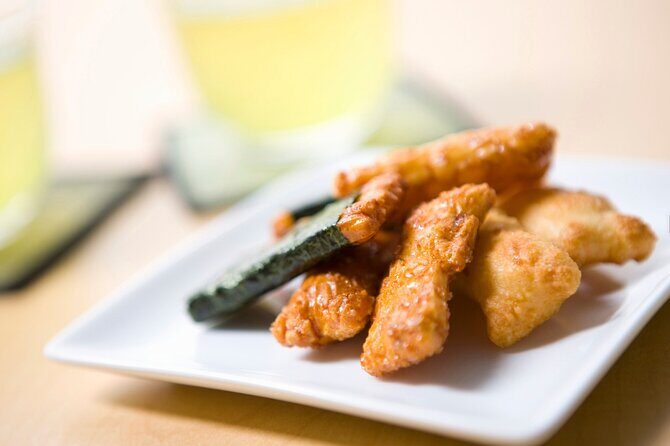
This tasting is paired with snacks, which is a big deal. Sake tasting without food can feel harsh or one-note fast. With snacks available, you can keep your palate clearer and make the tasting more comfortable.
In at least one account, the snack included nuts and soybeans between pours. That’s useful information for you, because salty snacks can help reset your mouth and make subtle differences easier to catch. Even if the exact snacks vary by timing, the presence of food is consistent.
You’ll also want to take pacing seriously. One guest explicitly advised pacing yourself after tasting 11 sakes, which tells you the pours can add up quickly. The experience is relaxed, but it’s still a tasting session—so bring a mindset of slow sipping, not rapid chugging.
Price and Value: Is $62.40 Worth It?
Let’s talk value in a real way. At $62.40 per person for about 1.5 hours, you’re paying for three things that are hard to replicate on your own:
- Guided tasting design: you’re not just buying random bottles. The order and explanations help you learn faster.
- Language support and interpretation: the guide helps with language barriers, and clear English makes the learning stick.
- Multiple samples plus snack support: tasting around 10 varieties in one session is time-efficient, and the included snacks help you stay comfortable.
If you were to build this yourself, you’d likely spend more time figuring out which labels to buy, and you’d miss the “why this tastes like this” layer that the guide provides. For people who want learning without a classroom vibe, this format justifies the price.
The private nature also matters. Since only your group participates, you get more attention per person than you typically would in a large group tasting.
Logistics That Matter: Finding the Place and Showing Up Ready
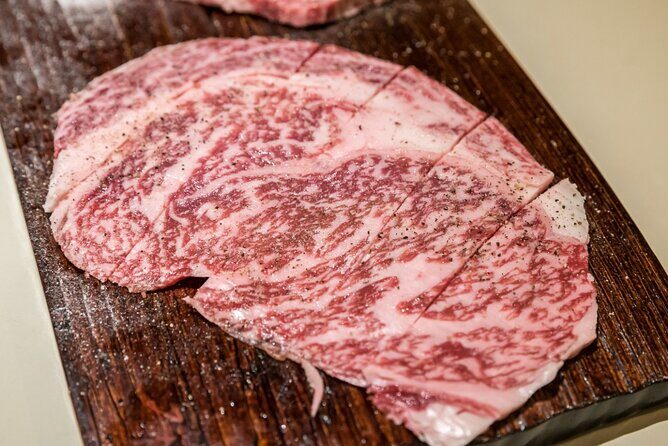
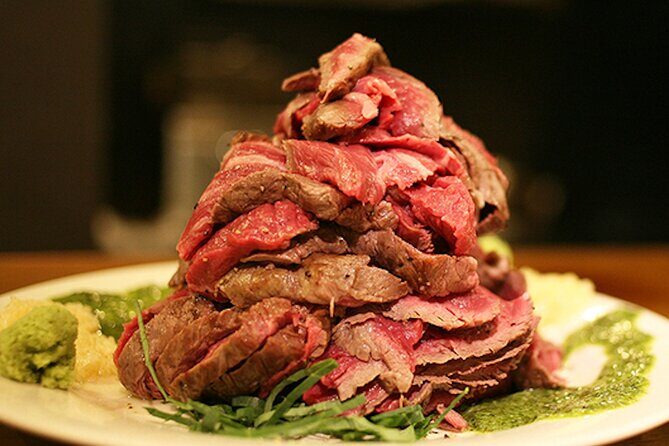
The meeting point is at Wagyu Yakiniku & Sake all-you-can-drink Niku-no-Himalaya, located at 2-chōme-13-2 Shintomi in Chuo City (near public transportation). Your tour ends back at the same location, so you’re not left wandering with a head full of new flavors.
One practical caution from a review: it can be a bit hard to find at first. My advice is simple: check the exact pin in your map app before you leave, and arrive a few minutes early. In Japan, entrances and building layouts can be less obvious than you expect.
Also, this activity uses a mobile ticket. That’s one less thing to manage, but it’s still worth confirming the ticket is accessible offline on your phone.
Who This Tour Is Best For (And Who Might Want Something Else)
This tasting is a great fit if you’re one of these travelers:
- You love food and drink experiences that come with context
- You want a low-pressure way to learn sake basics like Junmai vs Daiginjo
- You like asking questions and having a real conversation
- You’d rather taste your way through learning than read a sake encyclopedia
It may not be the best match if you:
- Don’t want alcohol at all, since it’s built around sampling multiple sakes
- Get overwhelmed by lots of samples quickly
- Prefer a silent, self-guided experience rather than chatting and asking questions
If you’re traveling with friends and want a shared activity that’s genuinely different from a museum stop, this works well. Reviews also show people booking solo and still feeling taken care of, because the guide conversation adjusts to the group size.
Should You Book This Tsukiji 10-Sake Tasting?
If your goal is to leave Tokyo being able to order sake with confidence, I’d book it. The combination of around 10 tastings, etiquette coaching, and understandable explanations makes the learning practical. It’s also private, so you can get your questions answered instead of waiting your turn.
One last decision tip: if you’re worried about pace, go in hydrated and ready to sip slowly. This experience is relaxed, but the tasting quantity is real. If you handle that part well, you’ll get a lot out of the time—and you’ll likely remember the differences long after the last pour.
In short: book this if you want sake culture with actual taste lessons, delivered in plain language and paired with snacks.
FAQ
How long is the sake tasting experience?
The experience lasts about 1 hour 30 minutes.
Is this a private tour or a group activity?
It’s a private tour/activity. Only your group participates.
How many sake varieties will I taste?
You’ll taste around 10 different sake varieties during the session.
What will I learn during the tasting?
You’ll learn how to drink sake and basic information, the differences between sake quality categories such as Junmai and Daiginjo, and differences between sake from different parts of Japan.
Do I need to speak Japanese?
No. The local guide helps with language barriers.
Are there snacks included?
Yes. Snacks are included during the tasting.
Where does the experience start?
It starts at Wagyu Yakiniku & Sake all-you-can-drink Niku-no-Himalaya, nomuno (2-chōme-13-2 Shintomi, Chuo City, Tokyo 104-0041, Japan). It ends back at the same meeting point.
Can I cancel and get a full refund?
Yes. You can cancel for a full refund if you cancel at least 24 hours before the experience’s start time.
![[Ishigaki]Mangrove SUP/Canoe + Blue Cave Snorkeling - Meeting at Ishigaki Port: start time and how to avoid stress](https://images.thejapantraveler.com/wp-content/uploads/ishigakimangrove-sup-canoe-blue-cave-snorkeling.jpg)