REVIEW · TOKYO
7 Kinds of Sake Tasting with Complementary Foods
Book on Viator →Operated by True Japan Tour · Bookable on Viator
This Tokyo sake tasting turns a confusing topic into something you can actually taste and remember. You get 7 different sakes from 7 regions and 7 food pairings, with a certified sommelier explaining the why behind each pour. It’s part lesson, part dinner, and it’s built for beginners who want clarity fast.
I especially like two things about it: the pairing focus (including dessert) and the hands-on guidance from a nationally accredited instructor who explains how sake is produced. The food isn’t treated like a tiny snack; it’s planned as a real meal with complementary bites.
One possible drawback: at about 1 hour 15 minutes, it’s not a super long deep study. And at $107.50 per person, it’s best if you’re ready to take the pairing lesson seriously rather than just do a quick tasting.
In This Review
- Key highlights worth your attention
- Tokyo Sake Tasting That Actually Teaches You How to Taste
- The 1 Hour 15 Minutes Flow: 7 Sakes + 7 Pairings
- The Pairing Dinner: More Than Small Bites
- Learning How Sake Is Made (Without Making It Complicated)
- Where the Meeting Spot Really Is Near Tokyo Tower
- Price and Value: Is $107.50 Worth It?
- Group Size, Atmosphere, and How Personal It Can Feel
- Who This Sake Tasting Is Best For
- Should You Book This Sake Tasting in Tokyo?
- FAQ
- What is the duration of the sake tasting?
- How much does it cost?
- How many sakes and dishes are included?
- What time does the tour start?
- Where does it take place?
- Is it easy to get to?
- Can I bring dietary requirements?
- Is extra food or drink included?
- Can I cancel for a refund?
Key highlights worth your attention
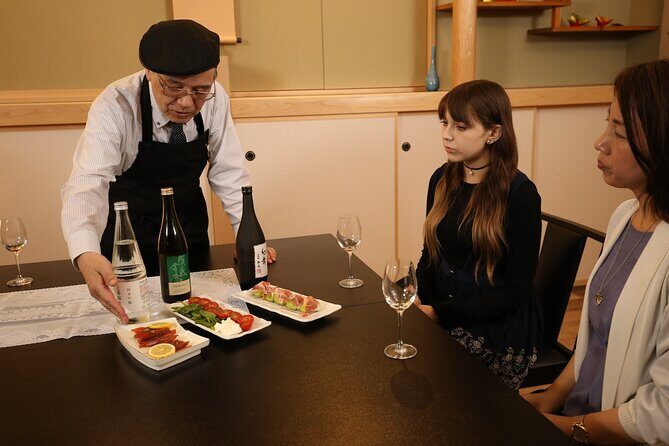
- 7 sakes, 7 regions: you’ll taste wide flavor range, not just one house style
- Dessert pairing included: sake isn’t only for savory bites
- Certified instruction: you learn the basics of production and how to taste smarter
- 7 complementary dishes: planned as a multi-course experience, not filler
- Near Tokyo Tower: easier to find than you’d expect for a basement venue
Tokyo Sake Tasting That Actually Teaches You How to Taste
Sake in Tokyo can feel like a wall of choices. Dry or sweet? Warm or chilled? Crisp or soft? If you’ve tried to read the labels on your own, you know how quickly it turns into guessing.
This experience helps you stop guessing and start noticing. The core idea is simple: you taste 7 kinds of sake, each paired with a dish, while your instructor explains what to look for. You’re not just sampling drinks; you’re building a tasting vocabulary in real time. That matters because once you can describe what you like, buying a bottle later gets much less stressful.
Also, it’s designed as an introduction to sake culture, history, and cultivation. That doesn’t mean you’ll sit through a lecture. The lesson stays tied to what’s in front of you: the aroma, the texture, the finish, and how the food changes the glass.
You can also read our reviews of more food & drink experiences in Tokyo


The 1 Hour 15 Minutes Flow: 7 Sakes + 7 Pairings
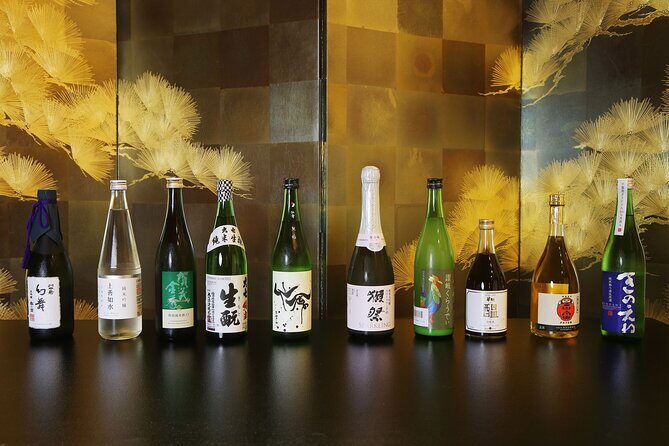
The session runs about 1 hour 15 minutes, starting at 6:15 pm. It’s timed well for dinner, especially in a city where your evening plans can sprawl. You won’t have to rearrange your night into tiny pieces. You also end back at the meeting point.
Here’s how the experience feels in practice: you move through multiple mini tastings. Each one comes with a paired dish, and the instructor gives you a short framework for what to notice before you take a sip.
Across the seven pours, you should expect variety in style. The program includes everything from sparkling sake to sweet sake, plus sakes that are specifically set up for dessert pairings. That’s a smart way to teach beginners, because it forces you to feel how sake can shift from light and lively to richer and sweeter depending on the pour.
A key value is that you’re learning tasting logic you can reuse. For example, you’ll get tips on what kinds of flavors usually work with different foods: savory vs. fatty, sweet vs. crisp, and how acidity or sweetness can change what you taste next. Even if you forget details later, the instinct you build will stick.
And you do get room for questions. One of the strongest themes in the experience is that the staff keep people engaged and answer questions throughout, which is exactly what you want when you’re new.
The Pairing Dinner: More Than Small Bites
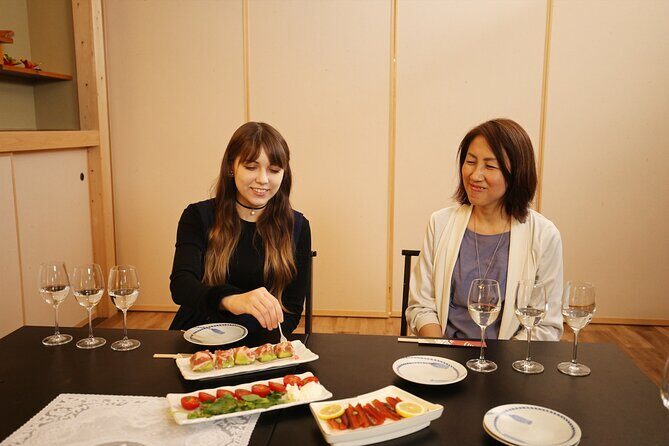
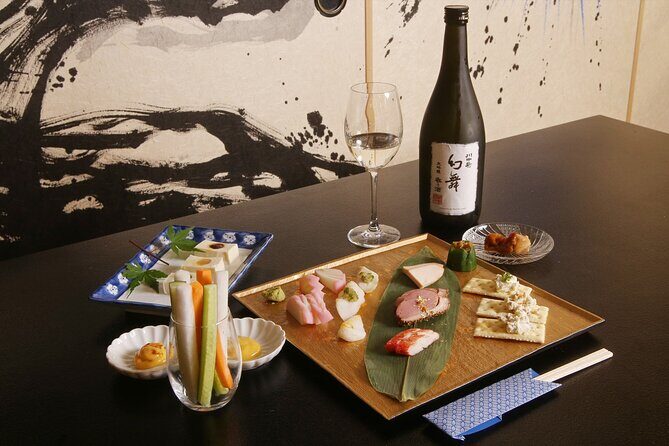
Food is where this tasting earns its keep. The idea is not just to add something to nibble between sips. You get 7 complementary Japanese dishes, and the overall meal includes a mix of Japanese and Western dishes alongside the sake.
That matters because sake tasting with random snacks can be frustrating. If the food is off, the sake tastes off. Here, the dishes are matched with purpose—so you can learn what pairing is supposed to do.
You’ll also notice the program includes dessert pairings, which is a big deal for first-timers. Many people only associate sake with seafood or grilled items. Dessert pairing shows the other side: sake can work with sweets in ways that don’t just mean masking flavors. It can bring balance, lift sweetness, and change texture.
One more practical point: the food is planned so it’s enough of a meal that you shouldn’t feel like you’re starving afterward. In a short evening slot, this is one of the best ways to get value without turning the night into a scavenger hunt for dinner.
Learning How Sake Is Made (Without Making It Complicated)
The lesson portion focuses on the basics: how sake is made, how it’s been shaped by Japanese culture over time, and how different sake varieties behave. Your instructor is a certified sake sommelier (nationally accredited), so you’re not getting generic talking points.
What I like about this kind of instruction is that it turns tasting into cause-and-effect. Instead of saying, This is good, you learn what might be happening in the process that leads to a flavor profile. That helps you explain your own preferences later, even if you can’t recite every technical term.
You’ll likely talk about things like production methods and how varieties differ enough to matter in your glass. And because the instruction stays connected to the tasting, it feels less like memorizing and more like learning by comparison: sip this, then sip that, and notice how the guidance helps you catch patterns.
There’s also an easy-to-understand vibe to the teaching. One review-style theme that shows up often is that the hosts feel warm and approachable, with a homey feel. That’s not a trivial point. When you’re paying for education, you want it delivered in a way that doesn’t make you afraid of saying something wrong.
Where the Meeting Spot Really Is Near Tokyo Tower
The meeting point is Kikai Shinkō Kaikan, 3-chōme-5-8 Shibakōen, Minato City, Tokyo. The start time is 6:15 pm, and it ends back there.
Yes, the location can sound odd at first because it’s in the basement of an office building and it’s across from Tokyo Tower. That kind of setup is common in Tokyo, but it can throw you off if you’re expecting something street-level and obvious.
Practical tip: give yourself a little buffer time. Tokyo towers of signs can be confusing even when you’re close. Getting to the meeting spot early helps you feel calm before the tasting starts.
On the logistics side, it’s a near public transportation area, and the tour uses a mobile ticket. Also, the experience notes that most travelers can participate, and you can share dietary requirements ahead of time.
You can also read our reviews of more drinking tours in Tokyo



Price and Value: Is $107.50 Worth It?
At $107.50 per person, this isn’t the cheapest thing you can do in Tokyo. But it also isn’t just a drink. For that price, you get:
- 7 different sakes
- 7 paired dishes
- instruction from a certified sake sommelier
- a structured intro to sake culture and production
- an evening slot that runs about 1 hour 15 minutes
When I compare that to the typical costs of ordering a few drinks at random plus paying for dinner separately, the math gets easier. You’re essentially buying a guided dinner program where the “menu” is educational too. And since it’s planned in advance, you don’t waste time hunting down the right place to try multiple sakes and pairing them correctly.
The only time I wouldn’t call it great value is if you already feel confident about sake styles and just want a casual tasting with no teaching. In that case, you might spend less on your own tastings.
But if you want the fastest path from confusion to preferences, the value is strong because you’re not learning by trial and error.
Group Size, Atmosphere, and How Personal It Can Feel
The experience has a maximum of 100 travelers, which means you’re not locked into a massive crowd. Still, don’t expect a private one-on-one class every time. This is built to work for a range of group sizes.
What you should expect is a lively, guided environment. The program is designed to keep you engaged as you taste, and multiple reviews highlight the friendliness and detailed explanations from the staff. In other words, you’re not sent off to wander with a cup and hope for the best.
If you’re coming with friends, this is also a solid social activity. Sake tasting plus paired food naturally sparks discussion. You’ll quickly find that people react differently to the same glass, especially once the sweeter styles and dessert pairings show up.
Who This Sake Tasting Is Best For
This one fits best if you:
- are a beginner who wants a clear, structured intro
- want to learn how sake pairs with food, including sweets
- like tasting a range of styles rather than only trying one type
- prefer guided instruction over reading labels on your own
It may be less satisfying if you:
- only want a casual bar-style experience
- expect to spend hours on technical sake history
- have very specific dietary needs you can’t accommodate with advance communication
If you’re planning a Tokyo trip that includes multiple food stops, this works well as an early “training session” for your tasting skills. Later, when you see sake on menus, you’ll know what questions to ask yourself.
Should You Book This Sake Tasting in Tokyo?
If you want a smart first step into sake, I’d book it. You’re getting a tight time window, real food pairings, and a certified instructor who helps you taste with confidence. The structure makes it approachable, and the range from sparkling to dessert-focused sweetness keeps it from feeling repetitive.
Book it sooner rather than later if you can. The experience is often booked about 24 days in advance on average, and confirmation is subject to availability.
My simple rule: if you’re curious and you like learning through tasting, this is a great use of an evening in Tokyo.
FAQ
What is the duration of the sake tasting?
The experience runs for about 1 hour 15 minutes.
How much does it cost?
The price is $107.50 per person.
How many sakes and dishes are included?
You’ll taste 7 different kinds of Japanese sake and receive 7 complementary Japanese dishes.
What time does the tour start?
The tour starts at 6:15 pm.
Where does it take place?
It starts at Kikai Shinkō Kaikan, 3-chōme-5-8 Shibakōen, Minato City, Tokyo.
Is it easy to get to?
Yes. The location is near public transportation.
Can I bring dietary requirements?
You should let the organizers know about dietary requirements.
Is extra food or drink included?
No. Extra food or beverages are not included.
Can I cancel for a refund?
You can cancel for a full refund up to 24 hours in advance of the experience start time.