REVIEW · TOKYO
Cherry blossom & Japanese Sake Tasting in Shinjuku
Book on Viator →Operated by Bancre Inc. · Bookable on Viator
Eight sakes in an hour—great for first-timers. This Shinjuku experience is built for easy sake learning, with the tasting paced from simpler, lower-alcohol pours toward more distinctive flavors. I like that the vibe is relaxed, and the host Shuma has a reputation for setting a fun mood with ambiance and music.
I also like the pairing-first format. You’ll get traditional Japanese snacks throughout, then end with amazake, a sweet fermented rice drink that works like dessert.
One possible drawback: this is strictly adult-only from age 20, and the activity requires good weather, so it may not be ideal if you’re planning around unpredictable forecasts.
In This Review
- Key highlights you’ll actually feel
- Shinjuku meeting point: a house with flowers and a 1-hour plan
- The 8-sake tasting flow: from simple to aromatic
- Snacks + pairing logic: why your bite changes what you taste
- Temperature and alcohol: how the tour teaches you to read a label
- The amazake finale: sweet, rice-koji, and actually dessert-like
- Price and value in Tokyo: what $39 gets you in real terms
- Who this is best for (and who should skip it)
- Weather, timing, and the quick practicalities
- Should you book this sake tasting in Shinjuku?
- FAQ
- How long is the Cherry blossom & Japanese Sake Tasting experience?
- How many sakes are included?
- What’s included in the price?
- Are meals or extra drinks included?
- Where does the tour start and end?
- What is the age requirement?
- What are the cancellation rules and weather rules?
Key highlights you’ll actually feel
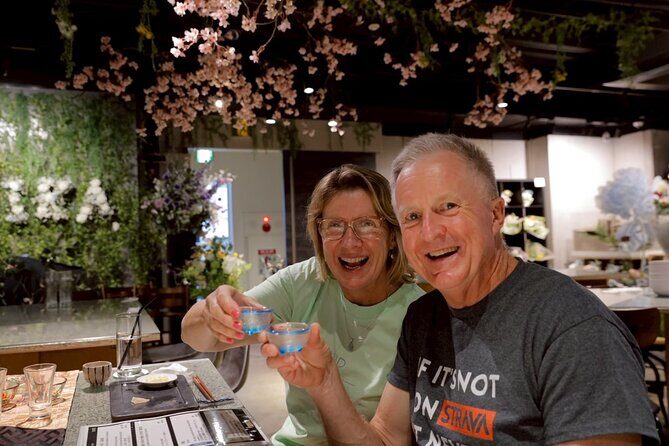
- Eight carefully selected sakes, sourced from across Japan, served in a guided progression
- Start low-ABV (around 15–16%) to help your palate adjust before the stronger stuff
- Food pairings built into the flow, using traditional Japanese snacks with each stage
- Amazake finish, a sweet rice-koji drink that lands as the tasting’s dessert moment
- Small group size (max 20), which usually makes it easier to ask questions and get attention
- Shuma’s hosting style, known for good energy, ambiance, and well-timed music
Shinjuku meeting point: a house with flowers and a 1-hour plan
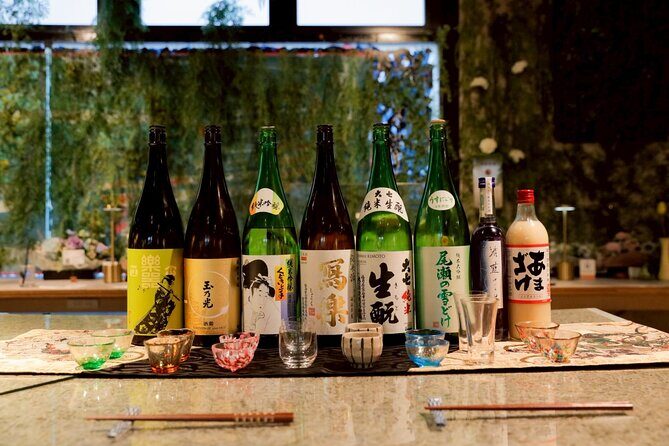
The whole experience centers on one stop in Shinjuku: a house with flowers at 3-chōme, Shinjuku City, in the 第6三和ビル 4階 building (address listed as 67 第6三和ビル 4階). It starts there and ends back there, so you’re not bouncing around the city for hours.
The tour runs about 1 hour, which is honestly a sweet spot for Tokyo. Long dinner plans can turn into a commitment; this one is short enough that you can still do an evening walk afterward. It also uses a mobile ticket, so you’re not hunting for paper receipts on a busy street.
One practical plus: the meeting point is described as near public transportation. That matters in Shinjuku, where the easiest route changes by the minute depending on which line you’re on.
You can also read our reviews of more food & drink experiences in Tokyo

The 8-sake tasting flow: from simple to aromatic
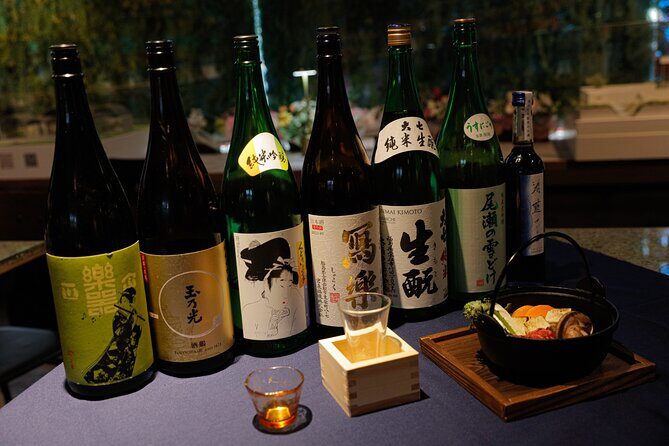
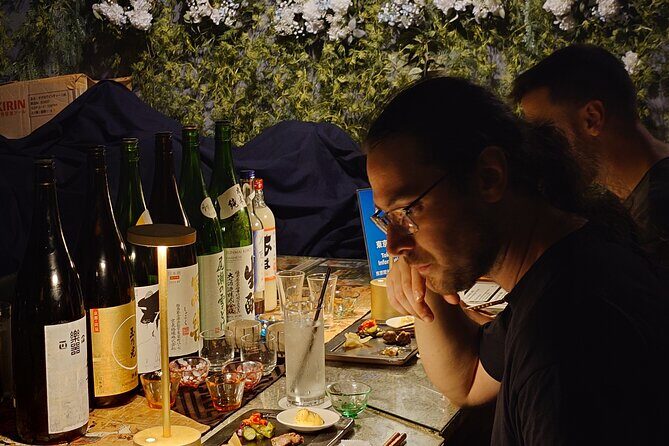
This is not a random “try whatever they pour” tasting. It’s structured like a guided on-ramp for your palate. You’ll taste eight sakes that are specifically sourced and selected for this experience, including bottles you can’t just pick up anywhere outside Japan.
The sequence starts with sake that’s typically around 15–16% alcohol. Then you move step-by-step toward options with more pronounced aromas and flavors. The idea is simple: start with something easier to read, then let your senses adjust before the stronger impressions arrive.
If you’re new to sake, this pacing does two useful things:
- It helps you notice differences without getting overwhelmed.
- It gives you a reference point early, so later pours make more sense.
If you’re more experienced, the progression can still help because it highlights how aroma and taste evolve as the flavor profile shifts. Think of it like walking from bright daylight into a dimmer room—you notice details more clearly once your eyes adjust.
Snacks + pairing logic: why your bite changes what you taste
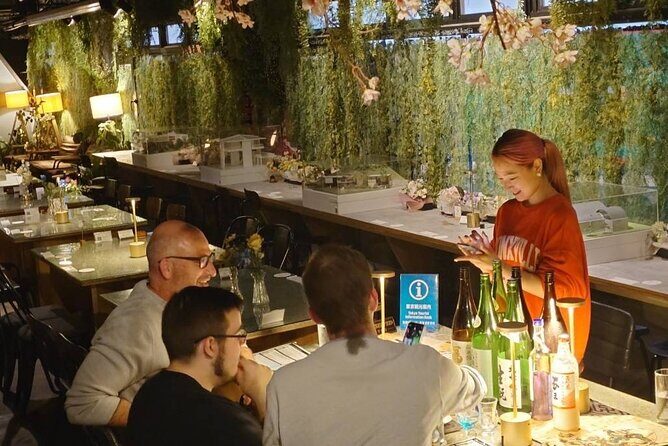
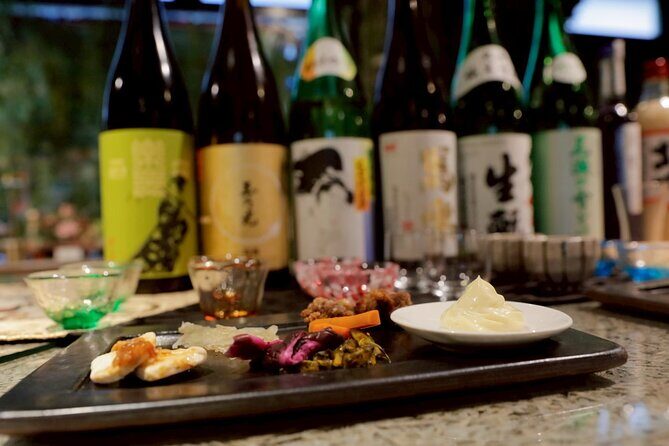
Sake and food weren’t treated like an afterthought here. Traditional Japanese snacks are included as part of the tasting, meant to pair with the sakes as you go.
This matters because sake doesn’t taste the same on an empty palate. Even within the same drink, the flavors can feel crisper, softer, or more layered once you have a bite in your mouth. The tour format nudges you to experience that in real time instead of guessing later.
You’ll also get the core concept that sake can be enjoyed at different temperatures depending on the season and what you’re eating. You don’t need to memorize a temperature chart. The value is that you start connecting why sake can taste fruitier, cleaner, or deeper depending on how it’s served and what’s on the plate.
If you’ve ever wondered why one bottle of sake tastes gentle and another tastes sharp, this kind of paired, guided tasting is the fastest way to make sense of it.
Temperature and alcohol: how the tour teaches you to read a label

The tasting is built around alcohol strength and flavor progression, but it also trains you to think beyond the number on a label.
Starting around 15–16% is a practical teaching tool. Lower or mid-range alcohol pours tend to be easier to track—more approachable on aroma, with less of that “wallop” that can drown out subtle notes. Then, as the lineup moves, you’re better equipped to detect distinctive smells and richer flavor structure.
Here’s the part I think you’ll appreciate most: you’re not expected to know sake vocabulary up front. You’re given a path. You taste the same way you taste music—first you hear the rhythm, then you start noticing the instruments.
And because the experience uses eight carefully selected sakes (sourced across the country), you’ll likely get a sense of how regional styles can feel different. That’s the kind of takeaway you can actually use the next time you order sake in a restaurant.
The amazake finale: sweet, rice-koji, and actually dessert-like
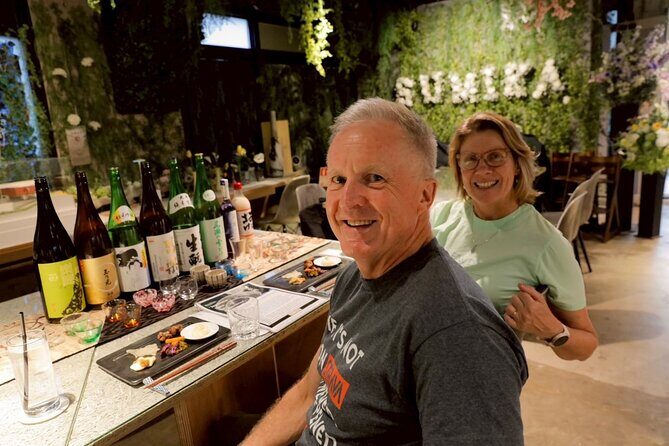
Every tasting needs a satisfying landing. This one finishes with amazake, a sweet fermented drink made from rice koji.
The tour also frames it as a health-friendly treat that’s popular in Japan, but the key for you is how it feels at the end of a tasting: dessert mode. Instead of ending on something dry or alcohol-forward, you end with something smooth, sweet, and comforting.
If you like the idea of food as part of the experience (not just a snack between sips), the amazake step is a strong closer. It also makes the tasting feel complete. You go from learning the basics of sake styles to experiencing a totally different texture and sweetness profile—then you leave with a clearer mental picture of what amazake is.
The experience description even calls amazake drinkable IV, which tells you the vibe they’re going for: gentle, satisfying, and easy to enjoy.
You can also read our reviews of more drinking tours in Tokyo

Price and value in Tokyo: what $39 gets you in real terms
At $39.02 per person, this isn’t a “budget-only” activity—but it also isn’t pricing itself like a fancy private event. For Tokyo, the value comes from what’s included and how concentrated the experience is.
You’re paying for:
- Eight sake tastings (not just a couple sips)
- Traditional Japanese snacks
- A guided progression designed for both beginners and enthusiasts
- An experience scheduled for about one hour
- All fees and taxes included
What you’re not paying for is also clearly defined: additional meals and drinks, transportation to the meeting point, and no hotel pickup/drop-off.
Here’s how I’d think about the value: in one hour, you’re getting a structured introduction that usually takes more time to recreate on your own. If you try to DIY a similar tasting, you’ll spend time searching, ordering, and then hoping the service style matches your learning curve. Here, the pacing and pairings are the product.
Also, the group cap is 20 travelers max. That’s big enough to create energy, small enough to keep the experience from feeling like a factory line.
Who this is best for (and who should skip it)
This tour is a good fit if:
- You’re new to sake and want a guided path instead of a confusing menu.
- You enjoy pairing food with drinks and learning how flavors shift.
- You like a short Tokyo activity that doesn’t consume your whole evening.
- You want to try sakes sourced across Japan without doing the legwork.
It may not be your best match if:
- You want a long, wandering tour that includes sightseeing stop after sightseeing stop. This is primarily a tasting experience at one location.
- You’re under 20, since participation is not allowed due to the Minors’ Alcoholic Beverage Law.
- You’re traveling in a period where you expect rough weather. The experience is listed as requiring good weather.
A fun note: the title includes cherry blossoms, but the details provided focus on the tasting flow itself. If you’re booking for a guaranteed outdoor sakura walk, you might want to keep expectations anchored to what’s actually scheduled here.
Weather, timing, and the quick practicalities
Plan for good weather. If conditions are poor and the experience gets canceled for that reason, you’ll be offered a different date or a full refund.
The good news is that flexibility is built in: free cancellation is available up to 24 hours in advance for a full refund. If you’re booking close to your travel dates, this takes some stress off your schedule.
You’ll also receive confirmation at the time of booking, and the activity is run by Bancre Inc. The tour ends back at the starting point, so you’re not stuck figuring out a late-night route after a short tasting.
Should you book this sake tasting in Shinjuku?
I’d recommend it if you want an efficient, friendly introduction to sake with food pairing and a guided progression. The strongest reasons to book are the structured eight-sake lineup, the fact that it’s designed to start easy (around 15–16% alcohol) and build, and the satisfying close with amazake.
Skip it if your top priority is sightseeing or if your schedule can’t handle a weather-dependent activity. And if you’re traveling with anyone under 20, plan around the age restriction—this one doesn’t flex.
For most people, especially first-timers who want a learn-and-enjoy evening without a big commitment, this is a solid buy. One hour, one location, eight sakes, and a finish that feels like dessert rather than a goodbye. That’s a pretty good trade in Tokyo.
FAQ
How long is the Cherry blossom & Japanese Sake Tasting experience?
It’s listed at about 1 hour.
How many sakes are included?
The tasting includes eight carefully selected sakes.
What’s included in the price?
All fees and taxes are included, plus the sake tasting and Japanese snacks as described. The experience also includes amazake at the end.
Are meals or extra drinks included?
No. Additional meals and drinks are not included.
Where does the tour start and end?
It starts at the house with flowers in Shinjuku (160-0022 Tokyo, Shinjuku City, Shinjuku, 3-chōme 67 第6三和ビル 4階) and ends back at the meeting point.
What is the age requirement?
Underage drinking is prohibited under the Minors’ Alcoholic Beverage Law, and those under 20 are not allowed to participate.
What are the cancellation rules and weather rules?
You can cancel for a full refund up to 24 hours before the experience start time. The experience requires good weather; if it’s canceled due to poor weather, you’ll be offered a different date or a full refund.