REVIEW · KYOTO
Crowd-Free Kyoto: Fushimi Inari, Nijo Castle & Kinkaku-ji
Book on Viator →Operated by JAPAN TRAVEL STAGE · Bookable on Viator
Kyoto can feel like a theme park when crowds roll in, so I love tours that plan around the clock. This one strings together Fushimi Inari-taisha, Nijo Castle, and Kinkaku-ji in about 5 hours, with a guide who adds context you won’t get from a map alone. The route is built for a calmer visit, with early timing where it matters most.
Two things I’d book again: you get the freedom of a private group (so the pace stays relaxed), and you’re not just checking boxes—you’re hearing stories that connect the places into a single day. The only real drawback to consider is that the paid sites (Nijo Castle and Kinkaku-ji) are not included, and the tour also doesn’t cover food.
In This Review
- Key highlights worth your time
- A 5-hour Kyoto combo that hits the big three
- Start at Kyoto Station and keep the day simple
- Fushimi Inari-taisha: see the Senbon Torii before the noise
- Nijo Castle’s Ninomaru Palace: samurai power, UNESCO-level drama
- Kinkaku-ji’s Golden Pavilion: the classic finish
- Why the private guide matters more than you think
- Food is on you, so plan snacks and water
- Value check: is $91.96 per person worth it?
- Who this tour suits best
- Should you book this crowd-free Kyoto tour?
- FAQ
- How long is the tour?
- Is this a private tour?
- Where does the tour start, and where does it end?
- Which admissions are included?
- What’s included in the price?
- Can I cancel for a full refund?
Key highlights worth your time
- Early timing to reduce crowd pain at the most popular stops
- A local guide who explains what you’re looking at, not just where to walk
- Private pacing so you can pause for questions and photos without group pressure
- Fushimi Inari’s Senbon Torii experience with free admission
- Nijo Castle’s UNESCO stop featuring the Ninomaru Palace
- Kinkaku-ji’s gold-leaf Golden Pavilion moment at a major Zen temple
A 5-hour Kyoto combo that hits the big three
This tour is the “smart overview” of Kyoto. Instead of hopping around all day on your own, you get a focused loop that takes you from the shrine trails at Fushimi Inari, into the samurai-era world of Nijo Castle, and ends at the showpiece of Kinkaku-ji. It’s a great fit if you’re on limited time or if you want a single itinerary that doesn’t require constant decision-making.
What makes the planning feel practical is the order and the timing logic. Fushimi Inari is famous—and that means it gets loud. Kinkaku-ji also draws crowds because it’s instantly recognizable and very photo-friendly. This tour’s whole pitch is to help you see these places before the busiest crush. For you, that usually means shorter lines, less shoulder-to-shoulder walking, and more breathing room for actually looking.
You can also read our reviews of more tours and experiences in Kyoto.


Start at Kyoto Station and keep the day simple
Most people underestimate how much time and energy they burn figuring out transit and meeting points. Here, the start is easy: South Square, Kyoto Station Building. That matters because Kyoto’s rail and bus network can be confusing the first day, especially if you’re carrying luggage or trying to get your bearings.
You’ll also like the fact that this is described as near public transportation. Translation: you’re not getting stuck in a far-off corner where every trip involves extra transfers. The end point is at Kinkaku-ji, which is convenient because it’s the natural way to finish your west/north Kyoto sightseeing loop.
The other big advantage is privacy. This is a private tour, meaning only your group participates. That’s what keeps the day from turning into a hurried parade.
Fushimi Inari-taisha: see the Senbon Torii before the noise
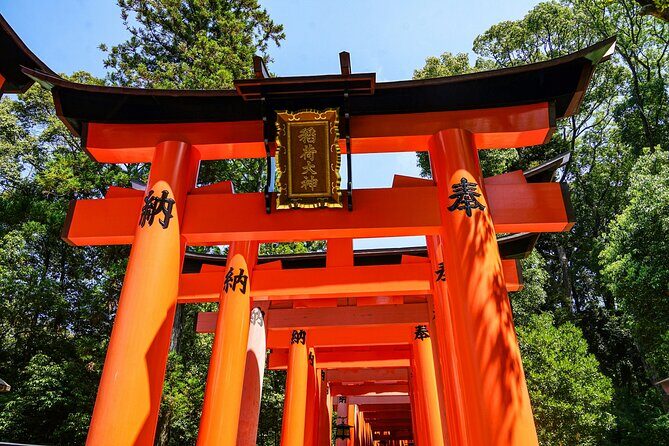
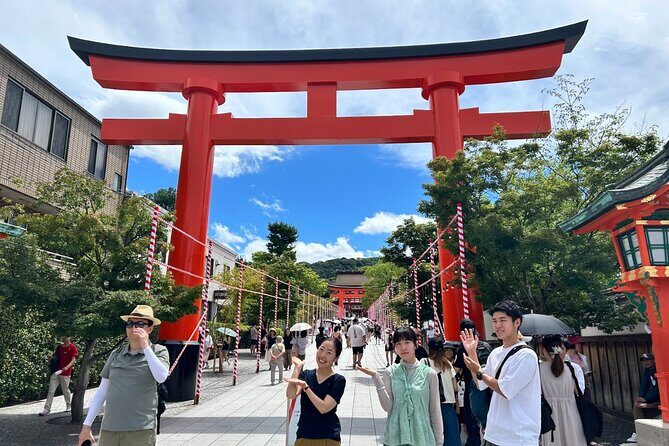
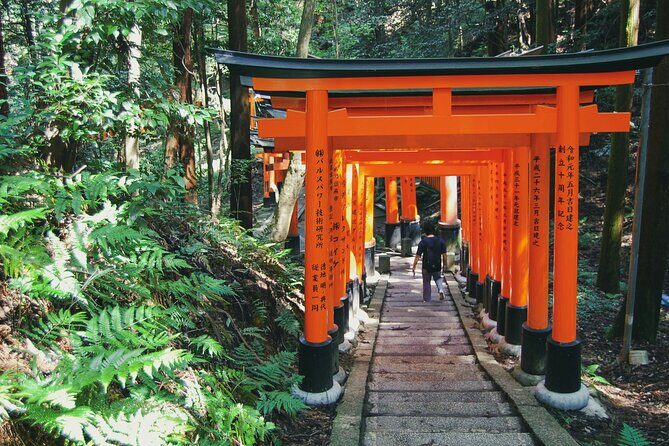
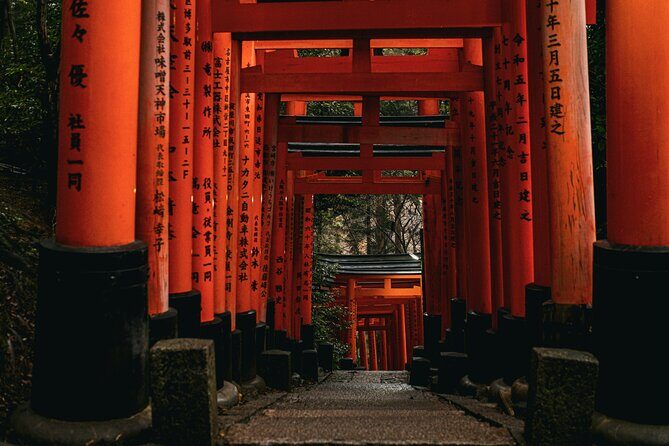
Fushimi Inari-taisha is one of those places where the setting does half the work for you. The famous image is the Senbon Torii: thousands of red gates that stack up and fade into the distance. It’s visually addictive. You’ll feel it immediately as you start walking, because each turn makes the tunnel effect stronger.
A practical plus: admission for this stop is free. So you’re not paying just to stand in a queue for a ticket. The value here is time and experience. If you’re going to climb into the shrine area, earlier hours help. In the morning, the flow is usually easier—less stopping and starting, more steady progress.
A tip based on the vibe of this kind of stop: wear shoes you trust. Even if you don’t go all the way up, you’ll be walking on uneven paths and steps. Also, plan for small purchases along the way. One past guest joked about a 300 yen water cost once you’re out there, which is a good reminder that the convenience stores and vending machines inside the tourist zones can be pricey.
What you’ll get from a guided visit is the meaning behind the spectacle. A good guide helps you notice details you’d miss alone—like how the shrine complex connects to local beliefs and why the gates aren’t just decorative. That’s where the tour becomes more than walking around with a camera.
Nijo Castle’s Ninomaru Palace: samurai power, UNESCO-level drama
Then you switch worlds. Nijo Castle feels different the moment you enter—less trail, more architecture, history, and atmosphere. It’s a UNESCO World Heritage site, and the highlight on this tour is the Ninomaru Palace, which served as the residence of the Tokugawa Shogun.
Why this matters for you: it gives context for how political power and culture were staged in Kyoto. This isn’t just a “pretty building” stop. The palace setting helps you understand why these places are taken so seriously in Japan—because they were built for governance and ceremony, not for tourism.
In a perfect day, this stop is a relief after shrine walking. You can slow down, look up, and focus on the structure. The palace interior elements and the overall design are best appreciated when you’re not trying to keep up with a faster group.
One key consideration: admission is not included for Nijo Castle. So budget for the entry fee on top of the tour price. If you hate surprise costs, you’ll want to check the total you’ll pay in advance so the day stays stress-free.
Kinkaku-ji’s Golden Pavilion: the classic finish
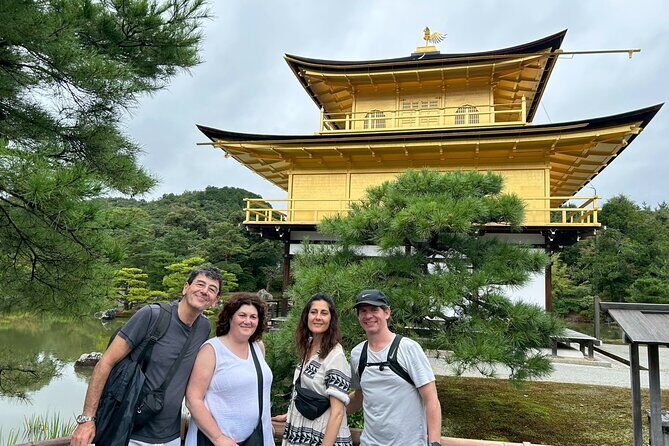
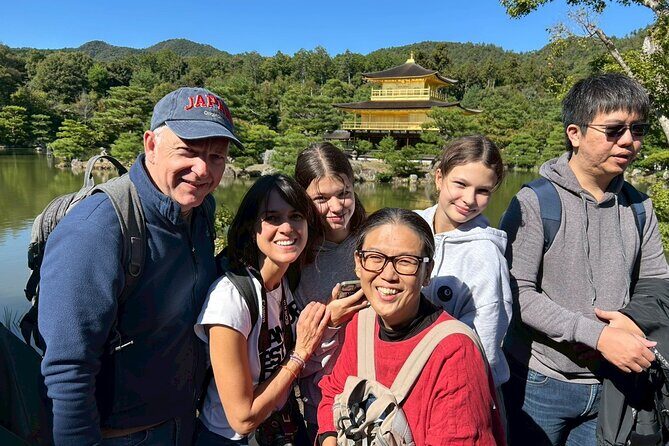
Kinkaku-ji, the Golden Pavilion, is the kind of sight that looks unreal in person—because it’s deliberately iconic. The temple is covered in gold leaf, and that gold catches light in a way that makes you stop even if you came for something else. It’s also a major Zen Buddhist temple, so the atmosphere feels different from the shrine energy at Fushimi Inari.
This stop is a strong closer for a few reasons:
- The sight is immediate. You don’t need time to “get it.”
- It photographs well, but it’s also worth seeing slowly.
- It’s the capstone of a Kyoto day that started with spiritual space and moved into historical power.
Just know this: admission isn’t included here either, so again, expect a separate ticket. Also, the itinerary notes a weather dependency (it mentions weather permitting). You can’t control clouds or rain, so if weather is touchy on your dates, it helps to have flexibility.
If you want the most satisfying experience, don’t treat Kinkaku-ji like a quick stop. Give yourself a few minutes to take in the pavilion and then look around for the wider temple setting. A guide can help you understand what you’re seeing beyond the obvious gold.

Why the private guide matters more than you think
Here’s the part that usually makes or breaks a “great sights” tour: the guide’s job isn’t to recite facts. It’s to connect the places to the patterns of Kyoto.
This tour is built around that idea. You’re not just moving between landmarks—you’re hearing stories about the city that you’d likely miss if you were solo. That can mean anything from explaining what a temple or castle meant at the time, to pointing out why a certain layout feels the way it does.
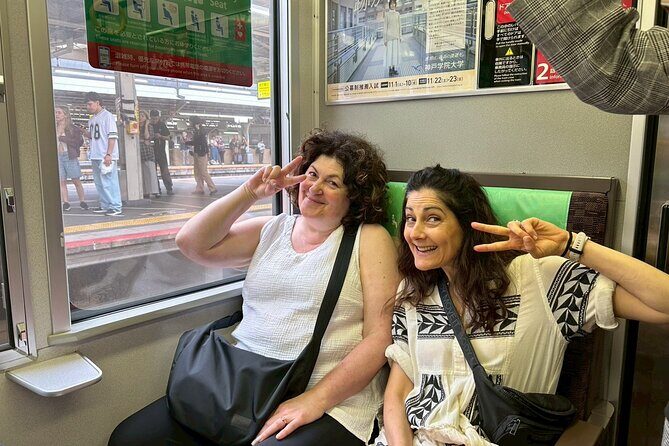
It also changes the pace. You’ll typically see private tours turn smoother because you’re not waiting for slow walkers ahead or getting rushed by faster people behind. With a private group, you can take breaks, ask questions, and adjust your pace when the day gets warm or when you want to linger at a view.
The guide quality is a big theme in the feedback. Names like Tom, Ryu, Kazuya, and Maki come up as leaders for this route, and the common thread is that guests felt looked after and informed. Even if you don’t care about biographies, you should care about this: a guide who can answer questions makes Kyoto feel less like random sightseeing and more like a coherent story.
Food is on you, so plan snacks and water
The tour includes a local guide, but food and drinks are not included. That’s totally normal for a half-day format, but it does change how you should prep.
If you’re the type who gets cranky when you’re hungry, bring a light snack or plan a quick purchase between stops. For water, don’t assume prices will be friendly once you’re inside the tourist-heavy areas. Even one small reminder about water costs suggests you should pack smart.
A good strategy is simple:
- Eat beforehand or bring a snack you like.
- Carry a refillable bottle if it fits your day.
- Plan bathroom breaks around the natural pauses at each site.
This is how you keep the day relaxing instead of turning it into a hunt for convenience.
Value check: is $91.96 per person worth it?
At $91.96 per person for about 5 hours, this tour sits in the “good value” zone for Kyoto—especially because it’s private and includes a local guide.
Here’s the value math in real terms:
- What you’re paying for: guidance, pacing, and the plan to visit at less crowded times.
- What’s not included: admission tickets for Nijo Castle and Kinkaku-ji.
- What is included: a guide and a route that saves you time figuring out logistics.
If you’d otherwise spend your day bouncing between three major sites on your own, you’d still be paying for transit time, possible ticket confusion, and the mental energy of planning. This tour trades some independence for efficiency and comfort. For many people, that trade is worth it.
Also, you get mobile ticket support and group discounts, which is helpful if you’re traveling with someone and want to keep costs under control. Private Kyoto days can get expensive fast, so seeing a price that stays reasonable while still offering early timing is a plus.
Who this tour suits best
This is a good match if any of these describe you:
- You want Kyoto highlights in one focused day.
- You hate crowd stress and prefer an early start when it counts.
- You’d rather listen to explanations than read on your phone while walking.
- You’re traveling with a partner and want a relaxed pace instead of a group scramble.
It’s also a smart choice if your Kyoto days are short or if you’re mixing sightseeing with recovery from jet lag. A 5-hour format gives you structure without taking over your whole schedule.
One note: if you love drifting with no plan, this might feel too structured. Still, even if you like freedom, a private guide can create freedom of pace—because you’re not forced into someone else’s timeline.
Should you book this crowd-free Kyoto tour?
I’d book it if your priority is a calmer visit to three headline sites—especially Fushimi Inari early, plus the historical contrast of Nijo Castle and the iconic finish of Kinkaku-ji. You’ll likely feel the value in the pacing and the guide’s ability to make each stop feel like part of one story.
I’d think twice only if you dislike paying extra for entrance tickets at major sites, since Nijo Castle and Kinkaku-ji admissions aren’t included. If you’re okay budgeting for those tickets (and you’re prepared for a day without food included), this looks like a smart way to spend a half-day in Kyoto without turning it into a crowded endurance test.
FAQ
How long is the tour?
The tour runs for about 5 hours.
Is this a private tour?
Yes. It’s private, and only your group participates.
Where does the tour start, and where does it end?
It starts at South Square, Kyoto Station Building and ends at Kinkaku-ji.
Which admissions are included?
Fushimi Inari-taisha Shrine admission is free. Nijo Castle and Kinkaku-ji admissions are not included.
What’s included in the price?
A local guide is included. Food and drinks are not included.
Can I cancel for a full refund?
Yes, you can cancel up to 24 hours in advance for a full refund.