REVIEW · KYOTO
Takashi’s local food adventure through Gion Kyoto tips of Ramen
Book on Viator →Operated by Amazing Kyoto Experience · Bookable on Viator
Kyoto at night tastes different.
This Gion food-focused walking tour pairs street-level culture with a real dinner in downtown spots, guided by Takashi or Natsuki. I love how the walk sets the mood (Yasaka Shrine, canal-side alleys, and the chance to spot Maiko/Geisha), and I love that the guide steers you toward what to order so you’re not guessing in an English-unfriendly restaurant. One thing to consider: the evening is partly a walk, so if you expect many fast tasting stops back-to-back, you’ll want to arrive on time and be ready for the main payoff to happen at the seated meal.
You start at Gion-Shijo Station (7:30 pm) and finish back there, with about three hours of gentle-to-moderate strolling through the best-looking lanes in Higashiyama. The tour also uses a mobile ticket and runs as a private experience, so it feels less like a stampede and more like a local plan. If you’re late, the schedule tightens fast because some small places around Gion close earlier than you’d think.
In This Review
- Key points you’ll care about
- Why a Gion night food walk works better than daytime sightseeing
- Meet the guides: Takashi and Natsuki set the tone
- The 7:30 pm plan: Gion-Shijo to the cultural streets of Higashiyama
- Yasaka Shrine (free) and the alleys that feel like Kyoto’s best kept secret
- Kawara-machi and your dinner: ramen, katsu, or izakaya chosen for you
- Price and value: what $166.14 covers, and how to budget the rest
- What the itinerary gets right (and what can surprise you)
- Who should book this tour
- Should you book this Gion ramen and night food walk?
- FAQ
- What time does the tour start?
- Where do I meet the guide?
- How long is the tour?
- Is this tour private?
- What’s included in the price?
- Are meals included, or do I pay for food?
- Is Yasaka Shrine admission free?
- Are service animals allowed?
Key points you’ll care about
- Nighttime Gion routing: you’ll walk the cultural heart of Gion before you sit down to eat.
- Yasaka Shrine stop included: it’s part of the story, and the admission is free.
- Maiko/Geisha may appear: you may see traditional performers and hear what they represent in Gion.
- Hidden-in-plain-sight restaurants: you’re steered toward places locals use, not the loudest tourist menus.
- Ramen, katsu, or izakaya depending on the night: the guide selects dishes rather than sending you on a menu scavenger hunt.
- Food cost is on you: you pay for what you eat; the tour includes navigation and guidance.
Why a Gion night food walk works better than daytime sightseeing
Gion after dark has a different tempo. The streets don’t feel like a postcard anymore—they feel like a living neighborhood with rules, rhythms, and quiet corners you’d miss if you only followed the biggest attractions.
That’s what makes this tour click for me: it doesn’t treat food as an afterthought. The evening starts with context—Gion’s long entertainment-and-arts role, the area around Yasaka Shrine, and the canal-side lanes with classic lanterns—then it turns into dinner while you’re still warm from the walk.
Also, the format is built for people who don’t want to gamble. Kyoto has plenty of places where the vibe is great but the English menu is not. Having Takashi or Natsuki help you pick the right dishes is the whole point of the experience.
The only catch is pacing. It’s not a “ten bites in ten minutes” sampler tour. You may get a couple of small food moments along the way (for example, there can be shrine-area snacks), but the real meal is the anchor. If you want a multi-stop tasting parade, go in with that mindset.
You can also read our reviews of more food & drink experiences in Kyoto
Meet the guides: Takashi and Natsuki set the tone
This experience is led by local foodie guides—most often Takashi or Natsuki, based on how the tour is described and the names that show up repeatedly.
Takashi is presented as a professional who also runs car tours around Kyoto, Nara, and Osaka. That matters because it usually comes with two skills: practical logistics (timing, walking flow) and smart local recommendations. He’s also described as a big ramen person with a ramen place suggestion that’s meant to impress.
Natsuki, on the other hand, is described as delightful and welcoming—someone who makes the group comfortable and keeps the evening moving at a friendly pace. That’s important for a night walk, where the best moments can be brief: a glimpse in a side street, a quick story at a shrine, or the moment you step into a calmer restaurant room and finally exhale.
Either way, the guiding style is meant to be conversational. You’re encouraged to ask about geisha, pagoda, and even Kyoto’s geography. You’re not just collecting trivia; you’re learning how the neighborhood worked historically and how that shows up now.
The 7:30 pm plan: Gion-Shijo to the cultural streets of Higashiyama
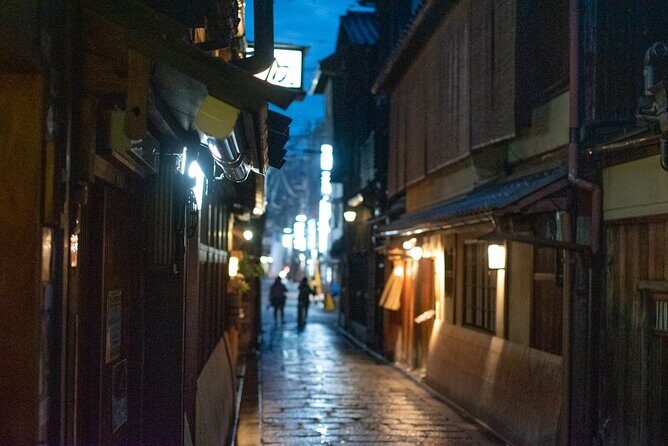
Your tour starts at Gion-Shijo Station at 7:30 pm. That’s a smart meeting choice because it puts you in the middle of things right away, with easy access to public transportation and a clear end point (you return to the same area).
From there, you’ll walk into Gion’s lanes. You’ll see the kind of streets and shops that make this area famous. The tour also frames why Gion matters: it’s described as the center of entertainment and culture with over 500 years of history. Even if you don’t love history lectures, that context helps you read what you’re looking at—why the alleys feel designed for specific kinds of visitors, and why the entertainment tradition is tied to geography.
Along the way, you may encounter Maiko or Geisha. The tour specifically flags what to watch for: their traditional look, including the well-known pale makeup. You’ll also hear what the guide thinks these performers mean in today’s Gion, which is more useful than just spotting costumes and moving on.
Practical tip: wear comfortable shoes. The walk is part of the experience, and night lighting makes the sidewalks look smooth even when they’re not.
Yasaka Shrine (free) and the alleys that feel like Kyoto’s best kept secret
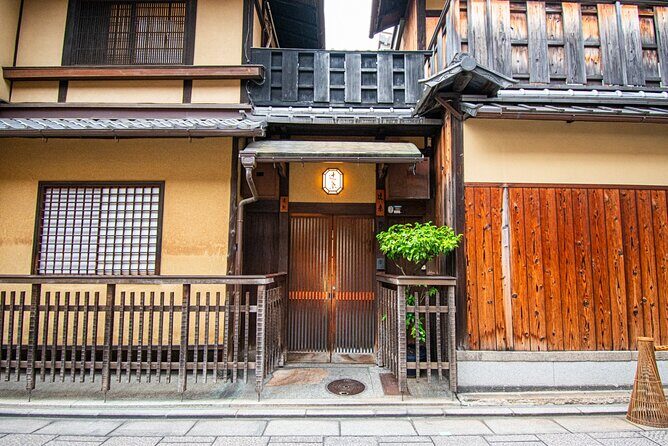
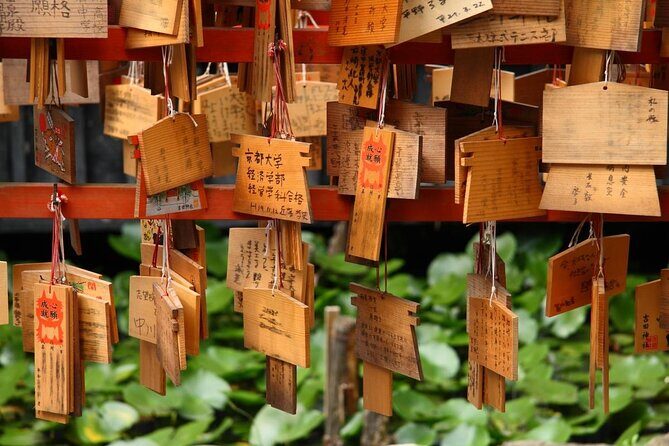
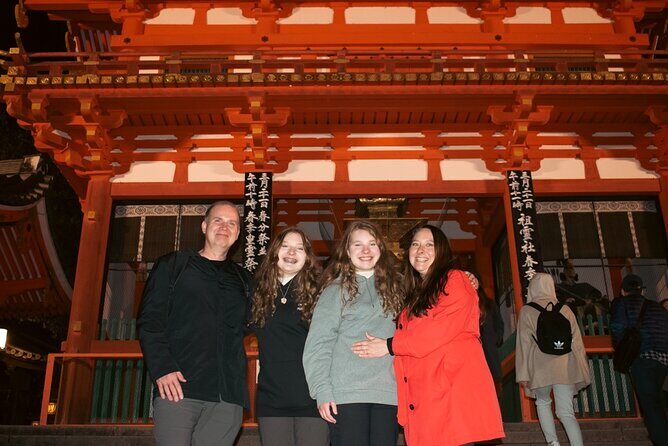
You’ll reach Yasaka Shrine as a scheduled stop. The shrine stop is listed as about 30 minutes, and admission is free.
This is a good time buffer in the itinerary. You’re not rushing through the most scenic moment of the evening, and you can settle your brain a bit before you head toward food. The tour also links the shrine’s role to Gion’s entertainment culture, including how geisha and Kabuki culture developed in the area. The takeaway for you: this isn’t a random tourist photo stop. It’s part of the story that explains why Gion looks the way it does.
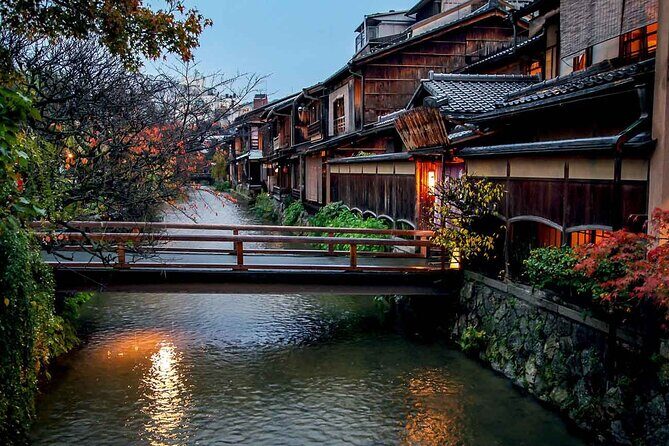
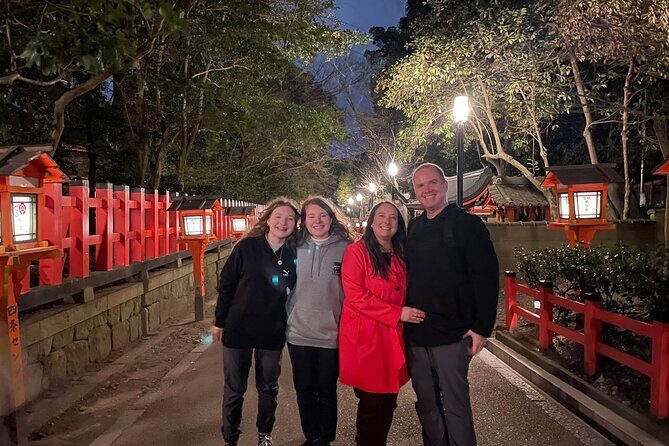
After Yasaka Shrine, the tour shifts to the photo-worthy-but-real spaces: small alleys along the canal, with iconic lanterns and little shops. This is the kind of walking stretch where you slow down naturally, because the lanes are narrower and the details are closer. If you enjoy atmosphere, you’ll probably feel like you found the Kyoto you hoped for without needing to hunt for it yourself.
If you’re sensitive to crowds, note that this is a popular area, but the tour pacing helps you move through it without trying to fight everyone for the same spot.
Kawara-machi and your dinner: ramen, katsu, or izakaya chosen for you
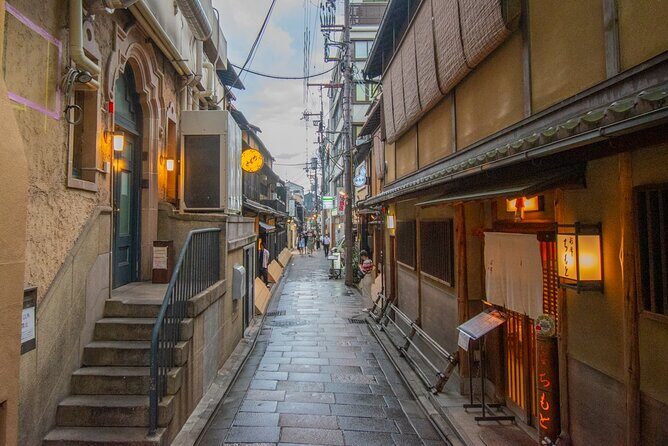
After the walk, the tour moves you to Kawara-machi, and that’s where the food payoff happens.
Here’s the key difference between this and DIY eating: you don’t just go into a restaurant and stare at the menu. The guide selects dishes and helps you navigate ordering. The tour description says you’ll be able to unlock different food styles across tours, such as katsu, ramen, or izakaya. So what you eat can vary, but the method doesn’t: the guide chooses.
This portion is listed as about two hours. That length matters. It gives you enough time to actually relax at dinner, talk with the guide, and not feel like you’re on a timer after you’ve already walked the streets for an hour.
The tour also highlights an important reality: many local restaurants are tucked away and may not be obvious to foreigners, so the guide’s navigation is the value. You end up at a place that feels used by locals, not just designed for tourists.
One consideration: since all food is purchased by guests, you should budget separately. The tour price covers navigation and guidance, not your meal bill. The restaurant can still be a great value, but the final cost depends on what you choose to drink and eat.
A few more Kyoto tours and experiences worth a look


Price and value: what $166.14 covers, and how to budget the rest
The listed price is $166.14 per person for roughly 3 hours, and it’s a private experience with personalized navigation. That’s not cheap, but it’s also not just “a walk plus a guide.” You’re paying for someone to:
- route you through Gion efficiently at night,
- provide cultural context (shrines, Gion’s arts background, and performer history),
- and get you into a restaurant situation where the guide helps with ordering and choosing.
The biggest value lever is the restaurant access. If you’ve ever tried to pick a good ramen spot in Kyoto without language help, you already know how easy it is to end up at a place that’s popular but not right for what you want. This tour tries to prevent that guesswork.
Budgeting note: because food isn’t included, your total cost will likely be higher than the tour price. Before you go, I’d set an “eating budget” in your head based on the kind of meal you want. If ramen is your goal, great. If you want something more like izakaya-style dining, you’ll likely spend more.
What the itinerary gets right (and what can surprise you)
This tour’s strengths are very specific:
- You’re not just walking. You’re walking with explanations tied to the exact places you see.
- You’re not just eating. You’re eating in a guided way that reduces menu confusion.
- You’re using the evening light and atmosphere in Gion instead of spending it staring at a map.
But there are a couple of things that can change the experience.
First: timing. The tour is scheduled tightly around dinner hours and shop rhythms in Gion. If you show up late, you may miss some smaller food opportunities along the way because places can close before the group reaches them.
Second: expectations. Despite the label as a food tour, the structure is still a walk-first model, with the main meal happening at the restaurant. If your ideal is many separate tastings in many tiny stops, this may feel more like a “food-led night stroll plus one strong dinner” than a bite-by-bite buffet.
If you can match your expectations to that format, the tour tends to feel like a smooth, grown-up plan: history first, then food, then conversation.
Who should book this tour
This is a strong fit if:
- you’re visiting Kyoto for the first time and want Gion at night, not just in daylight,
- you like ramen, katsu, or izakaya and want help ordering the right things,
- you’d rather avoid the stress of finding less touristy places on your own,
- you enjoy talking with a guide who can answer questions about geisha and Kyoto’s layout.
It might be less ideal if:
- you want a constant stream of small tastings at many stops,
- your schedule is unpredictable (even small delays can affect what you can fit in before shops close),
- you’re expecting the total price to include dinner.
Should you book this Gion ramen and night food walk?
I’d book it if you want a guided Kyoto night where the walking has a purpose and the dinner feels chosen for you. The combination of Yasaka Shrine context, canal-side alley atmosphere, and a restaurant plan in a place where English can be tricky is exactly the kind of “local support” that makes a trip feel easier—and tastier.
But book with eyes open: food costs are extra, and the evening isn’t built as a rapid-fire tasting parade. If that matches your style, you’ll likely come away feeling like you ate like Kyoto residents, not like you followed a generic tourist route.
FAQ
What time does the tour start?
The tour starts at 7:30 pm.
Where do I meet the guide?
Meet at Gion-Shijo Station (1 Chome Miyagawasuji, Higashiyama Ward, Kyoto).
How long is the tour?
It lasts about 3 hours.
Is this tour private?
Yes. It’s listed as a private tour/activity, and only your group participates.
What’s included in the price?
Included is private and personalized navigation (plus a mobile ticket). Admission for the listed shrine stop is free.
Are meals included, or do I pay for food?
You pay for the food. The tour notes that all food is bought by guests.
Is Yasaka Shrine admission free?
Yes. Yasaka Shrine is listed with free admission.
Are service animals allowed?
Yes, service animals are allowed.
If you want, tell me your travel dates and what you most want to eat (ramen only, or a broader izakaya plan). I can suggest what to prioritize so you get the best value out of the evening.