REVIEW · TOKYO
Tokyo Private Walking Tour With Fresh Eyes, Local Hearts
Book on Viator →Operated by Exploring Tokyo · Bookable on Viator
Tokyo feels way easier with a plan.
This private walking tour in Tokyo cuts the guesswork by matching your day to your interests, with guides who are born and raised in the city and keep things flexible. You get a private, exclusive experience (just your group), plus hotel pickup and a mobile ticket, so you can spend less time figuring out logistics and more time actually seeing Tokyo.
I especially like two things. First, you get undivided attention from your guide, which makes it easier to ask questions and adjust on the fly instead of pacing through a group. Second, the route is customizable, so you are not stuck with stops you do not care about. I also picked up a great tip from a past booking about how the guide Toko contacts you before you meet to learn your interests, then builds the day around that.
One consideration: some big-name places have limits on what you can enter. The Imperial Palace visit covers public areas only, the Kabuki-za stop includes a gallery rather than the main theater interior, and several gardens have admission fees not included. Also, each stop is relatively short, so if you want long museum-style time, you’ll need to choose a longer overall tour length.
In This Review
- Key highlights to know before you go
- A private Tokyo walking plan that actually reduces stress
- Imperial Palace public areas: a calm start with Edo-era context
- Tsukiji Outer Market and the Tsukiji Fish Market area: where breakfast becomes a story
- Tsukiji Outer Market (Jogai)
- Tsukiji Fish Market (Inner area)
- Shibuya Crossing and Meiji Jingu: loud city energy, then sudden quiet
- Kabuki-za gallery visit and Senso-ji in Asakusa: iconic, meaningful, and photo-friendly
- Kabukiza Theater (gallery, not the main interior)
- Senso-ji Temple (plus Asakusa streets)
- Shinjuku Gyoen and Golden Gai: gardens for calm, alleys for character
- Shinjuku Gyoen National Garden
- Shinjuku Golden Gai
- Akihabara, Takeshita Street, and Yoyogi Park: pop culture plus a breather
- Akihabara
- Takeshita Street (Harajuku area)
- Yoyogi Park as a reset
- Nezu Shrine and Tokyo’s smaller garden stops: quiet alternatives in a city of noise
- Nezu Shrine
- Kiyosumi Teien
- Other garden options when you have more time
- Tokyo Tower, Zojo-ji, Ueno Park: viewpoints, faith, and the city’s layers
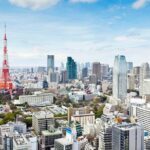
- Tokyo Tower
- Zojo-ji
- Ueno Park
- Gotokuji and Kanda Shrine: oddball myths and old protection
- Gotokuji Temple and the maneki-neko
- Kanda Shrine
- Price and time: getting real value from a $26.36 private tour
- Who should book this private route through Tokyo?
- Should you book this private Tokyo walking tour?
- FAQ
- What is the duration of the Tokyo private walking tour?
- Is the tour private?
- Do you get help with transportation from your hotel?
- Are the major attractions included with entry?
- Is admission included at all stops?
- How long do you usually spend at each stop?
- Are meals included in the price?
- Are public transportation fares included?
- Is cancellation free?
- Can service animals join the tour?
Key highlights to know before you go
- A private guide born and raised in Tokyo, so the day feels personal instead of scripted
- Customizable itinerary based on what you want to see that day
- Classic Tokyo mix: palace grounds, markets, shrines, neighborhoods, and gardens
- Admission notes matter: some entrances are outside-only or gallery-only, and some gardens charge
- Hotel pickup + walking with public transport help, which saves time on transfers
A private Tokyo walking plan that actually reduces stress
Tokyo is enormous, and the hardest part is often not what to do, but what to choose. This tour helps because your guide builds the route around you. Instead of forcing you through a fixed list, you can request what matters most—history, food, fashion neighborhoods, quiet shrines, or garden time.
The experience is designed for real mobility. It’s a walking tour with public transportation support, and it’s private, meaning your pace is your pace. If you want more photo time at Shibuya Crossing or more stillness at a shrine, you can shape the day that way.
Also, you do not have to worry about standing around wondering how to find the next place. There’s hotel pickup offered, and you receive a mobile ticket, which usually keeps things smoother on the ground.
You can also read our reviews of more walking tours in Tokyo
Imperial Palace public areas: a calm start with Edo-era context
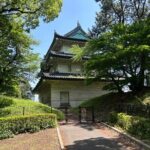
A good first stop sets the tone, and this one does. You start with the Imperial Palace area, with access limited to certain public spaces. You will not be going inside the main palace grounds, but you still get the “this is Tokyo’s power center” feeling from the parkland setting.
What I like about this start is the contrast. Tokyo’s streets can feel fast and loud right away, and the Imperial Palace area gives you space to reset. It also helps you understand the geography of the city: you’ll see why so many other landmarks feel connected to this historical core.
Practical note: you’ll spend about 15 minutes here, so treat it as an orientation stop. If you want deeper palace-area time, you’ll likely need a longer day.
Tsukiji Outer Market and the Tsukiji Fish Market area: where breakfast becomes a story
From the palace calm, the energy shifts quickly to Tsukiji. You’re set up for market wandering—short, focused, and guided.
Tsukiji Outer Market (Jogai)
The Outer Market is known for a huge variety of shops and stalls, and it’s a strong pick for a breakfast stop. In this tour format, you’ll have roughly 15 minutes to graze and look. That short window is actually useful: you get the feel of the market without spending half your day in line or stuck deciding between ten things.
Tsukiji Fish Market (Inner area)
Then you move toward the inner market area. The tour notes that it can feel less familiar even to many Japanese people, which hints at the vibe: not just a tourist checklist. Here again, the time is about 15 minutes, so I’d approach it like you’re getting a guided snapshot of how the market world works rather than a full market immersion.
Why this works: markets can swallow time fast. A private guide keeps it on track and helps you spend your time on what fits your interests—snacks, sights, and understanding what you’re seeing—rather than blindly wandering.
You can also read our reviews of more private tours in Tokyo



Shibuya Crossing and Meiji Jingu: loud city energy, then sudden quiet
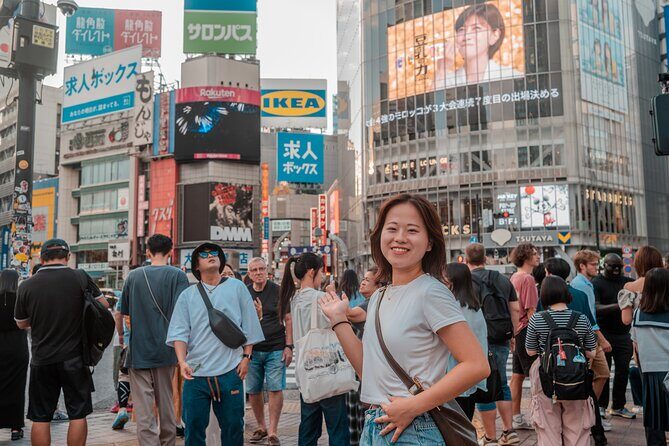
Shibuya Crossing is basically Tokyo on a traffic-light schedule: fast, crowded, and visually chaotic in a way that still feels organized. You’ll have about 15 minutes here. That’s enough time to watch the crossings, grab a few key viewpoints, and get oriented to one of Tokyo’s most famous lifestyle districts.
What makes Shibuya interesting on a guided walk is context. Shibuya is associated with youth culture, fashion, and entertainment, and your guide can help you connect the modern scene to the neighborhoods you’ll see next.
Then the tour pivots hard—Meiji Jingu Shrine. You’ll spend around 15 minutes here too, and this stop is about stepping from city noise into shrine calm. The shrine is tied to a major historical figure: it was established in 1920 in honor of Emperor Meiji and Empress Shoken. That detail matters because it explains why the site feels ceremonial rather than just decorative.
A good tip for this combo: treat Shibuya as your eye-candy and Meiji Jingu as your reset. Even in a short time, the rhythm shift is the point.
Kabuki-za gallery visit and Senso-ji in Asakusa: iconic, meaningful, and photo-friendly
This part of the day is built for atmosphere.
Kabukiza Theater (gallery, not the main interior)
You’ll visit the Kabukiza Theater building, but the tour specifically says it does not include access to the inside of the main theater itself. Instead, you visit a gallery on a different floor within the same building.
That’s not necessarily a bad thing. In a short tour window, the gallery visit still gives you cultural context without the time crunch that can come with major venue access. If you want to catch a full kabuki performance, you’d need a different type of ticketed experience, but for culture and understanding, this format works.
Senso-ji Temple (plus Asakusa streets)
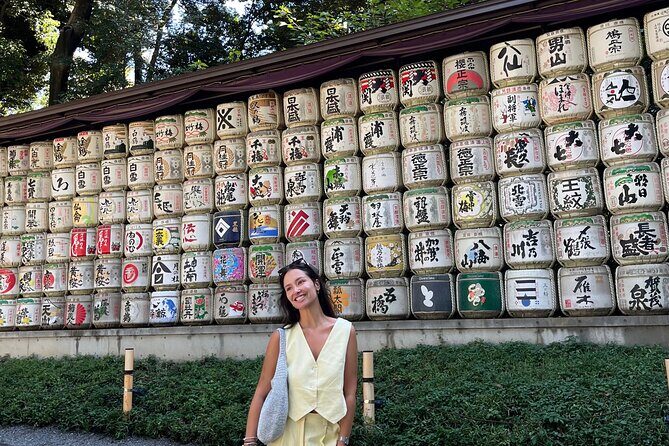
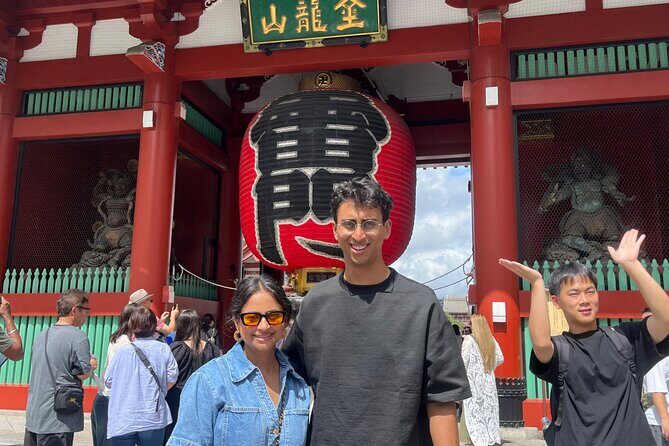
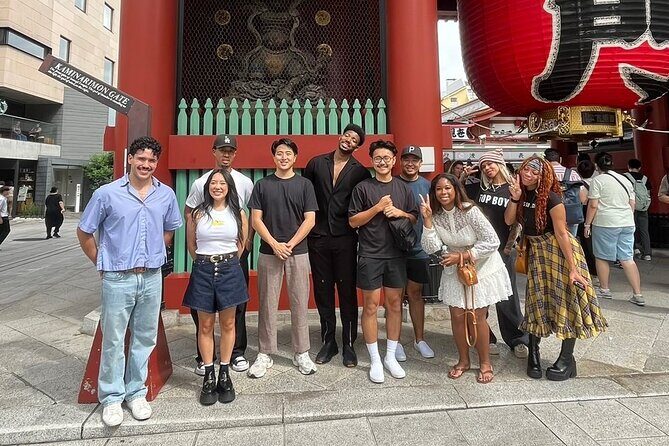
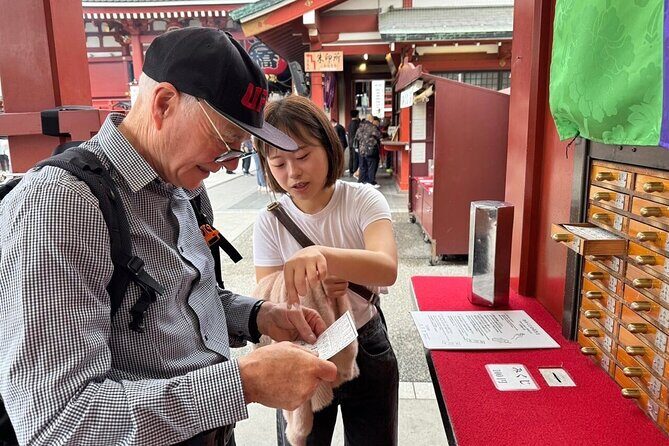
Then you land at Senso-ji Temple, in Asakusa. The tour frames Senso-ji as Tokyo’s oldest temple and one of its most beloved landmarks. You’ll have around 30 minutes at Senso-ji, which is a meaningful chunk compared to other stops.
Asakusa itself follows with about 15 minutes. This is where you get the street-level feel: traditional neighborhood energy right around the temple, with lots of small things to notice.
If you care about “Tokyo beyond a photo,” Asakusa is a good bet. The streets around Senso-ji make it easier to walk slow—so even with a guide-driven schedule, you get space to absorb the vibe.
Shinjuku Gyoen and Golden Gai: gardens for calm, alleys for character
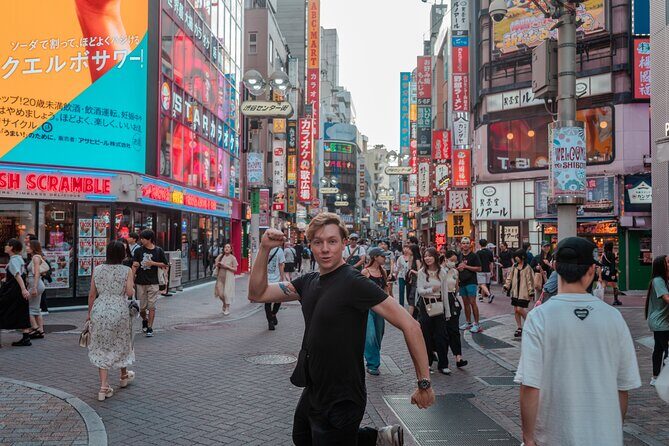
Shinjuku is often seen as skyscraper chaos, but this tour deliberately includes two very different sides of it.
Shinjuku Gyoen National Garden
Shinjuku Gyoen is described as an oasis of greenery right in the heart of Tokyo. It was originally built as an imperial garden and is open to the public now. You’ll get about 15 minutes here, with admission not included.
That admission detail matters. Gardens take time, and if the weather is good, you’ll probably want longer than a quick walk. So I’d treat this stop like a “taste,” unless you’re traveling during a season you care about most.
Shinjuku Golden Gai
Golden Gai is a completely different world: narrow alleyways packed with many tiny bars—over 300 are mentioned. You’ll have about 15 minutes and the tour notes admission is free.
I like Golden Gai as a contrast stop. You get modern nightlife culture without needing a big venue. It’s small-scale, photogenic, and very Tokyo.
Just be aware: this is more about walking and atmosphere than eating a full meal. If you want drinks, you’ll handle that separately.
Akihabara, Takeshita Street, and Yoyogi Park: pop culture plus a breather
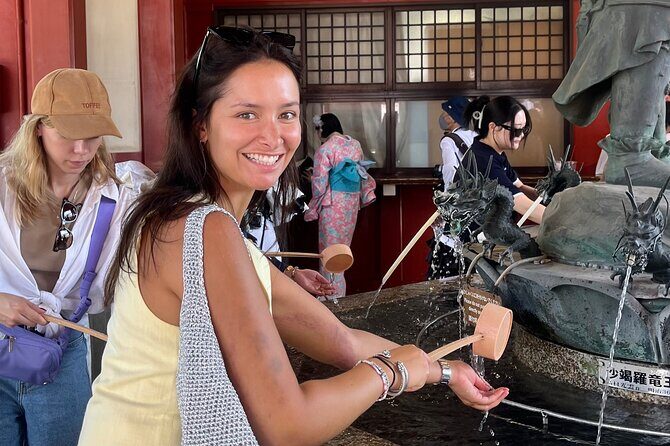
Tokyo has a way of offering variety in short distances, and this tour leans into it.
Akihabara
Akihabara is described as Tokyo’s hub for cutting-edge pop culture—electronics, anime, manga, and gaming. You’ll get roughly 15 minutes to see the scene. This is enough time to find the kind of stores you like and understand the area’s energy without getting lost for hours.
Takeshita Street (Harajuku area)
Next is Takeshita Street, associated with “kawaii culture.” Again, time is about 15 minutes and it’s a good stop for quick browsing—fashion, accessories, sweets, and character goods.
The reality check here: this area can be visually overwhelming. A private guide helps because you can ask where to go based on what you actually want—street fashion vs. specific shops vs. snack stops.
Yoyogi Park as a reset
To balance all that visual intensity, you get Yoyogi Park for about 15 minutes. It’s a big urban park used for jogging, picnics, and events, with lots of open space and seasonal trees.
Even a short park break helps. It lets you recharge your feet and your brain before the next neighborhood shift.
Nezu Shrine and Tokyo’s smaller garden stops: quiet alternatives in a city of noise

This tour offers multiple calmer, greener stops beyond the usual “big ticket” attractions.
Nezu Shrine
Nezu Shrine is described as famous for azalea flowers and as a historic Shinto shrine. You’ll have 15 minutes and the tour notes admission is free. If you’re visiting when the azaleas are in bloom, this could be one of the most peaceful stops of the day.
Even outside peak season, shrines like this give you a break from shopping streets. You’ll notice a difference in sound levels the moment you slow down.
Kiyosumi Teien
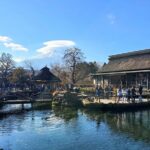
Kiyosumi Garden is a Japanese stroll garden built around a pond and designed during the Edo period. Admission is not included, and time is about 15 minutes.
For me, these stroll-garden stops are most useful when you want a breather—not a checklist. In a short visit, you’re mostly getting the overall layout and a few scenic viewpoints.
Other garden options when you have more time
The tour also lists additional garden possibilities with admission not included:
- Hamarikyu Gardens: Edo-period garden by Tokyo Bay, with ponds and seasonal flowers
- Koishikawa Korakuen Garden: early Edo Japanese garden with ponds, bridges, and hills
- Rikugien Garden: pond-centered feudal-era stroll garden; especially beautiful in spring cherry blossoms and autumn foliage
If you pick the longer tour window, these garden stops can become the best parts of your day because you can slow down enough to actually experience the walk.
Tokyo Tower, Zojo-ji, Ueno Park: viewpoints, faith, and the city’s layers
This tour includes a mix of skyline and historic atmosphere.
Tokyo Tower
Tokyo Tower is presented as an iconic observation tower with panoramic city views. At night, it’s described as beautifully illuminated, and the stop also notes historical significance.
This is the kind of stop where timing matters. If you choose a tour that reaches evening, you’re more likely to get the night glow. If you’re daytime-only, you’ll still get the views, but the “lit skyline” effect may be limited.
Zojo-ji
Zojo-ji is a historic Edo-period temple and is called the family temple of the Tokugawa clan, with several Tokugawa shoguns enshrined. You’ll have about 15 minutes, admission free.
This is a good contrast to the market and shopping areas. It brings back the sense that Tokyo’s present grew out of long-running institutions and power structures.
Ueno Park
Uenokoen (Ueno Park) is described as a cultural and nature hub with museums, art galleries, and even a zoo. It’s especially known for cherry blossoms in spring, with crowds, and you’ll have about 15 minutes.
If your goal is a “park walk with options,” Ueno Park fits. Your guide can steer you toward the type of scene you like most—art-focused, nature-focused, or just strolling.
Gotokuji and Kanda Shrine: oddball myths and old protection
If you want a slightly different side of Tokyo—less mainstream, more story-driven—these last shrine/temple stops deliver.
Gotokuji Temple and the maneki-neko
Gotokuji Temple is described as the birthplace of the maneki-neko (beckoning cat). You’ll have about 15 minutes, free admission. This one is fun because it connects a famous Tokyo icon to a specific place and setting.
Kanda Shrine
Kanda Myojin is described as a historic Shinto shrine with over 1,300 years of history and one of Tokyo’s traditional guardian shrines. It’s noted for protecting central areas like Kanda and Nihonbashi. The tour lists about 15 minutes, with admission not included.
These two stops work well when you want a quieter, more reflective end to the day.
Price and time: getting real value from a $26.36 private tour
At $26.36 per person, the value here is mostly about what you’re buying: not a single attraction, but a guided routing brain and time-saving movement across Tokyo.
Here’s what that price typically covers based on the tour details:
- Walking and public transportation support (public transport fees are not included)
- Hotel pickup is offered
- Your group is private, with only your group participating
- The itinerary can be customized
What it does not cover:
- Meals and personal expenses
- Admission at stops where fees are noted as not included (several gardens)
- Private transportation (if you decide you need it)
Why this can be a smart deal: if you’re spending a day hopping neighborhoods anyway, a guide can help you avoid waste—wrong turns, poorly matched attractions for your interests, and transfers that take longer than they should.
Time planning matters too. The tour is offered in a flexible 1 to 8 hour range. With many potential stops, a short version works best for you if you want a highlight circuit. If you want gardens to feel meaningful instead of rushed, pick the longer end of the range.
Also, remember what the stop notes imply: Imperial Palace is public areas only, and Kabuki-za is gallery-only. So your day is about seeing the area and understanding it, not getting guaranteed deep access to every interior space.
Who should book this private route through Tokyo?
This tour is a great match if:
- You’re first-time in Tokyo and want a guided mix of major landmarks plus neighborhoods
- You want to avoid group-tour pacing and get your own rhythm
- You like variety: markets, shrines, shopping streets, and green spaces
- You’re traveling with family or a group that benefits from a tailored day
It’s also a solid option if you don’t want to build an itinerary from scratch. The “avoid decision fatigue” angle is real—your guide handles the order and timing, and you steer the priorities.
One last practical point: the tour says it’s near public transportation and that service animals are allowed, and most travelers can participate. That’s helpful if you’re planning around mobility comfort and transit ease.
Should you book this private Tokyo walking tour?
Yes, if you want a guided day that balances Tokyo’s famous icons with places that help you feel the city’s texture. The biggest reason I’d book it is the customization plus private attention—it’s not just sightseeing, it’s a plan that fits your interests.
I’d be a cautious “maybe” if your top priority is full interior access at major venues, or if you strongly prefer long stays at one museum or one garden. This tour is structured for movement and short, meaningful stops, and several attractions have entry limits or extra admission fees at specific gardens.
If you want a smart first Tokyo day—well paced, flexible, and easy to navigate—this is the kind of tour that makes your trip feel less like work and more like discovery.
FAQ
What is the duration of the Tokyo private walking tour?
The experience runs for approximately 1 to 8 hours, depending on the option you choose.
Is the tour private?
Yes. It’s a private tour/activity, and only your group participates.
Do you get help with transportation from your hotel?
Hotel pickup is offered, and the tour includes walking and public transportation.
Are the major attractions included with entry?
Some stops have limits or partial access. The Imperial Palace visit does not include access to the inside of the Imperial Palace, and the Kabukiza Theater stop does not include access to the inside of the main theater itself.
Is admission included at all stops?
Not always. Several gardens are noted as admission not included, so you may pay additional fees depending on which garden stops your guide includes.
How long do you usually spend at each stop?
The provided schedule shows short visits, commonly around 15 minutes, with a few longer stops such as Senso-ji.
Are meals included in the price?
No. Meals and personal expenses are not included.
Are public transportation fares included?
Public transport fees are not included, even though the tour includes walking and public transportation.
Is cancellation free?
Yes. You can cancel for a full refund up to 24 hours in advance of the experience start time.
Can service animals join the tour?
Yes. Service animals are allowed.