REVIEW · OSAKA
Eat Osaka: Street Food Cooking in an Authentic Kitchen!
Book on Viator →Operated by Eat Osaka · Bookable on Viator
Osaka tastes better when you make it. In Eat Osaka’s small-group cooking class inside an old townhouse kitchen, you’ll learn how to build okonomiyaki and handmade udon with a local bilingual chef, step by step.
I also like that the class keeps things practical: all ingredients and instruction are included, plus you’ll sit down afterward with drinks like beer, sake, or green tea. One thing to consider is the format: it’s a focused 2.5-hour cooking block, not a long walking tour—so if you want hours of sightseeing, add that separately.
In This Review
- Key Things I’d Watch For
- Why This Osaka Street Food Class Feels Local
- Getting There in Higashinari: Simple, Walkable, and Transit-Friendly
- Inside the Old House Kitchen: The Room Makes the Food Make Sense
- What You Actually Cook: Osaka Staples, Built From Scratch
- Okonomiyaki, Made From Scratch
- Hand-Made Udon Noodles
- Yakitori Skewers with Signature Sauce
- Tempura and Crispy Vegetable Technique
- Pickled Cucumber for Balance
- Sweet Mochi Dessert
- How the Teaching Works: Small Group, Lots of Attention
- The Best Part: Eating What You Made (With Drinks)
- Price and Value: Is $79.28 Worth It?
- Who Should Book This Class (and Who Might Skip)
- FAQ
- FAQ
- How long is the cooking class?
- What’s included in the class price?
- What dishes will I learn to make?
- How big is the group?
- Where do I meet the group?
- What’s the cancellation policy?
- Final Call: Should You Book Eat Osaka?
Key Things I’d Watch For
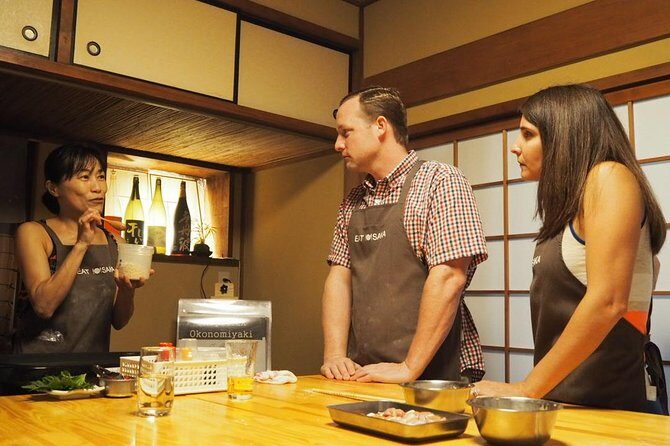
- Old-house kitchen setting: You cook in a purpose-built studio inside an old Japanese house, which makes the whole experience feel grounded in place.
- Small group (max 8): With a tight group size, you get more attention and fewer bottlenecks at the stations.
- Make multiple Osaka staples: You’re not doing one dish—you’ll work through okonomiyaki, udon, and more classics.
- Professional tools, not kitchen-school toys: You use real utensils and follow guided technique.
- Food + drinks at the table: You finish by eating what you made, with beer, sake, or green tea included.
- Guides with strong teaching energy: People rave about hosts like Miki, Natalie, and Nathalie for clear explanations and a friendly vibe.
Why This Osaka Street Food Class Feels Local
Osaka street food has a reputation for being fun, fast, and full of comfort—fried, sizzling, sauce-heavy, and made for eating on the move. The trick is that you can’t fully understand that style from a menu alone. This class brings you into the kitchen workflow where those flavors make sense.
I like that the experience is rooted in real street-food logic. You learn how Osaka dishes are assembled—how batter is handled, how noodles come together, how skewers get their glaze—so you’re not just copying a recipe. You’re building a mental map of why each component matters.
You also get a human ingredient: the way your chef teaches. In past sessions, hosts such as Miki, Niki, Natalie, and Nathalie have been praised for welcoming questions and keeping the room relaxed. That matters because cooking classes can feel stiff if the tone is rigid. Here, it’s more like learning a craft with people who genuinely want you to succeed.
You can also read our reviews of more food & drink experiences in Osaka


Getting There in Higashinari: Simple, Walkable, and Transit-Friendly
The meeting point is Eat Osaka, Higashinari (Higashinari, 1丁目-2-10, 東中本, 東成区, 大阪市, 大阪府 537-0021). The location is listed as near public transportation, and in practice that’s a big deal. When you finish cooking, you’ll likely want an easy way back to your next meal or neighborhood wander.
The class runs about 2 hours 30 minutes, so you don’t need to build half a day around it. Still, plan to arrive a little early. Kitchens run on timing—dumplings and batter don’t wait politely.
One other practical note: the activity ends back at the meeting point. That saves you the stress of figuring out where to go next while your stomach is warm and full.
Inside the Old House Kitchen: The Room Makes the Food Make Sense
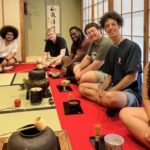
This is one of the reasons I think this class works so well. You’re not crammed into a sterile classroom. You cook in an old Japanese house setting, with a purpose-built cooking studio vibe—traditional feel, practical workflow.
That old-house atmosphere helps your brain understand the food style. Osaka street food is casual and social. The setting mirrors that: you can feel the shared “let’s make this together” tone instead of standing behind glass.
And because you’re working with proper setup, you get to practice the technique rather than just follow steps on a board. You use professional-level tools and ingredients, which makes the difference between an impressive result and a frustrating one.
If you’re used to kitchen gadgets at home, you’ll likely notice that the class environment is designed for real hands-on cooking—mixing, forming, skewering, frying, and portioning.
What You Actually Cook: Osaka Staples, Built From Scratch
Here’s the core payoff: you don’t just taste Osaka street food—you create it.
Okonomiyaki, Made From Scratch
Okonomiyaki is Osaka’s poster child: a savory pancake built with shredded ingredients, sauce, and heat. This class has you making your own version from scratch, guided by a chef in a studio kitchen.
What’s valuable here isn’t just the final bite. It’s learning how the batter and toppings behave on heat—how thickness affects texture, how cooking time changes the surface, and how assembly turns into flavor. Once you understand that, ordering okonomiyaki later feels less mysterious.
A few more Osaka tours and experiences worth a look



Hand-Made Udon Noodles
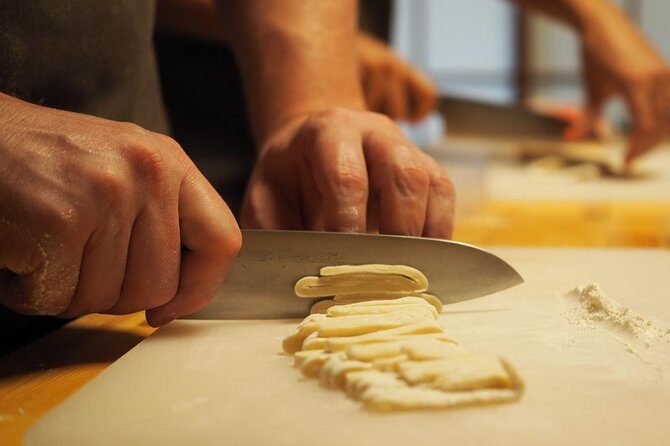
Udon is the comfort side of Osaka cuisine: chewy, thick, and satisfying. You’ll work on hand-made udon noodles, which is a learning experience by itself.
Even if you’ve eaten udon a hundred times, you might not realize how much of its identity comes from the dough and handling. In class, you get the tactile lesson—mixing, shaping, and cooking enough so you can connect mouthfeel to method.
Yakitori Skewers with Signature Sauce
Yakitori is street-food energy in stick form. You’ll prepare yakitori skewers with a signature sauce—a chance to learn how sweet-salty glaze and heat work together.
This part is great if you like flavor that clings. You’ll probably come away thinking differently about sauce: it’s not just added at the end. It’s part of the cooking rhythm.
Tempura and Crispy Vegetable Technique
Osaka has tempura culture, and you’ll learn to make Osaka-style tempura using professional tools and guidance. The big lesson with tempura is texture control—how batter interacts with hot oil and how you avoid the common sad result: oil-soaked sogginess.
You’ll also likely get a clearer sense of how vegetables are prepped to fry well. That’s the kind of practical insight that helps you recreate at home without guessing blindly.
Pickled Cucumber for Balance
Not every cooking class gives you palate balance. Here, you’ll also make pickled cucumber, which gives you something crisp and tangy alongside richer fried and saucy dishes.
That balance matters. Street food is often heavy—so the pickles help reset taste buds and make the meal feel more complete.
Sweet Mochi Dessert
To finish, you’ll prepare a sweet mochi dessert. It’s a compact ending—something you can enjoy while the flavors you cooked are still fresh in your mind.
The takeaway is simple: Japanese street food isn’t only about salt and crunch. There’s always a sweet landing that makes the whole experience feel rounded.
How the Teaching Works: Small Group, Lots of Attention
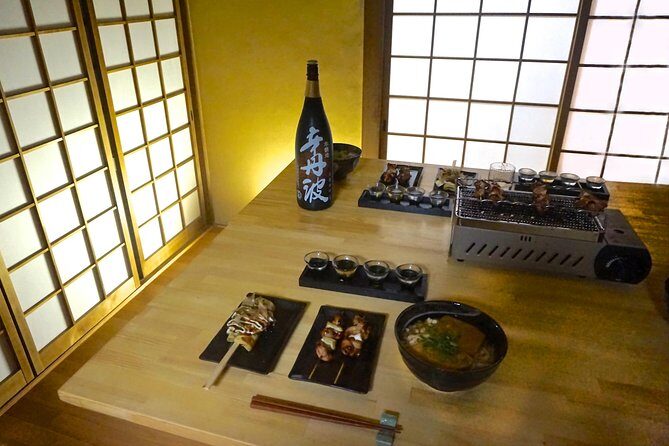
This is where the reviews’ loudest praise makes practical sense. The class runs with a maximum of 8 travelers, and that creates breathing room. Stations aren’t overcrowded. You’re not waiting forever for help. You can ask questions without feeling like you’re slowing everyone down.
The teaching style is also repeatedly described as friendly and clear. Names that show up in feedback include Miki, Niki, Natalie, and Nathalie, and the common thread is encouragement and the ability to explain both the steps and the reasoning.
That’s the best kind of instruction for a cooking class. If you only get instructions, you can follow them once. If you understand why the step exists, you can adjust next time.
One extra plus: there’s evidence that instructors can accommodate at least some dietary needs. For example, vegetarian accommodation has been mentioned with success. If that applies to you, it’s smart to ask when booking so you can get the right setup for the menu.
The Best Part: Eating What You Made (With Drinks)
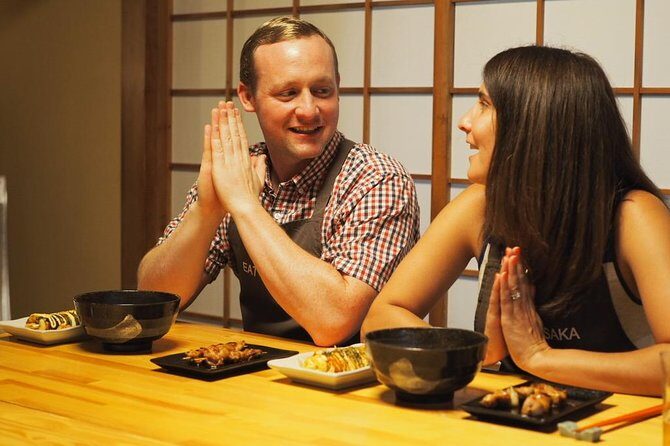
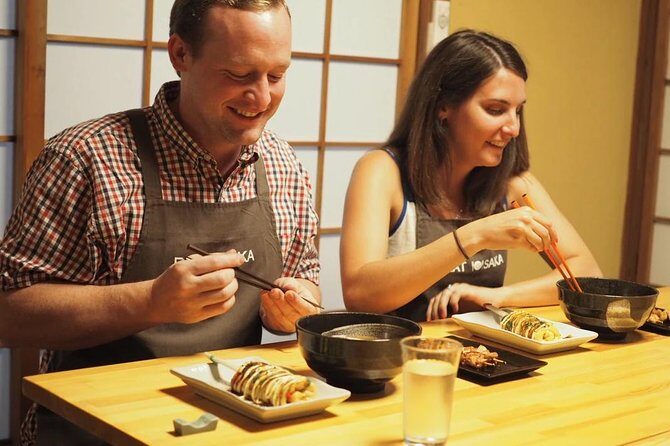
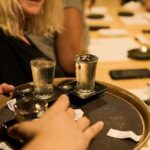
After cooking, you don’t just get a box to go. You sit down and enjoy your creations with included drinks such as beer, sake, or green tea.
This is more than a perk. It turns your labor into a real meal you can taste and evaluate right away. You can compare dishes: crunchy vs chewy, sauce intensity vs tangy balance, fried texture vs noodle elasticity.
Also, sake and beer being included makes the social side easier. Food feels more celebratory when you’re not rationing your budget for drinks after a cooking effort.
If you’d rather not drink alcohol, green tea is included, so you’re not forced into one option.
Price and Value: Is $79.28 Worth It?
At $79.28 per person for roughly 2.5 hours, this class is priced like an experience that includes real instruction plus real ingredients—not a casual tasting.
Here’s what makes it feel like value:
- Ingredients are included, so you’re not paying workshop prices and then buying food elsewhere.
- You make multiple dishes, not one.
- You use professional tools, which helps you get results you can actually be proud of.
- You get to eat everything you cook, plus welcome drinks and additional drinks at the table.
Could you eat your way through Osaka for less? Sure. But you won’t learn how udon dough feels under your hands, how okonomiyaki assembly changes texture, or how yakitori glaze behaves on heat. This class pays for skills and for the chance to understand the food, not only sample it.
If you’re a foodie who likes doing instead of just consuming, this price is pretty fair. If you’re on a super tight schedule and only want photos, it may feel like a lot for a short window.
Who Should Book This Class (and Who Might Skip)
You should book if:
- You want a hands-on Osaka experience that goes beyond street-food shopping.
- You like learning technique, not just tasting.
- You enjoy social, small-group activities where you can ask questions.
- You want a meal that includes real drinks as part of the experience.
You might skip if:
- Your goal is mostly sightseeing and walking, not cooking.
- You don’t like structured activities and prefer unplanned discovery time.
- You want a long day rather than a focused 2.5-hour session.
The best-fit traveler is someone who thinks, I want to understand Osaka food culture from the inside.
FAQ
FAQ
How long is the cooking class?
It’s about 2 hours 30 minutes.
What’s included in the class price?
The class includes ingredients and instruction, welcome drinks, and drinks like beer, sake, or green tea when you sit down to enjoy what you made.
What dishes will I learn to make?
You’ll work on Osaka street-food favorites including okonomiyaki, hand-made udon noodles, yakitori skewers, Osaka-style tempura, pickled cucumber, and a sweet mochi dessert.
How big is the group?
The class has a maximum of 8 travelers, which keeps the experience more hands-on.
Where do I meet the group?
You start at Eat Osaka, Higashinari, 1丁目-2-10 東中本 東成区 大阪市 大阪府 537-0021, Japan, and it ends back at the meeting point.
What’s the cancellation policy?
There’s free cancellation. You can cancel up to 24 hours in advance for a full refund.
Final Call: Should You Book Eat Osaka?
If you want an Osaka experience you’ll remember for how food works, not just how it tastes, I think this is a great choice. The combination of small-group attention, from-scratch cooking, and an old-house kitchen setting makes it feel genuinely local.
Book it especially if you’re the type who loves learning technique—okonomiyaki assembly, udon noodle making, tempura texture, and yakitori sauce. If that sounds like your style, you’ll likely come away with better instincts for Osaka street food for the rest of your trip.