REVIEW · TOKYO
Flavors of Asakusa Food & Traditions with a Friendly Guide
Book on Viator →Operated by The Washoku Club Culture and Food Tours · Bookable on Viator
First you’re hit with old Tokyo energy. This 4-hour walking food tour ties together Asakusa street snacks with major sights like Senso-ji and a Tokyo skyline view. You’ll follow a local rhythm through souvenir lanes, temples, and theater-era streets, with just enough time at each stop to feel the place instead of speed-running it.
I especially like the mix of sweet and savory tastings—think treats like dango and daifuku, plus classic snack-style eats along the Nakamise area. And the tour’s guided by Chisato, a friendly presence who helps you understand what you’re seeing (and what you’re tasting) while keeping things moving.
The main thing to consider is the pace: it’s a 4-hour on-your-feet tour with multiple short stops. If you’re hoping for long, sit-down time at temples or big shopping sprees, you’ll want to pair this with extra free time afterward.
In This Review
- Quick hits you’ll care about
- Start Smart at Asakusa Culture Tourist Information Center
- Nakamise and Kaminarimondori: souvenir streets with snack-level payoff
- Senso-ji Temple: the colorful center that teaches you how to look
- Asakusa Shrine and the idea of multiple places to worship
- Hoppy Street: a short stop that adds texture
- Rokku Yumemachi Theatre: old entertainment district history without the lecture
- Food stops: 4–5 tastings that actually add up to a meal
- Tokyo Skytree viewpoint: seeing how huge Tokyo really is
- Price and what you’re really paying for
- Who this tour is best for
- Should you book Flavors of Asakusa with a Friendly Guide?
- FAQ
- What food and drinks are included?
- How long is the tour?
- Where does the tour start and end?
- How big is the group?
- Is alcohol included?
- Is this tour ticket mobile?
- Can I cancel for a full refund?
Quick hits you’ll care about
- Small group size (max 10) keeps it lively but not chaotic
- 4–5 food stops with snacks and desserts means you won’t need to plan meals
- Non-stop context as you move from Kaminarimon to Senso-ji and beyond
- Tokyo skyline time (including an observation-deck-style view) shows you how huge Tokyo is
- Cool start point at the Asakusa Culture Tourist Information Center, with free Wi‑Fi available there
Start Smart at Asakusa Culture Tourist Information Center
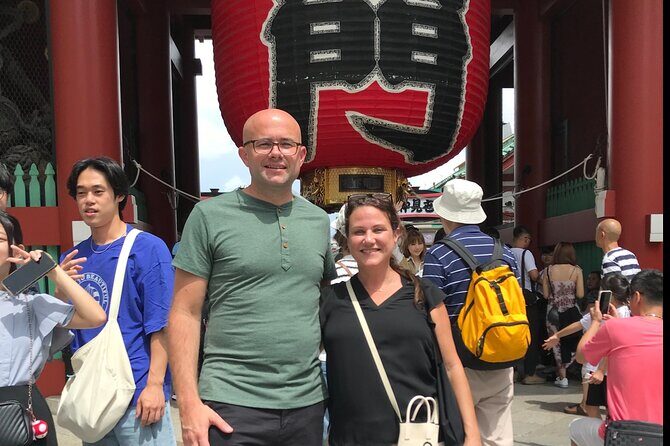
Your tour kicks off at the Asakusa Culture Tourist Information Center near Kaminarimon. This is a smart first move because it’s a real setup point for orientation. You’re in the right neighborhood, you can grab quick help, and the center offers guidance in Japanese, English, Chinese, and Korean, plus free Wi‑Fi.
For practical travelers, that matters. Asakusa is busy, full of little side lanes, and easy to “wander wrong” if you’re just winging it. Starting here helps you get your bearings fast before you step into the shopping-and-snack flow.
Also, since the tour is designed as a walking experience, you’ll feel less rushed right away. Instead of trying to decode signage and routes while hungry, you’re mentally ready for what comes next.
You can also read our reviews of more food & drink experiences in Tokyo

Nakamise and Kaminarimondori: souvenir streets with snack-level payoff
Next you walk through Kaminarimondori and then the Nakamise Shopping Street stretch. These are among the oldest and longest souvenir streets in Japan, and they’re famous for one simple reason: the layout is made for browsing and sampling.
I like how this part is short but purposeful. You don’t get dumped into a massive shopping zone and left to figure it out. The guide helps you hit the best “try something” spots without losing your whole afternoon to indecision.
What you’ll likely notice (and enjoy) is how snack culture works here. You’re surrounded by options—savory bites, grilled items, little cakes, and Instagram-friendly sweets like dango and daifuku. Even if you’re not a “food-photos-first” person, it’s still fun to taste a few things that reflect the seasonal or traditional style of the area.
One practical note: these streets can be crowded, so expect shoulder-to-shoulder moments near the temple gates. The upside is that the energy is part of the experience. The tour helps you move through it in an orderly way.
Senso-ji Temple: the colorful center that teaches you how to look
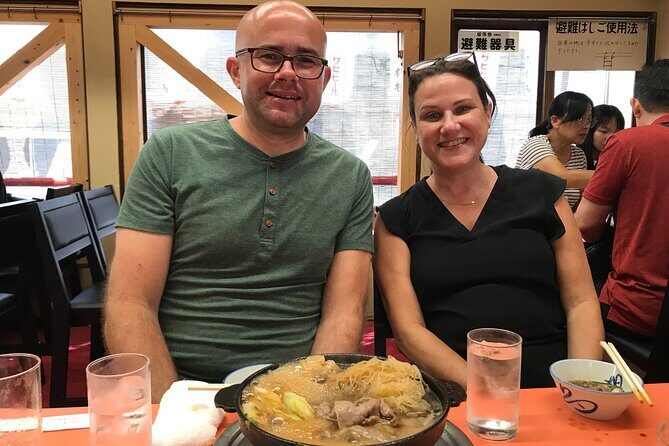
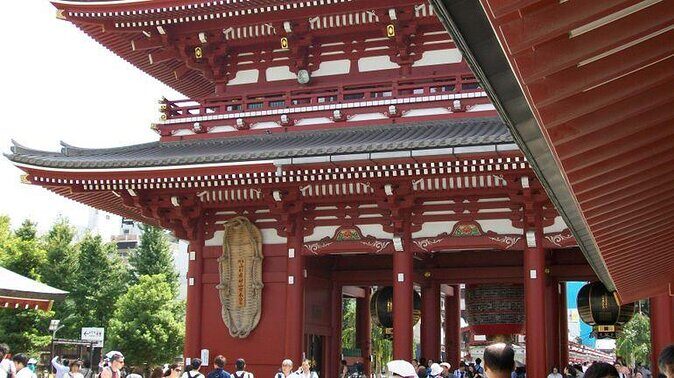
Then comes Senso-ji Temple—the big name, and not just because it’s famous. This is one of Tokyo’s most visited temple areas, and it’s colorful in a way postcards can’t fully explain.
What the guide adds here is not just “what this is,” but how to pay attention. You’ll see the temple through the lens of routine and tradition: how people move through the space, what visitors look for first, and how the whole area is designed around a lived-in flow.
This stop is also where the contrast hits. One moment you’re in snack-stall mode; the next you’re in a sacred, high-importance environment. That shift can feel jarring if you’re alone. With a guide, it feels natural because you know what to notice.
Time is limited at each major point—around a half hour here—so don’t expect a long, meditative visit. Instead, think of it as a focused orientation stop. It sets you up so that if you want to return later for more quiet time, you’ll know exactly where to go and what to look for.
Asakusa Shrine and the idea of multiple places to worship
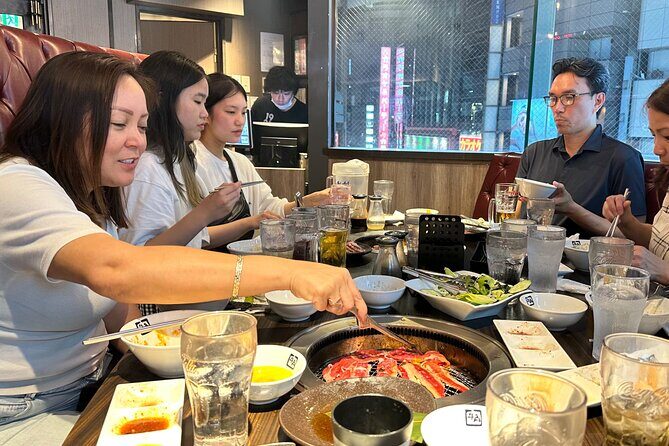
After Senso-ji, you move to Asakusa Shrine. This matters because many visitors treat Asakusa as only “the temple.” But the area has multiple religious spaces, and that changes the feel of your visit.
Here’s what I like about including a shrine in the mix: it breaks the one-stop checklist habit. You’re not just ticking boxes. You’re learning how the neighborhood handles devotion and public life side by side.
Also, you’re guided to see more than just the headline attraction. That’s a major value point in guided walking tours: you get help spotting what you’d otherwise miss, especially in areas where signage and layouts are layered and easy to overlook.
Hoppy Street: a short stop that adds texture
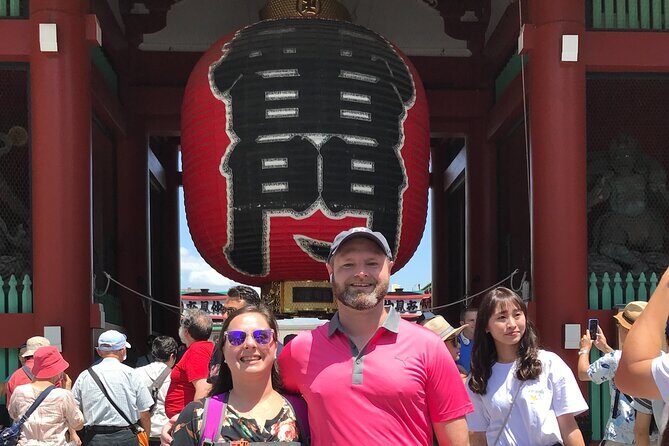
Next you walk through Hoppy Street. Even if you aren’t chasing nightlife, this kind of lane gives Asakusa its texture. It’s one of those areas where the energy feels more local than tourist-brochure.
This is also where the tour’s “food-forward but not meal-heavy” design shines. You’re not stuck waiting for a long sit-down course. You keep moving, see different sides of the neighborhood, and maintain momentum.
The tour includes snacks and desserts, plus two soft drinks and water, which helps you avoid the classic mistake of being too full too early—or thirsty at the wrong time.
If you’re curious about alcohol, note that alcoholic drinks are not included (they’re available to purchase). So you can keep the tour light and still make your own choice if you want to add a beer or cocktail on your own schedule.
A few more Tokyo tours and experiences worth a look


Rokku Yumemachi Theatre: old entertainment district history without the lecture
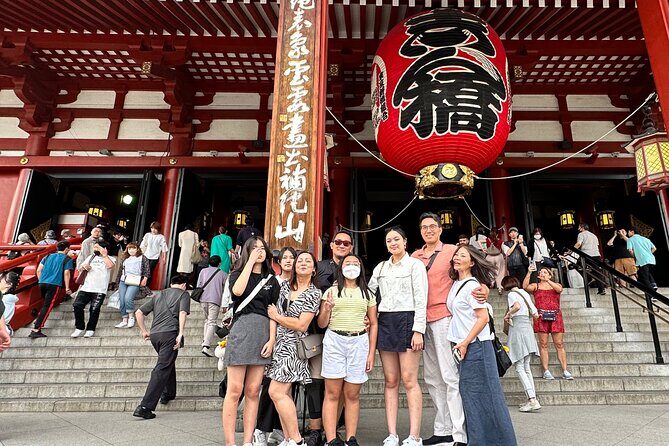
Then you visit Asakusa Rokku Yumemachi Theatre—tied to the old “Rokku Broadway” theater district concept. This stop adds something different from the temple-and-snack rhythm.
It gives you a sense that Asakusa wasn’t only about devotion and commerce. It also had a strong entertainment culture, with amusement facilities and theaters. The area’s history runs back to 1884 in this district story, which helps you connect the dots between old Tokyo streets and the Tokyo you see today.
This portion works best if you enjoy short cultural context stops—places where you get just enough background to make the area feel more intentional. You’re not trapped in a long museum-style explanation. Instead, you’re learning why a street corner has meaning.
And because it’s a walking tour, you keep the atmosphere in motion. That’s often the best way to enjoy Asakusa: you absorb it in layers, not in one big indoor chunk.
Food stops: 4–5 tastings that actually add up to a meal
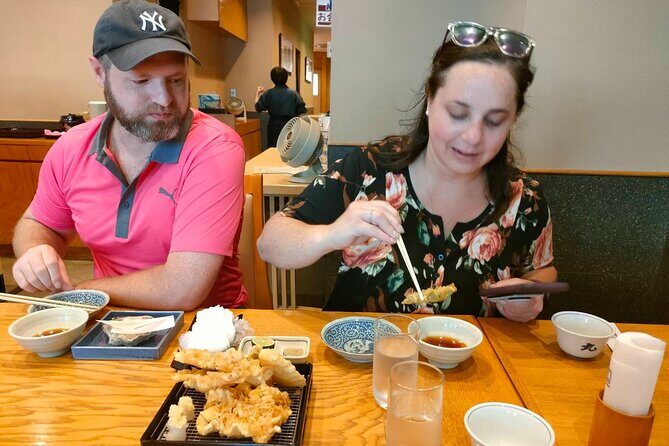
One of the core reasons to book this tour is the structure: 4 to 5 food stops only in Asakusa, with snacks and desserts included. That’s a sweet spot. You get variety without turning the entire experience into a stomach marathon.
Here’s how to think about it as value:
- You’re paying for a guide, coordination, and curated sampling.
- You’re also getting non-trivial extras: snacks and desserts, plus two soft drinks and water.
- The tour keeps you from wasting time guessing what’s worth trying.
You’ll likely encounter a range of Japanese street-food styles, including traditional savory dishes and the sweet treats that Asakusa is known for. Even if you’re a picky eater, the tour format usually makes it easier to choose what you’ll enjoy, because you’re guided stop-to-stop rather than browsing endlessly on your own.
A small tip: go in hungry, but not starving. If you arrive with an empty stomach, you might feel overwhelmed by the volume of options at the first snack stop. If you arrive already full, you’ll miss the fun part—trying a few different things instead of eating one big item.
Tokyo Skytree viewpoint: seeing how huge Tokyo really is
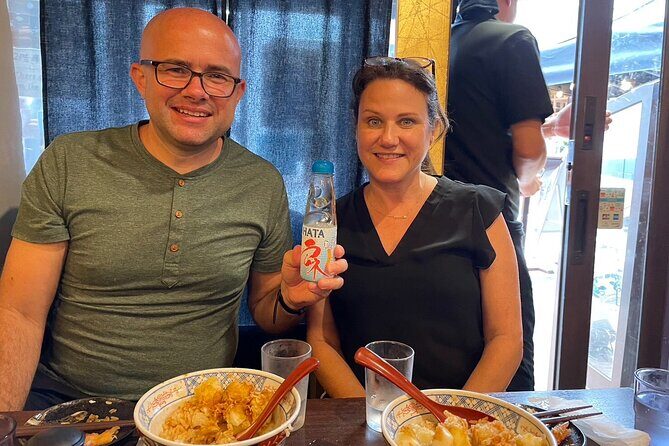
The tour also includes a major viewpoint moment through a Tokyo Skytree-style observation deck experience. The whole point here isn’t just a photo—it’s scale.
When you look out over the city, Tokyo stops feeling like a set of neighborhoods you visited and starts feeling like one massive system. You can finally understand why certain routes, crowds, and transit lines seem to behave the way they do.
This is where the tour earns its “wow” factor. Asakusa can feel like a time capsule—older streets, traditional shop fronts, and temple energy. Then the city view lifts you into a new frame: the same Tokyo, but viewed from far above.
It’s also a good break from walking. Even if the time is brief, a viewpoint pause helps you reset before continuing your day.
Price and what you’re really paying for
At $167.40 per person for about 4 hours, this isn’t a budget snack crawl. But it also isn’t priced like a private tour or a full-day guided itinerary.
What you’re getting for the money is practical:
- A guided walking route through key Asakusa zones
- 4–5 included food stops with snacks and desserts
- Drinks: two soft drinks and water
- A group limited to 10 travelers, which helps with pacing and attention from the guide
- Mobile ticket convenience, which reduces stress
When you compare this to building your own Asakusa plan, the value comes from time saved and decision fatigue reduced. You’re not just buying food—you’re buying a route and a translator for the sights.
If you have limited time in Tokyo and you want Asakusa to feel meaningful (not just crowded and confusing), the price starts to make sense fast.
Who this tour is best for
This is a strong fit if you want:
- First-time Asakusa time without planning every stop
- A food-focused guide-led approach with a few key tastings, not a full dinner
- A balance of temples, streets, and a viewpoint
- A small-group vibe where your guide can actually help
It’s also a nice choice if you’re the type who enjoys understanding what you’re seeing while you walk. You’ll get context for temple areas and street culture, and you’ll know what to look for instead of just collecting photos.
If you’re traveling with very specific dietary needs, this tour might still work, but you’ll want to check the included snack choices in advance with the provider (the tour data confirms snacks and desserts, but doesn’t list every item).
Should you book Flavors of Asakusa with a Friendly Guide?
Yes—if you want an Asakusa experience that balances food, sights, and explanations in a manageable timeframe. The best reason to book is the combo: you get classic street snacks plus major temple/shrine energy, and you finish with a big-city scale view through the Skytree observation experience.
I’d skip it only if you dislike walking, or if you’re expecting long time at each site. This is built for short, well-timed stops and a guided tasting route. Treat it like a high-value tasting walk—then use your free time to linger in the spots you loved most.
If that sounds like your style, this one is a very reasonable way to get the most out of Asakusa without turning your vacation into a spreadsheet.
FAQ
What food and drinks are included?
You’ll get snacks and desserts, and 2 soft drinks and water. The tour also includes 4 to 5 food stops in Asakusa.
How long is the tour?
It’s approximately 4 hours of walking with a local guide.
Where does the tour start and end?
The tour starts at the Asakusa Culture Tourist Information Center (2-chōme-18-9 Kaminarimon, Taito City, Tokyo 111-0034) and ends back at the meeting point.
How big is the group?
The tour has a maximum size of 10 travelers.
Is alcohol included?
No. Alcoholic drinks are not included, though they may be available to purchase.
Is this tour ticket mobile?
Yes, the experience uses a mobile ticket.
Can I cancel for a full refund?
Yes. You can cancel for free up to 24 hours in advance for a full refund.
If you tell me your travel dates (and whether you’re more temple person or food person), I can also suggest what to add before or after the tour for a smooth day in Asakusa.