REVIEW · HIROSHIMA
Hiroshima: Shukkei-en Garden with local guide 90min
Book on GetYourGuide →Operated by DeepExperience, Inc. · Bookable on GetYourGuide
A feudal garden in the middle of the city. That is the quiet magic of Shukkei-en, a 300-year-old daimyo garden with a big central pond and “borrowed scenery” ideas that make the grounds feel bigger than they are. I especially like the way the curved stone bridge and waterfront structures pull your eye around the water, and how a guide helps you spot the design choices instead of just passing by pretty spots. The only real drawback: it is a short, 90-minute visit, so if you want hours of wandering or time for snacks, you’ll need to plan that separately.
This is a small, private walking experience with an English or Japanese live guide, meeting in front of Shukkei-en with the DeepExperience yellow sign. You’ll keep it moving but not rushed, and you’ll get a clearer sense of why this place was built the way it was, right in central Hiroshima.
In This Review
- Key Things You’ll Notice on This Shukkei-en Garden Tour
- Why Shukkei-en Feels Like a Timeout in Central Hiroshima
- Before You Go: Meeting Point and What to Expect From the Pace
- A Simple 90-Minute Itinerary That Doesn’t Waste Your Time
- Stop 1: Starting at 縮景園
- Stop 2: Shukkei-en Garden (the main loop + photo moments)
- Stop 3: Back at 縮景園
- The Daimyo-Style Pond: The Garden’s Real Center of Gravity
- Curved Stone Bridge Views and the Built-In Photo Stop
- Boat Landing and the Moon-Viewing Stage
- How to Pace Yourself So You Don’t Feel Rushed
- Price and Value: Is $58 a Good Deal for Shukkei-en?
- Who This Tour Suits Best
- Should You Book Shukkei-en with a Local Guide?
- FAQ
- How long is the Shukkei-en garden tour?
- Where do I meet the guide?
- What languages are available?
- What is included in the price?
- Is this a private tour?
- What is the cancellation policy and payment option?
Key Things You’ll Notice on This Shukkei-en Garden Tour
- Daimyo-garden planning: a pond placed at the heart of the composition
- Signature photo moments: the curved stone bridge, boat landing, and moon-viewing stage
- A guide that explains, not just walks: you’ll connect the sights to the design idea
- Calm, city-center escape: a peaceful walk right where you’d expect traffic
- 90 minutes that feel intentional: enough time for highlights without a long commitment
Why Shukkei-en Feels Like a Timeout in Central Hiroshima
Hiroshima’s Shukkei-en sits right in the city center, yet it plays a different game. Instead of rushing from one monument to the next, you slow down on garden paths and let your eyes follow the water.
Shukkei-en was built around 300 years ago as a feudal lord’s garden. The big concept is daimyo-garden style: these gardens were often large, centered on a pond, and designed to echo famous scenery from the region. At Shukkei-en, that translates into a layout where the pond is the anchor, and the buildings and bridges are placed so your viewpoint keeps changing as you walk.
And that is where a guide earns their fee. Without explanation, a garden can feel like “pretty plants and a nice pond.” With a guide, you start noticing how the structure shapes your route and your attention. It turns the walk into something you can actually read.
You can also read our reviews of more guided tours in Hiroshima


Before You Go: Meeting Point and What to Expect From the Pace
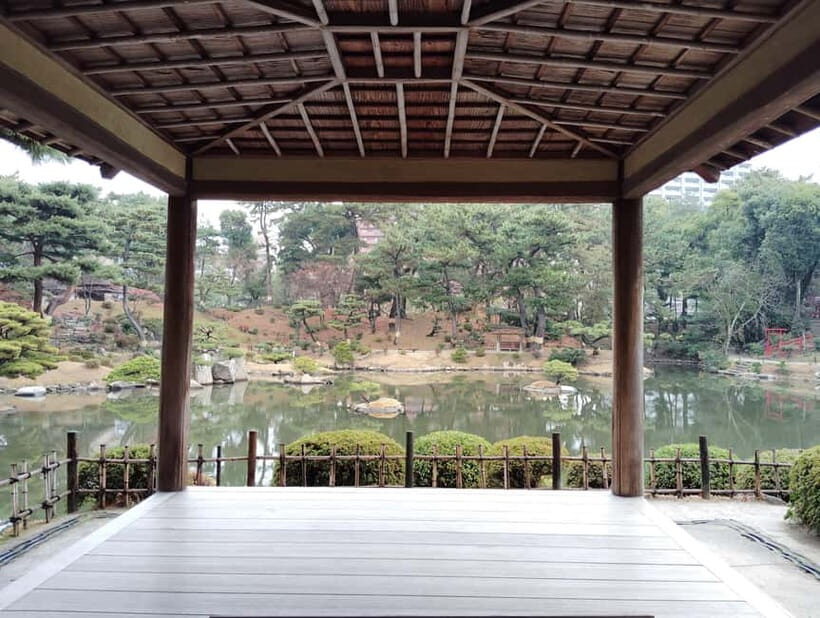
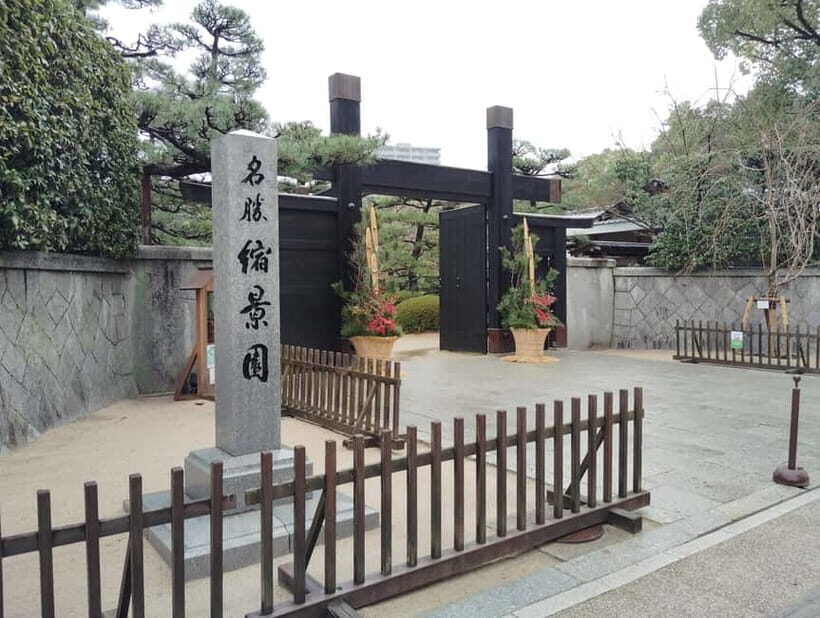
You meet in front of Shukkei-en at the entrance area. The guide holds a yellow sign with the DeepExperience logo, which makes it easy to spot your group without standing around with a confused face.
The tour runs about 90 minutes and is private, not a big cattle-car group. That matters because gardens are best enjoyed when you can pause. If you feel like taking a second look at the bridge curve or lining up a photo with the water, a private format helps you do it without feeling like you’re holding up a busload.
The experience is live-guided and available in English or Japanese. So if you want context for the design—why the pond matters, why certain viewpoints are framed—you can get it. If you just want quiet and photos, you’ll still be fine. The guide’s job is to point you toward the “why,” not force you into a lecture.
One practical note: food and drinks are not included. If you’re visiting around mealtimes, plan on grabbing something nearby before or after your garden time.
A Simple 90-Minute Itinerary That Doesn’t Waste Your Time
The flow is straightforward, and that is a plus. You start at the garden entrance, then your guide leads you through the main sights at a walking pace designed for highlights.
Stop 1: Starting at 縮景園
You begin right at the garden, so you don’t waste time with a long explanation of logistics. This is where you’ll usually get the quick orientation: what you’re about to see and how to look for the key features. It sets you up to enjoy the walk instead of spending the first 10 minutes just trying to figure out where to go.
Stop 2: Shukkei-en Garden (the main loop + photo moments)
The heart of the tour is a guided walk with time for sightseeing and a photo stop. You’ll spend about 1.5 hours here, which is enough time to enjoy the central pond views and the signature structures without turning it into a full-day commitment.
What makes this part special is the sequence of viewpoints. Gardens like this are built so your perspective changes as you move—especially around the water. The guide helps you move from one “framed view” to the next, so you’re not just wandering randomly.
A small drawback of the 90-minute format is that you may not have time to explore every corner at a slow, personal pace. If that’s your style, treat this tour as the “highlight map,” then return later on your own for deeper wandering.
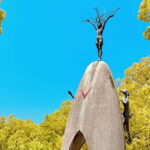


Stop 3: Back at 縮景園
You end where you started. That’s convenient. No complicated route-ending logistics—just a return to the entrance area after your guided highlights.
The Daimyo-Style Pond: The Garden’s Real Center of Gravity
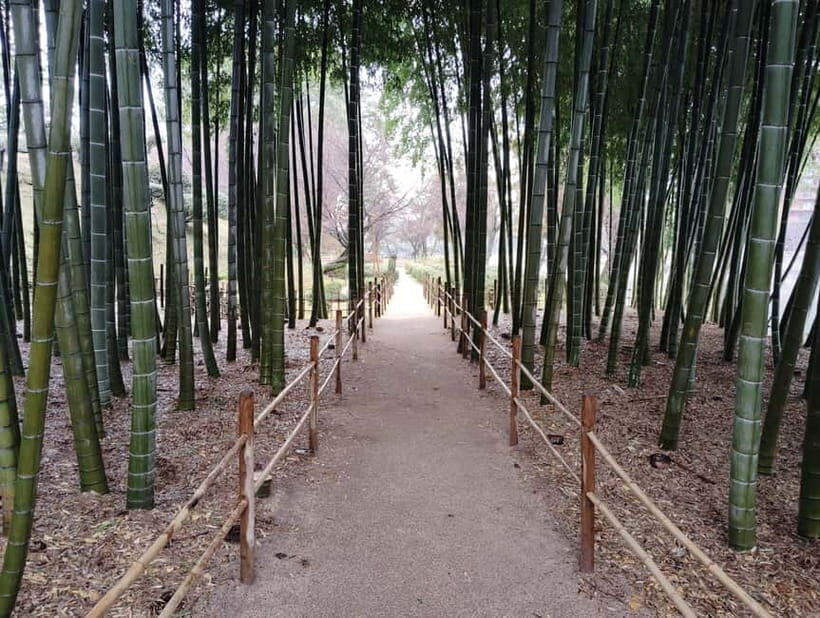
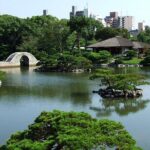
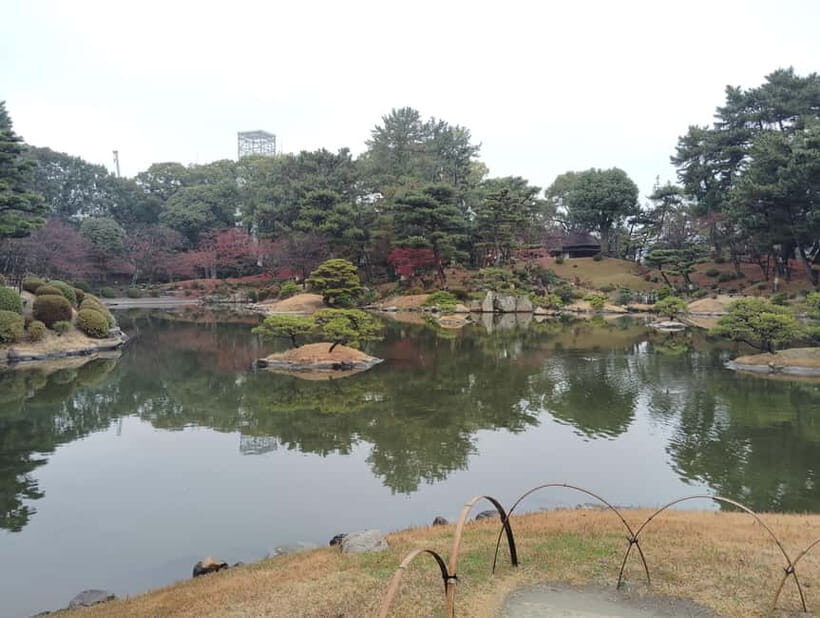
In many daimyo gardens, the pond is not just decoration. It is the composition engine. Shukkei-en follows that idea closely: the largest feature is a central pond, and the buildings around it are arranged so the water becomes a reflective backdrop and a visual centerpiece.
When you’re there, try this approach: don’t think of it as “a pond I walk past.” Think of it as the garden’s stage. Your route is the script. Each time the path bends, your viewpoint shifts, and the architecture and bridge line up differently against the water.
The guide’s explanation helps you understand how these gardens tried to recreate or echo famous scenes from elsewhere. Even if you have never heard of those references, you can still feel the effect: the pond and surrounding structures are placed to create variety from one location to the next.
That is one reason this tour is worth it even if you’re not a garden expert. You don’t need specialized knowledge to appreciate the design when someone points out what you’re actually looking at.
Curved Stone Bridge Views and the Built-In Photo Stop
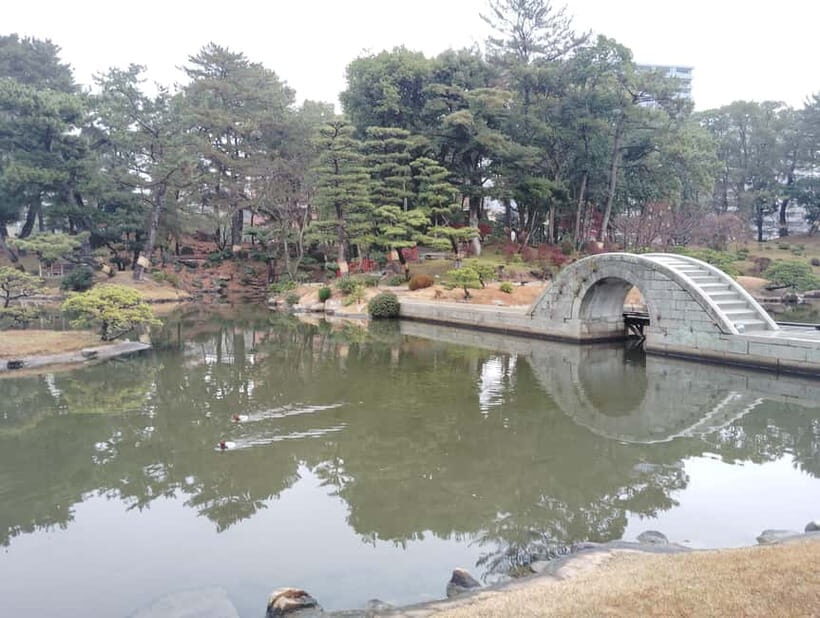
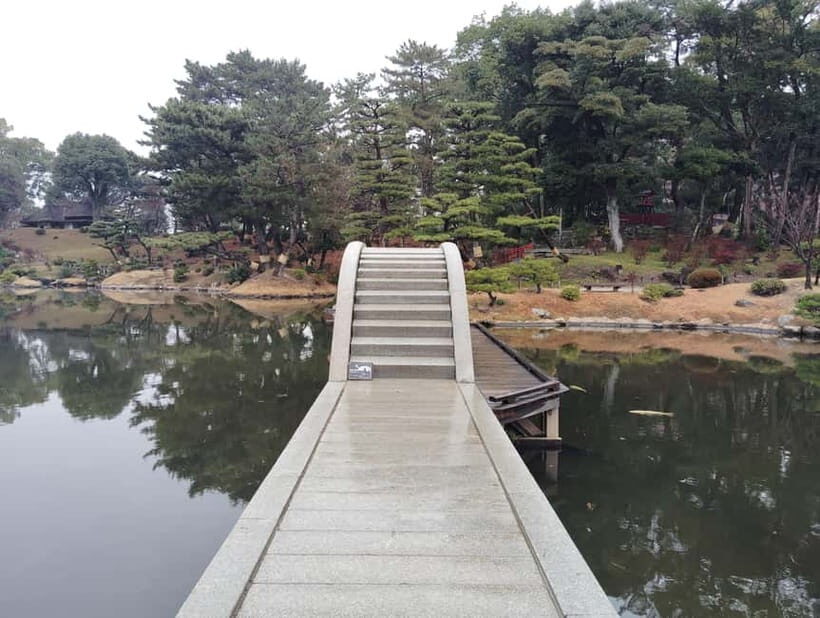
Shukkei-en is known for elegant, highly designed structures, and one of the most memorable is the curved stone bridge. The curve matters. Straight lines don’t guide your eye the same way. This bridge creates a gentle pull that connects the paths, the pond, and the buildings you’ll see along the way.
Your guide will likely slow down around key angles so you can line up photos where the bridge and water work together. This is a practical advantage of a guided tour: you save time figuring out the best viewing points.
I also like that the bridge isn’t just a “stand here and take one shot” object. It becomes part of the walking rhythm. As you move, you see the bridge from multiple perspectives, and it helps you understand the garden’s layout rather than treating it like a single viewpoint stop.
If you’re traveling with people who prefer photos over explanations, this is still a strong stop. The bridge looks good in almost every light, and the pond reflection helps even on overcast days.
Boat Landing and the Moon-Viewing Stage
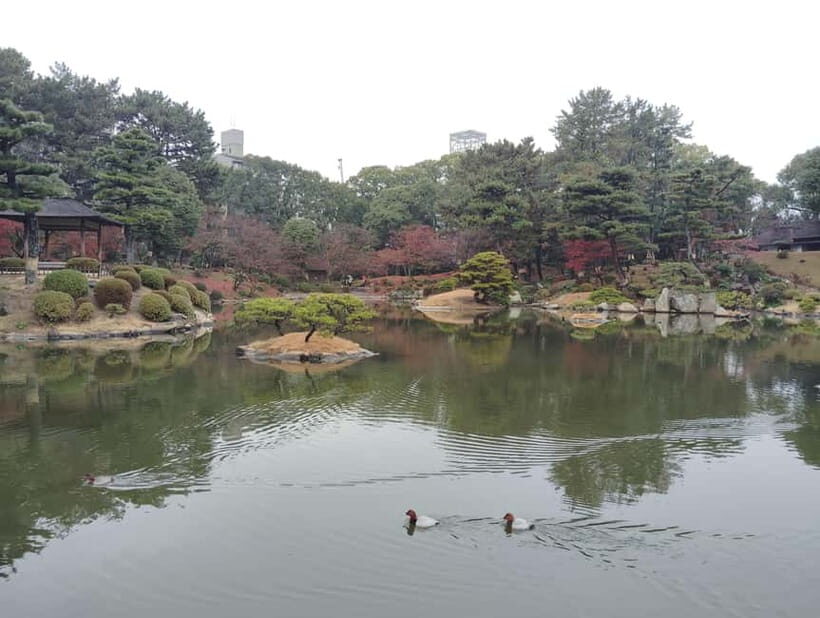
Beyond the bridge, two other features bring the garden to life: the boat landing and a stage for viewing the moon.
A boat landing is a detail that instantly gives you a sense of how gardens were used. It implies a leisurely pace, time to linger, and the idea that the pond wasn’t only admired from land. It is also one of those design elements that feels practical while still being aesthetic.
The moon-viewing stage is more subtle, but it adds a storyline. These gardens were designed around seasons and moments—quiet evenings, specific views, and the feeling of watching the landscape change. Even during daytime visits, that concept shapes your attention. You look for the places where a visitor in the past would likely stand.
With a guide, these aren’t random structures. They become cues that tell you what kinds of experiences the garden was built to support.
How to Pace Yourself So You Don’t Feel Rushed
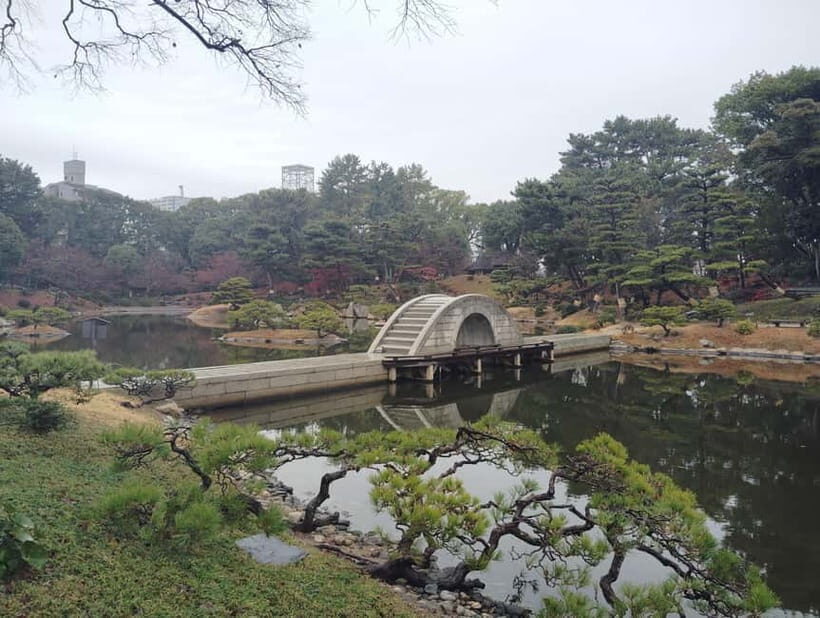
A lot of garden tours fail because they try to cover too much ground. This one doesn’t. At 90 minutes, you can experience the main sights and still have room to stop and look.
Here’s how I’d manage it on the day:
- Use the walk as your “timer.” When the guide points out a viewpoint, pause for your photo and then look again without the camera.
- Take breaks when the path opens toward the pond. That is usually when the composition is best.
- If you tend to speed-walk, intentionally slow down near the bridge and water edges. That is where the design effect happens.
One consideration: if you’re the type who needs a long lunch or wants a café stop, plan that outside the tour time. Food and drinks aren’t part of this experience, and you may not want to interrupt the flow mid-visit.
Price and Value: Is $58 a Good Deal for Shukkei-en?
At $58 per person for 90 minutes, this tour can feel like “just a garden walk” until you look at what is included.
You get:
- The entrance fee for Shukkei-en
- A professional guide
- A focused visit centered on the garden’s main design features
That is the value part. Entrance fees alone can add up in Japan, and garden sites get more interesting when someone explains the logic behind the layout. With a guide, you’re not just consuming scenery; you’re learning how the garden works, including daimyo-garden features like the central pond and framed views.
Also, the private group format helps you get more from the time. You’re not stuck listening to an explanation meant for a crowd. If you like your sightseeing to feel calm and personal, the price makes more sense.
If you’re on a super tight budget and you’re comfortable wandering on your own, you could choose self-guided time. But if you want the “why” behind the curved bridge, the boat landing, and the pond-centered design, the guide cost is doing real work.
Who This Tour Suits Best
This experience is ideal if you want:
- A short, high-quality garden visit in central Hiroshima
- Explanations in English or Japanese
- A peaceful walk that still has structure
- Time for key photo moments without a long commitment
It may not be the best fit if you need many hours for independent wandering. Since the tour is about 90 minutes, it prioritizes highlights. You can still enjoy more on your own after, but the guided portion won’t turn into an all-day garden crawl.
Should You Book Shukkei-en with a Local Guide?
I’d book it if you like your travel to include small, smart context. Shukkei-en is already beautiful, but the design ideas—daimyo-garden layout, pond-centered composition, and framed viewpoints—make it more than pretty scenery. A guide helps you see those choices instead of just walking past them.
It’s also a great match for couples or solo travelers who want calm and clarity. You meet at the entrance, get a focused 90-minute walk, and finish right back where you started. No complicated route. Just a good pace through a genuinely restful space.
If you’re especially photo-driven, this is a strong option because the tour includes planned sightseeing moments and time to stop around the most recognizable structures.
FAQ
How long is the Shukkei-en garden tour?
The tour lasts 90 minutes.
Where do I meet the guide?
Meet in front of Shukkei-en, and the guide will be holding a yellow sign with the DeepExperience logo.
What languages are available?
The live tour guide is available in English and Japanese.
What is included in the price?
The price includes the Shukkei-en entrance fee and the professional guide fee.
Is this a private tour?
Yes, the group type is private.
What is the cancellation policy and payment option?
You can cancel up to 24 hours in advance for a full refund. You can also reserve now and pay later.