REVIEW · TOKYO
Tokyo: 60min Panoramic Open Top Bus Tour with Audio Guide
Book on GetYourGuide →Operated by Hato Bus Co., Ltd. · Bookable on GetYourGuide
Open-top views make Tokyo feel close. In just 60 minutes, this Hato Bus ride lines up big sights with GPS guidance in multiple languages, so you’re not guessing what you’re looking at.
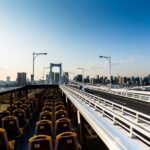
I especially like the uninterrupted panoramic views from the double-decker, and how the route sets you up for standout angles of Tokyo Tower and the bay. You’ll also get that windy, sea-air feeling as you pass Rainbow Bridge.
One thing to plan around: it’s weather-sensitive. If it’s rainy, the bus roof may close, and the tour can be canceled in bad or heavy rain.
In This Review
- Key things to know before you go
- Price and value for $14: what you’re really paying for
- How the ride works (and why it matters: not hop-on hop-off)
- Meeting point near Tokyo Station: your easiest starting move
- What to bring: smartphone GPS and your own earphones
- The bus rules: food limits, drinks allowed, and photo-friendly pacing
- Stop-by-stop: what you’ll see from Hibiya Park to Ginza
- Hato Bus Tokyo office (start and finish)
- Hibiya Park (quick but useful context)
- National Diet Building (a key orientation landmark)
- Toranomon (where the city feels sharp)
- Tokyo Tower (the big highlight moment)
- Rainbow Bridge, Tokyo (breeze and water energy)
- Odaiba (waterfront Tokyo on the move)
- Toyosu (industrial-meets-new vibe)
- Tsukiji Outer Market (food district energy without the crowds stop)
- Kabuki-za (the theater district signal)
- Ginza (the final shine)
- The comfort factor: short duration, open-air payoffs
- Weather and roof closures: what to expect if skies change
- Who this bus tour is best for (and who it isn’t)
- Should you book? My take
- FAQ
- Where does the tour start and end?
- How long is the tour?
- Is this a hop-on hop-off bus?
- What languages are included?
- Do I need a smartphone and earphones?
- Can I eat or drink on the bus?
- What happens in rain?
- Is there free cancellation?
Key things to know before you go
- GPS automated guidance runs in eight languages, so you’re covered even if you don’t speak Japanese
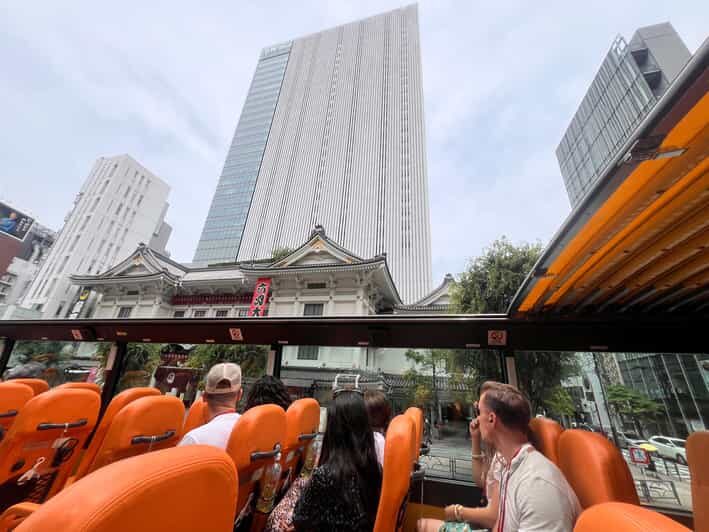
- Double-decker open-top seating gives real skyline sightlines, not just window views
- No hop-on, hop-off: you stay on the bus for a smooth, continuous loop
- Rainbow Bridge + Tokyo Bay area moments add that “moving outside” Tokyo breeze
- Short 1-hour timing is perfect for a first-day orientation without eating up half your schedule
- You’ll pass classic highlights like Tokyo Tower, Ginza, and Kabuki-za from the street level
Price and value for $14: what you’re really paying for
At around $14 per person, this tour is priced like a practical orientation tool. You’re not buying a long museum-style experience—you’re buying a quick, high-impact way to see Tokyo’s main power points from a vantage most people don’t get.
What makes it good value is the bundle: double-decker open-top bus + audio/GPS guidance for the full loop. You also avoid the chore of planning a route, timing landmarks across different rail lines, and juggling multiple walking transfers. In one hour, you’re fed a sequence of recognizable sights, pass-by style, with narration to keep it from turning into a blur of streets.
The other value angle is mental. Tokyo can feel like information overload. This tour gives you a structure—Tower, bridge, bay, markets, theater district, Ginza—so your first contact with the city has a backbone.
You can also read our reviews of more guided tours in Tokyo

How the ride works (and why it matters: not hop-on hop-off)
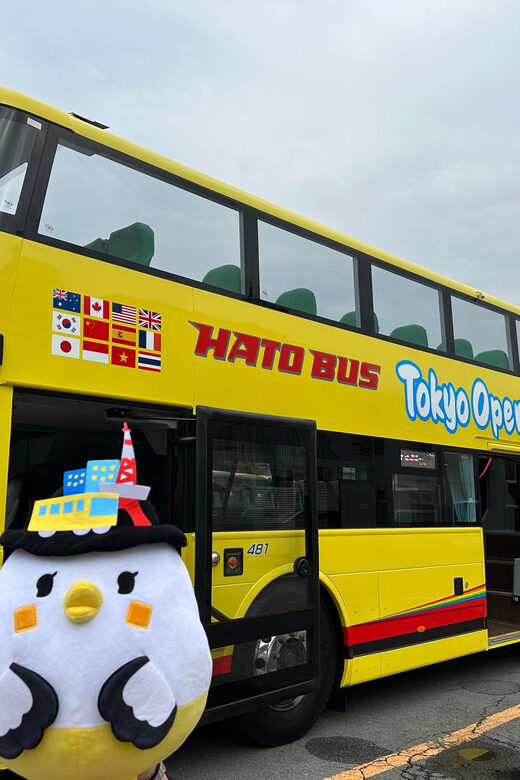
This is a single uninterrupted bus tour, not a hop-on hop-off setup. That matters because the whole experience is built around continuity. You’ll stay seated while the bus flows through central Tokyo and the waterfront areas, and the GPS audio stays synced to your motion.
That uninterrupted flow is why panoramic viewing works so well. If you’re the type who spends time debating where to stand or when to get off, this format will feel reassuring. You don’t need to make a decision every five minutes.
The trade-off is also clear: you can’t jump off to linger. If you want to spend time inside a place—shops, theater, or anything ticketed—you’ll need a separate plan after the bus. Think of this as a moving introduction, not a complete sightseeing day.
Meeting point near Tokyo Station: your easiest starting move
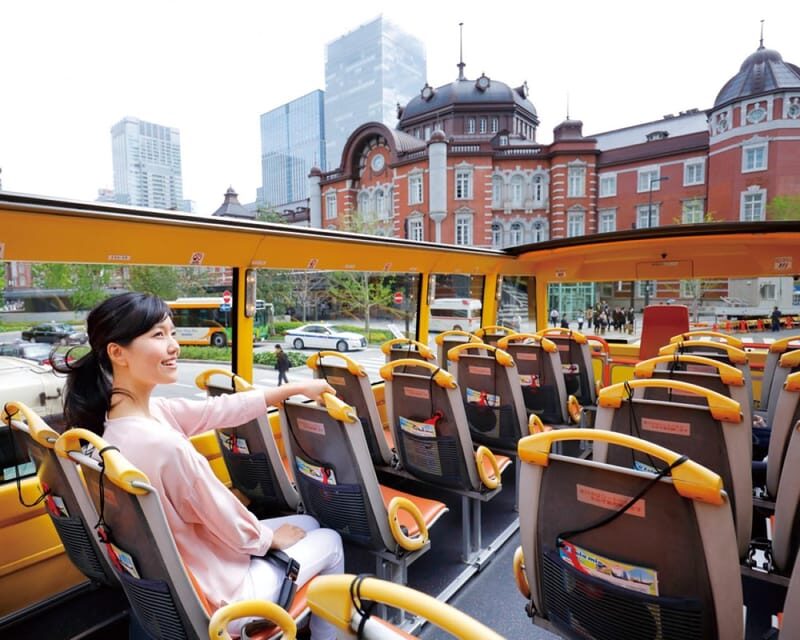
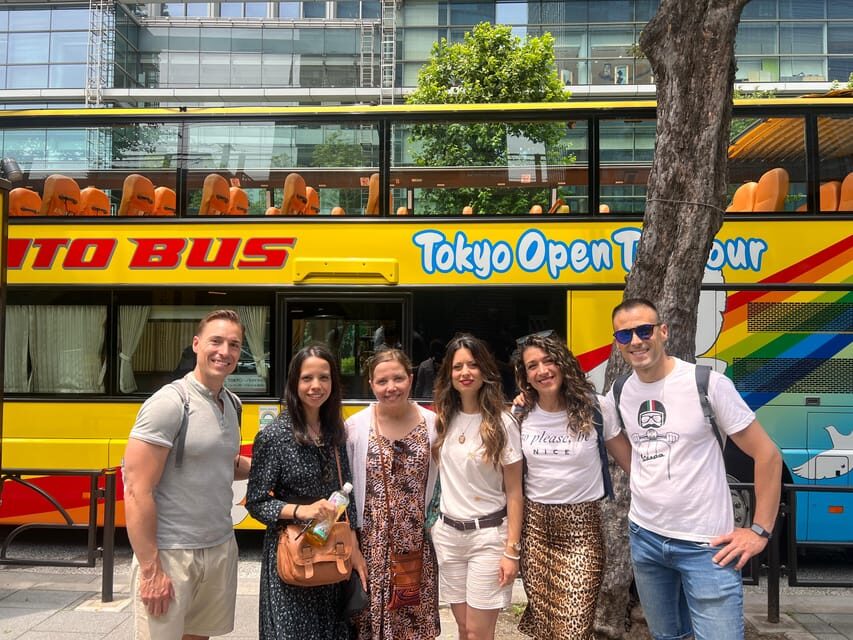
You start and end at the Hato Bus Tokyo office at Tokyo Station. The practical detail that helps most is the location: it’s near the JR Tokyo Station Marunouchi South Exit. When you come out, turn left and walk straight about two minutes. You’re looking for the yellow bus.
If you’re arriving by Shinkansen or a mainline connection, this is a relief. Tokyo Station can be a maze, but having a clear, short walk from one known exit keeps the first hour from starting with stress.
What to bring: smartphone GPS and your own earphones
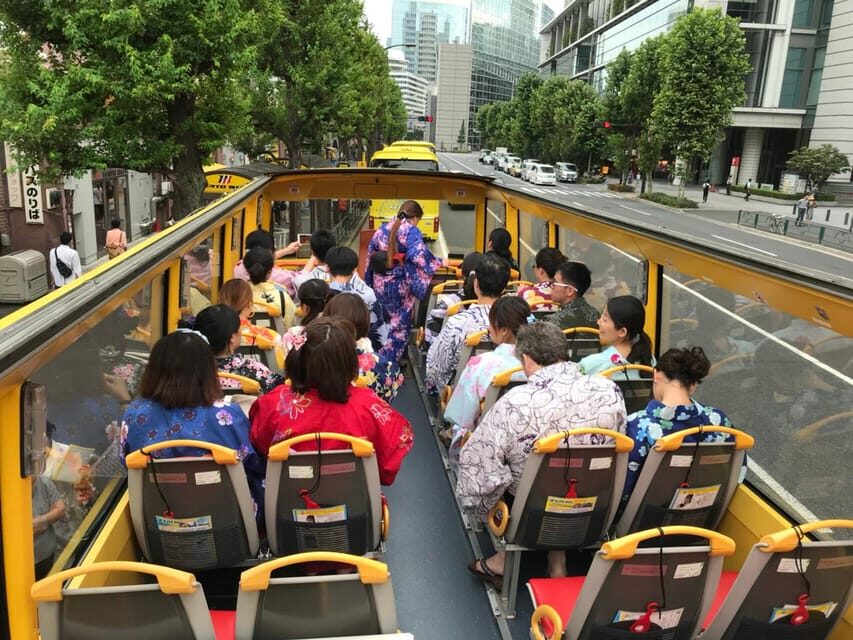
To enjoy the guidance, you’ll want to come prepared. The tour uses a GPS-based guidance system in eight languages, and it expects you to bring your own setup.
Bring:
- A smartphone that can be used in Japan
- Your own earphones (not provided)
Also note the rule: the system is provided free of charge, but no refunds are given for technical issues or malfunctioning earphones. That’s not trying to scare you—it’s just the reality of how audio delivery works.
So if your earphones are cheap wired ones that get tangled easily, consider switching to something more reliable. Your “small” comfort choices are the difference between enjoying narration cleanly and constantly fixing audio.
The bus rules: food limits, drinks allowed, and photo-friendly pacing

Eating isn’t allowed on the bus. Drinks are allowed only in plastic bottles.
For most people, this rule keeps the bus neat and helps the audio stay clear without open snack smells or messy wrappers. For you, it means a simple strategy: drink water before boarding if you can, and keep anything you bring to a bottle format.
For photos, you’re in good shape because the experience is designed around passing major landmarks with wide viewing. But remember: since you’re on a moving vehicle, you’ll still want to stabilize your phone with both hands and avoid leaning too far out. The open-top setup gives you angles; it doesn’t give you a free-for-all.
A few more Tokyo tours and experiences worth a look

Stop-by-stop: what you’ll see from Hibiya Park to Ginza

Here’s the ride in order, with what to pay attention to as the bus passes.
Hato Bus Tokyo office (start and finish)
Your first job is just to get settled early so you can enjoy the full loop. The route begins at the Hato Bus stop at Tokyo Station and ends back there, which makes it easy to connect to your next plan—subway, hotel, or a quick meal afterward.
Hibiya Park (quick but useful context)
As you pass Hibiya Park, you get a taste of Tokyo’s mix: formal city planning, big green space presence, and the proximity to major shopping and business districts. Even from a bus, it helps you anchor where you are relative to central Tokyo.
A practical tip: if you’re hoping to match landmarks later on a map, Hibiya Park is a good reference point to remember early in the tour.
National Diet Building (a key orientation landmark)
Seeing the National Diet Building from the street gives you a real sense of scale. It’s one of those Tokyo landmarks you might recognize from photos, but the bus view adds street-level context: width of surrounding roads, spacing, and how central it sits in the city grid.
If you’re doing Tokyo on your own, this kind of “I can now place this on the map” moment is worth gold.
Toranomon (where the city feels sharp)
Toranomon is more than a stop name. It’s an area that signals modern Tokyo’s business edge. From the bus, you’ll likely notice the built-up density and the way Tokyo’s major districts blend into each other.
For photographers, this is a good segment to watch for clean building lines—city angles often look best when the bus is moving smoothly and you’re not trying to shoot at a stoplight.
Tokyo Tower (the big highlight moment)
Then comes Tokyo Tower, and this is where the tour earns its reputation. You get views from a moving perspective and not just one fixed viewing spot. The result is that Tower can feel less like a single photo object and more like a landmark with multiple angles as you approach and pass.
One detail worth knowing: because you’re on a double-decker, you’re higher than most street-level passersby. That height helps you frame Tokyo Tower against wider stretches of skyline.
Rainbow Bridge, Tokyo (breeze and water energy)
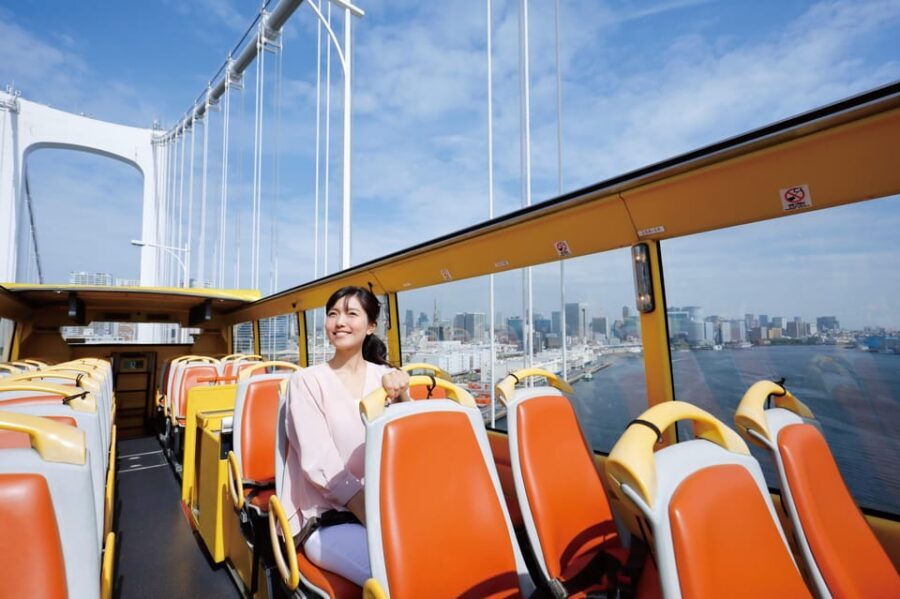
Passing Rainbow Bridge and the Tokyo Bay area is a strong change of pace. Even without stopping, you get water nearby, and the air shift is part of the point. The tour description calls out the breeze, and that’s exactly what makes this segment feel different from the landlocked city streets.
Also, bridges are great because they reveal Tokyo’s geography—how islands and waterways shape movement patterns. It’s a quick lesson in why Tokyo is laid out the way it is.
Odaiba (waterfront Tokyo on the move)
As the bus passes Odaiba, you’ll get that classic waterfront Tokyo feel: modern district energy and the sense of space compared with the tight core. Even if you’ve seen images, bus passing views show you how the shoreline looks in real life.
This is also a good moment to think about where you might want to go next. Odaiba tends to attract people for a reason, and the bus view gives you enough of a preview to decide if you want more time there later.
Toyosu (industrial-meets-new vibe)
You’ll pass Toyosu, and this area tends to look more purposeful than touristy. That’s actually useful. Tokyo isn’t only about postcard spots. Seeing areas like this from the bus helps you understand the city’s working texture.
It’s also a segment where you can just relax and let the narration do its job. You’re not hunting for the perfect photo—your job is to absorb the city flow.
Tsukiji Outer Market (food district energy without the crowds stop)
As you pass Tsukiji Outer Market, you’re getting a taste of Tokyo’s food identity without the full market chaos of a walk-through. From a bus, you won’t be doing tasting or shopping, but you can still clock the neighborhood’s atmosphere.
If you love food travel, this is a strong reminder that Tokyo’s culture isn’t only temples and towers—it’s also markets, specialty streets, and the daily rhythm of vendors.
Kabuki-za (the theater district signal)
Next up, Kabuki-za. Even if you’re not planning to catch a show, you can use this moment to recognize how Tokyo marks its major cultural centers. The theater district look is distinct, and seeing it from the bus helps you connect the area to your later plans if you decide to attend a performance.
If you’re the type who likes planning ahead, note that this is the segment where you’ll likely picture an evening activity. It’s a natural hook for a future plan.
Ginza (the final shine)
Finally, the bus passes Ginza before returning to Tokyo Station.
Ginza is one of those names that means something to almost everyone, even if you haven’t been. From the bus, you’ll see why it’s famous—its concentration of retail presence and the way the district projects a polished city identity.
The best part here is timing. Finishing at Ginza and then looping back helps you close the circle: you start near Tokyo Station, head out to landmarks, come back through major central Tokyo, and end where you began.
The comfort factor: short duration, open-air payoffs

The experience is just 1 hour, which is one reason it works well for many people. You’re not trapped on a long ride while you’re tired, and the open-top format feels worth it because you’re not enduring it all day.
Comfort-wise, the double-decker design is part of why the ride is so enjoyable. Being higher helps you feel the panoramic effect instead of being blocked by heads and nearby structures.
And if you care about narration, the route is long enough to cover a meaningful stretch of Tokyo without turning into an endurance test. That’s a big deal when you’re traveling on limited energy.
Weather and roof closures: what to expect if skies change
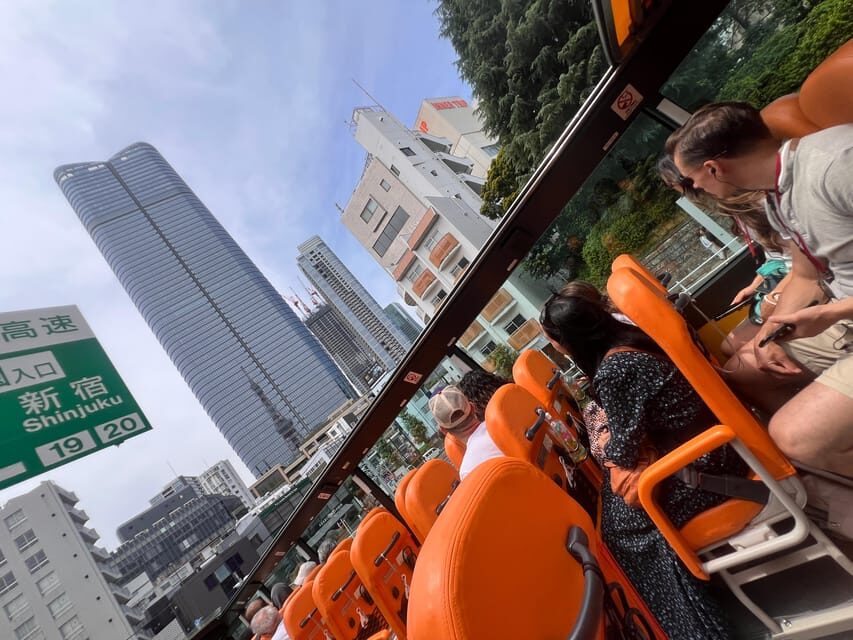
This tour is sensitive to rain. The bus roof may close in case of rain, and the tour can be canceled due to bad weather or heavy rain.
Here’s how to handle it like a pro: check conditions before you leave your hotel. If it’s light drizzle, you might still go, but a sudden heavy downpour is when plans get complicated.
If you’re flexible, consider scheduling this tour early in your trip so you still have backup time if weather disrupts it. You don’t want an open-top plan to be your only sightseeing slot for the day.
Who this bus tour is best for (and who it isn’t)
This tour is a good match if you want:
- A fast first-day overview
- Scenic skyline moments without navigating multiple transfers
- Multi-language GPS guidance that helps you understand what you’re seeing
- A short, controlled format with major sights in sequence
It’s less ideal if you:
- Want to get out often and walk around
- Are only interested in deep stops like museums or markets with time inside
- Hate being constrained to a strict one-hour window
Think of it as a “see Tokyo’s highlights in motion” ticket. For a short trip or a first day, that can be exactly the right move.
Should you book? My take
Book this tour if you want a simple, high-coverage way to see Tokyo’s headline landmarks—especially Tokyo Tower, Rainbow Bridge, and the Ginza finish—within one hour. The price is low enough that it doesn’t feel risky, and the GPS guidance plus audio in eight languages makes the time useful, not random.
Skip it if your dream Tokyo day is all about getting out, wandering slowly, and spending long periods inside specific places. This is a ride for views and orientation, not a walking itinerary.
If you’re traveling with limited time, this is one of the more efficient ways to get a big-picture feel for the city—without turning your day into a logistics puzzle.
FAQ
Where does the tour start and end?
It starts and ends at the Hato Bus Tokyo office near JR Tokyo Station Marunouchi South Exit, about a two-minute walk away. Look for the yellow bus at the Hato Bus stop.
How long is the tour?
The tour lasts 1 hour.
Is this a hop-on hop-off bus?
No. It’s not hop-on hop-off. You stay on the bus for the full loop.
What languages are included?
GPS automated guidance and audio are available in eight languages: English, Chinese, Korean, Spanish, French, Thai, Indonesian, and Vietnamese. The live tour guide is Japanese.
Do I need a smartphone and earphones?
Yes. You should bring a smartphone that can be used in Japan and your own earphones. GPS devices and earphones are not provided for rental.
Can I eat or drink on the bus?
Eating is not allowed. Drinks in plastic bottles are permitted.
What happens in rain?
The bus roof may be closed in rain. The tour may also be canceled due to bad weather or heavy rain.
Is there free cancellation?
Yes. You can cancel up to 24 hours in advance for a full refund.