REVIEW · SAPPORO
Japanese Tea Making Class in Sapporo
Book on Viator →Operated by 日本茶と和菓子 エフ · Bookable on Viator
Sapporo’s tea lesson is a small taste of how Japan thinks. You’ll get hands-on practice with tea temperature and timing, then compare the same leaves in warm, iced, and very hot brews. It’s part science, part craft, and part quiet fun at 日本茶と和和菓子 エフ near 円山公園.
I like that you don’t just watch—you taste step by step and learn how flavor shifts with technique. The ceramic cup vs. wine glass detail makes the lesson feel real, not lecture-y, and the seasonal wagashi pairing gives you an easy way to understand bitterness and astringency.
One thing to keep in mind: private transportation isn’t included, so you’ll want to plan how to reach the meeting point in Sapporo. At this price point, getting there smoothly matters.
In This Review
- Key things to know before you go
- Japanese Tea Making in Sapporo: what you’re really learning
- The full flow: warm, iced, then hot (and why the order matters)
- Your cup choices: ceramic teacup vs wine glass
- Wagashi pairing: how sweets teach you to taste bitterness
- The health angle, without the lecture
- Price and value: is $78.48 fair for 90 minutes?
- Meeting at 日本茶と和菓子 エフ (Maruyama Park area)
- What to expect during the tasting (and how to make it count)
- Who this class is best for
- Should you book this Japanese tea making class?
- FAQ
- What is included in the Japanese tea making class?
- How long does the experience last?
- Where does the class meet in Sapporo?
- Is private transportation included?
- Is this a private activity or shared with other groups?
- What kinds of tea are you brewing and tasting?
- What is the cancellation policy?
Key things to know before you go
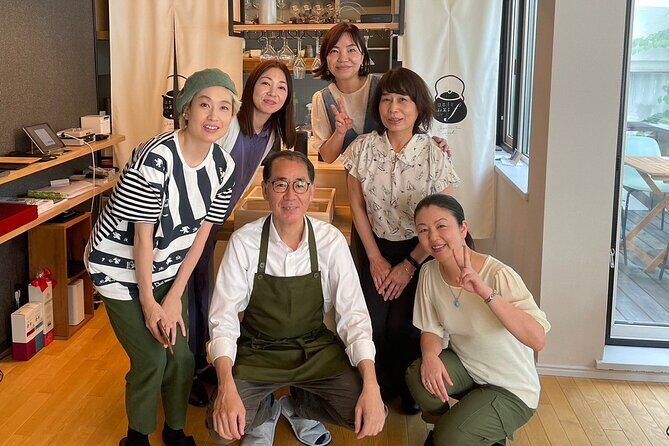
- Three brews, three moods: warm tea for original flavor, iced wine-glass tea for aroma and sweetness, hot tea to bring out bitterness and astringency
- Cup matters as much as water: you’ll switch from ceramic teacups to a wine glass to notice how presentation changes your perception
- Seasonal wagashi is part of the lesson: sweets aren’t an add-on; they’re used to balance and explain what you’re tasting
- You’ll get a practical cheat sheet: a summary of temperature and brewing time for each tea is mentioned in past lessons
- Two kinds of tea may be included: some courses use more than one tea, which makes comparisons easier and more fun
- Mobile ticket and private group: you’ll handle a simple ticket, and the activity is only for your group
Japanese Tea Making in Sapporo: what you’re really learning
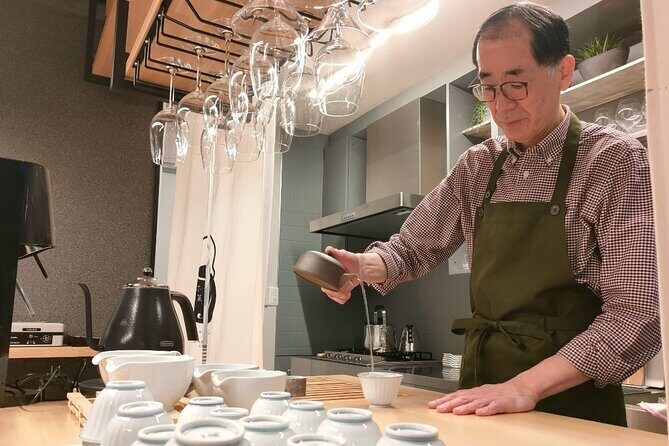
Japanese tea tastes different for reasons you can actually control. This class focuses on the two levers that change everything: hot water temperature and brewing time. Even if you usually drink tea on autopilot, you’ll leave with a more precise sense of what you’re tasting and why it happens.
There’s also a bigger cultural note baked into the experience: Japanese tea is increasingly tied to health-conscious habits. The course framing talks about polyphenols and theanine, plus the idea that antioxidant and antibacterial properties are part of why tea has grown in popularity. If that’s your angle, you’ll appreciate how the lesson connects daily enjoyment with why people bother to get it right.
And if you’re not into the health talk? No problem. The real payoff is sensory. You’ll taste how the same tea can move from smooth and gentle to more structured and complex just by changing the conditions.
A few more Sapporo tours and experiences worth a look
The full flow: warm, iced, then hot (and why the order matters)
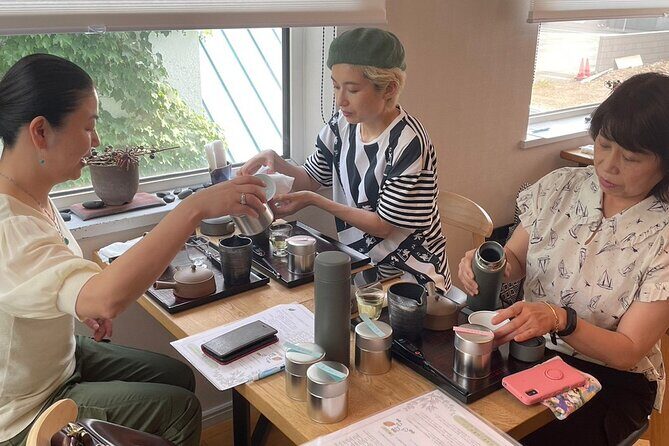
Your lesson is built around three cups, each one teaching a different taste profile. Think of it like learning the same song in three keys. The goal isn’t to memorize theory—it’s to notice what changes on your tongue and in your nose.
First cup: lukewarm water for the original flavor
You’ll start with lukewarm brewing to keep things closer to the tea’s baseline character. This is a great entry step if you’ve never tried Japanese tea this way, because it’s usually the most forgiving cup. You’ll learn what “straight” tea tastes like before you add extremes.
Second cup: iced tea in a wine glass
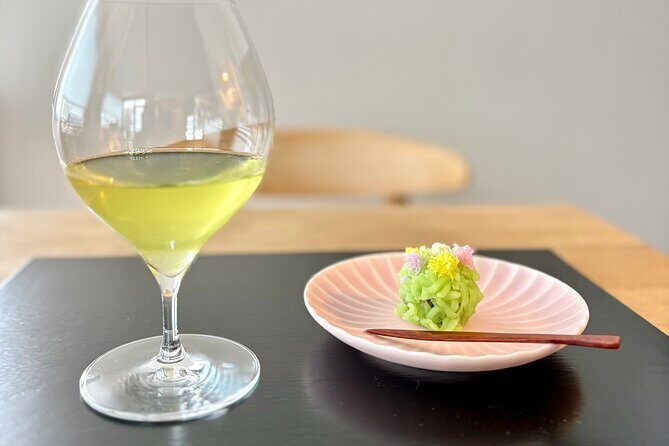
Next comes the fun contrast: cold tea served in a wine glass. The description calls out a big shift in aroma and taste—specifically more aroma and sweetness. You’ll also notice how chilling changes how flavors carry. It can feel surprising, like the tea has switched personalities.
Third cup: hot water to bring out bitterness and astringency
Finally, you’ll brew with hot water for a more intense cup. This stage is where Japanese tea often earns its reputation for depth. Bitterness and astringency can sound intimidating, but this is exactly where wagashi comes in, helping you understand balance instead of just bracing for a punchy sip.
That order matters. If you start with the strongest cup, you might miss how the earlier cups are teaching your palate. This sequence helps you build a mental map of taste.
Your cup choices: ceramic teacup vs wine glass
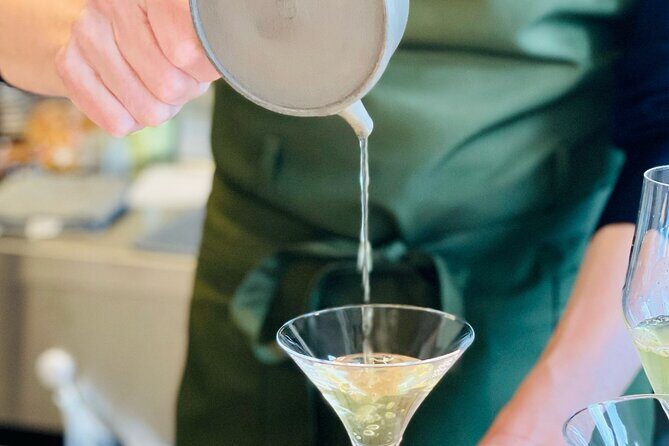
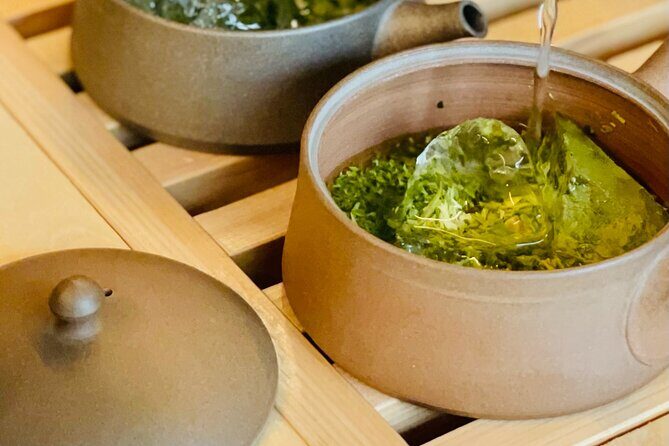
This class uses the kind of detail that makes you pay attention. Hot tea comes in a ceramic teacup, while cold tea comes in a wine glass. On paper, that sounds like showmanship. In practice, it’s a lesson in perception.
Ceramic teacups are the classic setting for hot Japanese tea, and they support the traditional feel of the drink. With a wine glass, you get a wider opening and a different way aromas rise toward your face. When the course emphasizes aroma in the second cup, it’s basically telling you: look, your senses are part of the measurement.
This is one reason I think the experience is worth doing even if you’ve had matcha or sencha before. You’ll stop treating tea like a single flavor and start thinking like a brewer.
Wagashi pairing: how sweets teach you to taste bitterness
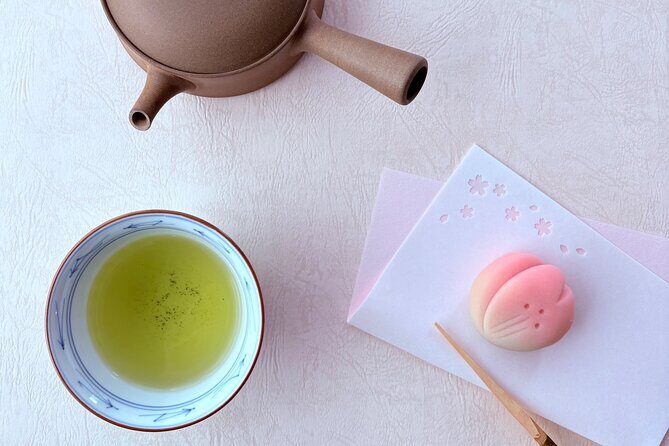
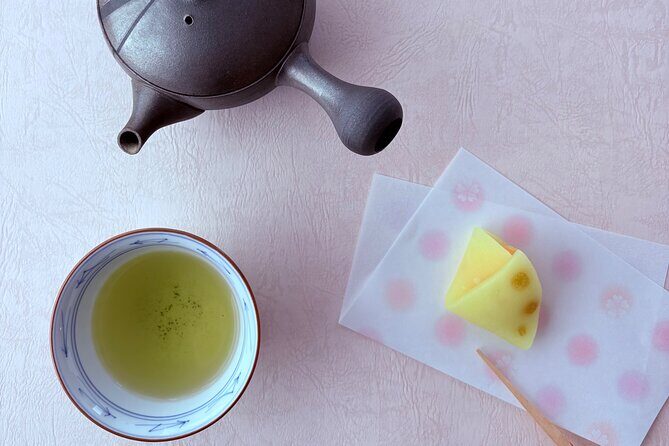
You won’t just drink tea. You’ll eat seasonal Japanese sweets (wagashi) alongside it, tied to the tea’s character. In particular, the hot third cup is paired with sweets to match bitterness and astringency.
Here’s why this works: wagashi often has a gentle sweetness that doesn’t overwhelm, so it lets the tea’s edge show without becoming harsh. You taste the difference between bitterness as an unpleasant spike and bitterness as a structured, intentional flavor.
You also learn something practical. If you ever want to recreate that balance at home, you’ll know it’s not only about steeping. It’s also about pairing. The lesson quietly trains you to think beyond the cup.
The health angle, without the lecture
The class description frames Japanese tea through a health lens: polyphenols that support regulating blood cholesterol and reducing body fat are mentioned, along with antioxidant and antibacterial properties. It also references theanine as an amino acid associated with relaxation.
I like that this is presented as context, not a sales pitch. Even if you ignore the health claims, they give you a reason why people take tea technique seriously. When something is both everyday and connected to wellness, it tends to get more attention from craft-minded locals.
Also, this health framing explains the recent demand trend described: export volume increasing about 2.5 times in the past 10 years. That tells you the tea world has expanded and formalized, even outside Japan. A class like this is part of that shift—teaching visitors how to participate the right way.



Price and value: is $78.48 fair for 90 minutes?
At $78.48 per person, you’re paying for more than tea. You’re paying for guided comparisons, a private group format, and tasting-based learning. The “private tour/activity” note matters because it usually means you won’t be competing for attention.
You’re also getting snacks: seasonal Japanese sweets included with the tea. And at least some versions of this class include a paper summary with temperature and brewing time. That’s the practical souvenir people actually use later, instead of just a memory.
Is it expensive compared to buying tea at a shop? Yes. But classes like this are priced like instruction and experience, not like retail. If you want a calm, structured way to learn how to brew, the value is strong—especially if you’ll actually experiment at home.
Meeting at 日本茶と和菓子 エフ (Maruyama Park area)
Your start point is listed as 日本茶と和菓子 エフ, 円山公園 25-chōme-2-12, Chuo Ward, Sapporo, Hokkaido. The tour also notes it’s near public transportation, which is a big deal in Sapporo when winter weather (or just busy streets) can make getting around slower.
The class ends back at the meeting point, so you’re not dealing with a one-way wandering itinerary. That keeps your day simple. It also means your biggest logistical question is how you’ll get there on time, since private transportation isn’t included.
If you’re planning your Sapporo day, treat this as a centered activity—go, learn, taste, leave. Don’t stack it with something that requires a long cross-city transit.
What to expect during the tasting (and how to make it count)
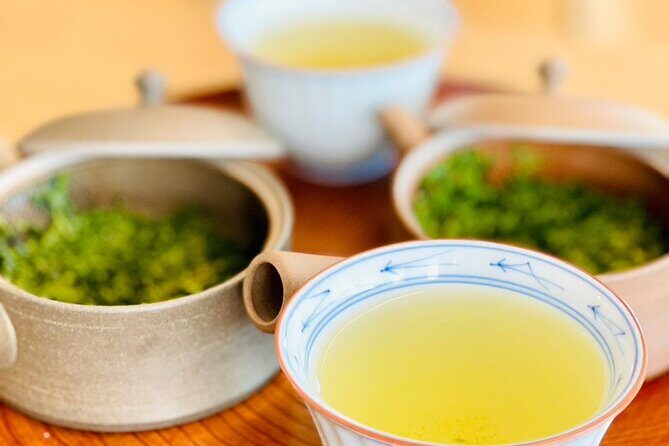
This is a guided class that steps you through brewing and tasting. The reviews emphasize that beginners are taught gently and that you can compare flavors step by step. That matters because tea technique can feel abstract until someone shows you the differences in a controlled way.
A key tip from the experience: don’t just sip. Smell first, then sip, then let the tea sit briefly in your mouth before deciding what you think. The iced cup in the wine glass is the one where aroma cues are supposed to hit harder, so slow down there.
If you get the summary sheet with temperature and brewing time, use it immediately. Ask yourself what worked best for your palate during the tasting, then mark it. When you try tea at home later, you’ll remember which cup you liked and how it was made.
Also, since the lesson may involve two kinds of tea in some courses, don’t assume every comparison will follow the same pattern. That’s actually useful. You’ll learn that tea isn’t one thing—it’s a set of variables, even when the “same” drink is on the table.
Who this class is best for
This experience is a good match if you enjoy hands-on learning and you like slow, sensory activities. It’s especially useful if you’ve ever wondered why one cup tastes lighter or harsher than another. By the time you reach the hot third brew, you’ll have the context to interpret bitterness and astringency instead of treating them as flaws.
It’s also a strong choice for food-and-drink travelers who want something more specific than a generic cooking demo. The combination of tea technique plus wagashi pairing gives you a clear framework for what to notice.
If you want something energetic and outdoorsy, this isn’t that. It’s a focused indoor lesson built around brewing, tasting, and comparing. It suits a calm schedule and people who prefer craft details over big sightseeing.
Should you book this Japanese tea making class?
Book it if you want an easy-to-follow way to understand tea like a brewer. The tasting sequence—lukewarm, iced in a wine glass, then hot for bitterness—gives you built-in comparisons, and the wagashi pairing helps you make sense of the flavors instead of guessing.
I’d skip it only if you’re mostly looking for a long cultural tour or a big itinerary. This is concentrated: around 1 hour 30 minutes, at one meeting point, focused on the brewing method and taste shifts. If that structure sounds perfect for you, it’s a worthwhile use of time in Sapporo.
One last practical note: check how you’ll reach the meeting point near 円山公園. Since private transportation isn’t included, being on schedule is easiest when your route is simple.
FAQ
What is included in the Japanese tea making class?
The price includes snacks, specifically seasonal Japanese sweets (wagashi) served along with Japanese tea.
How long does the experience last?
The class runs about 1 hour 30 minutes.
Where does the class meet in Sapporo?
You’ll start at 日本茶と和和菓子 エフ, 円山公園 25-chōme-2-12, Chuo Ward, Sapporo, Hokkaido 064-0820, Japan.
Is private transportation included?
No. Private transportation is not included.
Is this a private activity or shared with other groups?
This is a private tour/activity. Only your group will participate.
What kinds of tea are you brewing and tasting?
You’ll enjoy changes in taste and aroma by brewing with different hot water temperatures and brewing times, including a warm cup, an iced cup served in a wine glass, and a hot cup that brings out bitterness and astringency.
What is the cancellation policy?
You can cancel for a full refund up to 24 hours in advance of the experience’s start time. If you cancel less than 24 hours before, the amount paid will not be refunded.