REVIEW · KYOTO
Kyoto Magical Night English Tour: Gion & Fushimi Inari Shrine
Book on Viator →Operated by OTAKU hopper · Bookable on Viator
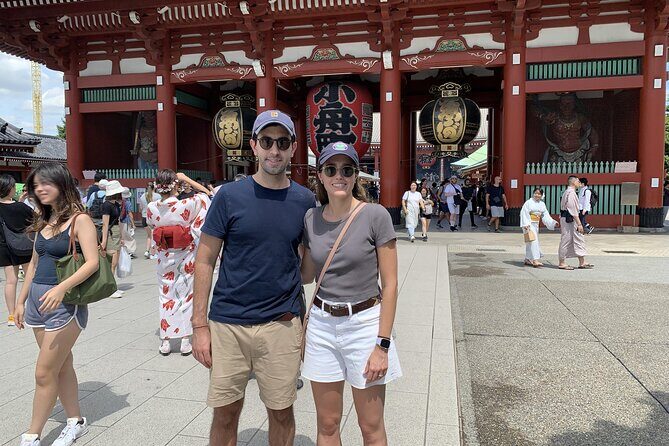
Torii gates look different at night. This Kyoto Magical Night English Tour strings together Fushimi Inari-taisha and the lantern-lit feel of Gion, with a local guide helping you make sense of what you’re seeing as you move. You’re also set up for great night photos, thanks to professional shots during the walk.
What I like most is how the tour turns landmarks into understanding. In particular, the focus on temple-and-shrine context (and how to properly pay respects) makes the places feel more meaningful than just picture-taking, and guides like Ikki and Yui come across as warm, organized, and easy to talk with.
One consideration: this is a true walking experience. If you’re not comfortable with steady steps for about 2.5 hours, you’ll feel it, and you’ll want to be on time at the meeting point because late arrivals can’t join.
In This Review
- Key things to know before you go
- How the night route works: meeting spot and walking tempo
- Price and value: what $26.43 really buys you
- Fushimi Inari-taisha at night: torii gates, guidance, and photo rhythm
- Hanamikoji Street and Gion: seeing the old Kyoto look without the crush
- Yasui-Konpiragu and Yasaka Pagoda: relationship prayers and the nail-less wonder
- Sannenzaka, Ninenzaka, and Nene-no-Michi: stone paths and shogun-era storytelling
- Yasaka Shrine finale: a prosperity-and-protection stop with national reach
- Professional photos at night: how to get the best results
- Who this tour suits best (and who should choose a different time)
- Should you book Kyoto Magical Night: Gion & Fushimi Inari?
- FAQ
- Where does the tour start?
- How long is the tour?
- Is this tour private?
- What is included in the tour price?
- What is not included?
- Do I need to buy tickets for temples and shrines?
- Is the tour mostly walking?
- Can I cancel and get a refund?
Key things to know before you go
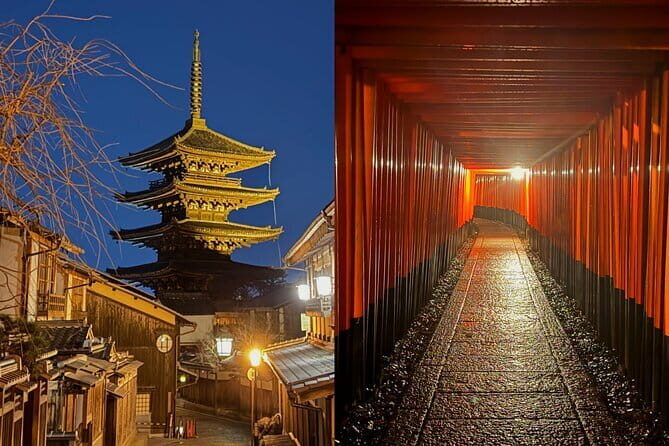
- Glowing Fushimi Inari at night: Walk the torii-gate setting with a guide who explains what you’re looking at.
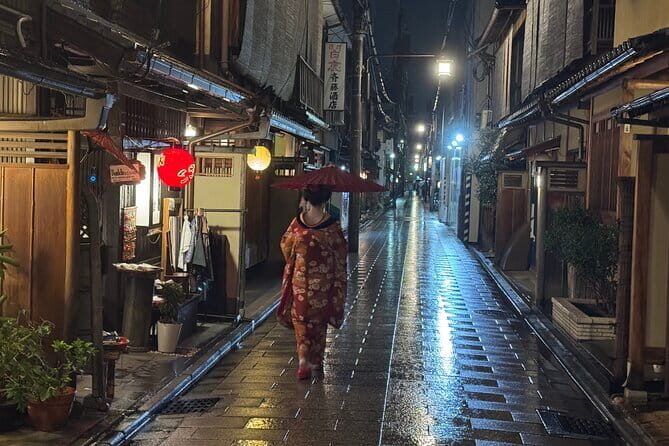
- Gion after dark: Traditional streets feel calmer and more atmospheric than daytime crowds.
- English-speaking local guides: Frequent praise for guides such as Ikki, Yui, Yuri, Yuki, Joi, and Mariko.
- Professional photos included: Photos are taken during the tour, and some guests reported getting them fast.
- A compact “best of Higashiyama” route: Shrines and old streets are grouped efficiently in one evening.
- Walking-first design: You’ll use public transport and do plenty on foot, so wear proper shoes.
How the night route works: meeting spot and walking tempo
The tour meets at the Statue of Izumo-no-Okuni (Kawabatacho), in Kyoto’s Higashiyama Ward. It also ends back at the same meeting point, so you’re not left figuring out a new return route after dark.
Timing is built around a steady pace. The scheduled stops add up to about 2 hours 30 minutes (approx.), and each segment is short enough to keep energy up while still seeing a lot. You should plan to move quickly between photo moments, because the tour is designed as a walk rather than a sit-and-sightsee experience.
If you’re with kids or an older relative, you’ll still want to manage expectations: the experience is very guided, but the pace can be brisk. One review noted the guide worked with older family members who needed more frequent breaks, which suggests flexibility—but the core structure remains walking-heavy.
You can also read our reviews of more evening experiences in Kyoto



Price and value: what $26.43 really buys you
At $26.43 per person, this is not just a “look at stuff” stroll. The value comes from three places:
- A local English-speaking guide who connects each stop to what it means (not just where it is).
- Temple and shrine admission fees covered as part of the experience.
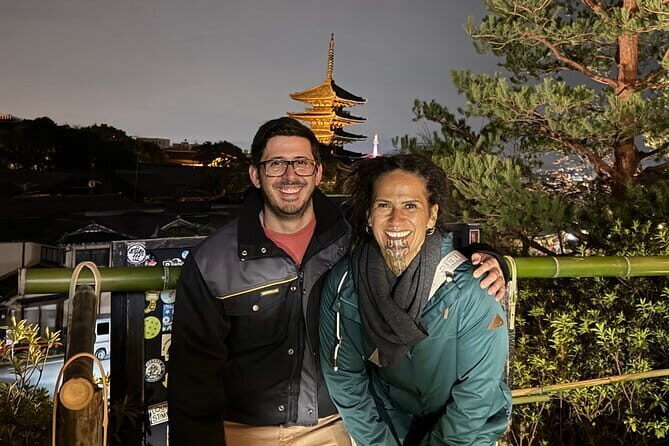
- Professional photos taken during the tour, so you get night shots without wrestling with shaky hands and low light.
What’s not included matters too: public transportation costs (listed as ¥480 per person) and food and drinks. Also, the tour doesn’t promise meals, so you’ll want a plan for dinner either before you go or afterward.
There’s also a practical perk: mobile ticketing. That cuts down on fiddling with paper when you’re trying to find your guide at night.
Fushimi Inari-taisha at night: torii gates, guidance, and photo rhythm
Your evening starts at Fushimi Inari-taisha Shrine, where the famous red torii gates create pathways up the forested Mount Inari. The tour gives this stop the most time—about one hour—which makes sense. In the dark, torii gates aren’t just scenery. They become a visual “route” you can actually follow.
A big plus here is how the guide helps you understand the setting. You’re not left guessing what to do at shrines. Guides are known for coaching guests on how to pay respects during the visit, so you can act confidently without slowing the group down.
Photo-wise, night is the point. You’ll be walking through a controlled sequence of scenes, which helps your camera (and your brain) keep track of what’s important. If you care about night photography, this is where you’ll benefit most from having someone point out good spots and angles as you go.
Hanamikoji Street and Gion: seeing the old Kyoto look without the crush

After Fushimi Inari, you shift into the Gion experience—specifically starting with Hanamikoji Street for about 10 minutes. Hanamikoji is known for traditional teahouses, historic wooden machiya houses, and the chance (not a promise) to spot geisha and maiko.
Then the tour adds another short 10-minute window in Gion itself. This is one of those “short but worth it” segments. At night, Gion’s atmosphere feels more grounded and less hectic. Several guests highlight the calmer crowd level compared to daytime, which is exactly why this pairing works.
One practical benefit: when you arrive with context, you notice details you’d otherwise miss. A good guide will help you see what you’re looking at in Gion—why certain streets look the way they do, and how the district’s identity ties into the broader Kyoto story you’re hearing.
Yasui-Konpiragu and Yasaka Pagoda: relationship prayers and the nail-less wonder
Next is Yasui-Konpiragu, also about 10 minutes. This shrine is known for a very specific kind of wish: praying for the severing of bad relationships and finding new, positive connections. That topic gives the stop a different emotional tone than a purely scenic walk, and it helps you understand why people seek it out.
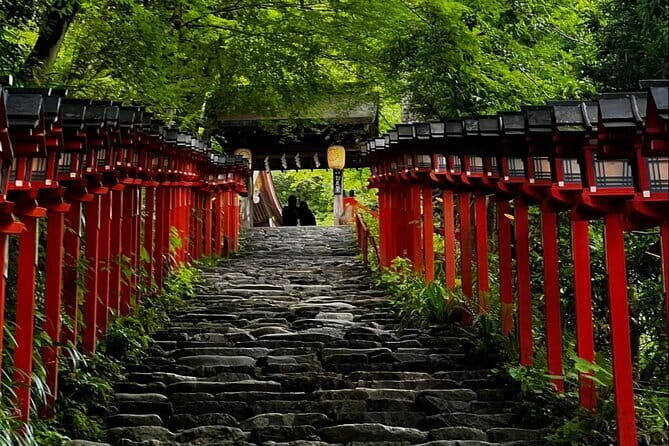
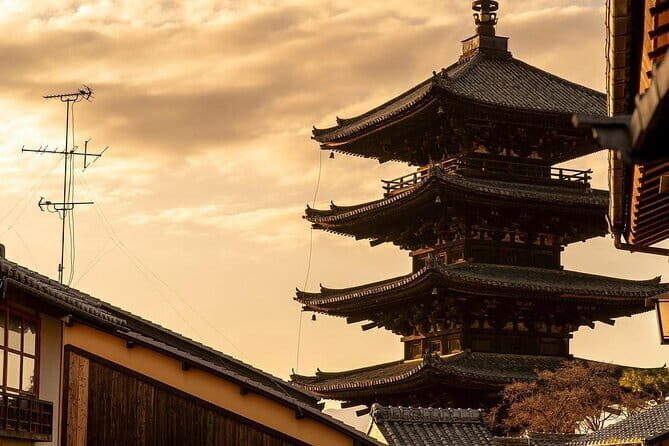
Then you move to Yasaka Pagoda (Hokanji temple) for about 15 minutes. The standout fact here is that it’s described as an ancient wooden structure built without nails. Whether you care about construction details or not, the size and age are hard to ignore at night, and the guide helps you frame why that matters in Kyoto.
This stretch is also where the walk starts to feel like an “old Kyoto sampler.” You’re not stuck repeating one kind of scene. You go from torii-gate symbolism to street culture to shrine focus, with enough variety to keep the night interesting.



Sannenzaka, Ninenzaka, and Nene-no-Michi: stone paths and shogun-era storytelling
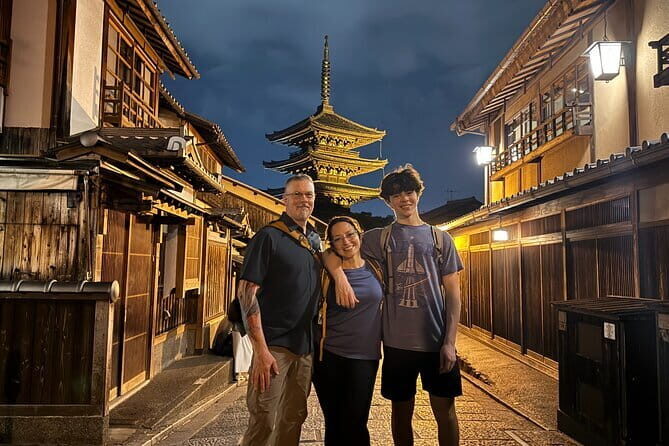
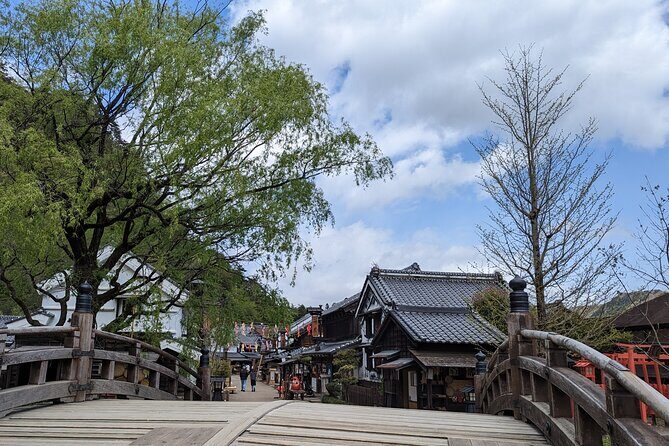
You’ll then hit Sannenzaka and Ninenzaka for about 15 minutes. These are traditional stone-paved lanes lined with souvenir shops and restaurants in historic-style wooden buildings. The point isn’t only shopping. It’s the feeling of stepping into an older Kyoto street pattern.
After that, you walk Nene-no-Michi for about 15 minutes. This path is named after Nene, the wife of a powerful Japanese shogun. The route is described as serene and passes historic temples, which makes it a good breather between busier photo moments.
If you like walking streets, this section is where your eyes will start “reading” the environment. Instead of just seeing a pretty lane, you’ll connect it to why it’s remembered and how the naming and route create a sense of continuity in Kyoto.
Yasaka Shrine finale: a prosperity-and-protection stop with national reach
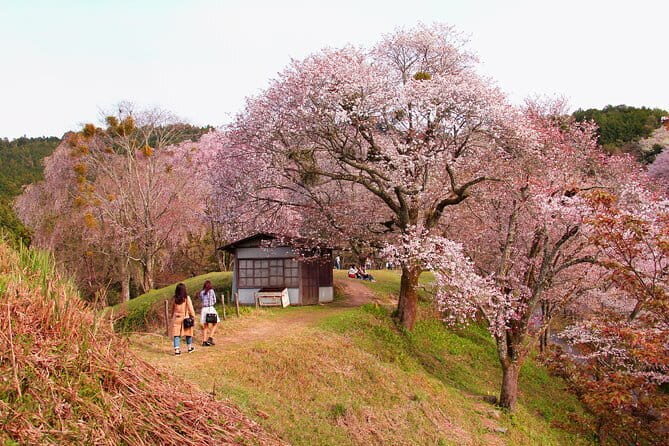
The tour ends at Yasaka Shrine for about 15 minutes. This is a meaningful closer because Yasaka Shrine is described as the headquarters of 2,300 related shrines throughout Japan. Even if you don’t memorize every detail, that scale helps you appreciate why this isn’t just one local spot. It’s part of a network of shrine traditions.
Yasaka Shrine is also dedicated to the gods of prosperity and protection, so the mood of the stop tends to feel hopeful rather than strictly ceremonial. As with earlier shrine guidance, you’re likely to get coaching on how to pay respects properly during the stop.
This finale is a smart design choice. After a night of streets, stones, and pagoda scale, you end with a place that ties it all together through shrine significance.
Professional photos at night: how to get the best results
Photos are included, and they’re part of what makes a night tour feel worth it. With low light, everyone struggles at some point—blurry shots, missed focus, awkward group framing.
What helps here is that you’re in motion and have a guide handling the photography moment. One review also mentioned the guide using a laminated chart with explanations and graphics, which suggests guides are prepared and structured rather than winging it. That kind of organization often leads to better photo timing too.
A real-world tip: if you want photos that actually look like night Kyoto, plan to wear shoes that let you move comfortably without rushing your posture. If you spend the entire tour adjusting your stance or limping, you’ll lose both the photo quality and the enjoyment.
Who this tour suits best (and who should choose a different time)
This tour is ideal if you want a compact way to understand Higashiyama and Kyoto’s shrine culture without getting stuck in translation or confusing etiquette.
It’s also a strong fit for:
- First-time Kyoto visitors who want a guided route that makes the city feel logical.
- People who prefer evening atmosphere and fewer crowds compared to daytime.
- Anyone who likes learning what they’re looking at, not only seeing it.
You might choose a different tour (or go daytime) if:
- You don’t enjoy walking for about 2.5 hours.
- You’re sensitive to colder night weather and don’t want long periods on foot.
- You need lots of seated time, because the stops are short and the route is designed to keep moving.
Should you book Kyoto Magical Night: Gion & Fushimi Inari?
Book it if you want Kyoto’s iconic spots connected by meaning—Fushimi Inari’s torii gates, Gion’s historic streets, and shrine stops that carry specific themes like prosperity or cutting bad relationship ties. The included professional photos and the admission coverage also make it feel like better value than a basic walking ticket.
Skip it if walking time sounds like a stressor. This is not a slow “wandering” tour. It’s a guided night walk with a pace you’ll feel, so comfortable shoes and an on-time arrival at the Statue of Izumo-no-Okuni are part of the deal.
If you do book, I’d recommend going in with one goal: ask your guide to help you understand what you’re seeing as you go. That’s where the best memories come from—when the night scenes click into place.
FAQ
Where does the tour start?
The meeting point is the Statue of Izumo-no-Okuni (Kawabatacho), Higashiyama Ward, Kyoto.
How long is the tour?
It runs for about 2 hours 30 minutes.
Is this tour private?
Yes. Only your group participates.
What is included in the tour price?
It includes an English-speaking local guide, admission fees for the temples and shrines, and professional photos taken during the tour.
What is not included?
Public transportation fare is not included (listed as ¥480 per person), and food and drinks are also not included.
Do I need to buy tickets for temples and shrines?
Admission fees for the temples and shrines are included as part of the experience.
Is the tour mostly walking?
Yes. It’s designed as a walking experience using public transportation and time on foot.
Can I cancel and get a refund?
Yes. You can cancel for a full refund up to 24 hours in advance.