REVIEW · KYOTO
Kyoto & Uji: Full Day Sightseeing Tour from Osaka or Kyoto
Book on Viator →Operated by F Trip · Bookable on Viator
Nine hours, eight stops, and a lot of Kyoto. This full-day guided tour strings together Kyoto’s big-name temples and Uji’s quieter tea-town charm, with an air-conditioned ride that keeps the day from turning into a transit puzzle. You get a clear plan, a professional guide, and time to wander on your own.
What I like most is the way the itinerary mixes major sights with small atmospheric pauses. Kinkaku-ji, Kiyomizu-dera, and Byodo-in are capped with street time in Sannenzaka and Ninenzaka, plus Uji River and a stroll through Byodo-in Omotesando. The second big plus: you’re not trapped with the guide every second—each stop includes meaningful free time to look, snack, and take photos at your own pace.
One thing to consider: lunch isn’t included, and you’ll likely pay entry fees for three major temples (1600 yen total). If you hate surprise costs or you like to stop for long sit-down meals, plan ahead with a snack in your day bag.
In This Review
- Key things to know before you go
- How the Kyoto-to-Uji day is paced
- Golden Pavilion at Kinkaku-ji: quick wonder, timed right
- Kiyomizu-dera: the climb is part of the experience
- Sannenzaka and Ninenzaka: where Kyoto feels like Kyoto
- Yasaka Koshin-do: the short stop with strong visual payoff
- Uji River and Uji Shrine: tea-town calm, rabbits included
- Byodo-in Temple and the Phoenix Hall: the big Uji finale
- Byodo-in Omotesando: where the day turns into tea shopping
- Guide style and multilingual support that actually helps
- Price and what you really get for $57.90
- Comfort, group size, and how it affects your experience
- Rain days and keeping your mood up
- Who this tour suits best
- Should you book this Kyoto & Uji tour?
- FAQ
- How long is the Kyoto & Uji full-day sightseeing tour?
- Where does the tour take place?
- What is the price per person?
- What is included in the tour price?
- Is lunch included?
- Which temple tickets are not included?
- Are any stops free to enter?
- How many people are on the tour?
- What if I need stroller space or have large luggage?
- Can I cancel for a full refund?
Key things to know before you go
- Eight famous stops, timed for a one-day hit so you see both Kyoto icons and Uji’s tea-town atmosphere.
- Your guided route includes on-the-ground context (including multilingual help like English with Mandarin and Japanese in some guide setups).
- Tickets are only needed for three paid temples, while several scenic stops are free to enter.
- Comfort matters: air-conditioned vehicle for a day that can otherwise feel like nonstop walking.
- Small-group feel for a big route with a maximum of 45 travelers.
- Rain usually doesn’t end the day; the plan still moves and the guide keeps people together.
How the Kyoto-to-Uji day is paced
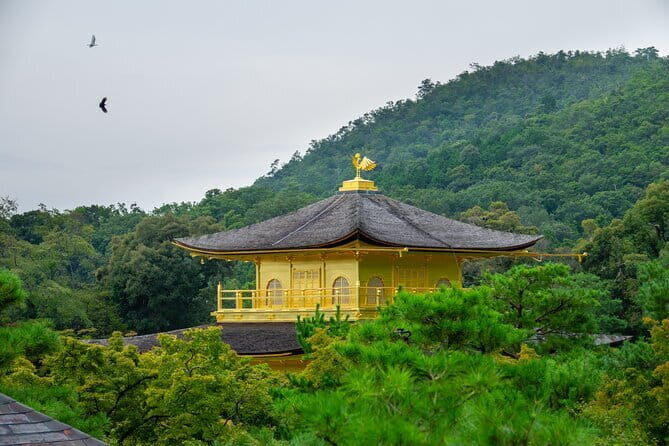
This tour runs about nine hours and is built for efficiency without feeling like a speedrun. You’ll ride between areas, then spend focused blocks at each place. Stop times are roughly 40 minutes, 1 hour, 1 hour, then shorter bursts like 20 to 30 minutes at several Uji and Kyoto sidestops.
That timing is useful because these areas are not just “see and leave.” Kyoto temples and surrounding streets work best when you can slow down a bit—peek into lanes, adjust to the crowd flow, and step away to breathe for a minute. Here, you get that balance: enough structure to hit the highlights, enough freedom to explore the approach streets and viewpoints rather than just the main photo angle.
You also travel with a guide and a comfortable vehicle. The tour includes an air-conditioned car/van and a guide, and it uses a mobile ticket. That matters on a day when you’ll likely rely on transit-adjacent meeting points, then want a quick, low-friction start once you’re with the group.
A few more Kyoto tours and experiences worth a look


Golden Pavilion at Kinkaku-ji: quick wonder, timed right
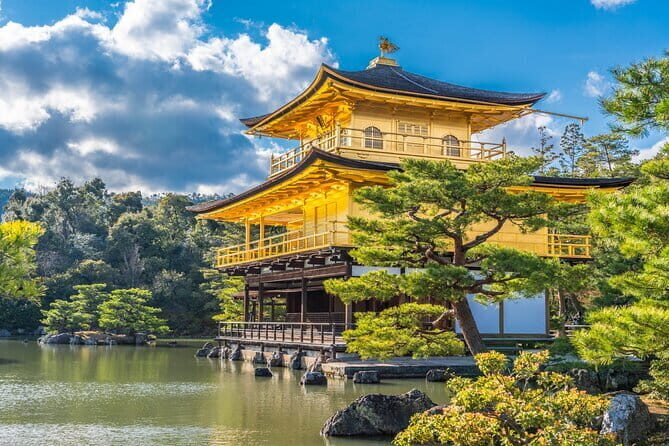
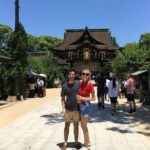
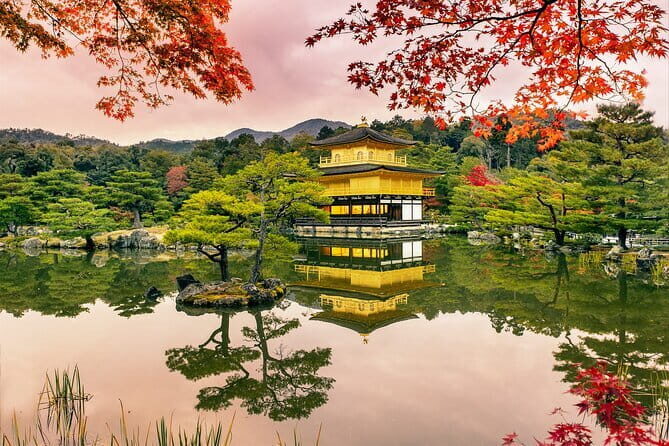
Kinkaku-ji, the Golden Pavilion, is the kind of sight that hits immediately. You’re looking at a Zen Buddhist temple with a dazzling golden exterior and carefully designed gardens. It’s also a UNESCO World Heritage site, so expect the photo lines and the “everyone pauses for the same angle” moment.
This stop is about 40 minutes, and that’s actually a good length. It gives you time to:
- take in the main pavilion view
- walk the garden edges at a calm pace
- circle to find a slightly different perspective
A tip: even with limited time, don’t treat it like a single-point photo. The gardens and surrounding viewpoints change how the gold reads depending on your angle and the light. With a 40-minute block, you can do both: the quick wow photo and a slower second look.
Admissions aren’t included for Kinkaku-ji, so plan for the paid temple fee.
Kiyomizu-dera: the climb is part of the experience
Kiyomizudera is one of Kyoto’s best-known temples, and it’s part of the UNESCO Historic Monuments of Ancient Kyoto. It’s known for its dramatic setting and the iconic temple complex that draws crowds for a reason.
You’re given about 1 hour here. That’s a sweet spot. One hour is long enough to:
- see the main temple area
- take in the platform views
- pause along the approach and surrounding grounds
The entry ticket for Kiyomizudera is also not included, so again, expect a small add-on cost.
What makes this stop work in a group tour is pacing. A guide helps you understand what you’re looking at without eating your whole hour with lectures. You still get time to walk at your own pace, and you can decide how much time you want for the best view versus the side details.
Sannenzaka and Ninenzaka: where Kyoto feels like Kyoto
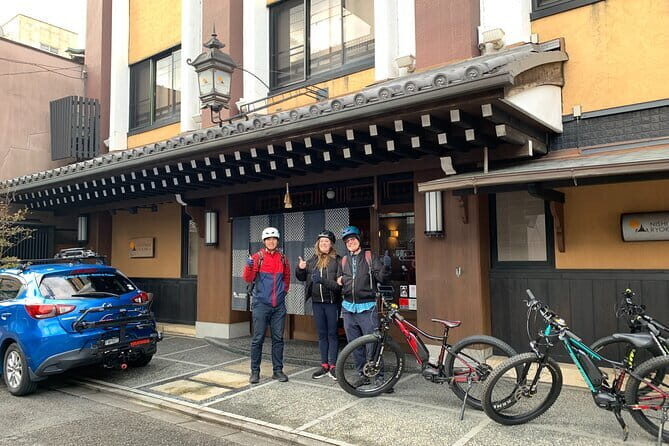
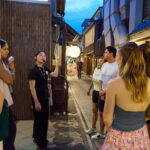
After the big temple hit, the tour slows down in a more human way. Sannenzaka and Ninenzaka are classic sloping streets known for historic Japanese-style buildings and a centuries-old atmosphere. This is the part where Kyoto stops being a checklist and starts feeling like a place you could wander for hours.
This block is about 1 hour, and admission is free. That combination is gold (no pun intended). You can spend more time browsing shopfronts, strolling the curves of the lane, and stepping into small corners without worrying about a paid entry line.
If you’re traveling with kids or you just want a calmer moment after temples, this is often the best time to reset. The streets are made for slow walking, and you can keep your energy for later Uji stops.
Yasaka Koshin-do: the short stop with strong visual payoff
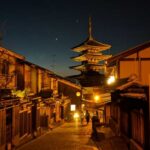
Yasaka Koshindo (also described as Daikokusan Kongoji Temple Koshindo) is a smaller, more quick-feeling stop, about 30 minutes, and it’s free to enter. What you’ll notice fast is the playful decoration—colorful, eye-catching “monkeys.” If you like quirky details in temples, this is the kind of stop that makes the whole day feel more lively.
Because it’s a shorter duration, it’s best viewed as a quick reset rather than a full immersion. You’ll get enough time to enjoy the character of the place without losing momentum before heading back to the bigger Uji sights.

Uji River and Uji Shrine: tea-town calm, rabbits included
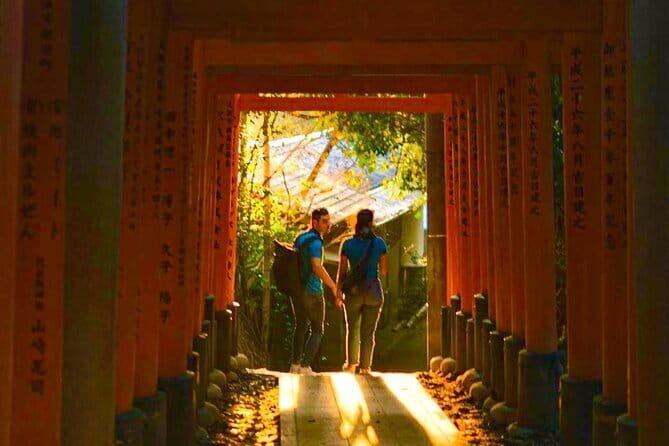
Uji is a different mood than central Kyoto. It’s quieter, and it feels more like a place locals visit, not just tourists. The tour uses two shorter stops here: Uji River (about 20 minutes) and Uji Shrine (about 20 minutes).
Uji River: This river is noted as the only river that originates from Lake Biwa, and it has historically been an important waterway connecting Shiga and Osaka. Even with a short time block, that bit of context helps you see the river as more than a pretty backdrop—it’s tied to how the region functioned.
Uji Shrine: This one has a clear theme: rabbits. The image of a white rabbit with red eyes shows up on lanterns and ema (votive tablets). It’s a fun contrast to the temple icons earlier in the day. If you’re the type who likes noticing consistent motifs, this is a good place to spot symbolism without needing a long lecture.
Both stops are free, which is useful because it keeps the day’s costs mostly centered on the three paid temples.
Byodo-in Temple and the Phoenix Hall: the big Uji finale
Byodo-in Temple is one of Japan’s best-preserved national treasures and a UNESCO World Heritage site. The star attraction here is the Phoenix Hall, famous for its wing-like corridors, and it’s the reason many people make the trip to Uji in the first place.
Your time at Byodo-in is about 30 minutes, and tickets aren’t included. That means you’ll want to arrive ready to focus. With only half an hour, you should prioritize:
- seeing the Phoenix Hall as the main visual goal
- walking the temple area at a pace that fits crowds and your comfort
- capturing photos early if you’re sensitive to waiting
The short time can feel tight if you love architecture details. But if you mainly want the iconic view and a satisfying sense of place, 30 minutes works well within a full-day route.
Byodo-in Omotesando: where the day turns into tea shopping
After the temple, the tour includes Byodo-in Omotesando, about 30 minutes and free to enter. This is Uji’s shopping street angle, and it’s closely tied to tea culture. Uji is known for green tea production, and the street is lined with shops selling tea and tea-related products.
This is the part I’d call practical fun. You can browse for gifts, taste small bites if offered by vendors, and grab tea items you can actually use once you’re home. Since lunch isn’t included, this also becomes a potential plan B if you’re hungry later in the afternoon.
Even if you’re not buying much, the street helps you end the day with something sensory—smells of tea, packaging, and the low-stress rhythm of a shopping lane.
Guide style and multilingual support that actually helps
The biggest “quality of life” factor on any one-day tour is the guide. Here, you’ll get a professional guide, and the tour has a setup that can include multiple languages. In one account, the guide spoke English, Mandarin, and Japanese. In another, the guide used WhatsApp to send meeting details and area maps, which makes it easier to stay oriented when everyone has to regroup.
You’ll also benefit from clear instructions on meet-up and return times. That doesn’t sound exciting, but on a long day it prevents the most common stress: confusion about where and when to be back.
The guide names I’ve seen tied to this experience include John, Jone, and Cave. I can’t promise any one guide will match your language preferences, but the pattern is clear: the guide role here is active and supportive, not just a narration voice from the bus seat.
Price and what you really get for $57.90
At $57.90 per person, this tour isn’t trying to be the cheapest option. It’s more about value in how it bundles transportation and a guide into a long, structured day.
Here’s the math in plain terms:
- Included: air-conditioned vehicle and a guide
- Not included: lunch
- Not included: entry tickets for Kinkaku-ji, Kiyomizu-dera, and Byodo-in Temple (1600 yen)
Several other stops are free to enter, so most of your ticket costs will cluster around those three iconic temples. If you were going to visit all of them anyway, paying for guided logistics can feel like a win. If you were only interested in one or two sites, you’d likely do better self-planning.
The best value is for people who:
- have one day in the Kyoto/Uji area
- want a plan that reduces decision fatigue
- don’t want to manage transit plus multiple ticket lines on your own
If you already know your way around and love building your own itinerary, you might prefer independent travel. But if your priority is getting the highlights without friction, the price makes sense.
Comfort, group size, and how it affects your experience
The tour caps at a maximum of 45 travelers. That’s large enough to keep costs reasonable, but small enough that the guide can still manage the group.
Group size matters at:
- Kinkaku-ji, where crowd flow can bottleneck photo spots
- Kiyomizu-dera, where stairs and viewpoints can slow down movement
- regroup moments, where you want clear instructions
Also, the tour notes it runs near public transportation. That means you’re not dealing with a far-off pickup point that makes the day annoying. If you’re traveling with stroller or large luggage, you’ll want to indicate it at booking so the logistics can match your needs.
Rain days and keeping your mood up
Kyoto weather can be dramatic. In one account, heavy rain during the afternoon didn’t ruin the tour, and the guide took good care of everyone. That aligns with how this itinerary is structured: it moves through major indoor-ish or sheltered-adjacent areas (temples and shrine complexes), then uses streets and open areas only in timed blocks.
Still, pack for wet weather. Even when the tour holds up, you’ll have a better day if your shoes and jacket are ready for sudden changes.
Who this tour suits best
This is a strong fit for:
- first-timers who want Kyoto’s headline temples plus Uji tea-town
- travelers who prefer an organized route for a one-day window
- people who like mixing iconic sights with street atmosphere
It’s less ideal if:
- you want a slow, low-schedule day with minimal transit and longer museum time
- you’re picky about lunch plans and hate using snacks instead
- you want to linger at Byodo-in or Kiyomizu-dera beyond the set time blocks
Should you book this Kyoto & Uji tour?
If your goal is to see Kinkaku-ji, Kiyomizu-dera, and Byodo-in without turning your day into logistics, I’d say this tour is worth booking. The mix of temple stops, free street time in Sannenzaka and Ninenzaka, and a tea-focused finish in Uji gives you both iconic Kyoto and a sense of regional contrast.
Book it especially if you have limited time and want a guide who helps you stay oriented, keeps the regrouping smooth, and supports the trip with practical communication. Just budget for the three temple entry fees and plan for lunch on your own—then you’ll get the best version of this day.
FAQ
How long is the Kyoto & Uji full-day sightseeing tour?
It runs about 9 hours.
Where does the tour take place?
The tour is in Kyoto, Japan, and it includes stops in Kyoto and Uji.
What is the price per person?
The price is $57.90 per person.
What is included in the tour price?
The tour includes an air-conditioned vehicle and a guide.
Is lunch included?
No, lunch is not included.
Which temple tickets are not included?
Tickets are not included for Kinkaku-ji, Kiyomizu-dera, and Byodoin Temple. The additional ticket cost listed is 1600 yen.
Are any stops free to enter?
Yes. Sannenzaka and Ninenzaka are listed as free, and Yasaka Koshindo, Uji River, Uji Shrine, and Byodoin Omotesando are also listed as free.
How many people are on the tour?
The tour has a maximum of 45 travelers.
What if I need stroller space or have large luggage?
You should indicate when booking if you’re traveling with a stroller or large luggage.
Can I cancel for a full refund?
Yes. You can cancel up to 24 hours in advance for a full refund. If you cancel less than 24 hours before the start time, the amount paid is not refunded.