REVIEW · TOKYO
Mt Fuji and Hakone 1-Day Bus Tour Return by Bus
Book on Viator →Operated by Japan Panoramic Tours · Bookable on Viator
Fuji in one long, well-run day. This bus tour strings together Mt. Fuji’s 5th Station, Hakone Ropeway, and a Lake Ashi cruise into an 11-hour package with air-conditioning, onboard Wi‑Fi, and multilingual audio. Guides such as Levin, Hiro, Yui, Aya, and Sora often keep the day moving with jokes and practical tips that help you get the most out of short stops.
The best part for most people is simple: you skip the driving headache and still hit the big postcard moments. You’ll also have an optional Japanese buffet lunch, with vegetarian and Muslim choices available if you request ahead. The main drawback is the tradeoff: this is a lot of time on the road, so if your dream is slow, unhurried sightseeing, you may feel rushed.
In This Review
- Key things I’d lock in before you go
- Tokyo to Mt. Fuji and Hakone Without a Rental Car
- Pickup points, mobile ticket, and what the day feels like on the ground
- Stop 1: The Robert Indiana LOVE statue meetup
- Stop 2: Mt. Fuji Subaru Line 5th Station for shrine air and quick views
- Lunch near the mountain: a buffet that can make or break your energy
- Midday routing: Mt. Hakone or Mt. Komitake viewpoint time
- Stop 4: Hakone Ropeway for aerial mountain-and-lake views
- Stop 5: Lake Ashinoko cruise for that calm Hakone break
- Finish at Odawara Station or Shinjuku: your return plan is the real deciding factor
- Price and value: why it costs $136.05, and when it won’t feel worth it
- Weather, cancellations, and how to keep expectations realistic
- Tips that actually help on a Fuji-and-Hakone bus day
- Should you book this Mt. Fuji and Hakone 1-Day Bus Tour?
- FAQ
- Where do you pick up in Tokyo?
- Does the tour always return to Shinjuku?
- Is lunch included?
- What’s included for Hakone Ropeway and Lake Ashi?
- Is there Wi-Fi on the bus?
- What languages does the audio guidance support?
Key things I’d lock in before you go
- Morning timing matters for Mt. Fuji views: clear-sky chances often come down to luck plus season, so start strong.
- Short-but-impactful stops: 5th Station, ropeway, and the lake cruise are built around quick access to the best viewpoints.
- Guides bring energy and real-world advice: names like Levin, Hiro, Aya, and Yui show up often, and they tend to keep everyone organized.
- Included sightseeing fees save you hassle: Hakone Ropeway and the Lake Ashi cruise are part of the price.
- Your lunch option has limits: vegetarian and Muslim are available with request, but halal and vegan meals aren’t offered as part of the lunch add-on.
- Plan B is part of the experience: weather, traffic, or closures can shuffle the order or swap stops.
Tokyo to Mt. Fuji and Hakone Without a Rental Car

If you’re trying to see more than one “greatest hits” area while staying based in Tokyo, this kind of one-day bus plan is hard to beat. You get a direct coach day with an English-speaking guide plus multilingual audio support. That matters because Fuji and Hakone logistics can be confusing when you’re figuring it out from scratch, especially if you’re traveling solo or with a tight schedule.
The group size is capped at 43, which keeps it from feeling like chaos. Still, this is a shared-day tour, so you’ll follow the schedule and walk when it’s time to walk. Comfort-wise, the bus is air-conditioned and includes free Wi‑Fi, which is a lifesaver when you’re killing time between scenery stops.
A few more Tokyo tours and experiences worth a look



Pickup points, mobile ticket, and what the day feels like on the ground
You’ll start from one of two Tokyo pickup points: Matsuya Ginza at 7:20am or the LOVE Shinjuku meeting point at 7:50am. The LOVE statue is also listed as the final meeting spot for the group, so don’t assume you can stroll in late.
The bus departs in the morning (some schedules line up with an early 8:00am start). Expect a long travel day that blends commentary, road views, and then quick movement when you arrive. You’re not just commuting—you’re “scheduled” to be ready for photo moments and viewpoint windows.
You’ll also want to travel light. If you plan to use the Shinkansen later, there’s a luggage size limit mentioned for non-reserved cars (maximum total height/width/length of 160cm). Even if you’re not taking the Shinkansen in the end, it’s still smart to keep bags compact so you’re not stuck in awkward luggage wrangling.
Stop 1: The Robert Indiana LOVE statue meetup
This first stop is less sightseeing and more orientation. The Robert Indiana Sculpture: LOVE is where you’re confirmed and gathered before the bus commits to the day.
It’s useful because it gives you a clear landmark in a busy city. Even if you’re arriving a bit early, you can get your bearings fast, meet your guide and group, and know you’re in the right place before the longer drive begins.
Stop 2: Mt. Fuji Subaru Line 5th Station for shrine air and quick views
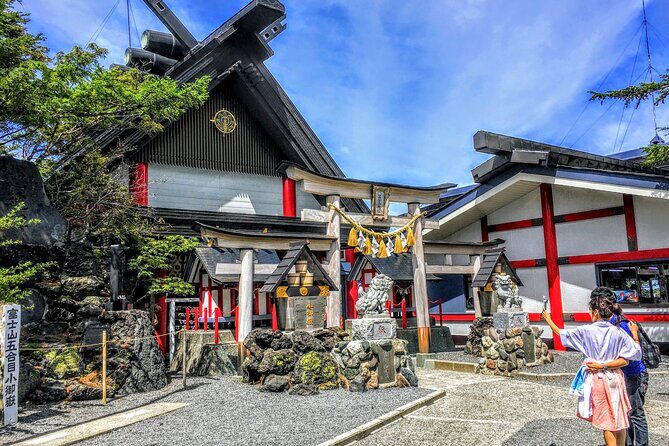
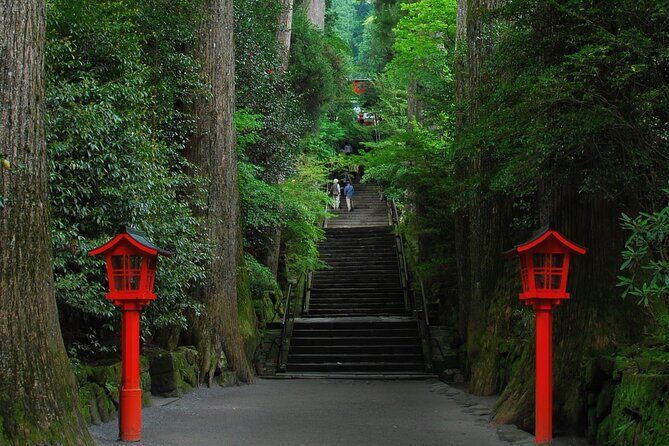
The big moment is Fuji Subaru Line 5th Station. You get about 30 minutes, which sounds short until you realize that it’s strategically placed. This is where the “Fuji feeling” kicks in: crisp mountain air, a shrine atmosphere, and strong photo angles if visibility is good.
There’s also an important reality check: access and views can change. The tour notes that if conditions limit going beyond the 4th station area, you may be adjusted accordingly. So think of 5th Station as your primary target, but not a guarantee that the mountain will look the same for everyone each day.
What you should do with your time:
- Walk out early for sky-facing photos while the group is still settling.
- If it’s windy or chilly, move quickly and layer up rather than standing still trying to “wait out” the weather.
- If the sky is clear, this is typically the best shot of the day for getting Fuji in frame without haze.
When weather cooperates, the payoff is huge—many guides are praised for keeping the line moving so you don’t waste your one real window of time near the mountain. When weather doesn’t cooperate, you’ll still get the sacred, mountain-atmosphere experience even if the view is muted.
Lunch near the mountain: a buffet that can make or break your energy
Lunch is built into the Fuji-area portion, with a buffet option included if you selected the add-on. You’ll have about 40 minutes in the Mt. Fuji section time block, with lunch at the bottom area.
Here’s the practical part: lunch is not just food. It’s also a timing tool that keeps the rest of your day on track for the ropeway and Lake Ashi cruise. Many people like buffet lunches because they’re quick, filling, and low-stress when you’re coordinating a group.
Dietary options are clearly stated:
- Vegetarian and Muslim-friendly lunch can be arranged if you request when booking.
- Halal and vegan meals aren’t available with the lunch add-on. If you need halal or vegan, the tour data suggests booking without lunch and bringing your own.
Quality can be inconsistent. Some people love the variety; others describe it as more cafeteria-like than scenic. My advice is to treat the buffet as convenient fuel, not a food highlight. If eating well is your top priority, consider skipping the add-on lunch and planning a simpler meal you control.






Midday routing: Mt. Hakone or Mt. Komitake viewpoint time
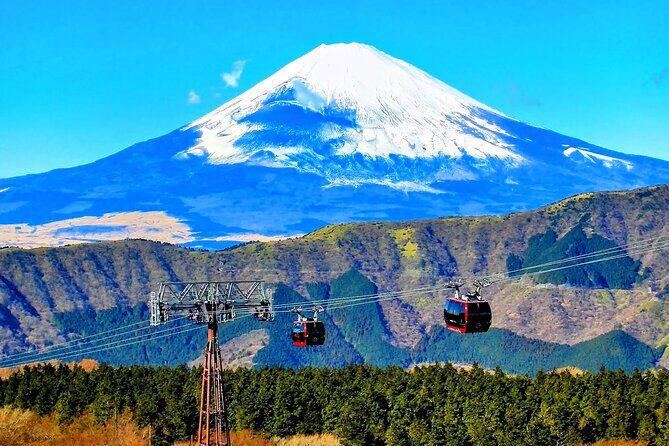
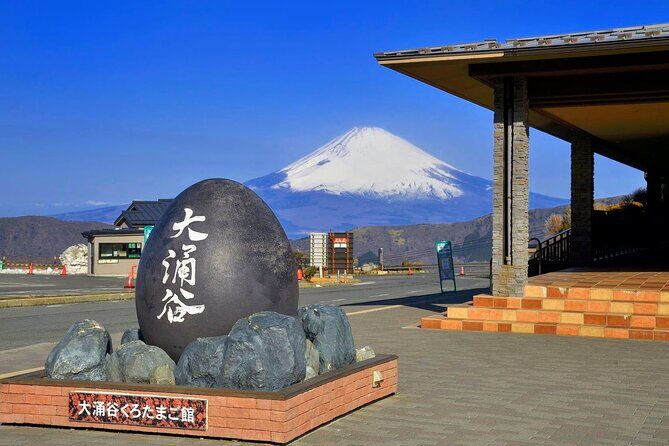
After lunch, the day includes a stop that will go to either Mt. Hakone or Mt. Komitake to show Hakone area beauty from a vantage point. The idea is to give you an extra lookout beyond just the ropeway and lake cruise.
This part of the schedule is the kind of “bonus view” that feels worth it when you get clear weather. In poor weather, it can feel more like a transit moment. Either way, it’s part of the tour’s attempt to stack viewpoints without forcing you into long self-guided planning.
Because the tour also states that the itinerary order can shift due to traffic and weather, don’t treat this as a locked sequence in the moment. The guide and bus schedule will keep you updated based on what’s safe and open.
Stop 4: Hakone Ropeway for aerial mountain-and-lake views
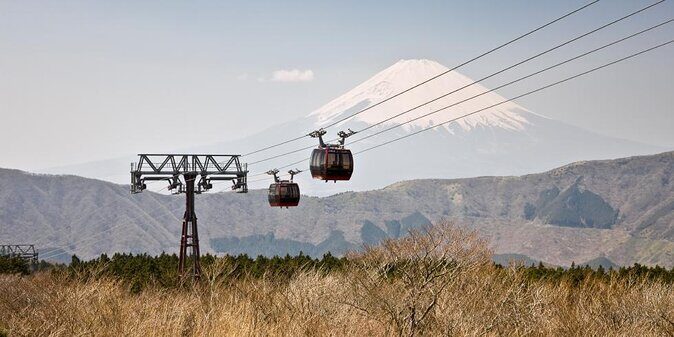
Next up is Hakone Ropeway, about 30 minutes with the ticket included. This is where the Hakone visuals tend to go from “pretty” to “wow,” because you’re elevated above the valley and you get a cleaner line of sight toward Mt. Fuji when conditions allow.
The ropeway also acts like a weather filter. If visibility is limited, you may still enjoy the ride and general scenery, but the iconic angles matter. If the ropeway is affected by timing or operations, the tour notes that activities may be adjusted or replaced depending on conditions. In real life, that can mean you’re doing a slightly different version of the planned Hakone segment.
When you ride the ropeway, wear shoes you can walk in quickly. Ropeway time is short, and it’s better to move efficiently than to spend your whole window waiting at the most crowded spot.
Stop 5: Lake Ashinoko cruise for that calm Hakone break
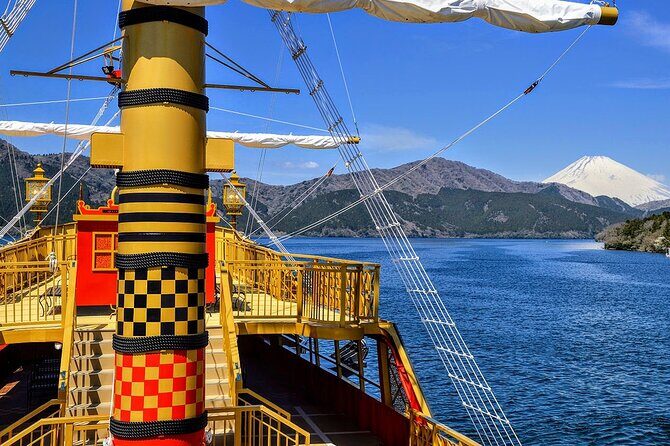
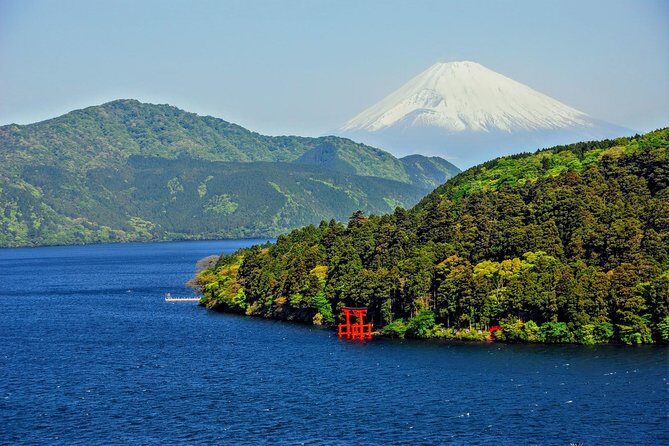
Then comes the relaxing part: a Lake Ashinoko (Lake Ashi) cruise. You’ll get around 30 minutes, and the cruise fee is included.
This is often the emotional reset of the day. After roads, crowds, and quick viewpoint hops, the water gives you a chance to breathe and take photos without running from one place to another. The lake is a caldera lake, and the scenery from the boat tends to feel more open than what you see from the roads.
One practical note: the cruise can be crowded. So if you care about photos, get to a good angle quickly once boarding starts. If you care about comfort, aim for a spot where you can sit without leaning into elbows for the entire ride.
Also, don’t assume the boat in marketing photos is exactly the boat you’ll use. The key is the experience: time on Lake Ashi with skyline and mountain vibes.
Finish at Odawara Station or Shinjuku: your return plan is the real deciding factor
Your last portion depends on conditions. The tour can end at:
- Odawara Station (with a short 5-minute stop at the Tourist Information Center), or
- Shinjuku (final drop-off about 19:00).
On weekends and public holidays, the tour may end in Odawara due to heavy traffic. If you’re planning your night in Tokyo, this matters. Odawara is also where you can take the bullet train back to Tokyo (the tour notes JR Pass holders can use bullet train from Odawara to Tokyo Station).
If your schedule needs the easiest return, the tour offers a “Returning by Bullet Train” option (including the Shinkansen ticket). That’s often worth it if you’d rather avoid last-minute transport decisions after a long day on the bus.
If you’re sensitive to time at the end of the day, double-check what your departure option implies for where you finish.
Price and value: why it costs $136.05, and when it won’t feel worth it
At $136.05 per person, this tour prices you into convenience. You’re paying for:
- an English-speaking guide and multilingual audio,
- air-conditioned coach with Wi‑Fi,
- included fees for Hakone Ropeway and the Lake Ashi cruise,
- and the structure that helps you squeeze Fuji and Hakone into one day.
If you’re used to DIY travel, it can still feel steep until you add up what you’d pay for transport + timed tickets + guide coordination. Where the value shifts is the one thing no price can fix: road time.
Yes, you do get multiple major stops, but your day is still dominated by driving. Some people feel they’re “buying time” rather than buying scenery. If you dislike rushed sightseeing windows, this tour might feel like a checklist rather than a journey. If you’re okay with that tradeoff, it’s a pretty efficient way to cover the highlights.
Weather, cancellations, and how to keep expectations realistic
Mt. Fuji is weather-dependent. The tour explicitly warns that due to weather, traffic, or operations you may not complete every activity. In those cases, alternative places can be used (examples listed include things like Oshino Hakkai, Hakone Shrine, Hakone Sekisho, Odawara Castle, Minaka Odawara, and even a Swan Lake Cruise on Lake Yamanaka), or the operator may provide a compensation gift. Refunds aren’t given for those changes.
So here’s the mindset that helps:
- If Fuji is clear, this tour can feel magical.
- If Fuji is foggy or blocked, you’ll still get the Hakone elements (ropeway and lake), and you’ll leave with a real sense of the region, not only one mountain photo.
Some schedules also include specific adjustments, like an alternative spot if access is limited due to Mt. Fuji hill climb traffic regulations on June 7.
Tips that actually help on a Fuji-and-Hakone bus day
- Dress for mountain weather: even in warmer months, it can feel cooler near Fuji and breezier at Hakone.
- Bring water and a snack plan: food and drinks aren’t included beyond the optional buffet, so having your own backup keeps you from getting cranky mid-day.
- Arrive early to the correct pickup: the LOVE statue is the final meeting point, so build in buffer time.
- Plan your photo priorities: the most reliable shots tend to come from 5th Station and the ropeway. Don’t spend all your energy at one place if the sky is fading.
- If you need halal or vegan: book without lunch and bring food. Halal and vegan lunch aren’t offered with the lunch add-on.
- If you’re prone to asthma: the tour data says it’s not recommended, so you should think carefully about exposure and air conditions.
Should you book this Mt. Fuji and Hakone 1-Day Bus Tour?
Book it if you want a low-stress, high-efficiency day that covers Mt. Fuji area viewpoints, Hakone Ropeway, and Lake Ashi without doing route planning. It’s a strong pick for first-timers in Japan, people short on time in Tokyo, and anyone who values an organized schedule and clear guidance.
Skip (or consider a different format) if your priority is long free time at each stop, slow wandering, or if you’re very photo-and-pause picky. The long bus day and short windows are real tradeoffs. Also, if your travel style depends heavily on flexible stop control, you may find a fixed group schedule frustrating.
FAQ
Where do you pick up in Tokyo?
The tour picks up at Matsuya Ginza (7:20am) or LOVE Shinjuku (7:50am). The LOVE statue is also listed as the final meeting place for the tour.
Does the tour always return to Shinjuku?
No. On weekends and public holidays, the tour ends at Odawara Station due to heavy traffic. Otherwise, it typically finishes at Shinjuku.
Is lunch included?
Lunch is included only if you choose the buffet lunch add-on. Vegetarian and Muslim lunch options are available when you request them. Halal and vegan meals are not available with the lunch add-on.
What’s included for Hakone Ropeway and Lake Ashi?
Hakone Ropeway and the Lake Ashi cruise fees are included in the tour price.
Is there Wi-Fi on the bus?
Yes. The bus includes free Wi‑Fi service.
What languages does the audio guidance support?
Audio guidance is available in English, Spanish, French, Italian, German, Portuguese, and Ukrainian.