REVIEW · TOKYO
Official Street Go-Kart in Shibuya
Book on Viator →Operated by Street Kart · Bookable on Viator
Watching people wave at you while you roll through Shibuya feels a little unreal. This small-group street go-kart ride puts you at street level for Shibuya Crossing and the nearby fashion streets, with a guide, safety gear, and a costume included in the price. Choose a start time from morning to night, so you can match the vibe to your schedule.
What I really like is how much structure you get for the money: a lead guide, included kart rental, and safety instructions so you’re not figuring it out alone. I also like that you’re set up for photo memories, not just driving—people see you coming, and the experience is built around the spectacle.
One consideration: you must have the right documents to drive. If you don’t arrive with a valid International Driving Permit (and passport in hand), you won’t be able to get behind the wheel.
In This Review
- Key Things to Know Before You Go
- The Celebrity Moment: Why This Ride Hits Hard in Shibuya
- Your Route: Shibuya Crossing, Harajuku Style, and Omotesando Nights
- 1) Shibuya Crossing: the waving, the photos, the headliner moment
- 2) Harajuku: where fashion energy starts
- 3) Omotesando: luxury streets and tree-lined night scenes
- Price and Logistics: Is $76.27 Worth It?
- The Real Gatekeeper: Driving Requirements (IDP + Passport)
- Check-In Day: How to Show Up Without Stress
- What You Actually Do While Driving (and Why It Feels Fun)
- Costumes: Fun Outfit, Practical Rules
- Photos and Memories: How You Get Keepsakes
- Timing Choices: Morning vs Night Changes the Streets
- Who Should Book This Tour (and Who Might Not)
- Should You Book Street Kart Shibuya?
- FAQ
- Do I need an International Driving Permit to drive in Japan?
- Can I use my home country’s driver’s license without an IDP?
- Can children or non-drivers ride along in the kart?
- What’s included in the price?
- Is food included?
- Do you provide hotel pickup and drop-off?
- Is there an extra insurance fee?
- What should I wear to participate?
- How many people are in a group?
Key Things to Know Before You Go
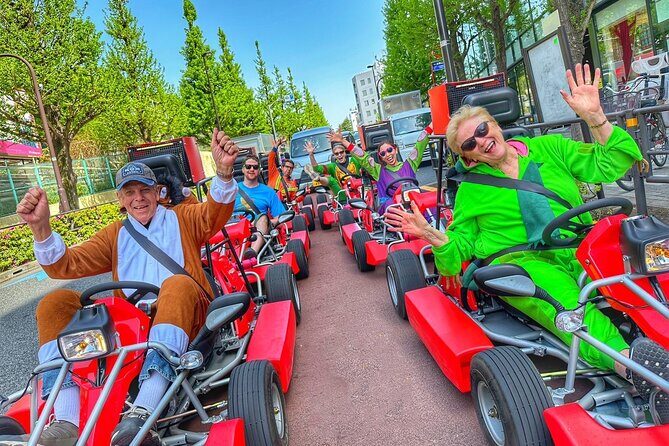
- Small group (max 6 drivers): you’ll stay together and get clearer guidance.
- You drive, single-seater only: no riding along. Everyone needs the proper license setup.
- Shibuya Crossing by street level: the waving-and-photo moment is the whole point.
- Costume rental included: fun look, but you still need practical footwear.
- Guides with strong route timing: clearer traffic-light navigation makes the ride smoother.
- Weather matters: you’ll still go in light rain, but cold/wet can change comfort.
The Celebrity Moment: Why This Ride Hits Hard in Shibuya
The headline here is simple: you’re not watching Shibuya Crossing from a safe distance. You’re driving through it. And that changes everything.
At street level, the scale of the crossing feels bigger, not smaller. You get that loop of sights and sounds—people stepping into your lane of attention, phones up, smiles, waves—while your guide keeps the flow moving. It’s a rare moment in Tokyo where you’re the feature, not the background.
I also like the “guided but still fun” balance. You’re not just hopping in a kart and crossing your fingers. You get a vehicle introduction, safety gear, and a guide riding point—so you can spend your mental energy on driving and enjoying the street energy instead of worrying about directions.
You’ll also see Tokyo in a way normal walking routes don’t give you: the city feels closer. You notice the street rhythm, the turns, and how Harajuku and Omotesando “shift gears” from one block to the next. It’s not just a photo stop. It’s motion through the neighborhoods.
You can also read our reviews of more tours and experiences in Tokyo.



Your Route: Shibuya Crossing, Harajuku Style, and Omotesando Nights
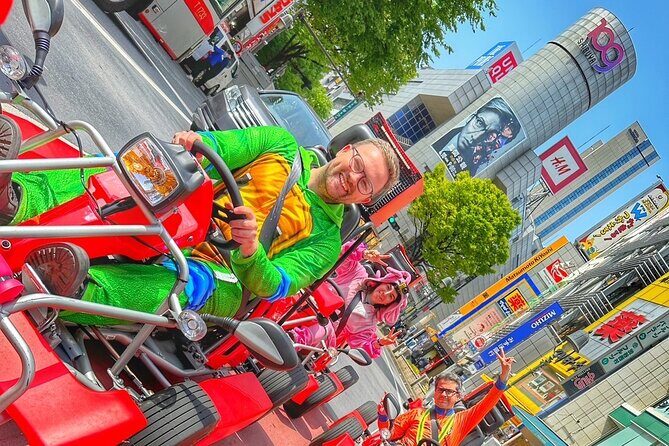
Your ride is designed as a loop around three classic Tokyo zones—so you get one memorable highlight plus two strong contrast neighborhoods.
1) Shibuya Crossing: the waving, the photos, the headliner moment
This is the main attraction. The experience is built around driving through the most famous crossing in Japan, with people waving and taking pictures as you pass. Expect the streets to feel busy in the way only Shibuya can manage, and also expect your guide to keep everyone moving smoothly.
A few practical tips that come directly from how the guides lead:
- Focus on the guide’s hand signals and timing.
- Don’t try to “race ahead” mentally; your best driving is calm driving.
Some guides stand out in the way they communicate. Names you may see mentioned include Michael, Allen, Alexis, Manuel, and Pime. Across those accounts, a pattern shows up: clear instructions and keeping the group together, so your “celebrity moment” stays fun instead of stressful.
2) Harajuku: where fashion energy starts
After the crossing, you’ll head into Harajuku. This area carries a totally different vibe than the big billboard energy of Shibuya—more street-level style, more personality in the storefronts and side streets.
The value here is variety. You get the “wow, Tokyo is Tokyo” moment first, then you slide into a more fashion-forward Tokyo lane. If you like people-watching (and who doesn’t in Harajuku), this stop gives you that without turning into a long, boring trek.
What to expect: you’ll be driving through streets with more visual texture—so keep your eyes up, but also remember you’re the driver. Let the slow-down moments become your photo time.
3) Omotesando: luxury streets and tree-lined night scenes
Omotesando is the “polished boulevard” side of this route. The streets are known for luxury shops, cafes, and tree-lined views that shift by season. If you choose an evening start time, you’ll get a stronger nighttime look, because those trees light up and the boulevard changes character after dark.
This is where the experience becomes less about chaos and more about atmosphere. The karts make the boulevard feel playful, not formal. You’re still in motion, but the environment is more photogenic and less tightly compressed than central crossing zones.






Price and Logistics: Is $76.27 Worth It?
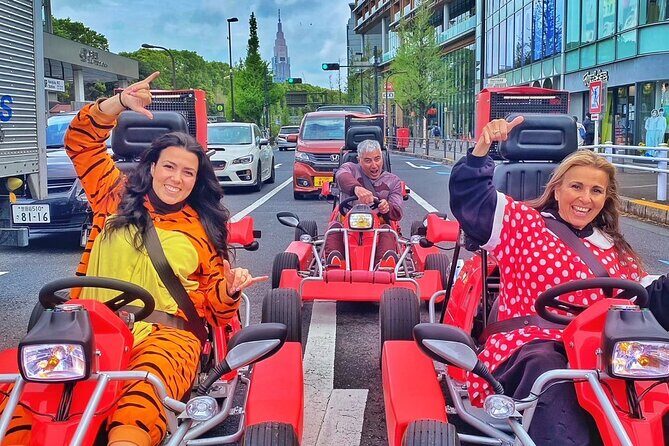
At $76.27 per person, this is not cheap. But it’s also not “just a ride,” because your cost covers several key items that add up fast in Japan: safety gear, the kart rental itself, and costume rental, plus taxes and fuel surcharge.
Here’s what’s included:
- Lead guide riding in a kart
- Kart rental fee
- Costume rental fee
- All taxes/fees/handling charges
- Fuel surcharge
And here’s what’s not included:
- Full coverage insurance fee (¥1,000 per person)
- Hotel pickup/drop-off
- Food and drinks
The best way to think about value is this: you’re paying for time with a guide, access to a street-level Shibuya moment, and the convenience of everything being organized on-site (gear, karts, costumes, instructions). If you tried to “DIY” a similar driving experience, you’d still face the document requirements, the safety rules, and the hassle of finding a legal setup.
One more pricing note that matters in practice: the insurance fee is optional on paper, but it’s included as a line item you should plan for. If you want full coverage, budget the extra ¥1,000.
The Real Gatekeeper: Driving Requirements (IDP + Passport)
This is a driving tour, so the rules are stricter than most Tokyo activities—and they matter.
You’ll need:
- An International Driving Permit (IDP) in the 1949 Geneva Convention format, from an authorized association
- Your physical IDP in hand
- Your physical passport at all times
License exceptions are listed for certain countries (like Switzerland, Germany, France, Taiwan, Belgium, Monaco) where you may need an official Japanese translation of your license through the Japan Automobile Federation (JAF).
Also important: single-seater karts mean you can’t “bring a friend who won’t drive.” Minimum age is 18 and everyone participating needs to meet the driving rules.
If your situation is complicated (hearing or mobility impairment), tell the provider ahead of time so they can plan appropriately.
Check-In Day: How to Show Up Without Stress
Plan to arrive early. One very practical tip from a guide-led experience: aim for at least 45 minutes before your departure time. Tokyo transit is fast, but getting turned around in station signage or using a map app in a crowded station can cost time fast.
Check-in is set up to move efficiently. You’ll typically get:
- A safety video
- A safety briefing
- Help getting oriented to the kart
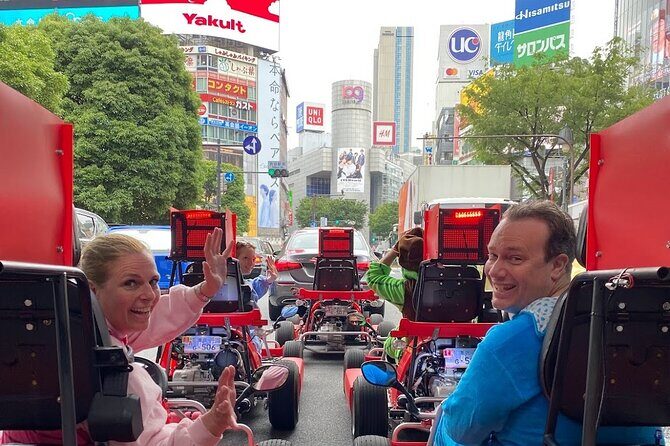
Then the real work begins: driving. The karts are single-seaters, so the first few minutes feel like learning a game with real city traffic. The good news is that multiple guides are praised for giving clear, easy-to-follow instructions and hand signals, which helps you get comfortable quickly.
One theme in the positive feedback: after the first few minutes, the driving usually clicks. If you’re nervous, you can still have a great time—some guides are specifically called out for being calm and reassuring, like Pime with nervous first-timers.
What You Actually Do While Driving (and Why It Feels Fun)
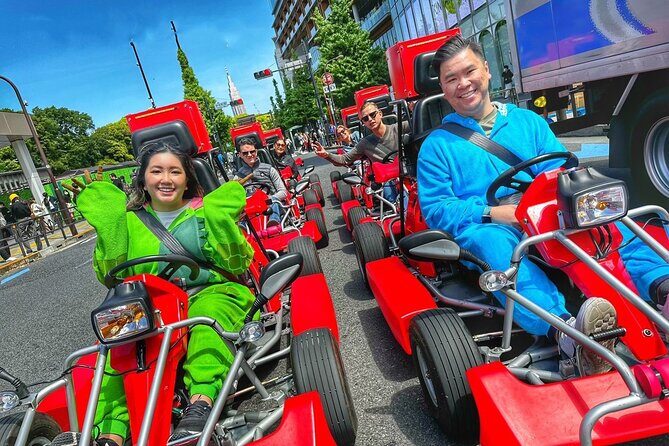
The ride is guided, but it’s still you driving the kart through traffic-light rhythms and real streets. That’s why it feels like an activity you’ll remember: it’s not watching landmarks from a bench.
Expect these elements:
- You follow your guide through the route
- You pay attention to traffic and signals
- You stay aware of other karts and pedestrians
Guides with strong traffic timing can make the ride smoother. One guide, Manuel, is praised for knowing the route and traffic-light timing, which helps reduce stop-and-start stress. Another guide, Alexis, is praised for being safe and thorough, with clear instructions.
In other words: the fun depends on good leadership. And this tour is set up for that leadership, with a max group size that keeps things manageable.
Costumes: Fun Outfit, Practical Rules
Costumes are part of the experience, and rental is included. This is one reason the tour feels like more than a driving lesson—you get that playful Tokyo flair.
But there are boundaries:
- Wear flat, closed footwear
- Avoid long, flowy skirts or dresses
- Nintendo/Mario-themed costumes are not permitted due to copyright restrictions
Also, keep in mind you’ll still be driving. The costume is for photos and fun, not for mobility. If you choose an outfit that restricts movement, your driving will feel harder.
Photos and Memories: How You Get Keepsakes
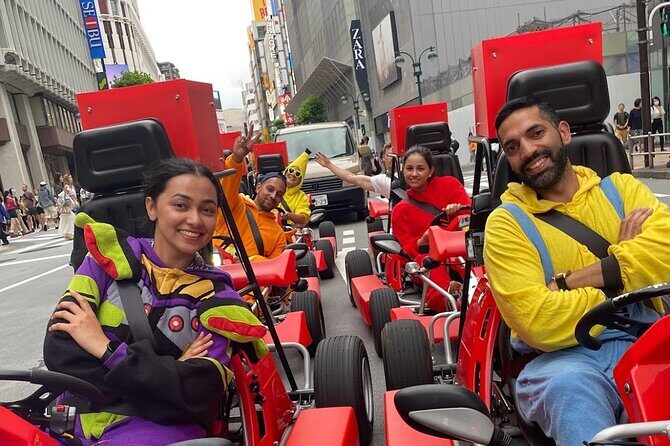
The tour leans into the photo moment. People often mention that the guide takes pictures during the ride and provides them afterward.
One review mentions AirDrop of photos immediately after the tour, which is a nice touch because it means you don’t leave thinking, I hope we can find those later. Another highlights that you get a great picture keepsake from your guide—built around the Shibuya moment.
If you’re doing this with family or friends, consider this: this is a rare time you’re both in the story and still get visual proof. Most Tokyo sightseeing leaves you behind the camera. This puts you in front of it.
Timing Choices: Morning vs Night Changes the Streets
You can pick a start time from morning to night. That choice matters, because the neighborhoods you’ll drive through change with the light.
- Morning can feel more energetic and fresh, with less night chill.
- Night adds atmosphere, especially with Omotesando’s tree lighting.
If you’re sensitive to cold, you’ll want to dress accordingly. A rain experience is also mentioned: costumes helped keep people warmer/dryer, but cold and wet can still make the ride feel less comfortable. So choose weather-smart clothing, even if you think you can power through.
Who Should Book This Tour (and Who Might Not)
This is ideal if you want:
- A high-impact, photo-friendly Tokyo experience that isn’t just walking
- To drive a kart through famous areas with a guide
- A small-group setting (max 6) where instructions actually stay clear
- A fun, slightly theatrical activity thanks to the costume component
It may not be the best fit if:
- You don’t have the right IDP/document setup yet
- You’re looking for a relaxed, stroller-friendly sightseeing pace
- You want hotel pickup (it’s not included)
- You’re traveling with minors or non-drivers who want to ride along (single-seater only)
Also, if you’re in a big group, pay attention: if more than 6 drivers, the group splits into two smaller groups with guides leading each group. That doesn’t ruin the day, but it does affect “everyone stays together” expectations.
Should You Book Street Kart Shibuya?
I think you should book if you want one of Tokyo’s most memorable, active “wow” moments that still feels organized. The Shibuya Crossing driving moment is the obvious reason, but the real win is the structure: guide-led safety, included kart/costume, and a route that mixes landmark spectacle with Harajuku and Omotesando contrast.
Book it now (instead of “maybe later”) if:
- You’re comfortable handling driving requirements ahead of time
- You can arrive early for check-in and safety briefing
- You want something different from the usual temple-and-train itinerary
Skip it if you’re missing the IDP rules, need hotel pickup, or you’re not ready to budget the optional insurance fee. Also skip it if you hate the idea of street-level driving in a busy city, even with a guide.
If you do book, plan your docs first, arrive early, wear the right shoes, and lean into the costume-and-photo side. This tour pays off when you treat it like a street-level Tokyo performance, not just a transportation activity.
FAQ
Do I need an International Driving Permit to drive in Japan?
Yes. You need an International Driving Permit (IDP) issued in the format of the 1949 Geneva Convention, and you must carry the physical IDP and your physical passport.
Can I use my home country’s driver’s license without an IDP?
No. A special document is required. The tour information explains that you need the IDP rules above to drive in Japan.
Can children or non-drivers ride along in the kart?
No. The karts are single-seaters only, and the minimum age is 18. Everyone participating must be able to drive according to the requirements.
What’s included in the price?
The tour includes the lead guide, kart rental fee, costume rental fee, fuel surcharge, and all taxes/fees/handling charges.
Is food included?
No. Food and drinks are not included.
Do you provide hotel pickup and drop-off?
No. Hotel pickup and drop-off are not included. The activity ends back at the meeting point.
Is there an extra insurance fee?
Yes. Full Coverage Insurance Fee ¥1,000 per person is not included.
What should I wear to participate?
Wear flat closed footwear. Avoid no long flowy skirts or dresses.
How many people are in a group?
The maximum is 6 travelers for this tour. If your group is more than 6 drivers, it will split into two smaller groups with a guide leading each group.