REVIEW · KYOTO
One-Day Walking Tour : Enjoy Kyoto to the fullest!
Book on Viator →Operated by KAMNAVI Tours · Bookable on Viator
Kyoto on one tight itinerary can still feel personal. This day tour strings together major sights with the kind of guide who helps you read what you’re seeing. You start early for the Arashiyama Bamboo Grove, then hit Kinkaku-ji and Fushimi Inari without wasting your time figuring out transit.
Two things I really liked: you get an easy path to the city’s top landmarks in one day, and your guide adds context so the temples don’t feel like just photos. The Golden Pavilion (Kinkaku-ji) and the orange torii corridor at Fushimi Inari are the kind of sights that land even if you only spend a short stretch there.
One drawback to plan for: this is a lot of walking. Even with breaks and shade on hot days, it’s still a full 8-hour push, and the physical demand is real.
In This Review
- Key highlights you’ll care about
- A one-day Kyoto route that actually fits reality
- Morning at Arashiyama Bamboo Forest Street before the rush
- Kinkaku-ji Golden Pavilion: icon of power, art, and change
- Gion district walking: geisha sightings are possible, not guaranteed
- Fushimi Inari-taisha: the torii tunnel walk you’ll remember
- How the pacing and transit work (and why it matters)
- Price and value: what you pay for, and what you’ll still spend
- What kind of traveler this fits best
- Should you book this Kyoto highlights walking tour?
- FAQ
- How long is the Kyoto one-day walking tour?
- What time does the tour start, and where do we meet?
- What stops are included in the tour?
- What is the total price per person?
- What costs are not included?
- Is this tour private?
- Is admission included for Kinkaku-ji?
- Is there a lot of walking?
- Are service animals allowed?
- What if the weather is bad?
Key highlights you’ll care about
- Early-morning Arashiyama: bamboo photos come easier before it gets crowded
- Kinkaku-ji at temple pace: about an hour to take it in without rushing
- Gion street time: a realistic shot at spotting geisha as you walk through
- Fushimi Inari’s torii tunnel: classic vermillion gates plus a meaningful shrine setting
- Guides help with navigation: people specifically praise smooth transit guidance
A one-day Kyoto route that actually fits reality
Kyoto can be tricky. The sights are spread out, the stations are confusing, and one wrong train connection can mess up your day. This tour solves that problem by bundling four top areas into an 8-hour walk-and-transit plan.
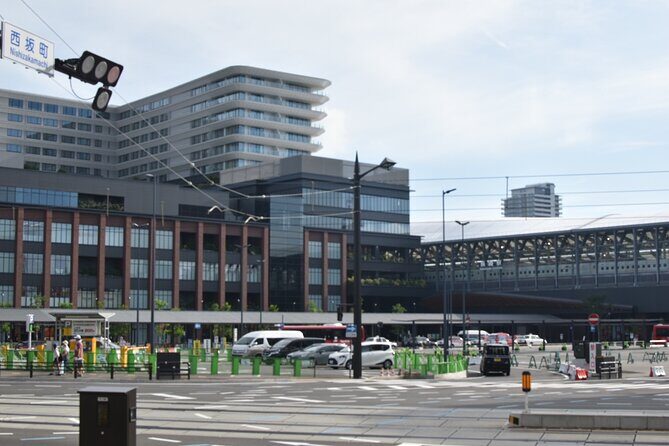
You’re starting at Kyoto Station Building (901 Higashishiokōjichō, Shimogyo Ward) at 9:00 am, and the tour returns you to the same meeting point. It’s designed for moderate physical fitness, and the pace is built around getting you from place to place while still giving you enough time to look around.
What makes it feel worth it is the way the guide acts like a translator of the city. People praise guides like Hironori, Seiya, and Noriko for giving context at each stop, not just pointing. One review called out how the guide adjusted the day to fit a family group, which is exactly what you want when you’re trying to see Kyoto without feeling herded.
This is also a private experience in the sense that it’s only your group. That matters in Kyoto, where waiting for crowds can make public tours feel slow. With fewer people in the mix, you tend to spend more time walking the actual streets and less time standing around.
You can also read our reviews of more walking tours in Kyoto


Morning at Arashiyama Bamboo Forest Street before the rush
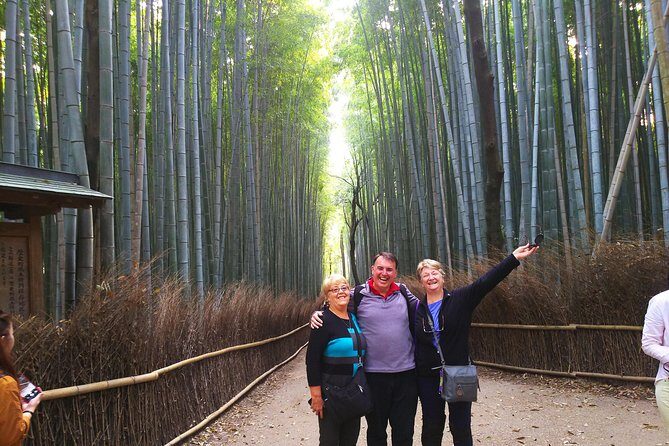
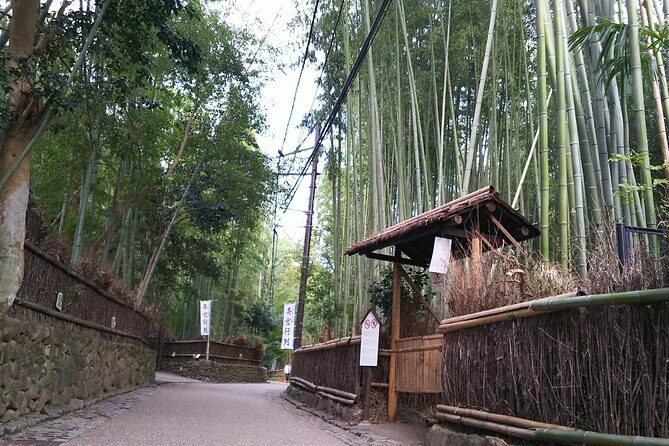
The day begins with fresh air and early light in the Arashiyama Bamboo Forest area. The tour schedule sets aside about 1 hour here, and the best part is the timing: it’s before the site gets busy.
Why that matters: bamboo works like magic when the light falls through the stalks cleanly. Later in the day, crowds and tour groups can flatten the experience into “photo, move on.” Early means you can slow down. Even the simple act of walking the path feels calmer, and you’re more likely to get shots where the bamboo looks tall and full instead of boxed in.
This is also a good moment to reset your brain for Kyoto. After you’ve watched bamboo for a while, everything else feels clearer. You start noticing textures, materials, and the way Kyoto blends nature with sacred spaces.
One practical tip: wear shoes you trust for long days. This tour stacks walking across the full day, and bamboo is the kind of place where you naturally pause for pictures and small detours.
Admission is free for this stop, so you’re not paying extra just to enjoy the atmosphere.
Kinkaku-ji Golden Pavilion: icon of power, art, and change
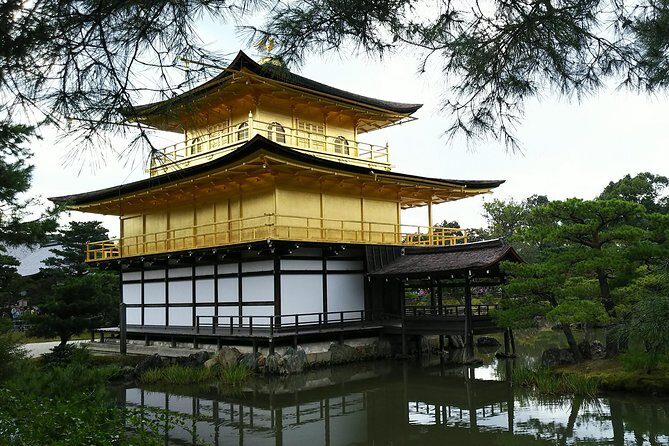
Next up is Kinkaku-ji (Golden Pavilion), one of the most photographed places in Japan for a reason. The main building is covered with gold leaf, and it’s styled as a temple that grew out of a much more political past.
The big story your guide will likely connect for you: it once served as the villa of a retired shogun, then became a temple after his death. That shift—from residence to religious site—adds weight to what you’re seeing. It’s not just pretty architecture. It’s a snapshot of how Japan’s social order changed.
Your time here is about 1 hour. Admission is not included, and the cost listed is ¥500 per person. So if you’re trying to budget, plan on this being the only paid temple stop.
One more thing I appreciate about guides on this route: pacing. On hot days, reviewers mention guides keeping people hydrated and steering the group toward shade when possible. That kind of small care is the difference between seeing Kinkaku-ji well and feeling like your brain is running on fumes.
If you’re the type who likes details, watch for the way the gold surface reflects light as you move. Even small changes in your angle can make the scene look different, especially when the sky isn’t perfectly flat.
Gion district walking: geisha sightings are possible, not guaranteed
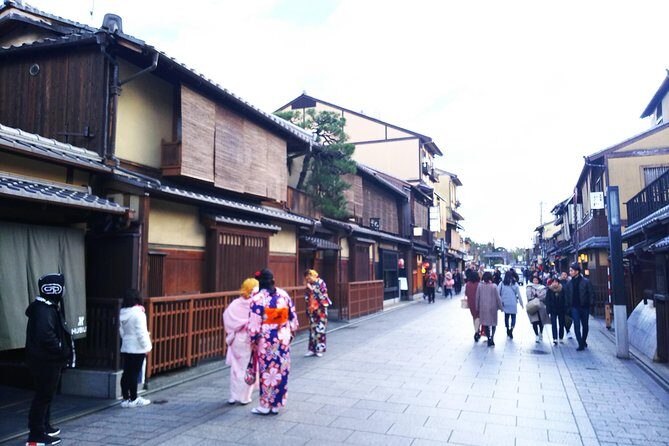
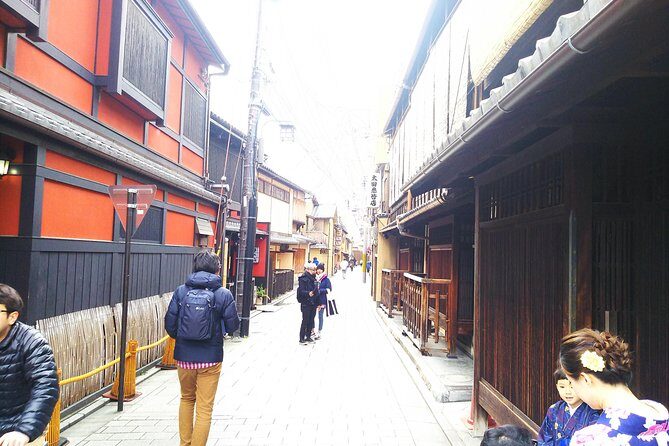
From Kinkaku-ji you move into Gion, Kyoto’s famous old-streets district linked to tea houses and traditional entertainment. Your time here is about 40 minutes, which is short enough to keep the day moving, but long enough to feel like you’re in the neighborhood rather than passing through.
What I like about this stop is that it gives you a chance to slow down in a different way. You’re not hiking through shrine grounds or standing at a temple courtyard. You’re walking streets where old Kyoto style still shows up in the details.
The guide helps here, too. The tour notes that if you’re lucky, you may encounter geisha walking from boarding houses to tea houses. That’s the realistic framing: you might see them, you might not. Either way, you’re learning how Gion works as a cultural space rather than just a backdrop.
Also, since it’s part of a guided day, you’re less likely to waste that limited 40 minutes trying to figure out where you’ll actually get a good view of the street life.
Fushimi Inari-taisha: the torii tunnel walk you’ll remember
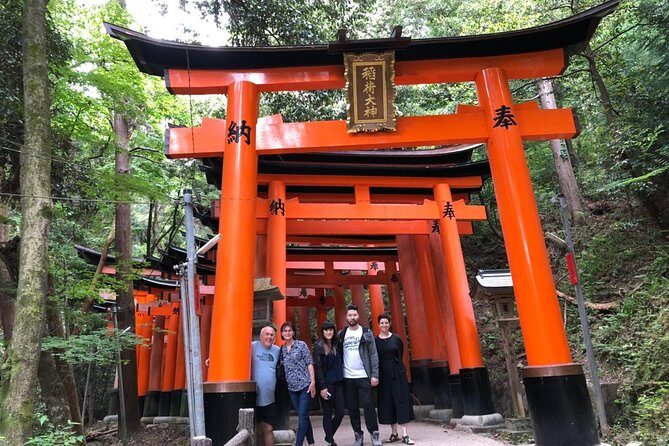
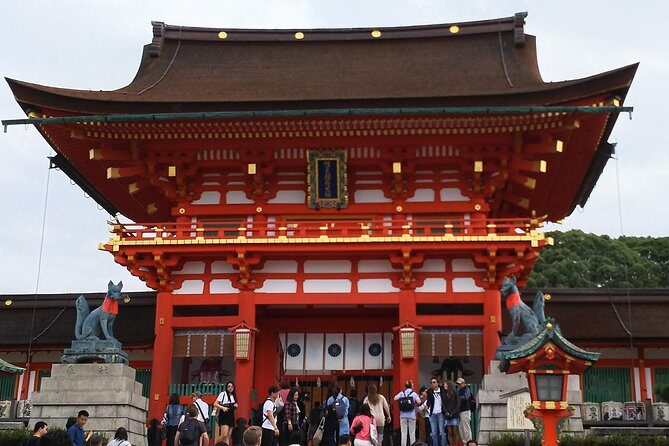
If you want one stop that feels instantly Kyoto, it’s Fushimi Inari-taisha. This shrine is known for thousands of vermillion torii gates, forming a corridor you walk through.
The tour allots about 1 hour here, and admission is listed as free. That’s a huge plus in value terms: you’re paying for guidance and time, not for another ticketed attraction.
Why torii gates hit so hard: the sheer repetition changes your sense of distance. As you walk, the tunnel effect makes the space feel deep and focused, like you’ve entered a pathway rather than just visited a point of interest. It’s also a shrine setting with its own logic, so your guide’s explanation can help you see why the gates exist and what worshippers associate them with.
You’ll get the classic photo moments, sure. But the best use of your hour is to vary your pace. Walk steadily for a while, then slow down and look around. Notice how the colors shift with light and how the shrine structures and stone paths guide you forward.
One more practical thought: this stop often pairs naturally with good shoe choice. It’s easy to want to keep walking “just a bit more,” and the day still has transit time after.
How the pacing and transit work (and why it matters)
This tour lasts about 8 hours, and it’s not only walking between sights. You’re also using public transportation. The listing explicitly notes public transportation fare of ¥1,500 per person, and reviews back up that guides help you navigate train systems.
That matters more than people think. Kyoto’s transit isn’t hard once you understand it, but it’s not intuitive if you’re new. Several guides are praised for keeping the schedule without rushing and for helping groups through the train network. That’s especially helpful if you’re traveling as a couple, family group, or first-timer who doesn’t want to burn half a day on logistics.
On at least one hot day, a reviewer mentioned walking around 20,000 steps. I wouldn’t treat that as a promise for every day, but it’s a good reality check. If you get cranky after long walking, build in hydration and plan for that evening soreness.
The route also has a smart rhythm. You start with a nature experience (bamboo), move to a palace-temple icon (Kinkaku-ji), go into a cultural district (Gion), then finish with a shrine that rewards slower attention (Fushimi Inari). That variety helps keep your energy from flatlining.
Price and value: what you pay for, and what you’ll still spend
At $131.14 per person, this tour is priced like a guided highlights day. The included part is the guide fare, plus a mobile ticket for the tour itself.
Not included:
- Kinkaku-ji admission: ¥500 per person
- Public transportation: ¥1,500 per person
- Meals
So the real value question is simple: is it cheaper and better to DIY? You could, but you’d be juggling train routes, managing timing across far-apart areas, and figuring out what each place means while you’re on the move.
Where you’re paying extra is for:
- time saved navigating transit
- story context that turns stops into understanding
- pacing that tries to keep you comfortable, even in heat
The reviews are heavy on the guide factor. People call out guides being helpful with transit, fluent enough for smooth explanations, and flexible with pace. That kind of service is the difference between “I saw Kyoto” and “I got Kyoto.”
One more value note: this is booked around 60 days in advance on average. If you’re traveling in peak season or on popular weekdays, that suggests availability can tighten up.
What kind of traveler this fits best
This tour is a good fit if you:
- want Kyoto highlights in one full day
- prefer a clear plan over an unstructured scramble
- like walking and don’t mind a long day out
- want someone to help you understand what you’re seeing
It’s also practical if you’re traveling with kids or as a small group, since reviews mention guides adjusting schedules for group needs. One review specifically noted a guide foregoing lunch timing to keep the day efficient for a family of six.
If you’re someone who hates crowds, you’ll at least get a head start at bamboo. If you hate heat, choose your hydration strategy carefully and wear gear that works outdoors. One reviewer noted the guide kept the group hydrated and used shade when possible, which is exactly the kind of adaptation you want.
If you want a deeply slow, day-long wandering vibe with long pauses at every corner, this may feel time-pressed. It’s built to cover major hits, not to sit for hours in one spot.
Should you book this Kyoto highlights walking tour?
If your goal is to see Kyoto’s most famous landmarks—bamboo, Golden Pavilion, Gion, and Fushimi Inari—in a single day without turning your vacation into a navigation project, I’d say it’s worth booking. The strongest selling point is the guided flow: guides help with pacing, explain what you’re looking at, and make transit feel manageable.
Book it if you’re comfortable walking for most of the day and you want a structured overview that still leaves room to look and take photos. Skip it if you’re trying to minimize walking, or if you want a slow, offbeat itinerary that leaves out the big-name sites.
If you do book, put your priority on footwear, water, and a calm mindset. Kyoto rewards attention, but this day rewards momentum.
FAQ
How long is the Kyoto one-day walking tour?
It runs for about 8 hours.
What time does the tour start, and where do we meet?
The start time is 9:00 am, and the meeting point is Kyoto Station Building (901 Higashishiokōjichō, Shimogyo Ward, Kyoto).
What stops are included in the tour?
You visit Arashiyama Bamboo Forest Street, Kinkaku-ji (Golden Pavilion), Gion, and Fushimi Inari-taisha.
What is the total price per person?
The listed price is $131.14 per person.
What costs are not included?
Kinkaku-ji admission is listed as ¥500 per person, public transportation is listed as ¥1,500 per person, and meals are not included.
Is this tour private?
Yes. Only your group will participate.
Is admission included for Kinkaku-ji?
No. Kinkaku-ji admission is not included.
Is there a lot of walking?
Yes. The tour notes quite a bit of walking and a moderate physical fitness level is recommended.
Are service animals allowed?
Yes, service animals are allowed.
What if the weather is bad?
The experience requires good weather. If it’s canceled due to poor weather, you’ll be offered a different date or a full refund.