REVIEW · OSAKA
Osaka Ramen Cooking Class “Learn here and make it at home”
Book on Viator →Operated by WashokuYanen · Bookable on Viator
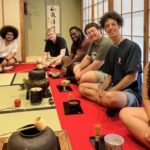
Ramen becomes personal in just three hours. This Osaka class puts you in the kitchen with a live English-speaking instructor and a small group setup, then hands you the skills to make ramen and gyoza you can actually repeat later. It’s also timed so you cook, eat, and drink what you made without racing across town.
What I like most is the way the teaching feels practical, not theatrical. You’re actively working with ingredients and techniques, and the instructors keep the pace friendly and easy to follow. I also love the payoff: after the cooking, you sit down for a full tasting session with drinks, including sake and beer for adults.
One thing to keep in mind: if you’re vegetarian, pescatarian, vegan, or have allergies, you need to message after booking so the kitchen can plan for it. If you show up with restrictions but didn’t reach out, you could end up with less-than-ideal choices.
In This Review
- Key highlights you’ll care about
- Why this Osaka ramen class is a smart use of 3 hours
- Finding the kitchen: Shinsaibashi and Honmachi station convenience
- The 30-minute start: orientation, tools, and getting unstuck fast
- Hands-on cooking: ramen basics and crispy fried gyoza steps
- Ramen: toppings, broth mindset, and noodle soup balance
- Gyoza: pan-fried texture and dipping sauce payoff
- You’ll get instructor help in the language you need
- The 1-hour tasting: sake, beer, and what you made together
- What you actually get for the price: $70 of skills and dinner
- Dietary requests and allergies: contact after booking for best results
- What to bring, what to wear, and how to plan your day
- Scheduling tip
- Who should book this class (and who might skip it)
- Should you book this Osaka ramen cooking class?
- FAQ
- How long is the Osaka ramen cooking class?
- What dishes will I make?
- Do I need to bring ingredients or kitchen tools?
- What languages do instructors speak?
- Is alcohol included?
- Where does the class take place?
- How big are the groups?
- What if I’m vegetarian, vegan, pescatarian, or have allergies?
- Is free cancellation available?
Key highlights you’ll care about
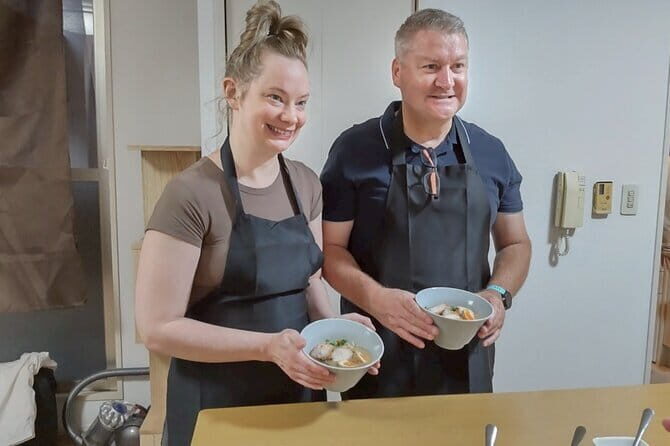
- Small group (max 8) so you’re not stuck watching from the back row
- Ramen + fried gyoza both made hands-on, not just assembled
- Multilingual instructors in English and Japanese, with Spanish available on request
- Kitchen is central: about a 5-minute walk from both Shinsaibashi and Honmachi stations
- Cook, then taste for 1 hour with sake, beer, and soft drinks
- Bring yourself only: tools, aprons, gloves, ingredients all provided
Why this Osaka ramen class is a smart use of 3 hours
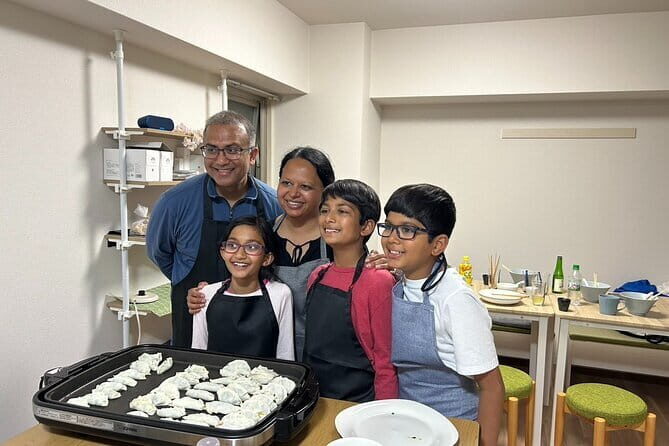
This class is built for people who want more than a meal. You’re learning ramen and gyoza as techniques: handling ingredients, following steps, and getting comfortable with the rhythm of Japanese comfort food cooking.
I like that the experience is structured, but not rigid. You get a short orientation first, then focused cooking time, and then a relaxed tasting window. It’s the kind of format that helps you leave with confidence, not just photos.
And the small group size (up to 8 people) matters. In a class like this, you’ll have questions—about timing, seasoning, texture, and frying. Smaller groups mean your instructor can actually respond instead of rushing everyone through.
You can also read our reviews of more cooking classes in Osaka
Finding the kitchen: Shinsaibashi and Honmachi station convenience
The meeting point is in the Chuo Ward area at ディアコート船場3034-chōme-3-1 Bakurōmachi, Osaka. The kitchen location is about a 5-minute walk from both Shinsaibashi Station and Honmachi Station on the Osaka Metro.
That’s a sweet spot for planning. You can pair the class with the shopping and dining energy of Shinsaibashi, but still reach a quiet neighborhood kitchen once you’re done. If you’re traveling and juggling train schedules, walk time like this is what keeps the day calm.
Also, you’ll be near public transportation. That’s helpful because a cooking class is one of those activities where arriving slightly stressed can throw off your focus.
The 30-minute start: orientation, tools, and getting unstuck fast
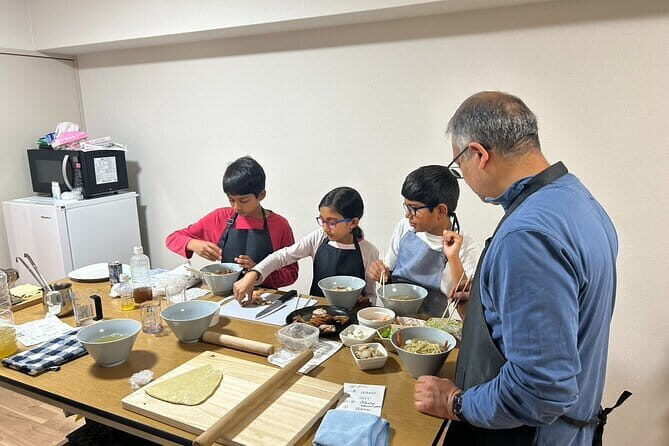
You’ll begin with a 30-minute orientation and preparation session. This is more than a greeting; it’s the part that makes the rest of the cooking time actually work.
You’ll get aprons and disposable plastic gloves, plus the kitchen tools needed for the class. The experience is designed around you bringing only yourself—no prep, no ingredient hunting, no worrying about whether you packed the right gear.
In my view, this early setup is where good cooking classes win. If you understand what you’re holding, how it’s used, and what the instructor expects, you move through the cooking steps with less confusion and less wasted time.
Hands-on cooking: ramen basics and crispy fried gyoza steps
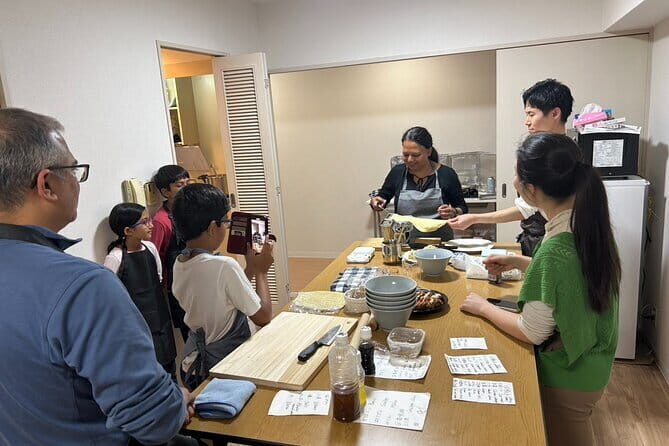
After orientation, you’ll have about 1.5 hours of cooking. The focus is on two dishes: ramen and fried gyoza, with the goal of making them from scratch enough that you learn the real flow.
Ramen: toppings, broth mindset, and noodle soup balance
Ramen here is described as a Japanese noodle soup with a rich broth and topping options like pork, chicken, egg, and vegetables. Even if the exact assembly details vary by the day, the core idea is consistent: you’re practicing how the components come together into something that tastes like a meal, not just noodles.
The value for you is technique you can reuse. When you learn how to build a bowl—broth + noodles + toppings—you start understanding ramen beyond ordering at a counter.
A few more Osaka tours and experiences worth a look

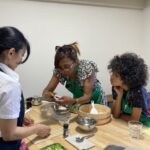
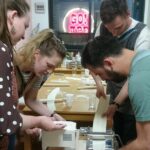
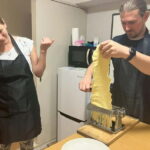
Gyoza: pan-fried texture and dipping sauce payoff
For gyoza, you’ll make fried gyoza with a vegetable-and-meat filling. The target texture is crispy on one side, then served with dipping sauce.
Gyoza is one of those foods where a little technique makes a big difference. You’re not just rolling or folding; you’re also learning how frying creates that signature contrast between crisp and tender. That contrast is a huge part of why gyoza tastes so satisfying.
You’ll get instructor help in the language you need
Instructors are fluent in English and Japanese, and Spanish support is available upon request. That’s a practical advantage—food timing and texture cues are easier when you can understand the instructor’s explanations clearly.
If your Japanese is basic, don’t worry. This class is set up for communication, not intimidation.
The 1-hour tasting: sake, beer, and what you made together
Once cooking finishes, you’ll get a 1-hour tasting session. This is your reward window—eat what you made, compare notes with your group, and enjoy the atmosphere without rushing to the next activity.
Drinks are part of it: sake, beer, and soft drinks. There’s an important rule: alcoholic drinks are served only to travelers 20 years old and above. If you’re under 20, you’ll still get non-alcoholic options, so you won’t feel left out.
I really like this tasting structure because it closes the loop. If something didn’t come out perfect during cooking, you get to taste the result right away and understand why—then you can adjust next time.
What you actually get for the price: $70 of skills and dinner
At $70 per person, this is not a budget activity. But for a hands-on cooking experience, it’s priced in a way that makes sense when you look at the full package.
You’re paying for:
- an instructor who guides you step by step in multiple languages
- all ingredients and cooking tools
- aprons and disposable gloves
- time to cook two dishes
- a tasting session with drinks
That’s basically “skills + dinner + drinks,” in a fixed format for about 3 hours. If you were trying to recreate this at home without local sourcing and with no guidance, the time and uncertainty would add up fast.
Also, the maximum group size of 8 helps justify the price. This isn’t a giant crowd where you get a quick demo and then cook alone.
Dietary requests and allergies: contact after booking for best results
The class offers vegetarian, pescatarian, vegan options, and it can handle allergies, but only if you contact the team after booking.
That’s the key detail. The experience is flexible, yet it’s not automatic. If you have restrictions, message soon after your reservation is confirmed so they can plan ingredients and cooking steps.
If you’re traveling with multiple allergies, I’d treat that as a priority task. Send clear information right away, because you want the kitchen to have time to prepare properly.
What to bring, what to wear, and how to plan your day
Good news: you don’t need to shop or prep. You just bring yourself. Ingredients and tools are included, and you’ll be given an apron and gloves.
For clothing, wear something comfortable for standing and moving around a kitchen setup. You’ll be cooking, so avoid anything delicate or tight. Think “practical travel outfit,” not “nice dinner clothes.”
Scheduling tip
The class is about 3 hours total. Plan it when your energy is decent—late afternoon or early evening can work well, especially if you want to end with the tasting and drinks.
Because it ends back at the meeting point, you can treat it like a self-contained dinner plan without needing a complicated return route.
Who should book this class (and who might skip it)
This is a great fit if you:
- want a hands-on food experience in Osaka rather than another walking tour
- enjoy cooking and want a repeatable outcome (ramen + gyoza)
- like learning from instructors who can explain in English/Japanese/Spanish
- want a central, easy-to-reach activity near Shinsaibashi and Honmachi
You might skip it if:
- you’re mostly after sightseeing and don’t enjoy cooking at all
- you have strict dietary needs and haven’t messaged the team after booking
- you’re trying to keep costs ultra-low
If you fall somewhere in the middle—curious but not a big cook—this is still a solid choice. The format is designed to keep you moving and guided.
Should you book this Osaka ramen cooking class?
Yes, if you want a real food skill plus an easy, structured dinner in central Osaka. The biggest value is not just eating ramen and gyoza, but learning the process with step-by-step help, then tasting your results right away.
Book it when you can follow through with dietary messages if needed, and plan a relaxed day around the 3-hour slot. If that sounds doable, you’ll likely leave feeling like you brought home more than souvenirs—you brought home technique.
FAQ
How long is the Osaka ramen cooking class?
The class runs about 3 hours total.
What dishes will I make?
You’ll make ramen and fried gyoza, and then taste what you cooked.
Do I need to bring ingredients or kitchen tools?
No. You just bring yourself. All ingredients and kitchen tools are provided, along with aprons and disposable gloves.
What languages do instructors speak?
Instructors can speak English and Japanese, and Spanish speaking support is available upon request.
Is alcohol included?
Yes. The tasting includes sake and beer, plus soft drinks. Alcohol is only served to travelers 20 years old and above.
Where does the class take place?
The kitchen is about a 5-minute walk from Shinsaibashi and Honmachi stations on the Osaka Metro. The meeting point address is ディアコート船場3034-chōme-3-1 Bakurōmachi, Chuo Ward, Osaka.
How big are the groups?
The class has a maximum of 8 travelers.
What if I’m vegetarian, vegan, pescatarian, or have allergies?
Contact the provider after booking so the team can handle dietary needs and allergies.
Is free cancellation available?
Yes. You can cancel up to 24 hours in advance for a full refund. If you cancel less than 24 hours before the start time, the amount paid is not refunded.