REVIEW · TOKYO
Private Sushi Making with a Sushi Master
Book on Viator →Operated by SUSHI MAKING CLASS in TOKYO 咲 -EMI · Bookable on Viator
Sushi night, but you build it. In Tokyo, this private workshop pairs you with a sushi master inside a Michelin-starred restaurant setup, then guides you through nigiri, maki, and gunkan along with a short quiz and photo time.
You’ll get personalized attention for slicing, rice work, and choosing seasonal ingredients, and the session ends with the sushi you made. The main thing to consider is timing: if you don’t check in within 5 minutes of the start time, it’s treated as a no-show with no refund.
In This Review
- Key things to know before you go
- Michelin-starred sushi, private and practical
- Nigiri, maki, gunkan: the three sushi skills that click
- Nigiri: simple shape, real precision
- Maki: rolls, seaweed, and tight structure
- Gunkan (battleship-style): the “ingredient showcase” shape
- The 1 hour 45 minutes flow: history, quiz, demo, then hands-on
- Meet the team: English-friendly instruction and real mentorship
- The meal and photo shoot: your sushi, your souvenirs
- Price and value: what $130.81 really buys in Tokyo
- Timing and logistics: meeting point, transport, and the 5-minute rule
- Dietary needs: yes, they plan for you
- Who should book this private class
- Should you book this private sushi master class?
- FAQ
- How long is the sushi making workshop?
- What sushi types will I learn to make?
- Where does the workshop take place?
- Is this a private experience?
- Is there a mobile ticket?
- Can you accommodate dietary restrictions or allergies?
- Will there be a meal at the end?
- Is there a quiz or sushi history lesson?
- What happens if I arrive late?
- Can I cancel and get a refund?
- Is there a separate fish gutting or filleting option?
Key things to know before you go
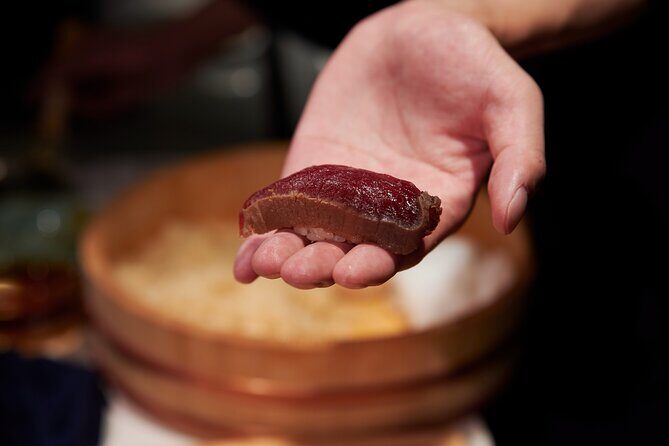
- Michelin-starred restaurant setting, but in a private class format
- Three styles covered in one session: nigiri, maki, and gunkan
- Quick sushi-history quiz plus hands-on coaching
- Ingredient quality focus, chosen and prepared to pristine condition
- Photo shoot built in, so you leave with a record of your sushi
- Dietary needs supported (vegetarian, vegan, gluten-free, and more)
Michelin-starred sushi, private and practical
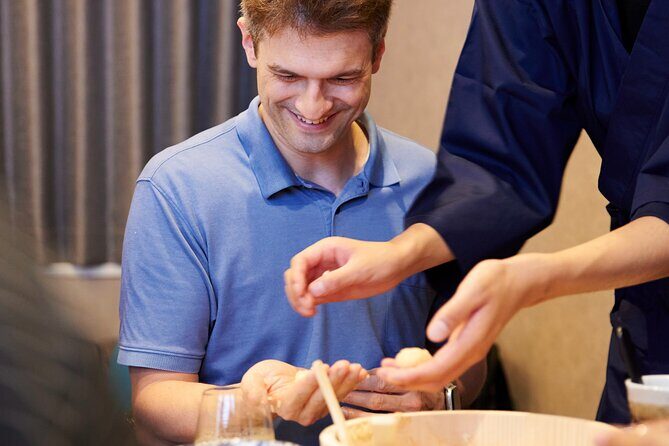
Tokyo has no shortage of great sushi. The trick is finding time with someone who can break down the craft in a way you can actually repeat later. This class is set in a Michelin-starred sushi restaurant, but the experience is arranged for your group only, so you’re not competing with a crowd for attention.
The meeting point is A-PULSE AZABU STUDIO in Nishiazabu (Minato City). It’s described as near public transportation, which matters because the timing here is tight: the workshop clock starts at the scheduled time. If you’re the type who likes to wander a bit and then casually arrive, this is one you’ll want to treat like a real appointment.
What I like about the “private” format is that it changes the learning. A sushi master can correct your rice pressure, your knife angles, and your roll tightness on the spot. That feedback is hard to get when you’re simply eating at a counter.
You can also read our reviews of more private tours in Tokyo



Nigiri, maki, gunkan: the three sushi skills that click
This workshop doesn’t stop at one style. You make three, and that gives you a fuller picture of sushi technique.
Nigiri: simple shape, real precision
You’ll learn nigiri, where a slice of fish sits on seasoned rice. The concept is straightforward, but the control is not. In a good class, you learn how the rice behaves and how the topping should sit—enough structure to hold its form, but not so much pressure that it turns dense.
Nigiri is also a great “confidence builder.” Once you understand the balance between rice and fish, you’ll start recognizing why restaurant nigiri tastes clean and cohesive instead of heavy.
Maki: rolls, seaweed, and tight structure
Next is maki, the traditional rolled sushi wrapped in seaweed. Rolls are where beginners often struggle, because there’s more to manage: seaweed, rice distribution, filling placement, and roll tightness.
The value here is that you’re not just copying a picture. You’re guided through the method—how much rice, how to keep it even, and what to do so the roll doesn’t fall apart when you cut it (or when you lift a piece).
Gunkan (battleship-style): the “ingredient showcase” shape
Finally, you make gunkan, often called battleship-style sushi. It’s seaweed-wrapped rice topped with various ingredients. This is the most “creative-feeling” of the three, because you’re seeing different toppings come together on a single base.
Even if gunkan looks fancy, the underlying technique is learnable: stable rice shaping and a topping that stays neat. That’s the kind of restaurant result you’ll want at home, and this style teaches the setup.
One more quality point: the master prepares and selects the ingredients for pristine condition. That matters because your results depend not only on technique, but on ingredient freshness and consistency.






The 1 hour 45 minutes flow: history, quiz, demo, then hands-on
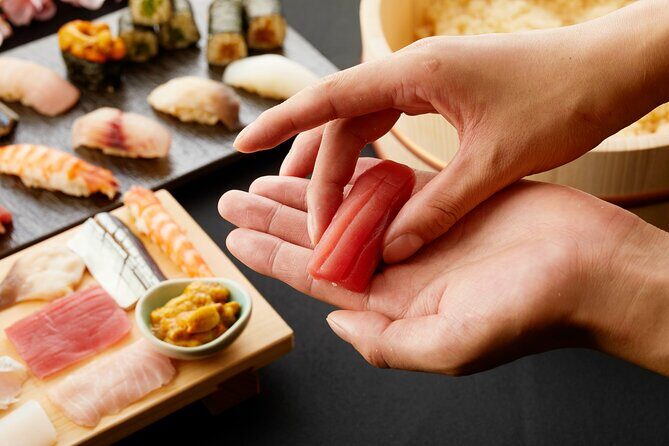
The class runs about 1 hour and 45 minutes. The pacing is designed to move you from context to repetition without dragging on.
Here’s how the session is structured:
- An introduction to sushi history
- A quiz
- A sushi-making demonstration by the master
- Hands-on sushi-making
- Time to take photos and eat what you made
That quiz might sound like a gimmick, but it actually helps you focus. Sushi has a lot of small rules—rice seasoning, fish handling, roll construction, and even the reasoning behind certain pairings. Quick questions keep the lesson active instead of passive.
The demo step is also important. In good classes, you don’t just watch; you learn what to copy and what to avoid. Then the hands-on portion gives you the repetition needed to feel it click.
At the end, you get photo time and then a meal. Come hungry, because you’re eating your own creations, not just watching them disappear.
Meet the team: English-friendly instruction and real mentorship
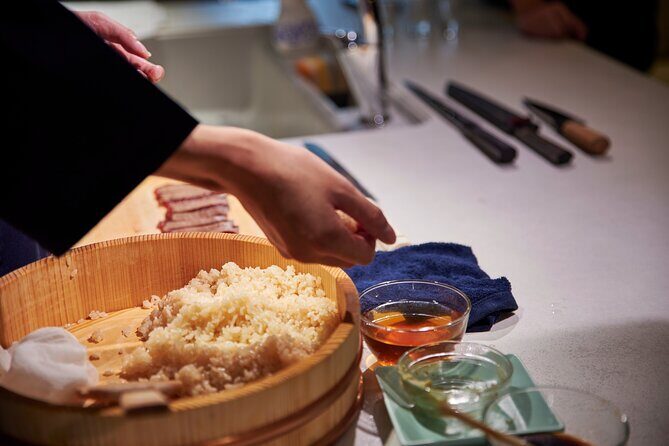
From the reviews, the teaching experience is a highlight. Names like Rin show up as especially helpful, and chef Riku is mentioned as a star for precision and passion. You can also expect English support—reviews specifically note the staff speaks perfect English—so you won’t be left guessing what the master wants you to do.
Why does this matter? Because sushi isn’t forgiving. If rice is too wet, it’s sticky. If it’s packed too hard, it’s dense. If roll pressure is off, the seaweed tears or the pieces unravel. A good instructor keeps you pointed in the right direction.
I also like the “ask anytime” vibe that private classes naturally create. You’re not waiting your turn behind a line of other people. Instead, the sushi master can correct your technique while the ingredients are still in reach and while the lesson is fresh.
The meal and photo shoot: your sushi, your souvenirs
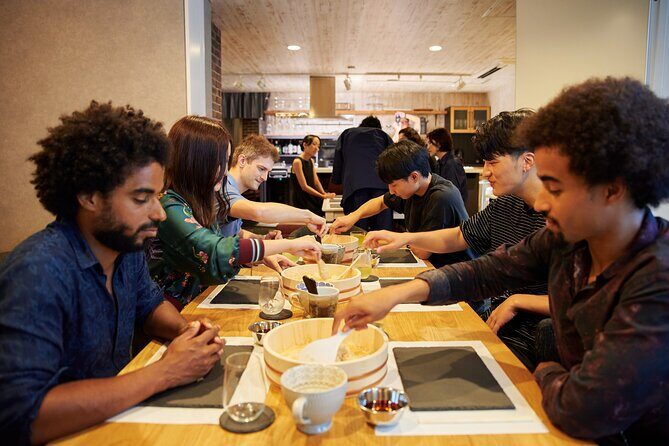
This workshop ends with a freshly prepared meal made from the sushi you create. That’s a big deal for value, because you’re not paying just for instruction—you also get to enjoy the result of that instruction.
Reviews mention the meal included soup and green tea alongside the sushi. Even if details vary slightly by session, the important part is consistent: you eat the sushi you shaped, rolled, and topped.
Then comes the photo shoot. This isn’t just about being cute. It gives you a chance to inspect your own work. You can compare how your pieces look to what you remember from Japanese restaurants, spot what you might improve next time, and share the outcome with friends.
If you care about having a solid memory beyond your camera roll, this structure helps. You leave with both food and proof.
Price and value: what $130.81 really buys in Tokyo
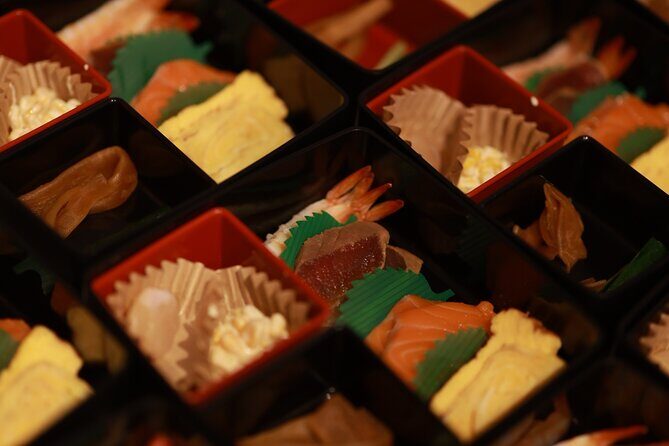
At $130.81 per person, this class isn’t a bargain-price “grab-and-go” workshop. But it’s also not priced like a rare trophy experience. The value comes from how many things are included, not just the restaurant name.
You’re paying for:
- A sushi master guiding you through three different sushi types
- A lesson that includes history and a quiz, not only hand movements
- A private setup, meaning you get tailored attention
- Ingredient handling and preparation in a high-standard environment
- A full end-of-class meal built from your own sushi
- Photo time
In other words, the fee covers skill coaching plus the kitchen-grade experience. That’s the best way to learn sushi because you work with quality ingredients and you get feedback while your technique is still developing.
If you’re the kind of person who likes to eat great sushi but also wants a party trick that works on day two at home, this is exactly the kind of class where the price starts to make sense.
Timing and logistics: meeting point, transport, and the 5-minute rule
The meeting point is A-PULSE AZABU STUDIO (エーパルス3-chōme-8-18 Nishiazabu, Minato City). The session ends back at the meeting point, so you’re not figuring out your own way across town afterward.
It’s near public transportation, which helps. Still, plan buffer time. The no-show policy is strict: if you don’t contact them within 5 minutes after the scheduled start time, your reservation is treated as a no-show and no refund is provided.
Here’s a practical note I’d follow: if your train looks even slightly risky, arrive early enough to settle in. If your flight or train delay truly happens, the team has shown kindness in at least one situation—one review notes they accommodated an arrival about an hour late. That doesn’t remove the 5-minute rule, but it does suggest communication matters.
Also, the booking includes a mobile ticket, so you’ll want your phone charged and ready.
Dietary needs: yes, they plan for you
One of the best signs for peace of mind is that the workshop is allergy-friendly and can accommodate dietary restrictions such as vegetarian, vegan, and gluten-free (and more). Sushi classes sometimes get tricky when you have strong restrictions, because a lot of sushi depends on dashi or soy-based ingredients.
Here, the promise is clear: the experience is set up to handle dietary needs. If that’s you, this is the type of class where you can relax and focus on learning instead of worrying.
Who should book this private class
This is a great fit if:
- You want to learn multiple sushi styles, not just one
- You like structured teaching with a quiz and demonstration
- You want private attention from a sushi master
- You care about ingredient quality and clean technique
- You need dietary accommodations
- You’re a solo learner and want one-on-one support without awkward group pacing
It might be less ideal if:
- Your schedule is too tight for a 1 hour 45 minute lesson plus photo time
- You’re likely to miss the start time and can’t communicate quickly
- You only want to eat sushi and don’t care about the process
Should you book this private sushi master class?
If your goal is to bring home real sushi know-how, I’d book it. The combination of three sushi types, private coaching, a Michelin-starred setting, and an end meal you actually enjoy makes it a strong learning-and-eating package.
Before you go, do two things: check your dietary needs up front, and plan to arrive early enough that the 5-minute no-show window never becomes stressful.
If you want a sushi workshop that feels like mentorship rather than a demo, this is the kind of Tokyo experience you’ll remember.
FAQ
How long is the sushi making workshop?
The workshop runs for about 1 hour and 45 minutes.
What sushi types will I learn to make?
You’ll make three types: nigiri, maki, and gunkan (battleship-style).
Where does the workshop take place?
The workshop takes place in a Michelin-starred sushi restaurant setup in Tokyo.
Is this a private experience?
Yes. It’s private, and only your group participates.
Is there a mobile ticket?
Yes, the experience includes a mobile ticket.
Can you accommodate dietary restrictions or allergies?
Yes. Allergy-friendly service is available, and dietary restrictions such as vegetarian, vegan, and gluten-free can be accommodated.
Will there be a meal at the end?
Yes. The workshop ends with a freshly prepared meal that includes the sushi you make.
Is there a quiz or sushi history lesson?
Yes. The session includes an introduction to sushi history and a quiz.
What happens if I arrive late?
There’s a no-show policy: if you do not contact them within 5 minutes after the scheduled start time, the reservation is treated as a no-show and no refund is provided.
Can I cancel and get a refund?
Yes. You can cancel up to 24 hours in advance for a full refund. If you cancel less than 24 hours before the start time, the amount paid is not refunded.
Is there a separate fish gutting or filleting option?
There is a separate premium fish filleting course option referenced on another page.