Tokyo to Fuji, all in one day.
This private day tour is built for one simple goal: see Mount Fuji and the Hakone area without rushing yourself across Japan. You get pickup and drop-off from your Tokyo accommodation, and your English-speaking guide keeps the day moving while adding context so the scenery feels like more than postcard views.
I really like the flexibility here. You can pick 5 stops from the featured options, so you can lean more Fuji-heavy (Chureito Pagoda and Kawaguchiko) or more Hakone-heavy (Ropeway and Owakudani). One thing to think about: the whole plan depends on weather. If visibility is poor, the day can shift, and you may need to adjust expectations for how clearly Mount Fuji shows up.
In This Review
- Key Points at a Glance
- Why This Private Mount Fuji and Hakone Day Works
- Price and Value: What $425 Gets You (Up to 3)
- Building Your Day: Picking 5 Stops From the List
- Hakone Ropeway to Owakudani: Volcano Time With Big Views
- Oshino Hakkai: Fuji Legends and Clear Water Ponds
- Lake Kawaguchiko and Chureito Pagoda: Where Fuji Photos Get Real
- Gotemba Premium Outlets: A Practical End to the Day
- Timing, Traffic, and How Not to Feel Rushed
- Included Comfort: Private Ride, Tickets You’ll Still Handle
- Should You Book This Private Tour?
- FAQ
- How much does the private tour cost?
- How long is the tour?
- Do you get pickup and drop-off from Tokyo accommodations?
- Are tickets for the Hakone Ropeway included?
- Can I choose which places to visit?
- Is lunch included?
- Is Mount Fuji viewing dependent on weather?
- What is the cancellation policy?
Key Points at a Glance
- Private pickup and drop-off in Tokyo saves you the hassle of transfers and schedules
- Choose 5 stops so your day matches your priorities
- Volcanic Owakudani time plus Hakone Ropeway gives you a real Hakone signature
- Chureito Pagoda is a big-picture Mount Fuji viewpoint with extra time built in
- Gotemba Premium Outlets adds shopping and a practical break near Fuji country
Why This Private Mount Fuji and Hakone Day Works
You’re trying to fit two famous regions into one visit window. That’s the tricky part. This tour handles it by using private transport and a tight route that hits the headline sights in a single shot.
The private format also changes the vibe. Instead of joining a crowd and hoping a bus timing works out, you get a guide who can shape the flow around your interests. If you care more about photos, you’ll likely want more time at the Fuji viewpoints. If you care more about the volcanic side of Hakone, you’ll focus there. Either way, you’re not stuck with a one-size-fits-all day.
And yes, you’ll still spend time traveling. But that travel is part of the plan, and the tour duration is set up for a full-day rhythm: several short visits, plus enough time at the main photo points to be satisfied.
You can also read our reviews of more private tours in Tokyo

Price and Value: What $425 Gets You (Up to 3)
$425 per group (up to 3 people) sounds like a big number until you look at what’s included and what you’d otherwise pay for.
Here’s what you’re buying:
- Private transportation with highway tolls covered
- Parking fees handled
- Air-conditioned vehicle (nice when the day heats up)
- A driver/guide who organizes the route so you’re not juggling trains, buses, and ticket timing
If you divide it, the cost can feel reasonable for couples or small groups who don’t want to spend their day changing directions. The bigger “value win” is less about the math and more about time saved. A solo traveler would likely feel the price more, but a group of two or three can find this is a practical way to cover Mount Fuji and Hakone in one day.
Two costs to plan for: lunch and the Hakone Ropeway ticket (not included). There’s also a mention of the pirate ship ticket not being included, so if you want a boat element at Lake Ashi or the Fuji-lakes area, budget for that separately.
Building Your Day: Picking 5 Stops From the List
One detail that matters a lot here: you choose 5 places from the available options. That’s your main tool for tailoring the day.
Think about your priorities like this:
- Want the most classic Mount Fuji views? Lean into Chureito Pagoda and Lake Kawaguchiko.
- Want Hakone’s signature atmosphere? Focus on Hakone Ropeway and Owakudani.
- Want a calmer, culture-and-legend stop? Add Oshino Hakkai.
Because time is limited, those choices help you avoid the common Tokyo day-trip trap: trying to see everything and feeling like you saw nothing. Instead, you choose the parts that match how you travel—photos, nature, legends, or shopping.
Also, the tour says it can check off Mount Fuji and/or Hakone in a day, which tells you the route is designed to be flexible enough to support either emphasis. That’s useful if your weather is only half cooperative.
Hakone Ropeway to Owakudani: Volcano Time With Big Views
Hakone starts with the aerial portion: the Hakone Ropeway. It’s a short ride—about 30 minutes on the tour clock—and it connects Lake Ashi to the Owakudani volcanic area. The ropeway is the “Hakone energy switch.” It’s an easy way to get altitude and views without turning the day into a hike.
Important practical note: the ropeway ticket is not included. You’ll need to pay that separately, so bring some cash or get comfortable using local payment methods at the ticket stage.
Then comes Owakudani Valley (about 40 minutes). This is where Hakone feels most dramatic. You’re heading into a volcanic setting known for steam vents and sulfurous hot springs. Expect a rugged, steam-filled vibe rather than a postcard-green park.
Why this stop is worth carving out: it’s a full sensory break from Tokyo. Even if Mount Fuji is partially hidden on the day, Hakone’s volcanic landscape is still the point. And if you’re a photo person, the steam and rock textures can give you shots that feel more “Japan” than just “Mount Fuji in the background.”
The downside? This is an area that can feel busy depending on the day, and you’ll want to dress for cooler air near the valley and bring layers. Short stop time means you should move at a pace that lets you enjoy it, not sprint through.
Oshino Hakkai: Fuji Legends and Clear Water Ponds
Next up is Oshino Hakkai, also called the Village of Eight Ponds. You’re given about 40 minutes here, and that time is about the calm side of the Fuji region.
This is a place built around springs fed by Mount Fuji. The ponds connect to local legends, and the setting feels more human-scale than the volcanic part of Hakone. If you like walking short distances and taking your time at water features, this stop is a good match.
What I like about Oshino Hakkai as part of this day: it balances the intensity. Ropeway and Owakudani are dramatic. Oshino Hakkai brings you back to a gentler pace without derailing your schedule.
One practical consideration: water areas can look very different under different weather. So if clouds roll in, you may still enjoy the site, but the “Mount Fuji reflected in the ponds” effect (if visible) won’t be guaranteed. Keep your expectations flexible and enjoy it for the ponds, the village feel, and the short stroll.
Also, lunch isn’t included. That means Oshino Hakkai can work as either a lunch window (if you find food nearby) or a “reset stop” where you grab a snack and keep going.





Lake Kawaguchiko and Chureito Pagoda: Where Fuji Photos Get Real
If you’re chasing Mount Fuji views, two stops do most of the heavy lifting: Lake Kawaguchiko and Chureito Pagoda.
Lake Kawaguchiko gets around 40 minutes. It’s described as tranquil and popular for outdoor activities, and that’s a good clue for what your time will feel like: slower pacing near the water and a chance to take photos without rushing between multiple tiny stops. You’ll likely see a wide range of viewpoints depending on where you’re positioned.
Then you move to Chureito Pagoda at Arakura Sengen Shrine. This is the stop with extra time: about 1 hour. That hour matters because Chureito Pagoda is famous for a reason—it’s one of those scenes where Mount Fuji can frame the pagoda from a specific angle. The time buffer helps you arrive, find your preferred spot, and take photos without watching the clock every ten minutes.
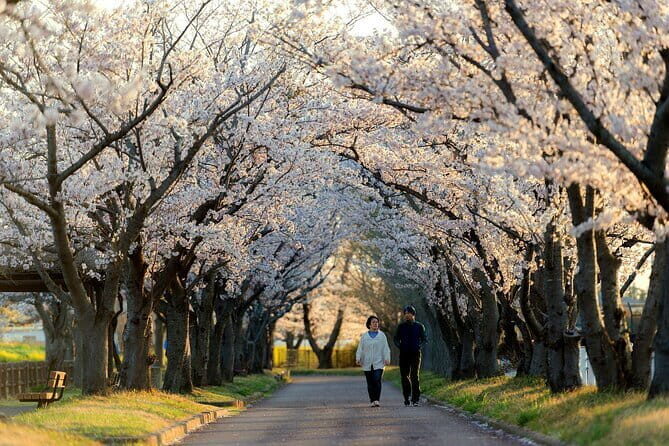
In spring, cherry blossoms are mentioned as a special season highlight. If you’re traveling in blossom season, you’ll want to bring patience and expect that people will be out for the same view.
Possible drawback: if the weather is poor, Mount Fuji can be partially obscured. Since the tour requires good weather, you should treat Fuji visibility as a best-case scenario, not a guarantee. I like having both Lake Kawaguchiko and Chureito on the schedule because if one angle underperforms, the other may still deliver.
Gotemba Premium Outlets: A Practical End to the Day
After all that scenery, you might appreciate a switch to something easy and predictable: Gotemba Premium Outlets. You’re given about 1 hour here, and it’s a useful late-day move for three reasons.
First, it’s a straightforward place to buy gifts. If you need brands, snacks, or travel-friendly shopping, this is where you can get it without thinking too hard. Second, it’s mentioned as Japan’s largest outlet mall, so the selection is usually a big part of the point. Third, it’s one of the rare shopping stops where Mount Fuji can appear in the background while you shop, which is a nice bonus when visibility cooperates.
You’ll also find that shopping time can solve the lunch problem. If you planned to eat earlier but traffic or weather throws things off, outlets give you flexible food options so you’re not stuck hungry.
One thing to plan for: an outlet visit can feel chaotic if you go in with a slow pace and you’re trying to browse everything. Use your hour with intention—pick what you want first, then relax.
Timing, Traffic, and How Not to Feel Rushed
This tour runs about 9 to 10 hours, with travel time included. That’s long enough to cover a lot, but short enough that your guide won’t waste time.
The key is how private transport handles unpredictability. The day can be affected by traffic, and good guiding means adjusting without losing the best parts. In past departures with guides such as Hadi or Kahn, the theme was attention and responsiveness, including keeping things workable even when roads slow down.
Your best strategy: decide your “non-negotiables” before you go. Since you choose 5 stops, lock in what you care about most. That way, if the day tightens, you won’t feel like you sacrificed something you really wanted.
Also, consider that you’ll spend time outdoors at several points. Even if it’s warm in Tokyo, Fuji area weather can feel cooler. Wear layers you can manage quickly, and keep a small bag for water and basics. It’s not glamorous advice, but it makes the day feel smoother.
Included Comfort: Private Ride, Tickets You’ll Still Handle
This experience includes a lot of behind-the-scenes costs:
- Parking fees
- Highway tolls
- Private transportation in an air-conditioned vehicle
- Modern, clean vehicles
- Mobile ticket use (so you’re not fumbling with paper confirmations)
These are the details that reduce mental load. You’re not thinking about where to park. You’re not paying extra tolls. You’re not stuck guessing how to get from stop to stop.
What’s not included is just as important:
- Lunch
- Ropeway ticket
- Pirate ship ticket
So the way I’d plan is simple: treat this tour as your transportation + sightseeing framework. Then plan your meals around what’s easiest at the stops you selected. If you want a sit-down lunch, build your choice of “where to spend time” around that.
Should You Book This Private Tour?
Book it if you want:
- A private, English-commentary day covering Hakone and the Mount Fuji area
- The freedom to choose 5 stops based on what you want most
- A route that hits big photo and cultural markers without you doing the logistics math
Skip or rethink it if:
- You’re traveling with very limited patience for weather-dependent views of Mount Fuji
- You hate paying extra at key moments (like the ropeway ticket)
- You’d rather explore using trains on your own and spend a day breaking it up more slowly
My bottom line: if you’re short on time and you want the highlights of Hakone and the Fuji-lakes area in one smooth package, this is a strong choice. The private setup makes it feel efficient rather than exhausting, and the stop-selection option keeps it from feeling generic.
FAQ
How much does the private tour cost?
The price is $425.00 per group, up to 3 people.
How long is the tour?
The duration is about 9 to 10 hours.
Do you get pickup and drop-off from Tokyo accommodations?
Yes. Pickup and drop-off are offered from your accommodation in Tokyo.
Are tickets for the Hakone Ropeway included?
No. The Ropeway ticket is not included.
Can I choose which places to visit?
Yes. You can select 5 places of your choice from the listed options.
Is lunch included?
No. Lunch is not included.
Is Mount Fuji viewing dependent on weather?
Yes. The tour requires good weather. If it’s canceled due to poor weather, you’ll be offered a different date or a full refund.
What is the cancellation policy?
You can cancel for a full refund up to 24 hours in advance. If you cancel less than 24 hours before the start time, the amount you paid will not be refunded.