REVIEW · TOKYO
Shibuya and Shinjuku Photography Experience
Book on Viator →Operated by Kenji · Bookable on Viator
Tokyo turns into a camera at night. This Shibuya and Shinjuku photography walk is built for catching Tokyo after dark, from the Shibuya Scramble Crossing to neon-soaked Kabukicho. I especially liked the deal of getting 25-50 color graded photos back, and how Kenji makes it easy to relax and get natural shots, even if you’re traveling solo. One more thing: you’ll see Tokyo’s contrast up close, with both modern hangout spots and older alleys in the same outing.
One catch to plan for: you need to show up on time, and the ¥170 Shibuya-to-Shinjuku train fee isn’t included. If you’re even slightly late, you could miss the chance to join.
In This Review
- Key things I’d bet you care about
- Night Photography in Tokyo: Why Shibuya and Shinjuku Work So Well
- Kenji’s role: Friendly coaching that helps you stop overthinking
- Meeting at Hachiko Statue: The perfect first beat of Shibuya
- Shibuya Scramble Crossing and Center-gai: Motion, crowds, and street texture
- Miyashita Park and the Shibuya Station alley: Modern style meets old-city side streets
- Omoide Yokocho (Memory Lane): Getting the gritty Tokyo vibe right
- Godzilla Road and Kabukicho: Neon intensity at Shinjuku’s edge
- Price and value: Is $62.13 worth it?
- Practical tips so your photos look intentional
- Who should book this Shibuya and Shinjuku photography tour
- Should you book this Shibuya and Shinjuku Photography Experience?
- FAQ
- What’s the duration of the Shibuya and Shinjuku photography tour?
- How much does it cost per person?
- What time does the tour start?
- Where do I meet the guide?
- What places are included in the route?
- Are photos included?
- What’s not included in the price?
Key things I’d bet you care about
- A small group (max 4 people) means you get more attention while you’re shooting in crowds
- English-speaking guide/photographer Kenji helps with poses and keeps solo travelers comfortable
- 25-50 color graded photos per person so you’re not stuck sorting night shots on your own
- Shibuya Scramble + Center-gai + Omoide Yokocho + Kabukicho in one 2-hour route
- Mobile ticket + bottled water so you can focus on shooting, not logistics
Night Photography in Tokyo: Why Shibuya and Shinjuku Work So Well
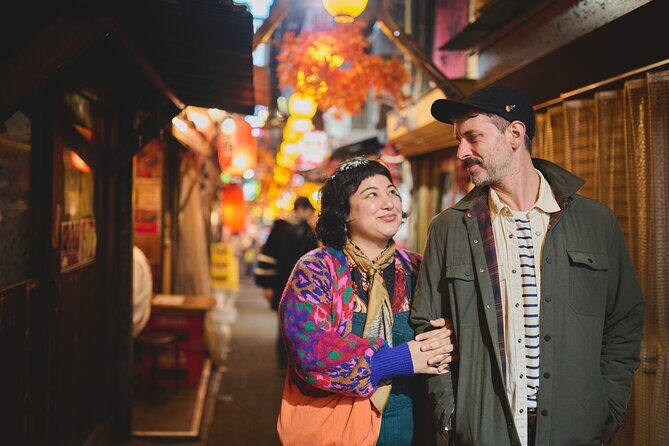
Tokyo after dark is when the city actually starts showing off. Bright signs glow against wet pavement, people create motion blur, and the streets feel like they have a soundtrack you can see. This tour is timed for that look, starting at 8:00 pm, when Shibuya and Shinjuku shift from daytime flow into nighttime energy.
What I like is how the route mixes famous landmarks with smaller streets that feel lived-in. You don’t just pose near a single sight and call it done. You move through neighborhoods with different moods, so your photos don’t all look like they came from one postcard.
And because you’re getting guided photography help, you’re also not stuck figuring out where to stand in dark, crowded areas. That matters. Night street photography is fun, but it can be stressful when you’re worried about getting the shot and also not getting in the way.
You can also read our reviews of more photography tours in Tokyo
Kenji’s role: Friendly coaching that helps you stop overthinking
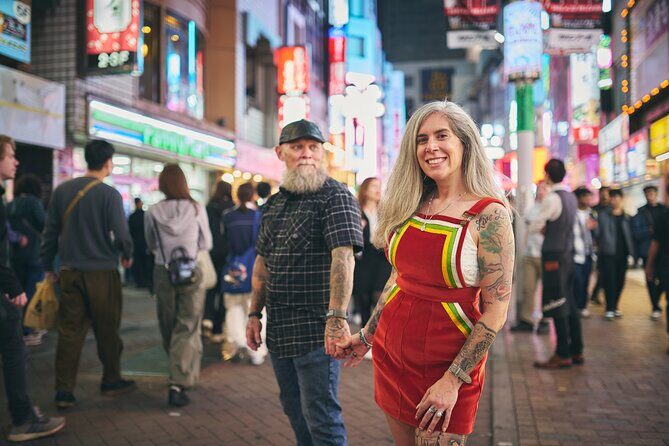
This experience is run by Kenji, and the best part is how he helps you feel at ease. If you’re a solo traveler, that is not a small detail. One of the hardest parts of city photography is simply getting yourself in the frame without looking stiff or constantly searching for someone willing to take your picture.
Kenji’s approach is practical: he’s friendly and makes the walk enjoyable, while also offering help with poses and what to do at each stop. He also brings city context, so you’re not just taking photos—you’re understanding why those places matter. In a short 2-hour window, that kind of guidance keeps the experience from feeling like a rushed checklist.
You’ll also get your photos color graded (25-50 per person). That takes pressure off your own editing workflow. Even if your phone camera is okay, night scenes often need help with color and balance, and having someone handle that makes the final results more consistent.
Meeting at Hachiko Statue: The perfect first beat of Shibuya
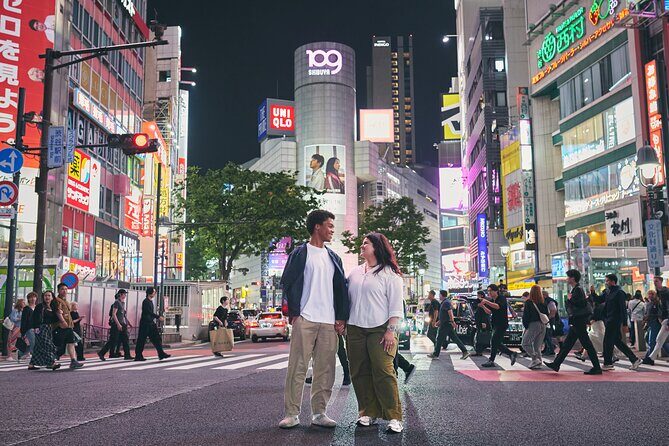
The tour starts at the Hachiko Statue in Shibuya. It’s a free stop, and it’s smart as a warm-up point. Before you hit the biggest crowds and brightest signs, you get a recognizable landmark tied to Shibuya culture and Japanese loyalty lore.
Visually, Hachiko gives you a clean reference point: you can take a couple of easy shots, settle your settings or shooting style, and start feeling comfortable with the group pacing. It also gives you a story anchor right away, so the rest of Shibuya doesn’t feel random.
If you’re worried about being awkward in photos, start here. It’s easier to relax when the scene is more controlled than a major scramble crossing.
Shibuya Scramble Crossing and Center-gai: Motion, crowds, and street texture
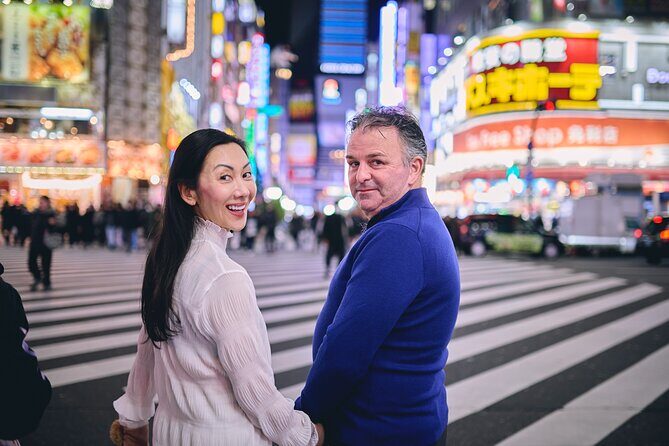
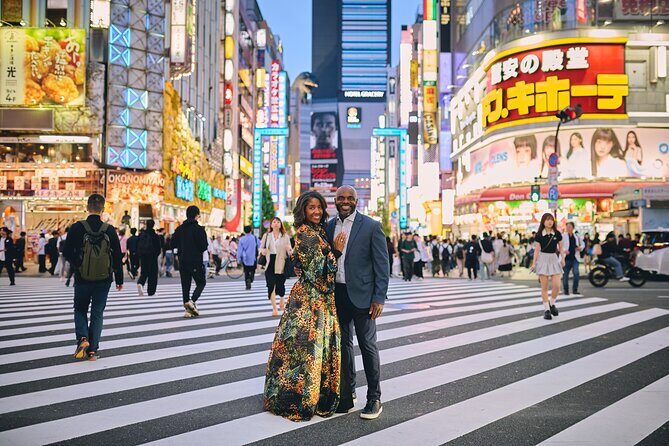
Next up is the Shibuya Scramble Crossing. This is the world-famous pedestrian crossing where crowds flow in multiple directions when the light changes. For photography, it’s a built-in lesson in timing. You’re not choosing between ten ideas—you’re watching people move, which creates natural composition.
The big benefit is energy. The crossing is one of those places where your photos will look like Tokyo because the crowd behavior is Tokyo. Your guided positioning helps you avoid standing somewhere pointless or unsafe just to chase a shot.
After that, you head to Shibuya Center-gai, the narrow, lively shopping street filled with shops, restaurants, arcades, and bars. This part is where your photos get more personal. Instead of giant street theater, you’re photographing layers: storefronts, neon signage, and people moving through a tighter space.
Possible drawback: Center-gai can feel packed. That’s great for photos, but you’ll want to be patient and follow Kenji’s instructions. Night street shooting is easier when someone else handles the pacing.
Miyashita Park and the Shibuya Station alley: Modern style meets old-city side streets
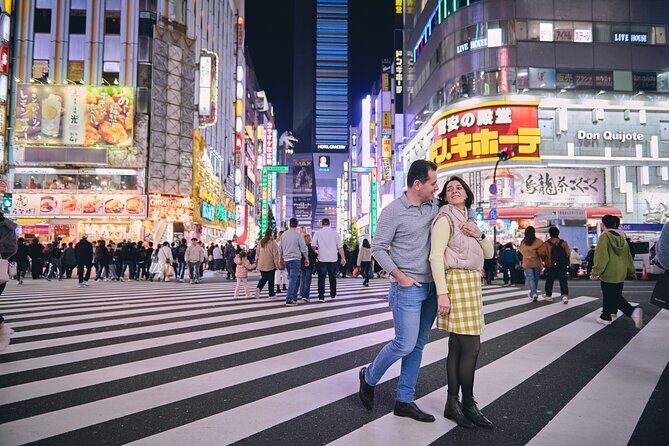
Miyashita Park is a modern urban oasis that adds contrast to the route. You get greenery, a skate park, cafés, and a shopping complex, all mixed into the city’s edge. In photos, this kind of stop helps you vary your set. Not every shot needs to be pure neon and crowds. You’ll likely end up with frames that feel calmer, with lines and geometry from the modern complex.
Then there’s a smaller twist: a narrow alley tucked beside Shibuya Station, lined with tiny, old-fashioned bars and izakayas. The point here is atmosphere. These lanes often have a different photo mood than the big streets—smaller light sources, closer textures, and that post-war Tokyo feel.
If you like photography that feels specific and lived-in, this is the section that can make your final set feel less generic. You’re not only shooting icons; you’re capturing everyday Tokyo at night.




Omoide Yokocho (Memory Lane): Getting the gritty Tokyo vibe right
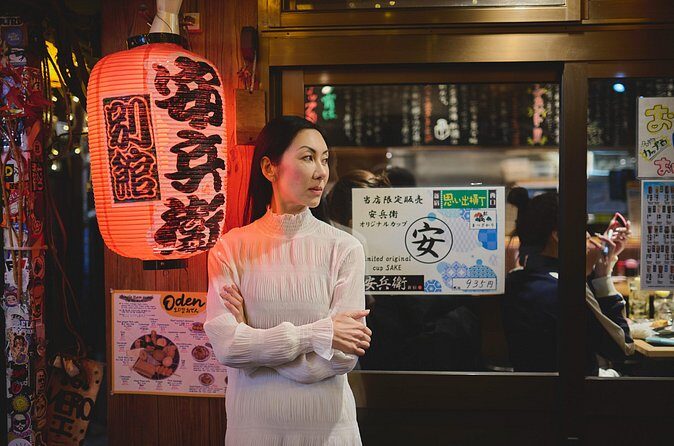
Omoide Yokocho means Memory Lane, and it lives up to the name with smoky yakitori stalls and cramped bars. The vibe is gritty, nostalgic, and full of character. For night photography, alleyways like this can be a gift—there’s usually enough ambient light from lanterns and signage to make people and details visible without relying only on your own device lighting.
You’ll also get local nightlife energy without it turning into a club scene. It’s more about texture: narrow walkways, close-up faces, and the warm glow of food stalls.
A practical consideration: this is the kind of place where you’ll want to watch your space. It’s tight, and people come and go. Kenji’s presence helps here—he can guide you where to stand and how to work your shots so you don’t block others.
Godzilla Road and Kabukicho: Neon intensity at Shinjuku’s edge
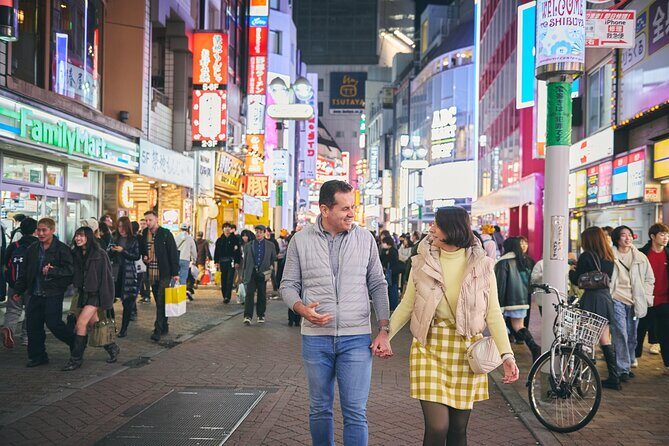
The tour finishes at Godzilla Road, which sits in Kabukicho, Shinjuku’s entertainment district. Kabukicho is known for neon lights and a nightlife reputation, and even if you’re not planning to go in, it’s visually striking from the outside.
Godzilla Road is famous for being loud in a visual way—signage, motion, and the sense that the city never really turns off. Ending here means your last photos can feel like a grand finale: high contrast, dramatic lighting, and plenty of opportunities for motion and portrait-style shots.
Keep in mind: Kabukicho is not quiet. If you’re someone who gets overwhelmed in very busy districts, plan to pause after the tour and let your senses reset. The photos will be worth it, but give yourself a minute to come down from the noise.
Price and value: Is $62.13 worth it?
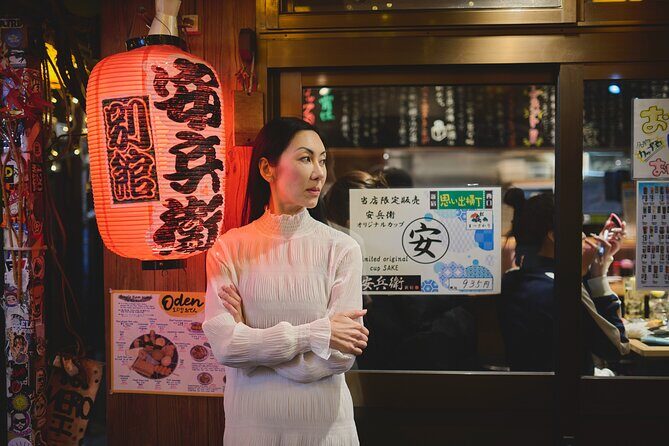
At $62.13 per person for about 2 hours, the price is fairly reasonable when you look at what’s included.
You get:
- A guide/photographer (Kenji) who speaks English
- 25-50 color graded photos per person
- bottled water
- a route through multiple iconic stops across Shibuya and Shinjuku
What’s not included is the train fee from Shibuya to Shinjuku, listed as ¥170 per person. That extra cost is small compared to the overall value, especially if you’re staying in one side of Tokyo and would otherwise spend time figuring out transit while also trying to shoot.
The best value here is for people who want strong night photos without turning the trip into a solo photography project. If you’ve ever come home with blurry night shots and a folder full of almost-right images, this tour directly solves that problem by building in photo help and editing.
Group size matters too. With a maximum of 4 travelers, you’re less likely to feel ignored in crowds, which is a common issue in any street photography setup.
Practical tips so your photos look intentional
You’re walking a lot at night, so you’ll enjoy the experience more if you prepare for comfort and steadiness.
- Wear shoes you can move in without thinking. Tokyo sidewalks plus crowded alleys add up.
- Bring a light layer. Night air can feel cooler even if the day was warm.
- If you’re using your phone, keep expectations realistic. Night street shooting is hard on any device. The guide help and color grading are doing a lot of the heavy lifting.
- Be ready to follow instructions. At the Scramble Crossing and in tight alleys, the difference between a great shot and a frustrating one is usually timing and where you stand.
Also, since you’re likely shooting people around busy intersections, aim to be polite first and creative second. Kenji’s guidance on poses and what to do is there to keep you moving and still getting great frames.
Who should book this Shibuya and Shinjuku photography tour
This is a strong pick if you:
- Want a photo set that looks like Tokyo after dark, not just a few random snaps
- Are traveling solo and want a plan for getting yourself into photos
- Like street scenes that mix modern shopping areas with older nightlife alleys
- Prefer having someone handle timing and pacing so you can focus on the experience
It’s also a good choice if you’ve already visited Shibuya or Shinjuku before. Even with repeat trips, a guided nighttime shoot can feel like seeing the neighborhoods in a new mood—especially with Omoide Yokocho and Kabukicho added into the route.
Should you book this Shibuya and Shinjuku Photography Experience?
Yes, if your priority is high-quality night photos and a low-stress way to shoot them. The combination of Kenji’s help, a tight 2-hour plan, and the promise of 25-50 color graded photos makes it easy to justify.
Skip it only if you hate crowds or you’re likely to show up late. The route is built around real nighttime energy, including busy crossings and nightlife streets, and it runs on time. If you show up ready to move, you’ll come away with images that feel like Tokyo, not just footage of Tokyo.
FAQ
What’s the duration of the Shibuya and Shinjuku photography tour?
The tour runs for about 2 hours.
How much does it cost per person?
The price is $62.13 per person.
What time does the tour start?
It starts at 8:00 pm.
Where do I meet the guide?
You meet at the Hachiko Statue, at 2 Chome-1 Dogenzaka, Shibuya, Tokyo 150-0043.
What places are included in the route?
The stops include Hachiko Statue, Shibuya Scramble Crossing, Shibuya Center-gai, Miyashita Park, a narrow alley beside Shibuya Station with old-fashioned izakayas, Omoide Yokocho, and Godzilla Road in Kabukicho.
Are photos included?
Yes. You receive 25-50 color graded photos per person.
What’s not included in the price?
Train fee from Shibuya to Shinjuku is not included and is listed as ¥170 per person. Bottled water is included, and you can ask the guide for help with beverages if needed.