REVIEW · HIROSHIMA
Sunset Walking Tour at Peace Park, Hiroshima
Book on Viator →Operated by Sunset Tour in Hiroshima's Peace Park · Bookable on Viator
Sunset turns Hiroshima Peace Park into something gentler. At 5:30 pm, this small-group tour helps you see the Peace Memorial Park light up from twilight through night, with the A-bomb Dome and other monuments looking striking in the changing light. The walk also gives you a calmer tempo than hopping from site to site on your own, especially if you want a meaningful visit without roasting in the late-afternoon heat.
I love how the guide, often Joshua, tells the story in clear English with room for your questions, so you actually understand what you are looking at. I also love the tone: it aims for insight with hope, not a constant gut-punch. One possible drawback: if you want a tightly planned, high-energy lecture, the pace can feel laid-back and not overly scripted.
In This Review
- Key highlights to look for
- Why the 5:30 pm Peace Park walk hits different
- Meeting at the Hypocenter and getting your bearings fast
- The monuments you’ll see, and what they mean at night
- Peace Bell, bridges, and the idea of peace
- The A-bomb Dome area: the iconic view, with context
- Children’s monument and the human scale of the story
- Fountain of prayer and the Tree that survived
- Museum area, Flame of Peace, and the emotional pivot
- Pond of Peace and the Korean Victims monument
- Joshua’s style: clear answers, not a one-size-fits-all script
- Price and value: is $32.66 for an hour fair?
- Photography tips for evening light in the Peace Park
- How this pairs well with a Miyajima morning plan
- Who should book this sunset walking tour
- Should you book it?
- FAQ
- How long is the Sunset Walking Tour at Peace Park?
- Where does the tour start?
- What does the tour cover?
- Is admission included for the Peace Memorial Park sites?
- Is this tour private or group-based?
- Do I need a paper ticket?
- What if the weather is bad?
Key highlights to look for
- Twilight-to-night lighting across the Peace Bell, bridges, domes, and memorials
- Joshua’s clear narration, with time for questions and small adjustments for your group
- A sense of hope that keeps the experience reflective instead of crushing
- Photogenic moments like views of the Peace Dome area as lights come on
- Free admission for the park sites, so your money goes to the guide and timing
Why the 5:30 pm Peace Park walk hits different
There is a reason this tour is timed for sunset. Daytime at Hiroshima Peace Memorial Park can feel like a long list: photo, monument, caption, repeat. At nightfall, the mood changes fast. Colors soften. Shadows stretch. Lighting turns key memorials into calm focal points instead of stop-and-gawk targets.
This is also when the park becomes easier to handle. You get relief from the day’s heat, and you can slow down enough to notice details you would normally miss. The route is designed for a smooth flow across major monuments and symbolic spots, with enough breathing room to actually look.
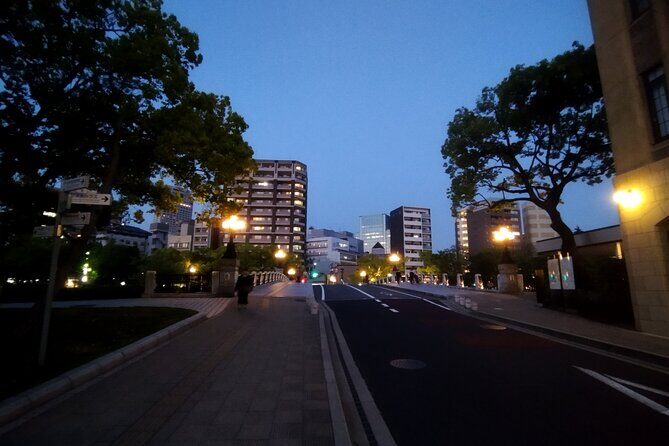
And yes, it is photogenic in a very specific way. One moment you are watching the sky shift behind well-known landmarks; then, as night falls, the park’s lights come alive around key memorial features. That contrast—twilight sky to lit stone and water—creates a memorable atmosphere.
You can also read our reviews of more walking tours in Hiroshima
Meeting at the Hypocenter and getting your bearings fast
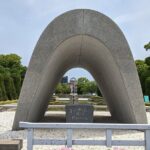
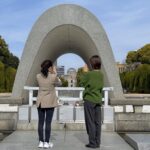
You start at the Hiroshima Atomic Bomb Hypocenter Monument (1-chōme-5-25 Ōtemachi, Naka Ward). It is a solid meeting point because it anchors the whole area. If you only visit on your own later, you may walk the park as separate objects. Starting here helps you understand how everything connects.
The tour runs about one hour, and it ends back at the meeting point. That matters because it keeps the experience focused. You are not meant to cover every corner of the Peace Memorial Park in depth. Instead, you get guided attention on the elements that carry the story most clearly.
This is also a private activity for your group. That typically means you can ask questions without feeling rushed by a large crowd. The tour is sold as a small-group experience, and that size helps the guide personalize the walk—good if you want a particular emphasis, or if you just need the pace to match your comfort level.
The monuments you’ll see, and what they mean at night

The tour is essentially one stop—Hiroshima Peace Memorial Park—handled as a guided walk through a set of major memorials and symbolic landmarks. Evening lighting makes each piece easier to read visually, and the narration helps you read it mentally.
Peace Bell, bridges, and the idea of peace
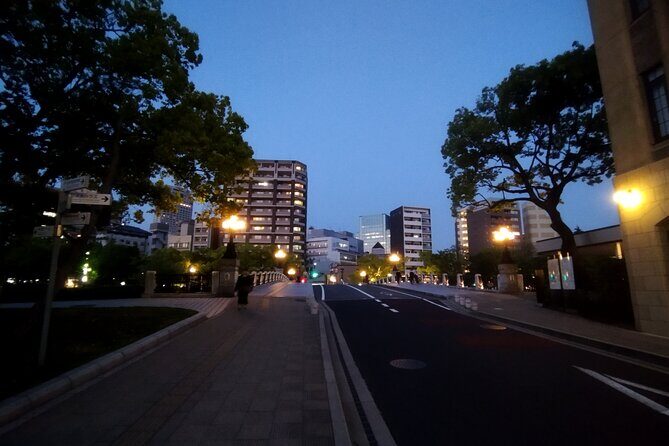
Near the early part of the walk, you pass through the Peace Bell area and other key park features, including the T-shaped bridge. In the evening, the bell area and surrounding landmarks feel more contemplative. The lighting does not just help photos; it changes how still the scene feels.
The bridge detail matters too. It is the kind of feature you might treat as background if you do not understand its purpose in the overall memorial setting. With a guide, it becomes part of the way the park channels your attention toward peace and rebuilding.
The A-bomb Dome area: the iconic view, with context
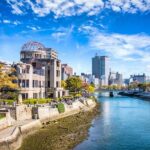
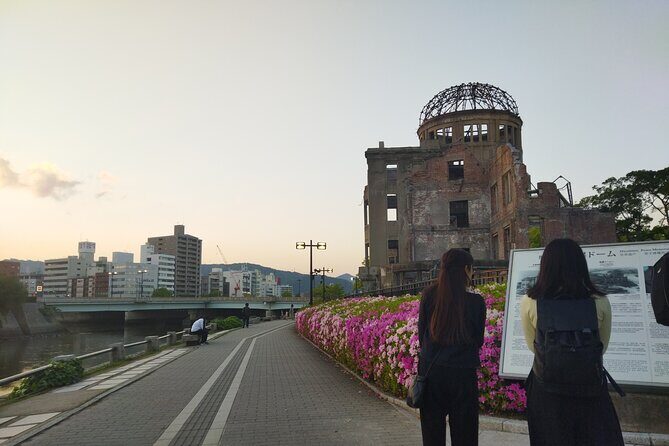
You will also see the A-bomb Dome area (the Peace Dome). This is the most famous sight in the park, but the best thing about this tour is that you are not staring at it as a symbol with no explanation. You get a clear, engaging narration that connects the building to the atomic bomb’s impact.
At sunset, the Dome area looks especially striking because of the way the sky and lights interact. If you care about photography, this is a prime moment: you get the changing light behind the landmark, and then the park lighting begins to take over as night sets in.
You can also read our reviews of more evening experiences in Hiroshima



Children’s monument and the human scale of the story
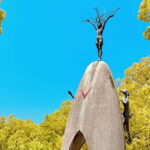
You will also spend time around the Children’s monument. This is one of those places where the meaning can land differently when you are not overwhelmed by a museum’s heavy indoor presentation. Evening gives you space to reflect instead of just absorbing.
A guide helps here by pointing out what to look for and how the park frames suffering and loss without reducing it to a single headline.
Fountain of prayer and the Tree that survived
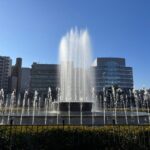
Two areas that tend to make the park feel more than just memorial stone are the Fountain of Prayer and the Tree that survived the A-bomb. In twilight, fountains and water features take on a softer, gentler look. The visuals support the tone of the tour: sober, but not hopeless.
The Tree is especially important in the story. It is a symbol of survival and endurance, and at night it often reads more clearly because the surroundings are less visually noisy. You can see how the park uses natural survival as a counterpoint to destruction.
Museum area, Flame of Peace, and the emotional pivot
The Peace Memorial Museum is part of the park grounds. Even if you are not spending extended time inside, you will understand how the museum fits into the bigger memorial experience.
Then the walk moves toward the Flame of Peace and the cenotaph area. This is where the tour’s approach feels intentional. The narration aims for clarity and a sense of hope rather than endless overwhelm. That does not mean the topic gets softened; it means the experience is structured so you can hold the weight of it without feeling lost or numb.
Pond of Peace and the Korean Victims monument
Near the later part of the walk, you pass the Pond of Peace and the Korean Victims monument. These are the kinds of elements people can miss if they rush. The guide helps you notice them and understand their place in the memorial map.
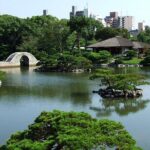
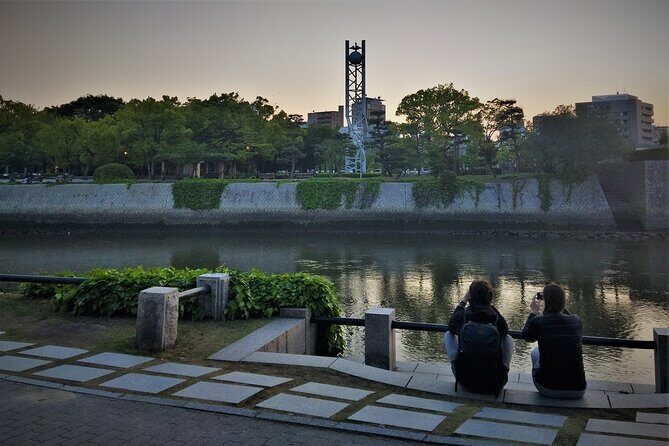
At night, the Pond of Peace and nearby memorial features can feel especially reverent. You can slow down and watch the reflections and lighting shift across the water and stone surfaces, which makes the symbolism more tangible.
Joshua’s style: clear answers, not a one-size-fits-all script
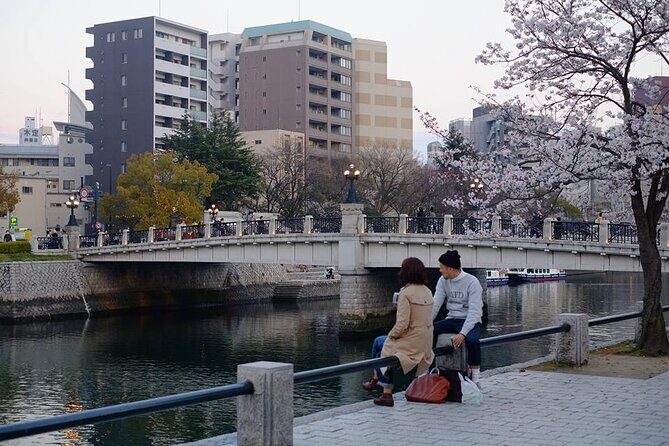
The guide is an English-speaking native, and that matters. You will hear the atomic bomb’s impact explained in plain language that stays respectful and engaging. This is not just a list of facts. It is an interpretation of what the park is trying to communicate.
I like guides who can flex. Here, the tour is described as customizable. That usually shows up as the guide adjusting the pace and emphasis based on your questions and your group’s needs. In at least one case, the tour was reorganized to be less tiring and more suitable for wheelchair access. So, while the standard visit is a walking tour, the operator is willing to work with the group.
Another detail I appreciate: the tour is designed to feel uplifting. That is a subtle promise, and it is hard to deliver well with a topic this heavy. The pacing and the selection of moments across the park help. You still learn what happened. You also leave with a sense that peace efforts continue.
Price and value: is $32.66 for an hour fair?
$32.66 for about an hour is not a bargain in the sense of being cheap. But it can be good value if you care about understanding what you are seeing and if you want to avoid misreading the park as isolated monuments.
Here is the value logic:
- Free admission is tied to the park sites you visit, so you are mostly paying for the guide and time at the right hour.
- The tour is small-group/private, which usually means more interaction and fewer moments where you tune out.
- The guide’s job is to make the park’s symbolism legible. Without that, you can still visit on your own, but you might miss how the elements connect.
- The experience is timed for sunset and lighting, which is hard to replicate perfectly solo unless you already know the park well.
Also, this is a practical length. If you are in Hiroshima on a tight schedule—say, between other stops—this tour gives you a meaningful hit without swallowing an entire day. It is also designed so you can connect it easily with other plans.
Photography tips for evening light in the Peace Park
If you bring a camera (or your phone’s best night settings), sunset timing is your friend here. The park lighting comes on as the sky darkens, and that gives you layers: sky gradients, lit stone, and reflections near water features.
A few practical tips:
- Plan for low light. Once the park turns fully dark, you will want a steady hand or a stable surface.
- Watch the Dome moment. The A-bomb Dome area is especially photogenic as the background light changes.
- Look for the lit details. Features like fountains and the Flame of Peace look different once lights kick in. The effect is more than aesthetic; it supports the mood.
- Don’t rush the memorials. If you keep walking just to get photos, you will lose the point. Slow down long enough to absorb the scene, then shoot.
You will walk enough to get movement variety, but this is still a memorial setting. Treat it like one: quiet voice, respectful distance, and no sprinting for the perfect shot.
How this pairs well with a Miyajima morning plan
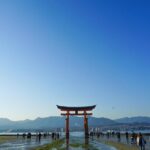
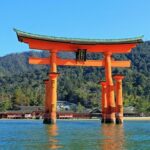
One big reason I like this tour timing is how naturally it fits with a broader Hiroshima itinerary. The tour runs in the evening, so you can place a morning trip to Miyajima earlier in the day and still have a meaningful Hiroshima experience after.
That split is smart because it balances two different modes of travel:
- Morning: sightseeing and coastal scenery.
- Evening: reflection and historical context.
If you are trying to fit a lot into a limited number of days, this scheduling helps you avoid burning your entire trip on one kind of activity.
Who should book this sunset walking tour
This works best if you:
- want clear English narration and help reading the park’s symbolism
- prefer a calmer, less crowded feel than a midday visit
- care about evening lighting and photography opportunities
- want a focused experience that fits into a busy itinerary
It may not be ideal if you:
- want a very structured, rigid hour with no flexibility
- prefer high-energy delivery over a slower, reflective pace
- get frustrated when a guide adjusts the walk to the group rather than sticking to a tight script
The good news: the tone is meant to be hopeful, and that can make it easier to process the subject matter without feeling emotionally flattened.
Should you book it?
If you are in Hiroshima and you want your Peace Park visit to feel understandable—not just visible—this is worth booking. The biggest strength is the combination of timing (sunset/night lighting) and a guide who can explain what matters in a clear, engaging way, often with Joshua at the helm. You also get that thoughtful balance of seriousness plus hope, which many people find easier to carry than the museum-only approach.
Book it if you want a guided, photo-friendly, emotionally steady walk that respects the weight of the topic without turning the whole evening into despair.
FAQ
How long is the Sunset Walking Tour at Peace Park?
The tour is about 1 hour.
Where does the tour start?
You meet at the Hiroshima Atomic Bomb Hypocenter Monument in Naka Ward, Hiroshima.
What does the tour cover?
It is a guided walk around Hiroshima Peace Memorial Park, focusing on major monuments and features in the evening light.
Is admission included for the Peace Memorial Park sites?
Yes. The admission ticket for the park sites listed is free.
Is this tour private or group-based?
It is a private activity for your group, and it is described as a small group tour.
Do I need a paper ticket?
No. The tour uses a mobile ticket.
What if the weather is bad?
This experience requires good weather. If it is canceled due to poor weather, you will be offered a different date or a full refund.