REVIEW · TOKYO
Tokyo: Asakusa tour by rickshaw
Book on GetYourGuide →Operated by Tokyo Rickshaw · Bookable on GetYourGuide
A rickshaw ride in Asakusa turns a jam-packed area into something you can handle fast. You’ll get 2-meter-high views that help you see over crowds, plus a driver who steers you toward the key sights without you having to figure it out on the fly. The quick pace also means you leave with photos and ideas, not just tired legs.
Two things I particularly like: the photo stops where your driver helps with memorable shots, and the real-world restaurant and shop recommendations you can use right away. One thing to consider is that it’s only 10 minutes, so it’s best for orientation and highlights, not for slow sightseeing.
In This Review
- Key Highlights You’ll Actually Feel
- Why This 10-Minute Asakusa Rickshaw Ride Works So Well
- Meeting at Asakusa Station: Start Easy, Start Clear
- The 2-Meter Views: Why You’ll See More With Less Effort
- Senso-ji and Kaminarimon: How the Ride Gives You the Big Picture
- Photo Stops: Turning a Quick Ride Into Real Memories
- Local Food and Shop Tips: What to Do After the Ride
- Price and Value: $70 for a Private 10-Minute Highlight
- Comfort, Rules, and Who This Tour Fits Best
- Languages, Private Groups, and Why That Changes the Feel
- Should You Book This Asakusa Rickshaw Tour?
- FAQ
- How long is the Asakusa rickshaw tour?
- Where is the meeting point?
- What does the tour cover?
- How much does it cost?
- What languages are available for the driver?
- Is the rickshaw tour wheelchair accessible?
- What should I bring?
- Are entrance fees or meals included?
Key Highlights You’ll Actually Feel
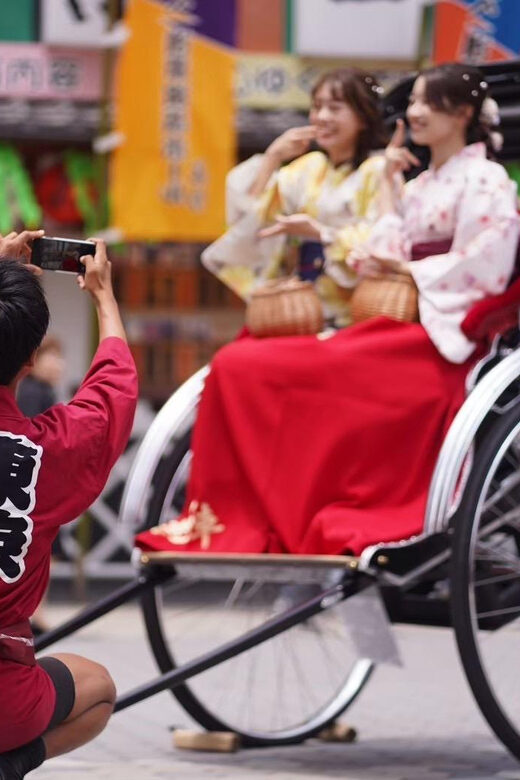
- 2-meter-high vantage that makes the crowded streets easier to navigate and photograph
- Photo stop with help from the driver, so you’re not hunting for angles
- Senso-ji and Kaminarimon area time built into a short, efficient route
- Local food and shop tips tied to what you’ll pass nearby
- Private group up to 2, so the ride feels personal even in busy Asakusa
- English, Spanish, Chinese, Japanese, Traditional Chinese support from the driver
Why This 10-Minute Asakusa Rickshaw Ride Works So Well
Asakusa can feel like information overload in the best way. Temples, snacks, souvenir shops, crowds, and tight streets all hit at once. A short rickshaw tour is a clever workaround: you get the big sights and a fresh sense of direction without spending your entire day crossing the same areas on foot.
The main value is speed with style. From the moment you hop in, you’re elevated—roughly 2 meters up—so your view is clearer and the ride feels less like you’re stuck in pedestrian traffic. And because it’s private (for up to 2), the driver can shape the experience to your pace rather than herding you with a huge group.
I also like the practical angle. This isn’t just a ride for the novelty factor. The driver shares local tips, points out what’s worth stopping for, and gives you food ideas you can actually use later that day.
If you want long, deep temple time, this may leave you wanting more. Think of it as a focused sampler that helps you plan the rest of your Asakusa day.
You can also read our reviews of more tours and experiences in Tokyo.



Meeting at Asakusa Station: Start Easy, Start Clear
You meet at the ticket office in front of Exit No. 1 at Asakusa Station (Ginza line). The good part is simple: you should recognize the staff by their uniform, which removes one of the most stressful parts of Japan tours—finding the right stand when everything looks similar.
The ride begins at 1-chōme-2-1 Asakusa, and you head out from there. Since you return to that same area, you don’t have to worry about where your pickup drops you off later. That closed-loop format matters in a place where detours can steal time fast.
Because the whole experience is 10 minutes, being on time helps. If you arrive relaxed and ready, you’ll feel like the tour is doing its job: giving you momentum in the middle of a busy district.
The 2-Meter Views: Why You’ll See More With Less Effort
Here’s the point of rickshaws in Asakusa: they solve visibility and movement. At street level, you’re constantly dodging shoulders, pausing for passing crowds, and trying to see over heads. Sitting higher changes the math. You get a clearer line of sight, and it’s easier to spot landmarks without doing a full-on navigation exercise.
You also get an energy reset. Instead of walking and stopping repeatedly, you’re carried along while your driver does the decision-making. That means you can focus on what you came for: photos, sights, and quick cultural context.
And yes, it’s fun. The rickshaw itself has a classic, photogenic look, which makes it easier to capture images that feel like Japan rather than just another street snapshot.
Senso-ji and Kaminarimon: How the Ride Gives You the Big Picture
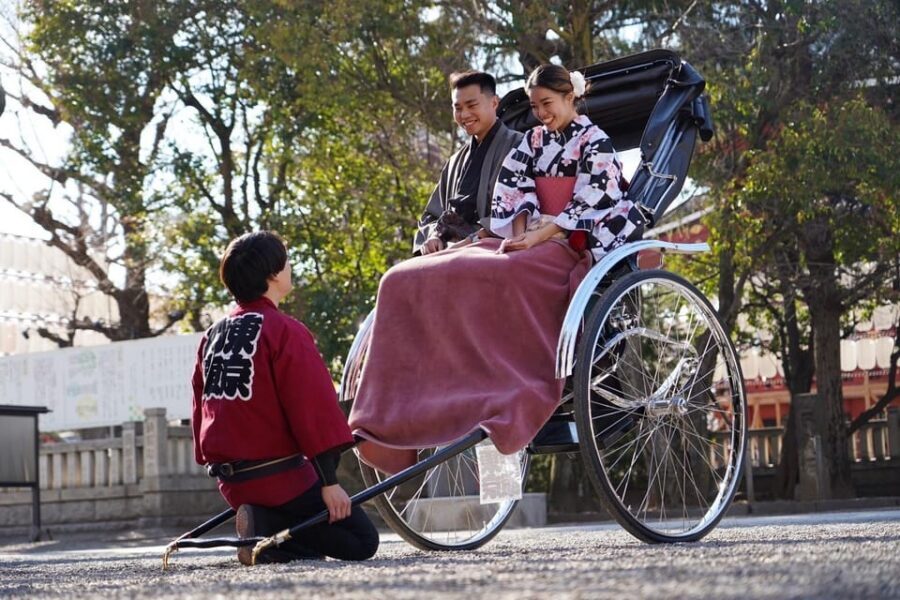
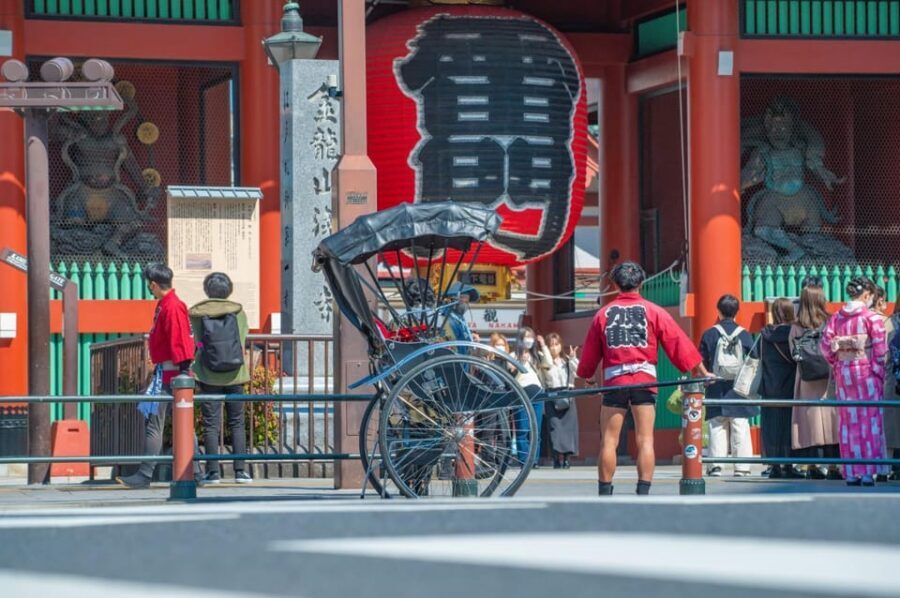
The experience is designed around Asakusa’s top landmarks, including Senso-ji Temple and Kaminarimon Gate. In a short tour window, that’s the key—these are the magnets people come to see, and they help you understand what direction to explore next.
In your 10 minutes, you’re not going to “finish” Asakusa. What you will do is get bearings. Seeing the approach to Senso-ji and the feel of the Kaminarimon area from a higher vantage helps you connect the dots between streets, crowd flow, and where you’ll want to linger later.
One practical benefit: when you later return on foot, you’re not guessing. You’ll recognize where you are and why those streets matter. That’s when the tour pays off, because you stop treating your day like random wandering.
Photo Stops: Turning a Quick Ride Into Real Memories
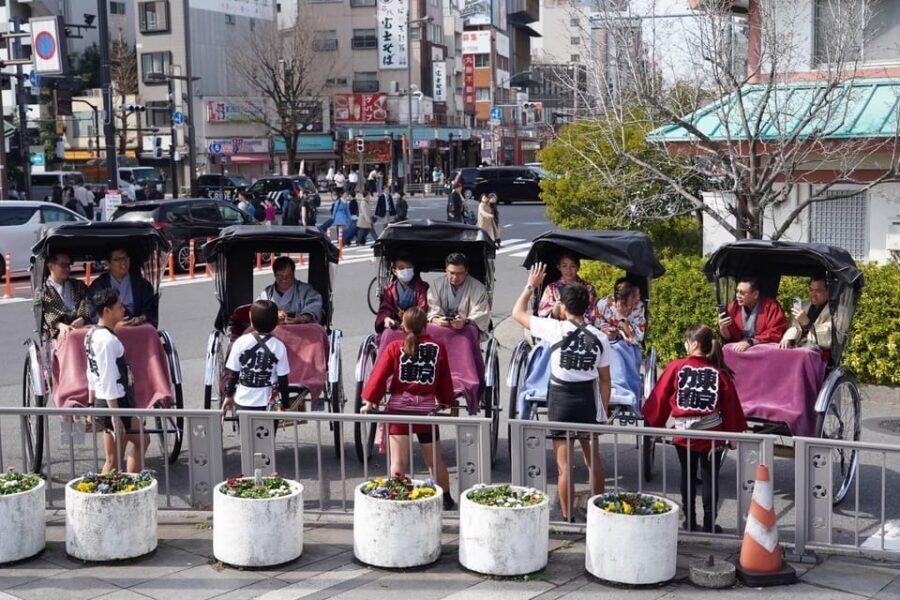
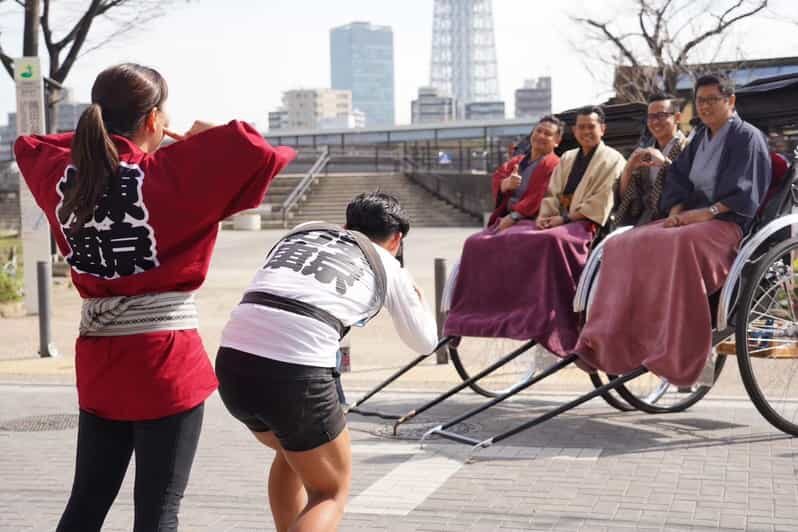
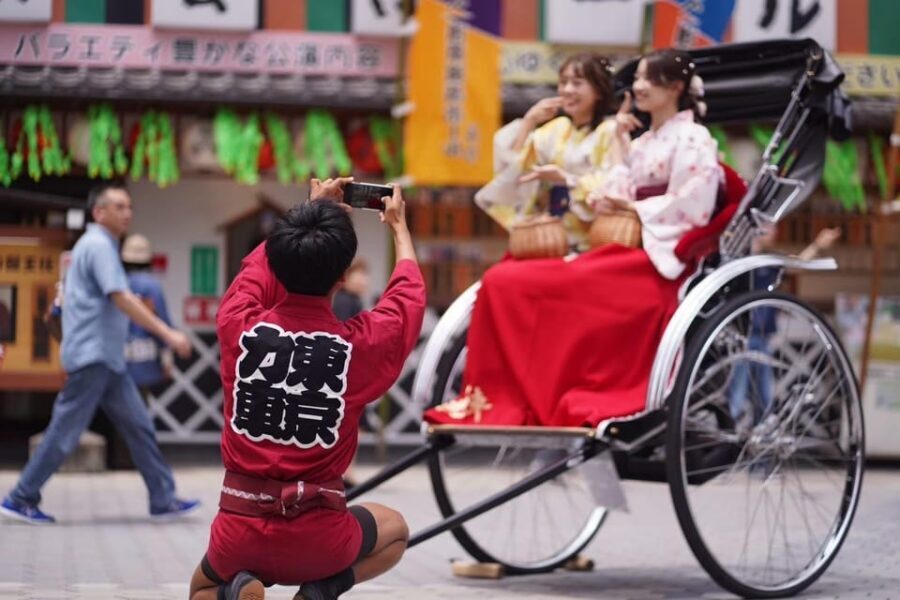
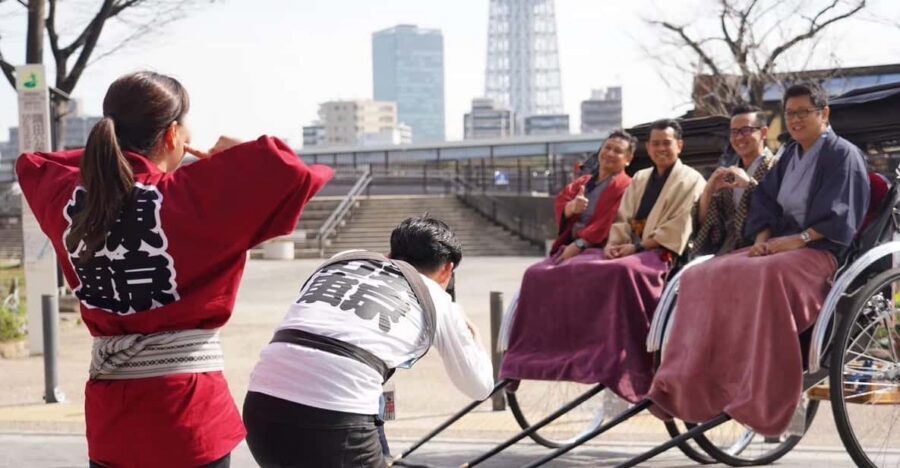
The most specific, memorable part is the photo stop. You’ll pause at a viewpoint for sightseeing and photos, and your driver helps you capture good shots—exactly when the lighting and positioning are at their best.
This matters because Asakusa photo spots are popular. If you’re trying to get a great frame while also walking and searching, you burn time and end up with mediocre pictures. With the rickshaw, you arrive at the photo moment with less stress.
Also, your rickshaw is part of the shot. That photogenic “riding-view” look gives your photos a stronger story. You’re not only photographing a temple entrance; you’re documenting the experience of seeing it from a distinctive angle.
Tip for better results: bring a charged smartphone and be ready to switch to camera mode quickly. If you want extra shots, hold your camera orientation steady during the photo pause so your driver can frame you comfortably.






Local Food and Shop Tips: What to Do After the Ride
A good guide doesn’t just point at sights. They give you the next steps. This tour includes restaurant recommendations and guidance on eateries and shops that fit what you’ll be passing.
In practice, these tips are about reducing decision fatigue. After a temple area day, you’ll be hungry and surrounded by choices. A driver who understands what’s practical (and what’s nearby) helps you avoid the common trap: picking the first place you see, then realizing you could have chosen better.
If you’re traveling with family, this is especially useful. The ride itself is short and lively, and the food advice helps you keep the day moving without endless searching.
One more thing I like: the tips come wrapped in context. The driver is already talking about what you’re seeing, so the recommendations don’t feel random. They feel connected to the route you just experienced.
Price and Value: $70 for a Private 10-Minute Highlight
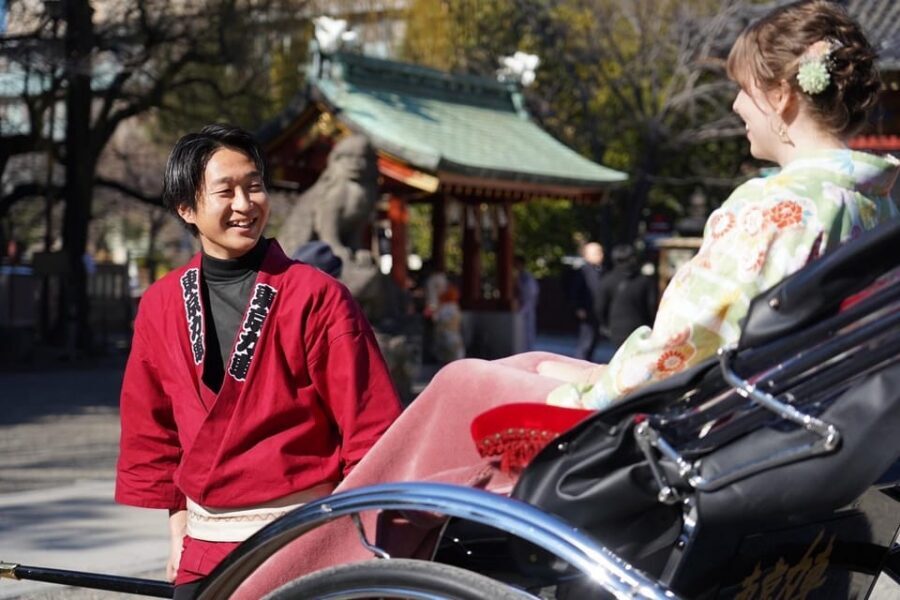
At $70 per group (up to 2) for 10 minutes, you’re paying for three things: speed, a driver who communicates in your language, and a photo-oriented experience in a crowded district.
That price can feel steep if you compare it to walking. But compare it to what you buy in return:
- You save energy and time in a place where movement is slow.
- You get help with photos at a viewpoint stop.
- You receive practical local recommendations so your sightseeing day runs smoother.
So when does it feel like a great deal? When you want highlights without planning every turn, and when photos matter to you. It’s also a smart add-on if you’re doing other Asakusa activities later and want a quick “setup” before you commit to longer walking.
When might it not be worth it? If you want long temple time, deep dives into neighborhoods, or lots of photo stops. In that case, you might prefer a longer rickshaw option or just do a focused walking route with a guide.
Comfort, Rules, and Who This Tour Fits Best
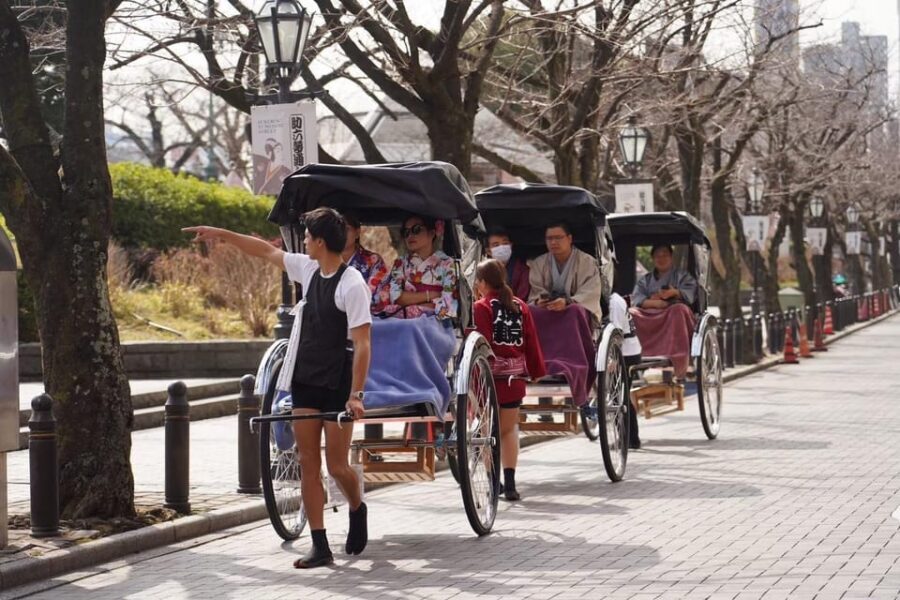
Comfort is part of the pitch. You sit up high and travel without the constant stopping and pushing that crowded areas can bring. Reviews also point to the ride feeling comfortable and special, not just like transportation.
The tour is wheelchair accessible, which is a major plus. You’ll still want to wear comfortable clothes for the weather, since the experience is short but outdoors.
Now the rules. Smoking is not allowed in the vehicle, and alcohol and drugs are not allowed. If you’re sensitive to smells, this is a relief. Also, bring sunscreen and a hat for sunny days, and a camera for the photo moments.
One important fit note: it’s not suitable for pregnant women. If that’s part of your group, you’ll want an alternative plan.
Finally, since the driver can communicate in English, Spanish, Chinese, Japanese, and Traditional Chinese, language is usually not a barrier. That’s a big deal when you want to ask quick questions about food, shortcuts, and what to see next.
Languages, Private Groups, and Why That Changes the Feel
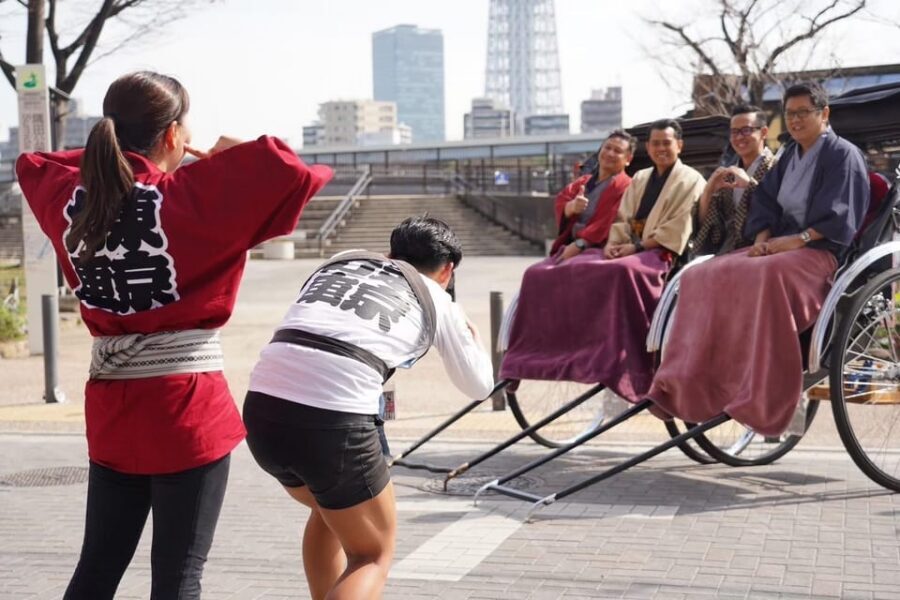
This isn’t a one-size-fits-all ride. It’s a private group, meaning the pace and conversation can adapt to you. For couples, it feels like a shared moment in a crowded city. For small families, it can be a fun break that keeps kids from melting down from too much walking.
Language support matters for the “local tips” portion. If you can speak with the driver easily, you’re more likely to get recommendations that match your preferences—like what kind of food to look for next.
One more point that helps: because the duration is short, the experience stays focused. You’re not stuck for a long time wondering what the next stop will be. You get a tight route, a viewpoint/photo pause, and you’re back where you started.
Should You Book This Asakusa Rickshaw Tour?
Book it if you want a fast, photo-friendly way to get oriented in Asakusa and you like the idea of getting local food and shop tips from the person driving you through the area. It’s also a strong pick if you’re visiting briefly, tired from walking, or traveling with someone who doesn’t love long strolls.
Skip it (or pair it with more time on foot) if you’re looking for long sightseeing. With only 10 minutes, it’s a highlight and orientation tool, not a complete Asakusa day plan.
If you’re deciding right now, use this rule of thumb: if your priority is memories and direction, this ride makes sense. If your priority is time on-site, plan extra walking around Senso-ji and Kaminarimon after you finish.
FAQ
How long is the Asakusa rickshaw tour?
The tour lasts about 10 minutes.
Where is the meeting point?
Meet at the ticket office in front of Exit No. 1 at Asakusa Station on the Ginza line. You can recognize the staff by their uniform.
What does the tour cover?
You’ll ride through Asakusa with guided stops for sightseeing and a photo viewpoint stop, and the experience includes time around Senso-ji Temple and Kaminarimon Gate.
How much does it cost?
It costs $70 per group, for up to 2 people.
What languages are available for the driver?
The driver can speak English, Spanish, Chinese, Japanese, and Traditional Chinese.
Is the rickshaw tour wheelchair accessible?
Yes, it’s wheelchair accessible.
What should I bring?
Bring a credit card or cash, plus a charged smartphone. A camera is also recommended.
Are entrance fees or meals included?
No. Entrance fees to attractions and meals and drinks are not included.