REVIEW · KYOTO
Kyoto Early Bird English Tour: Gion & Higashiyama(Private opt)
Book on Viator →Operated by OTAKU hopper · Bookable on Viator
Gion wakes up early, and this tour times it well. You’ll cover classic lanes in Gion and Higashiyama, with stops tied to a UNESCO World Heritage Site and a guide who keeps you moving. Two big pluses make it feel worth it: professional photos along the way and a route that’s easy to follow without wrestling with maps.
I like how the experience leans on a passionate local English-speaking guide who explains what you’re seeing as you go. The standout for me is the photo part—your guide (often Ikki Kataoka) will take pictures during the walk, and in at least one early-morning tour he even operated as a full-on photographer, not just a talker.
One thing to plan for: Kiyomizu-dera admission is extra (¥500 per person). Also, it’s a walking tour with moderate stamina needs, so wear proper shoes and don’t count on long stops that let you fully recover your legs.
Key things I’d circle before you book
- Early start advantage: schedules like the 7am option help you see Gion and Higashiyama before the heavy daytime crush.
- Guide + photos combo: a local guide handles storytelling and takes professional photos during the tour.
- Classic “starter loop” for Kyoto: Gion streets, Hanamikoji, Yasaka areas, and the Kiyomizu-dera viewpoint all in about 3 hours.
- A UNESCO stop on the route: the walk includes a UNESCO World Heritage Site tied to the Kiyomizu-dera area.
- Geared for easy navigation: you don’t need a map to find your way between sights.
- Small-group or private format: you can choose what fits your comfort level.
In This Review
- Why this Kyoto early-bird route feels smarter than DIY
- Price and value: what $64.01 buys you in real terms
- Meeting point at Izumo-no-Okuni: the start that keeps things smooth
- Gion first: machiya streets and what the guide helps you notice
- Hanamikoji Street: chasing old Kyoto charm (and possible sightings)
- Yasui-Konpiragu and the cut-the-bad-connection idea
- Yasaka Pagoda (Hokanji): the nail-less legend you can stand next to
- Sannenzaka and Ninenzaka: the streets where you shop, snack, and stroll
- Kiyomizu-dera and the UNESCO viewpoint: worth the ¥500 ticket
- Yasaka Koshindo and Yasaka Shrine: color, prayer, and scale
- Photography with Ikki Kataoka: why the photos feel built-in
- Who this tour is best for (and who should skip it)
- Should you book this Kyoto Early Bird English Tour?
- FAQ
- How long is the Kyoto Early Bird English Tour: Gion & Higashiyama?
- Is Kiyomizu-dera admission included?
- What’s included in the tour besides the guide?
- Do I need to buy a ticket for the temples and shrines?
- Is this a walking tour?
- Where do I meet the guide?
- Can I cancel for free?
Why this Kyoto early-bird route feels smarter than DIY
Kyoto looks like a postcard, but the timing is what makes the difference. This tour is built around the idea that morning hours help you enjoy Gion and Higashiyama at a human pace. You get the same iconic scenery, but with fewer people elbowing for position by the gates and temple staircases.
What I like most is that the route isn’t random. It’s arranged so you walk through neighborhoods that actually feel like Kyoto, then hit the headline sights—Kiyomizu-dera and the Yasaka Shrine area—without wasting your energy figuring out logistics. Your guide also gives you landmarks to look for as you pass them, so the streets stop being just pretty background.
Private or small-group adds another layer of value. If you’re traveling with people who want quieter conversation, or you want flexibility in how long you linger at a viewpoint, a private setup can feel like better control of your time.
The tradeoff is simple: you are walking. You’ll want solid shoes and a calm attitude about steps and sloped ground, especially around the Kiyomizu-dera approach.
Price and value: what $64.01 buys you in real terms
At $64.01 per person for about 3 hours, you’re paying for three things: a local guide, a structured walking route, and professional photos taken during the experience. That last item matters more than it sounds. Kyoto is the kind of place where great photos depend on timing, angle, and knowing where the light hits.
You also get what I call “decision relief.” Instead of planning which streets to walk first in Gion, when to go to Kiyomizu-dera, and how to connect it all without backtracking, your guide handles the order. That saves time, and time is money—especially when you’re on a tight Kyoto itinerary.
Do note the only clear extra cost: Kiyomizu-dera admission is not included and is ¥500 per person. So your all-in spend is the tour price plus that ticket, plus whatever you buy for snacks and drinks.
For context, the tour is usually booked about 43 days in advance, which tells me it’s not a “random niche” option. People plan ahead for a reason—often because early slots go fast and because guides matter in Kyoto.
You can also read our reviews of more private tours in Kyoto

Meeting point at Izumo-no-Okuni: the start that keeps things smooth

You meet at the Statue of Izumo-no-Okuni, Kawabatacho, in the Higashiyama Ward area. That’s a handy starting zone because it puts you right on the “action side” of eastern Kyoto, not out in a bus depot wilderness.
This tour ends back at the meeting point. I like that. It reduces stress at the end of the morning when your legs are tired and you just want a predictable finish.
One practical note: you’re expected to be on time. If you’re late, you won’t be able to join and won’t receive a refund. In a walking experience where the guide is timing things for flow, that rule makes sense even if it’s annoying.
You’ll also have a mobile ticket, which usually means fewer printouts to hunt for on your phone screen at 7am.
Gion first: machiya streets and what the guide helps you notice
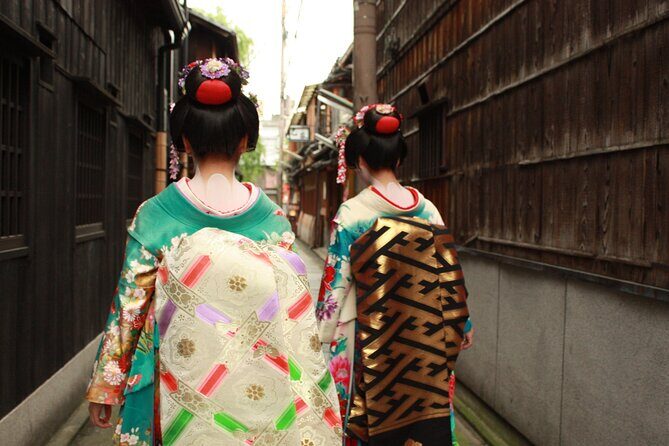
Starting in Gion is a smart move. It’s Kyoto’s most famous geisha district, known for preserved streets and the look of traditional wooden machiya houses and teahouses. From the ground level, it can look like you’re just wandering for vibes. With a guide, you learn what you’re actually looking at.
A guide-led walk also helps you understand the “why” behind the scenery. You’re not only taking pictures—you’re picking up cues about the neighborhood’s traditions and architecture as you move.
The pace works well early because many streets feel more intimate when the foot traffic thins out. If you’ve ever tried to photograph atmospheric lanes in Kyoto during peak hours, you’ll know the pain: people block your view at the exact moment you line up a shot. Morning helps.
This first stretch sets the tone for the rest of the route. You’ll be in the right mindset for the later stops that feel more spiritual and more grand, because you’ll understand the neighborhood history behind them.
Hanamikoji Street: chasing old Kyoto charm (and possible sightings)
Next comes Hanamikoji Street, one of Gion’s signature lanes. This is the place associated with traditional teahouses and machiya houses, and it’s also where you might spot geisha or maiko. Whether you see anyone depends on timing and luck, but the street itself is still the experience.
What I like here is how a guide turns a famous street into something you can actually navigate. The guide points out details you’d likely miss if you were just snapping photos and moving on—little visual markers that help you read the environment.
If your goal is photos, this is a key moment. The narrow lanes and traditional storefronts give you layers to shoot: foreground texture, midground architecture, and background depth. A guide’s eye can also help you avoid standing in the worst spots for crowd flow.
Even if you don’t catch a ceremonial encounter, Hanamikoji still gives you the “old Kyoto street” feeling you came for.
Yasui-Konpiragu and the cut-the-bad-connection idea
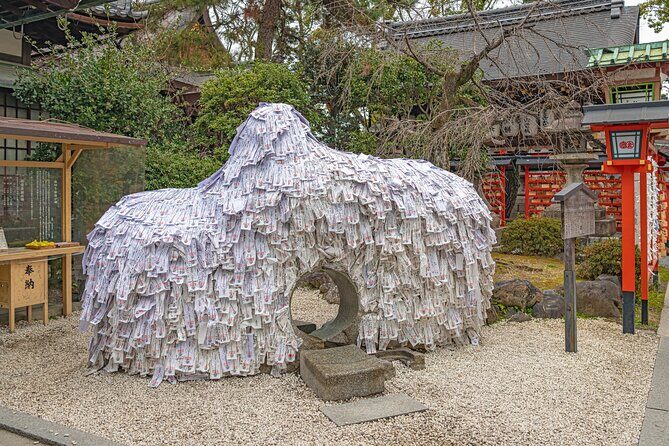
After Gion’s elegance, you shift to a different kind of Kyoto—more focused on prayer and personal wishes. Yasui-Konpiragu is known as a shrine people visit for severing bad relationships and replacing negativity with positive connections.
This kind of stop is valuable because it shows Kyoto isn’t only about aesthetics. It’s also about daily spiritual practice and how people use shrines for real-life goals. Your guide’s commentary helps you interpret the symbolism so you don’t just walk past with the mindset of a sightseeing checklist.
This is also a good palate cleanser before you hit larger structures. It’s calmer, less about crowds, and it fits well in a walking circuit.
It’s a brief stop, so don’t expect a long sit-down. Instead, think of it as a meaningful reset—one of those moments that makes the rest of the tour feel more grounded.






Yasaka Pagoda (Hokanji): the nail-less legend you can stand next to
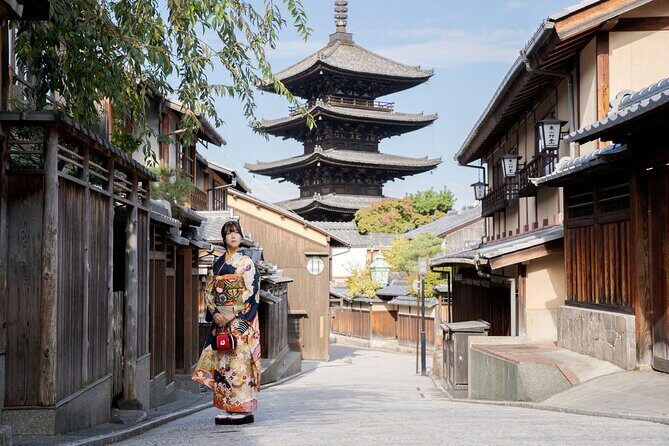
One of the most memorable architectural moments on this route is Yasaka Pagoda, also known as Hokanji. It’s described as one of the oldest wooden structures in Japan, and the scale is the first shock.
The standout detail here is the legend that it was built without using nails. Whether you view that as history, story, or a mix of both, it’s the kind of detail that gives the structure gravity. You’re not just looking at a tall pagoda—you’re looking at something that people treat like a landmark with real cultural weight.
This stop also works well earlier in the day. Pagoda photography can be difficult when large groups occupy the main angles. Morning light and fewer people can make your pictures actually usable.
Plan to take it slow for a minute. Even if you think you’ve seen “a pagoda before,” the way this one sits in its Kyoto context is different from what you may have in your memory.
Sannenzaka and Ninenzaka: the streets where you shop, snack, and stroll
Next you walk through Sannenzaka and Ninenzaka—stone-paved lanes lined with souvenir shops and restaurants in historic wooden buildings. These streets are famous for the feeling they create: it’s like walking through a preserved setting while you’re actually still in modern Kyoto.
This is a great section for taking your time, even if the tour schedule is moving. It’s the moment where you can slow down and enjoy the small scenes: signage, doorways, patterns on shopfronts, and people in period-style settings.
A guide is useful here because it’s easy to get distracted by shops and forget to watch for how the streets open up. You’ll keep your bearings, and you’ll move toward Kiyomizu-dera without losing the thread.
If you’re hungry, this is also one of the better places to grab something quick—just remember the tour includes no food or drinks, so you’re the one choosing your snack strategy.
Kiyomizu-dera and the UNESCO viewpoint: worth the ¥500 ticket
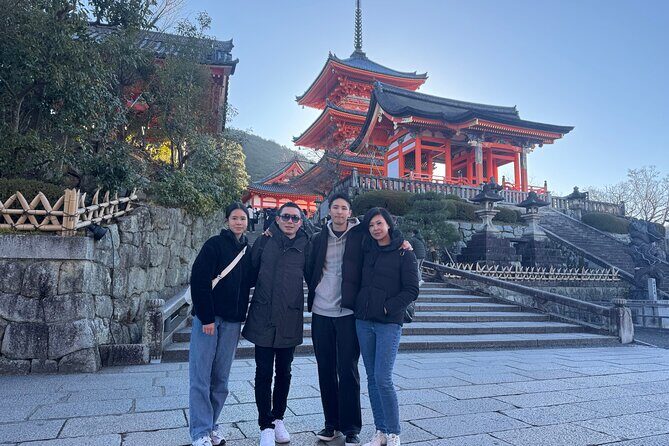
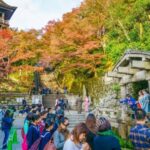
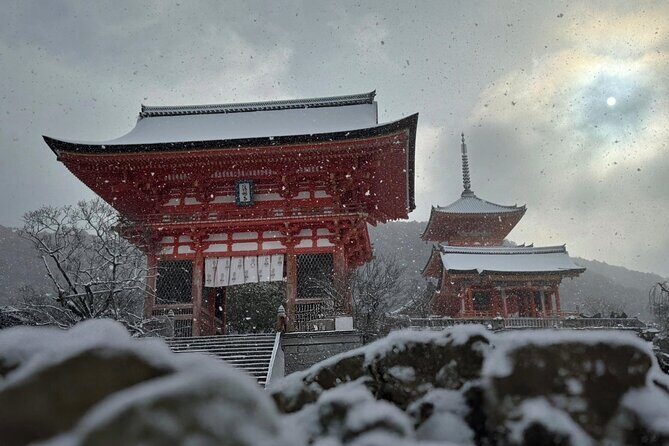
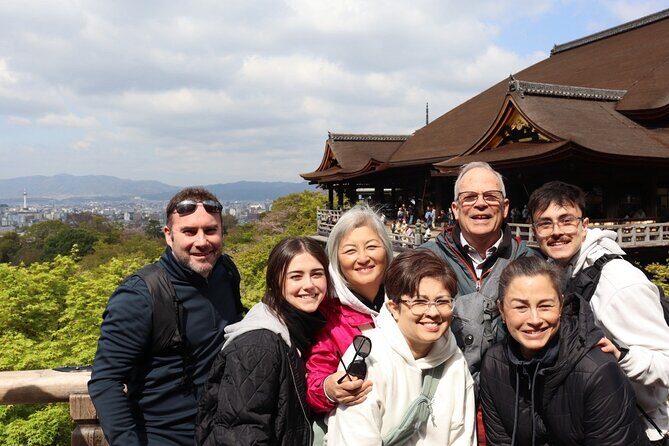
Then comes the big one: Kiyomizu-dera Temple, one of the most popular sights in Kyoto. The reason is simple: it’s known for panoramic city views and a dramatic setting up on the mountain.
This is the tour stop where the “why Kyoto matters” feeling peaks. Kiyomizu-dera isn’t only about the buildings. It’s about the position—how the temple overlooks the city and how the area gives you that classic Kyoto skyline sensation.
There’s a cost: admission is not included and is ¥500 per person. I’d still call it good value because the ticket gets you access to the experience you’re really paying for on this entire route: the temple viewpoint.
If you want photos that look like Kyoto postcards, this is the place to be patient and choose your moment. Morning timing helps, but you’ll still want to watch for where the crowd thickens so you’re not constantly fighting for your angle.
Also, yes—this section involves more walking and stair steps than some of the smaller shrine stops. If your legs are sensitive, plan to take short breaks and keep your pace steady.
Yasaka Koshindo and Yasaka Shrine: color, prayer, and scale
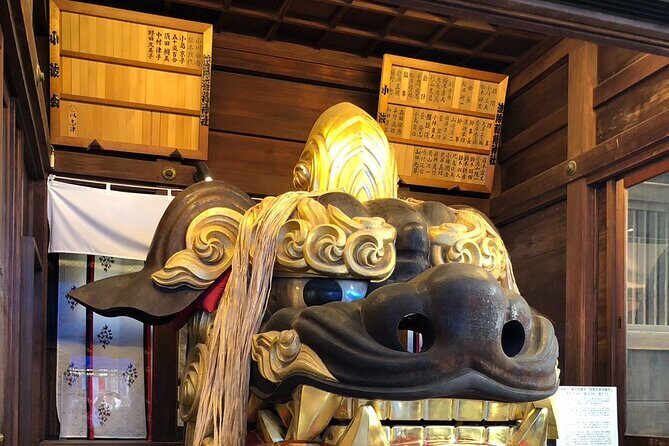
After Kiyomizu-dera, you get a shift in mood again. Yasaka Koshin-do is known for its colorful decorations, and it’s described as a mysterious temple with an unknown construction date. That combination—mystery plus color—makes it visually different from the more subdued look you might expect from other temple spaces.
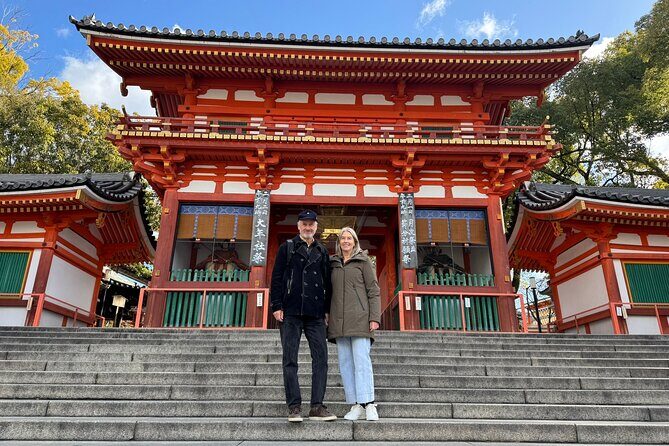
Then the tour ends at Yasaka Shrine. This is a major shrine complex with 2,300 related shrines across Japan. It’s dedicated to the gods of prosperity and protection, so it’s not just sightseeing. People are actively praying there, and that gives the whole finish a sense of purpose.
I like how ending here changes the emotional arc of the morning. You start in a famous neighborhood for tradition. You move through multiple prayer stops. You reach the big panoramic temple. Then you finish at a shrine that ties together protection and prosperity.
It’s the kind of route that leaves you with more than photos. It leaves you with a clearer picture of Kyoto as a living culture, not only a backdrop.
Photography with Ikki Kataoka: why the photos feel built-in
The included photos are a big deal. The experience provides professional photos taken during the tour, not just a quick moment where you set up your own shot and hope for the best.
In early-morning tours led by Ikki Kataoka, the guide was described as both guide and professional photographer. That matters because photography in Kyoto isn’t just pointing a camera. Light, crowds, and angles change fast, especially on narrow lanes like Hanamikoji.
If you’re camera-shy, this is actually a relief. You don’t have to explain what you want. The guide handles the process while you stay focused on enjoying each stop.
A practical tip: keep your clothing comfortable enough that you’re not fiddling with layers every time you move. The faster you can stay relaxed, the easier it is for someone else to capture good shots while you enjoy the walk.
Who this tour is best for (and who should skip it)
This tour is a great match if you:
- want a structured walk through Gion and Higashiyama without navigation stress
- care about getting good photos without spending your whole morning posing
- prefer early hours to avoid peak-day crowd pressure
- like learning a bit of meaning behind landmarks, not only architecture and views
It may be less ideal if you:
- hate walking and don’t want stairs involved near Kiyomizu-dera
- need a low-cost option, since admission fees at Kiyomizu-dera are extra
- want a totally flexible free-form route with no set stops (this one follows a clear sequence)
If you’re an older traveler or traveling with someone with slower mobility, a guide who moves patiently can make a difference. In the early reviews, the guide approach was noted as patient, which is exactly what you want on a walking tour.
Should you book this Kyoto Early Bird English Tour?
I think it’s worth booking if you want an efficient, meaningful Kyoto morning that hits the highlights in the right order—especially before crowds. The combination of an English-speaking guide plus included professional photos turns it from a basic sightseeing loop into a smoother experience with better results.
Book it if you’re the type who likes walking but still wants a plan. This is the kind of tour that helps you see Gion’s classic streets, hit the big temple viewpoint at Kiyomizu-dera, and finish at Yasaka Shrine without losing time.
Skip it only if you’re strongly budget-focused and you don’t want to pay extra for the ¥500 Kiyomizu-dera ticket, or if you know you’ll struggle with stairs and a three-hour walk.
FAQ
How long is the Kyoto Early Bird English Tour: Gion & Higashiyama?
It’s about 3 hours.
Is Kiyomizu-dera admission included?
No. Kiyomizu-dera admission costs ¥500 per person and is not included.
What’s included in the tour besides the guide?
A passionate local English-speaking guide is included, and professional photos are taken during the tour.
Do I need to buy a ticket for the temples and shrines?
The tour includes multiple free stops, but Kiyomizu-dera has an admission fee that you pay separately.
Is this a walking tour?
Yes. It’s designed as a walking experience, with plenty of time on foot and a moderate physical fitness level recommended.
Where do I meet the guide?
You meet at the Statue of Izumo-no-Okuni in Kawabatacho, Higashiyama Ward, Kyoto, and the tour ends back at the meeting point.
Can I cancel for free?
Yes. You can cancel for free up to 24 hours in advance for a full refund.