REVIEW · TOKYO
Tokyo : Authentic Samurai Experience in a Private Space.
Book on Viator →Operated by rojicoya · Bookable on Viator
A samurai sword class in a real home. You start in an old private house over 100 years old, then step into a kimono and learn the basics of handling a samurai sword the way you actually see in Japan. I like that the vibe feels personal, not showy, and that the instruction is guided by Sensei Musashi Oka and Yoshi San, who keep things friendly and clear.
Two things I really like: the class stays hands-on (you’re not just watching), and you get time to ask questions while you practice the motions behind Bushido. One consideration: this is a short 1 hour 30 minutes style experience, so you’ll learn a foundation, not a full lifelong sword course.
In This Review
- Key highlights at a glance
- Stepping Into an Old Tokyo House That Feels Like the Real Thing
- Kimono Time and the Bushido Mindset You’re Expected to Use
- What You Actually Learn With the Sword: Draw, Hold, Swing, Sheath
- The Cutting Practice: Straw and Tatami With a Real Katana
- Private Small-Group Energy: Up to Four People, More Attention
- The Tea Wrap-Up and Why the Q&A Matters
- Price and Value: Why $72 Can Make Sense for 90 Minutes
- Who This Samurai and Bushido Class Is Best For
- FAQ
- How long is the Bushido Experience?
- Is this a private class?
- Do I need prior experience with a samurai sword?
- What exactly do I do during the class?
- Is the class in English?
- Do I get to wear a kimono?
- Is tea included?
- What’s the meeting point?
- Should You Book This Samurai Experience in Tokyo?
Key highlights at a glance
- Small-group, private feel with a cap of four participants
- Kimono included, worn during the practical lesson in an old home
- Bushido-focused instruction tied directly to how you draw, hold, swing, and sheath
- Cutting practice using targets like straw and tatami, with a real katana during the hands-on segment
- Tea at the end, with a quiet cultural wrap-up after the practice
- English-first guidance, plus communication support designed to work smoothly in conversation
Stepping Into an Old Tokyo House That Feels Like the Real Thing
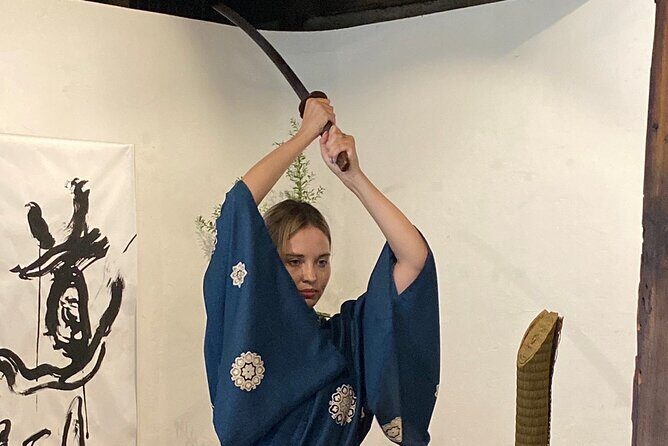
This experience meets at rojicoya 路地裏寺子屋36-1 Senjuasahichō in Adachi City, then ends right back there. The setting matters. You’re not in a big studio with rows of chairs; you’re in a traditional home that’s described as over 100 years old, so the whole experience feels grounded in place rather than staged for tourists.
Once you arrive, you’ll get the rhythm of the class quickly: suit up, listen, practice, then do the hands-on cutting. It’s a structured flow, but it never feels rushed, especially because the group is capped at four and only your group participates.
If you like experiences where the setting helps tell the story, you’ll appreciate this. You’ll also find it useful if you want something more direct than a long museum visit.
You can also read our reviews of more private tours in Tokyo



Kimono Time and the Bushido Mindset You’re Expected to Use
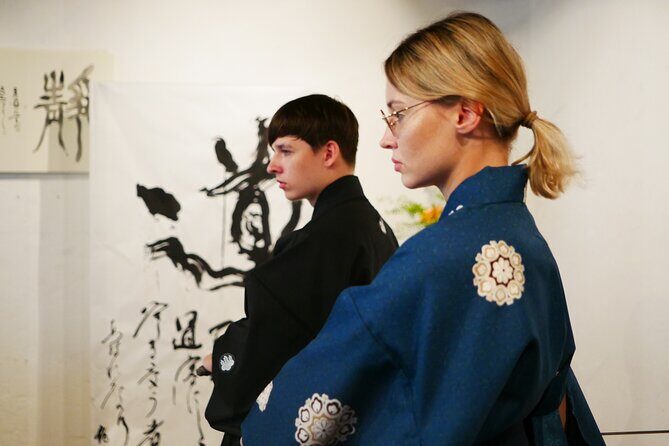
Before you touch the sword, you learn how the lesson frames Bushido. The program is built around tradition—how you hold yourself, how you move with intent, and how handling a sword connects to discipline. You’re asked to practice as part of learning, so it’s not just listening for a lecture-style hour.
A key detail for beginners: the instruction is designed so you can feel at ease. That matters, because sword classes can feel intimidating when you’re unsure what the instructor expects. Here, you’re constantly being taught and guided while you practice the core actions.
Also, this session is described as enjoyed by both men and women, and it’s set up as an interactive cultural experience. You’ll get the sense that the goal is understanding and technique together, not just getting a photo.
What You Actually Learn With the Sword: Draw, Hold, Swing, Sheath
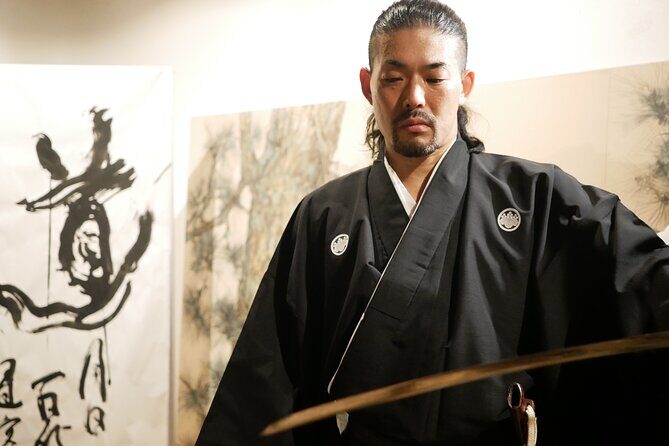
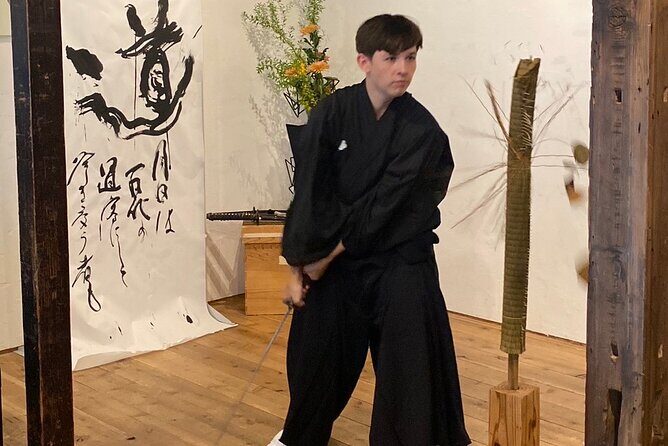
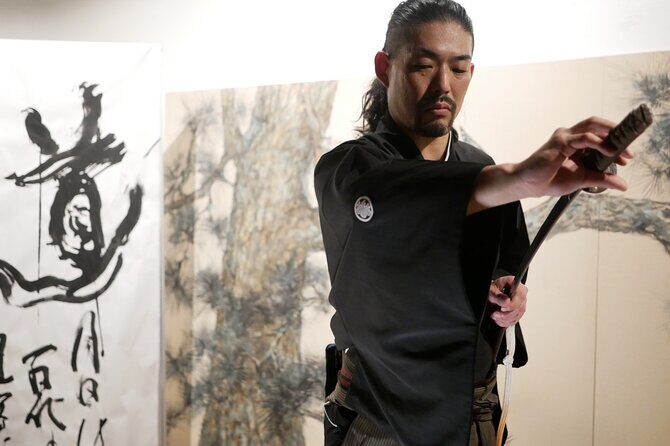
The heart of the class is the sword basics: how to draw, how to hold it, how to swing it, and how to sheath it correctly. You’re learning the sequence you’d expect from traditional swordsmanship practice, but the class keeps it beginner-friendly by breaking it into teachable steps.
This is where I’d tell you to pay attention to details like hand position and your body alignment. In most travel experiences, you get movement without meaning. Here, the instructor connects the motions to the Bushido theme, so you’re practicing technique and mindset at the same time.
You’ll likely get chances to repeat movements until they feel right, because practice is part of the program. That repetition is what turns this from a one-time demonstration into a skill you walk away with, even if it’s only the foundation.
The Cutting Practice: Straw and Tatami With a Real Katana
Then comes the moment people remember. The experience includes cutting practice through targets, and the overall description emphasizes cutting straw targets. One of the best parts noted in the experience feedback is cutting tatami with a real katana.
That’s not just a thrill moment; it’s also a learning moment. Cutting requires you to apply what you practiced earlier: posture, grip, timing, and a controlled swing. If you spent the first half feeling awkward, the cutting segment is where the class clicks into real action.
A quick practical tip: during cutting practice, focus on consistency rather than force. Your goal is to do the motion the instructor is teaching, not to swing as hard as possible. If you’re anxious, tell the instructor—your feedback helps them adjust how they guide you.
Also, remember this is hands-on Bushido practice in a private space. You’re not sharing the spotlight with a crowd. That makes it easier to concentrate and take corrections calmly.
Private Small-Group Energy: Up to Four People, More Attention
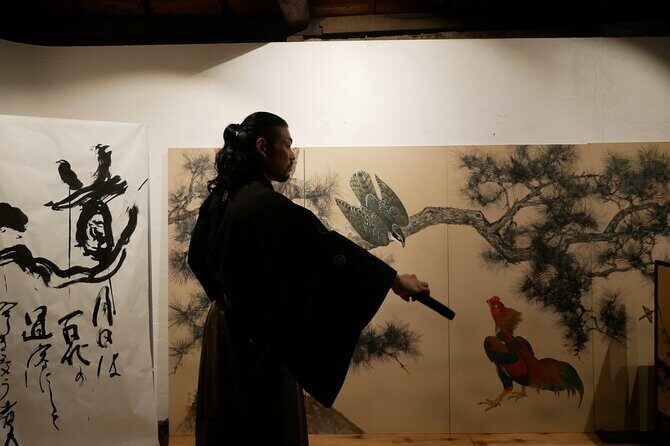
The group size is a big deal for value. This is capped at four participants, and it’s a private tour/activity where only your group participates. In a city as big as Tokyo, that kind of attention can turn a standard activity into something that feels made for you.
English is also handled in a practical way. The course is mainly in English, and it notes conversations are compatible with PokéTalk-compatible communication. Even if your Japanese is limited, you should be able to follow instruction and ask questions without feeling cut off.
From the experience feedback, the instructors are described as friendly and welcoming, with smooth English communication. Sensei Musashi Oka and Yoshi San come up by name, and the tone is hospitality, not intimidation.
If you’re visiting with a partner, friends, or even solo and want a quieter environment, this fits well. It’s also a smart pick if you’re short on time and don’t want a half-day commitment.






The Tea Wrap-Up and Why the Q&A Matters
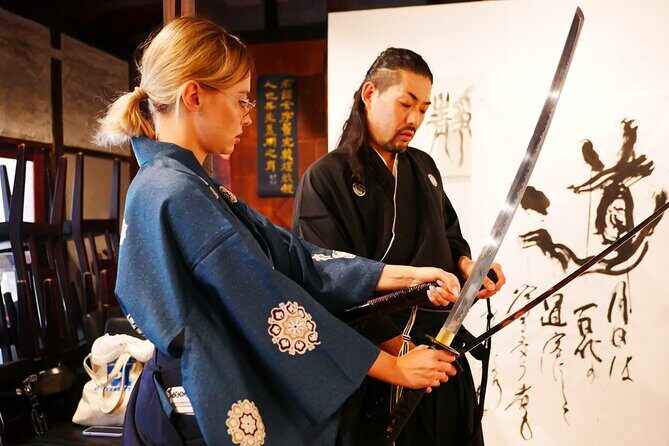
After the sword practice, you’ll serve carefully selected Japanese tea. That sounds simple, but it’s a good end cap because it turns the intensity of cutting into a calmer cultural conversation. The experience also mentions exchange meetings with lecturers held at this location, so there’s room to learn more than just technique.
The class encourages asking questions during and after practice. If you care about why certain motions matter, or how Bushido is interpreted today, this is your chance to ask. In a lot of tourist demos, you don’t get that back-and-forth. Here, the structure makes room for it.
If you’re the kind of traveler who likes learning context—what the sword training represents—this tea-time period is often when the story comes together.
Price and Value: Why $72 Can Make Sense for 90 Minutes
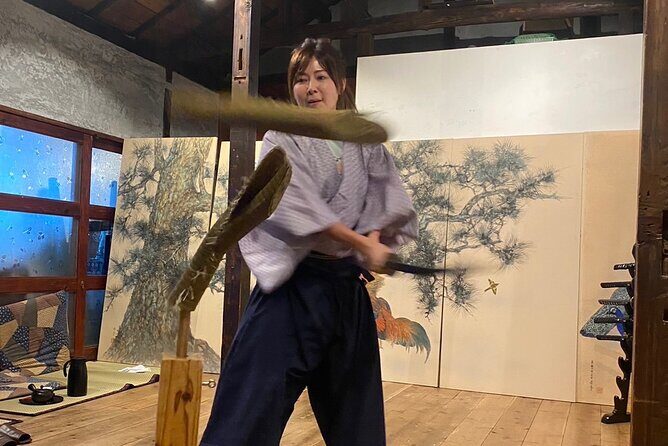
At $72 for about 1 hour 30 minutes, this isn’t the cheapest thing you can do in Tokyo. But it also isn’t just a ticket for a performance. You’re paying for a private small-group setting, hands-on instruction, and the included kimono and tea.
The best value part is the attention. Up to four participants means your corrections aren’t lost in a crowd. Sword training is technical, and technical classes cost more because they require focused time and safety awareness.
You’re also getting a structured experience in an authentic setting: an old private house, a Bushido framing, and practice that includes cutting targets. If you’ve been considering sword experiences that are more theatrical or more watch-only, this one is the practical choice.
If your travel style is short, active, and meaning-focused, $72 can feel fair. If you want a deep multi-hour course, you might find the time brief—but that’s exactly why it works for time-strapped visitors.
Who This Samurai and Bushido Class Is Best For
You’ll probably love this if:
- You want a hands-on experience, not a passive show
- You’re curious about Bushido through movement and practice
- You prefer small groups where it’s easier to ask questions
- You’re a beginner or returning after a long break and want clear teaching
- You want something under two hours that still feels memorable
It may not be the best fit if you’re looking for a long, academic history lesson. This class is practical and skill-based, so if you mainly want to read about Samurai history, you might pair this with a museum or guided city walk.
FAQ
How long is the Bushido Experience?
It lasts about 1 hour 30 minutes (approx.).
Is this a private class?
Yes. It’s a private tour/activity, and only your group participates. The class is also capped at four participants.
Do I need prior experience with a samurai sword?
No. Beginners are specifically mentioned as feeling at ease because you’re constantly being taught and practicing.
What exactly do I do during the class?
You learn how to draw, hold, swing, and sheath a samurai sword, and you also do cutting practice with targets like straw and tatami.
Is the class in English?
Courses are mainly in English, with communication designed to be compatible with PokéTalk-compatible conversation.
Do I get to wear a kimono?
Yes. You’ll wear traditional kimono during the experience.
Is tea included?
Yes. After the experience, traditional Japanese tea is served.
What’s the meeting point?
The start point is rojicoya 路地裏寺子屋36-1 Senjuasahichō, Adachi City, Tokyo 120-0026, Japan.
Should You Book This Samurai Experience in Tokyo?
If you want a short, high-attention, hands-on Bushido class in a real, old-style home, this is a strong yes. The best reasons to book are the private small-group setup, the beginner-friendly instruction, and the fact you do actual cutting practice—not just watching.
Book it if your priority is technique plus cultural context, and you like learning by doing. If you’re hoping for a long history lecture or a big crowd energy, you’ll likely be happier elsewhere. But for most visitors who want something different from the usual Tokyo checklist, this one earns its place.