REVIEW · TOKYO
Tokyo: Tsukiji Fish Market Foodie and Educational Tour
Book on GetYourGuide →Operated by Hanamichi · Bookable on GetYourGuide
Tsukiji can be chaos. This tour turns it into a smart, tasty walk through Tokyo’s food world, with a small group pace and included tuna bento.
I love that you start with real context, not just a list of stalls. And the guide helps you make sense of what you’re seeing as you go.
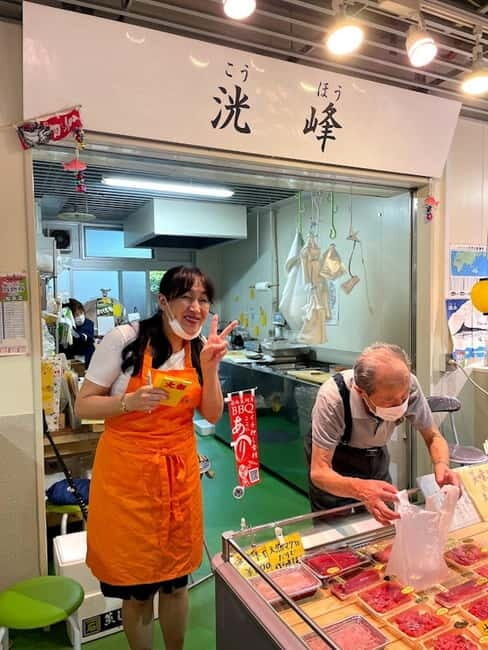
Next, I really like the mix of food and faith stops. The Namiyoke Inari Jinja visit adds meaning to the area, including prayers meant to ward off bad luck and misfortune. Then you step into Tsukiji Uogashi Mall for a stop at Tsukiji KohHoh, where the flavors are practical and the explanations are clear.
One possible drawback: you need a little extra cash for food and drinks you choose at the Outer Market and at the final Lawson’s stop, and the tour is not suitable for vegetarians. It’s also a short walking tour, so comfy shoes help.
In This Review
- Key points at a glance
- Value for your time: a 2-hour Tsukiji tour that actually teaches
- Meeting at Lawson’s Tsukiji 4-chome: where the tour really starts
- Namiyoke Inari Jinja: a shrine stop that explains how people think
- Tsukiji Uogashi Mall and Tsukiji KohHoh: tuna, wasabi, and the wholesaler view
- Tsukiji Outer Market: time for street food and real shopping alleys
- The Lawson’s finish: a convenience-store snack hunt with a local shopping list
- What’s included vs. what costs extra
- How the guide shapes the whole experience
- Practical tips so you don’t waste your appetite
- Who should book this Tsukiji tour, and who should skip it
- Should you book this Tokyo Tsukiji Fish Market Foodie and Educational Tour?
- FAQ
- Where do we meet for the Tsukiji tour?
- How long is the tour?
- Is the tour guide English-speaking?
- What food and drinks are included?
- Is street food included at Tsukiji Outer Market?
- Is the tour suitable for vegetarians?
- Are photos included?
- What is the maximum group size?
- Is free cancellation available?
Key points at a glance
- Lawson’s Tsukiji 4-chome is the easy meeting point, with a staff notice board so you can find the group fast.
- You get shrine context at Namiyoke Inari Jinja, including how people pray for protection from bad luck.
- The included meal is a small bento box with freshly cut tuna, fresh wasabi, water, and a small sake.
- You’ll visit Tsukiji Uogashi Mall and a wholesaler shop called Tsukiji KohHoh.
- You’ll have time at Tsukiji Outer Market for street food ideas, with purchases not included.
- The tour ends with a Lawson’s convenience store snack hunt and buying recommendations.
Value for your time: a 2-hour Tsukiji tour that actually teaches
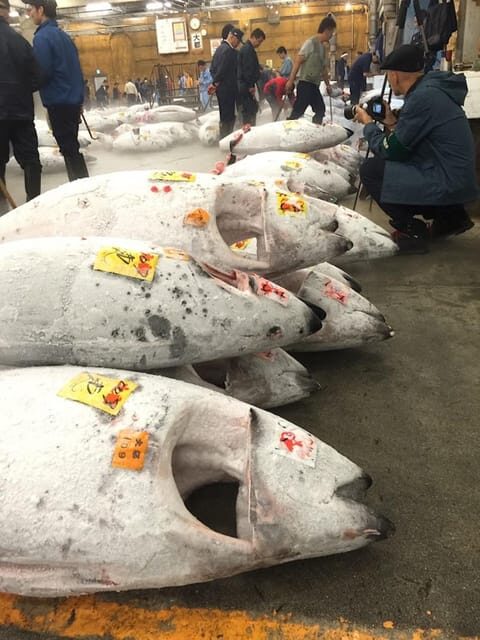
For $70 per person and about 2 hours, this tour is built for people who want Tsukiji without getting lost in it. You’re not just eating random samples. You’re learning what to look for, what matters, and what’s worth your yen.
The biggest value is that the included parts are the most expensive pieces of a foodie day: a prepared tuna bento and a small amount of sake, plus water. On top of that, you get historical and local context and photos taken during the walk, which is a nice bonus if you’re juggling a busy Tokyo itinerary.
It also helps that the group is limited to 6 participants. That size is small enough to ask questions, but big enough that you’re not waiting around.
A few more Tokyo tours and experiences worth a look
Meeting at Lawson’s Tsukiji 4-chome: where the tour really starts
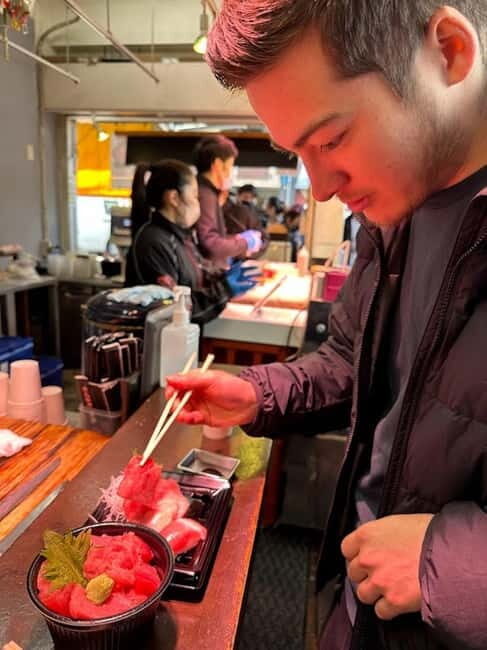
You meet outside Lawson’s at the Tsukiji 4-chome intersection. The staff will have a notice board. The main practical tip here: don’t cluster right by the store entrance. You’ll make life easier for the people going in and out.
Once everyone is together, the tour moves on foot in short segments. The route is designed so you’re never stuck for long in one place, and you get multiple “see it, eat it, understand it” moments.
Think of this as your Tsukiji orientation. You’ll spend the rest of the tour collecting food ideas and shopping cues for the streets around the market.
Namiyoke Inari Jinja: a shrine stop that explains how people think
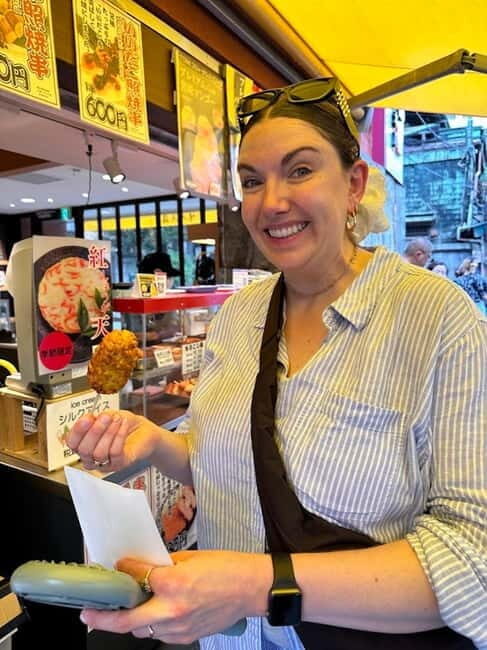
Before you go full foodie, you visit Namiyoke Inari Jinja (about a 15-minute guided stop). This isn’t a random photo stop. The guide explains why the shrine is highly worshipped and how people pray for protection.
Inari shrines in this area are tied to everyday concerns: staying safe, avoiding bad luck, and reducing the stress of misfortunes and turmoil. You’ll learn what that looks like in practice, including the idea of praying to keep unwanted things away.
One neat extra you may notice in the broader area is how nearby religious sites connect to Shinto and Buddhism. Even if you’re not religious, this helps you understand why Tsukiji feels different from a generic shopping zone. It’s a working neighborhood with meaning, not just a marketplace set dressing.
Tsukiji Uogashi Mall and Tsukiji KohHoh: tuna, wasabi, and the wholesaler view
After the shrine context, the tour heads to Tsukiji Uogashi Mall, where you’ll visit a shop connected to the wholesaler Tsukiji KohHoh. The experience is designed to connect the market’s supply chain to what ends up on your plate.
This is the “hands-on learning” part. You’ll have a small included meal: a bento box with freshly cut tuna and fresh wasabi, served with a small amount of sake. You also get a bottle of water.
The tour also points you toward fish expertise, and you’re in good hands: the shop is described as run by locals who are experts in blue marlin, which gives you extra credibility when you’re talking about tuna cuts and why certain bites taste different.
Even if you’re not a seafood nerd, this stop helps you eat with better eyes later. You learn to focus on the simple details: freshness, cutting style, and how wasabi shows up in the flavor rather than acting like a gimmick.
Tsukiji Outer Market: time for street food and real shopping alleys
Then it’s time for Tsukiji Outer Market, one of Tokyo’s best-known food areas. The tour gives you guided orientation plus time to wander for taste and ideas.
There’s history here, yes, but the real purpose of the Outer Market block is practical: figure out what to buy, what to snack on, and where the shopping feels more “local ingredients” than “tourist merchandise.”
You’ll also hear about alternative foodie options, including what’s tucked away in the alleys. That matters because the main floor can be visually overwhelming. A guide helps you sort out where to spend your energy.
Important for planning: the tour includes the guided experience and tastings around the route, but street food and drinks are not included. You’ll have the freedom to buy what you want, and the guide’s job is to help you choose with confidence.
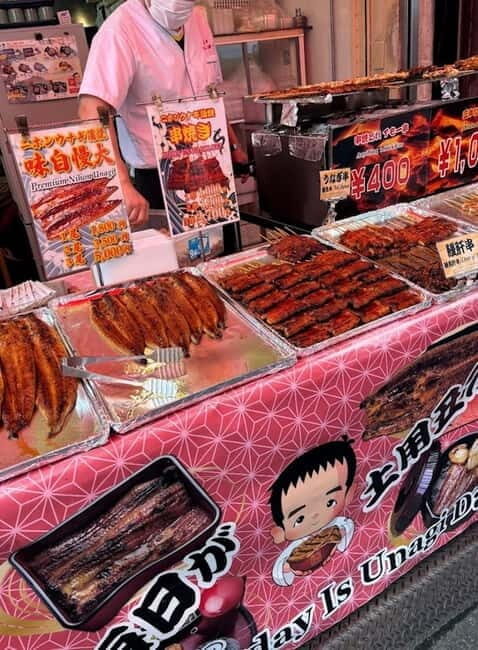
Spending a bit here is worth it because this is where you can pick up local culinary souvenirs and ingredients. The kind of items you’ll run into include Japanese kitchen tools like cooking knives and utensils, plus packaged specialties and seasonal produce.
If you love eating in between meals, this is the time to do it.
You can also read our reviews of more shopping tours in Tokyo

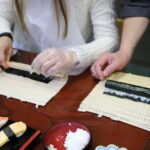
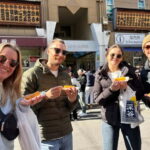
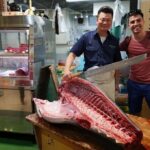
The Lawson’s finish: a convenience-store snack hunt with a local shopping list
You end back at Lawson’s, again at the Tsukiji 4-chome area. This last stop is surprisingly smart. It’s not just “buy a snack.” It’s a chance to learn what Japanese convenience stores do well: ready-to-eat food that’s consistent, tasty, and easy to bring back to your hotel.
The guide gives recommendations on what to buy and how to enjoy it. Since this portion is not included, you’ll pay for what you choose yourself.
This ending also helps if your day is packed. You’re not stuck trying to find a last meal place with a schedule ticking in your head. You have a predictable, low-stress option.
It’s a very Tokyo kind of ending: market energy in the morning, convenience-store efficiency to wrap it up.
What’s included vs. what costs extra
Here’s the value math in plain language.
Included in the tour price:
- Educational guided walking tour in the Tsukiji Market area
- Historical overview of the surroundings
- Photos taken during the tour
- A bottle of water
- Small bento box with freshly cut tuna and wasabi
- Small amount of sake
Not included:
- Street food and drinks you choose at Tsukiji Outer Market
- Any snacks you buy at Lawson’s
So the cost isn’t just paying for walking and talk. You’re paying for a guided route plus a real meal with sake. The extra spending is optional, and that’s good. If you’re on a tight budget, you can keep Outer Market purchases modest.
How the guide shapes the whole experience
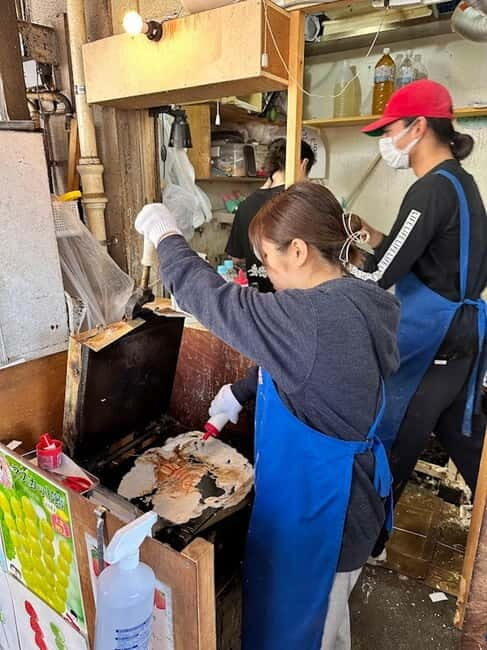
This tour stands or falls on the guide, and the strength here is local know-how mixed with clear English. One guide name that comes up often is Chinami. The guidance is described as very strong in terms of explaining what you’re tasting and seeing, plus giving tips that help you avoid common tourist missteps.
That shows up in small ways:
- You don’t just get told where to stand. You get taught what to look for.
- You get suggestions for what to buy when choices feel endless.
- You get the reason behind the stops, like the protective prayers at Namiyoke Inari Jinja before you enter a fish-and-food world.
If you enjoy learning while you eat, this is one of those tours where the “talk” makes the food taste better.
Practical tips so you don’t waste your appetite
A couple things you’ll thank yourself for later:
- Wear comfortable shoes. Even with short segments, you’re on your feet for a good chunk of the 2 hours.
- Come hungry, but not famished. You’ll already get an included tuna bento and small sake, so you don’t need to force big meals immediately afterward.
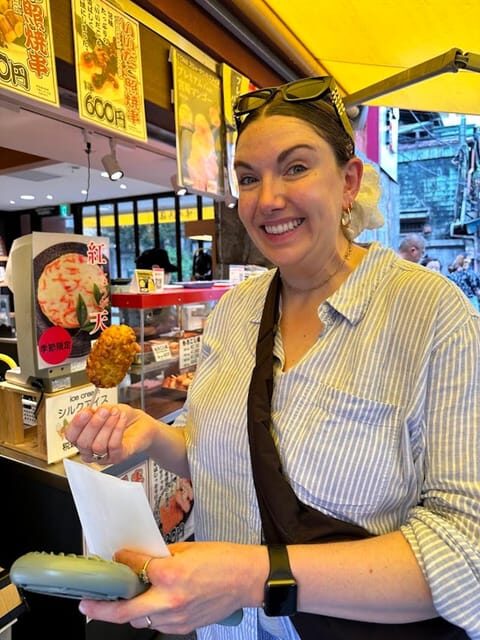
- Plan for extra spending. Outer Market street food and Lawson’s snacks are not included, so bring some cash or a payment card you can use without stress.
- Ask questions at the start. Since the group is small, you can get quick answers about what to prioritize in the Outer Market.
Also, if you’re traveling with kids: the tour can try to accommodate you if you let the provider know the children’s ages and food preferences, especially if they’re not eating the included bento.
Who should book this Tsukiji tour, and who should skip it
This experience fits best if you want:
- A short, guided food-focused tour with context
- Included tuna tasting plus a look at how wholesalers and market food connects
- A plan for what to do in Tsukiji without spending your whole morning stuck deciding
You might want to skip it if:
- You’re vegetarian. The tour is explicitly not suitable for vegetarians.
- You want fully included street food. Some of the fun purchases are on you at the Outer Market and Lawson’s.
For first-timers in Tokyo, this is a strong way to get your bearings fast. It also works well for foodies who don’t want a full-day market marathon.
Should you book this Tokyo Tsukiji Fish Market Foodie and Educational Tour?
I think you should book it if you want Tsukiji in a tight window and you care about the “why” behind the food. The included tuna bento with wasabi and small sake is the core value, and the shrine plus historical context makes the whole area feel more understandable.
If you’re vegetarian, or if you dislike paying extra for snacks beyond what’s included, then this one may not be your match. But for everyone else who’s curious and ready to taste, it’s a smart way to spend 2 hours in Tokyo.
FAQ
Where do we meet for the Tsukiji tour?
Meet outside Lawson’s at the Tsukiji 4-chome intersection. Please do not gather around the store entrance area, and look for the staff notice board.
How long is the tour?
The tour lasts 2 hours.
Is the tour guide English-speaking?
Yes. The tour is offered in English.
What food and drinks are included?
You get a bottle of water, a small bento box with freshly cut tuna and fresh wasabi, and a small amount of sake.
Is street food included at Tsukiji Outer Market?
No. Street food and drinks at Tsukiji Outer Market are not included, though the guide can help you find options.
Is the tour suitable for vegetarians?
No. The tour is not suitable for vegetarians.
Are photos included?
Yes. Photos are taken during the tour.
What is the maximum group size?
The group is limited to 6 participants.
Is free cancellation available?
Yes. You can cancel up to 24 hours in advance for a full refund.