REVIEW · TOKYO
Tokyo: Knife Making Workshop (Sharpening, Engraving)
Book on GetYourGuide →Operated by BUB Activity Center · Bookable on GetYourGuide
Tokyo can be surprisingly tactile. In this knife workshop, you sharpen, engrave, and assemble a Japanese-style kitchen knife, then leave with a souvenir that actually has your name on it. You’ll put on a light haori, choose your blade, and follow guided steps that turn focus into a real edge.
Two things I really like: first, the hands-on sharpening help, with staff correcting your movements in friendly English so you can keep up even if you’re a first-timer. Second, the personal touches are not gimmicks: you get a badge with your name in Japanese letters, then you engrave your name on the handle and attach it using a traditional hammer.
One consideration: sharpening and engraving both take steady hands and patience. Even with guidance, the final look can be as good as your focus that day, and one review noted they wished there were more engraving options for names and characters.
In This Review
- Key points worth knowing before you go
- From the 5th floor of Heiwa Building to your first knife choice
- The quick sword-and-knife lesson you’ll actually remember
- Choosing your blade: up to five options, with smart tradeoffs
- Tea, rules, and a calm, guided sharpening rhythm
- Engraving your name in Japanese: fun, but plan for patience
- The traditional hammer step that turns a project into a finished knife
- What you actually take home: knife, key-holder, snacks, and packaging
- Price and value: $161 for a skill, not just a photo
- Logistics that matter: timing, location, and who it suits best
- Should you book the Tokyo knife sharpening and engraving workshop?
- FAQ
- Where is the meeting point?
- How long is the workshop?
- What is the price, and what’s included?
- Do you choose which knife to sharpen?
- Are there extra fees for certain knife types?
- Is this workshop suitable for beginners?
- Do you provide support for English speakers?
- Can someone watch if they are not participating?
- What should I do with the knife box after the workshop?
- Is alcohol allowed during the workshop?
Key points worth knowing before you go
- Choose from up to 5 knife options so your sharpened skill matches what you’d actually want in a kitchen
- Sharpening feels meditative, and you’ll get ongoing corrections so you don’t just watch, you learn
- Japanese name badge on arrival sets a fun tone before you even touch the knife
- Engraving on the handle goes past text, since you can engrave a picture or your own idea
- Traditional hammer step finishes the craft and makes the workshop feel complete
- Take-home packaging and key-holder mean your souvenir experience doesn’t end when the class ends
From the 5th floor of Heiwa Building to your first knife choice
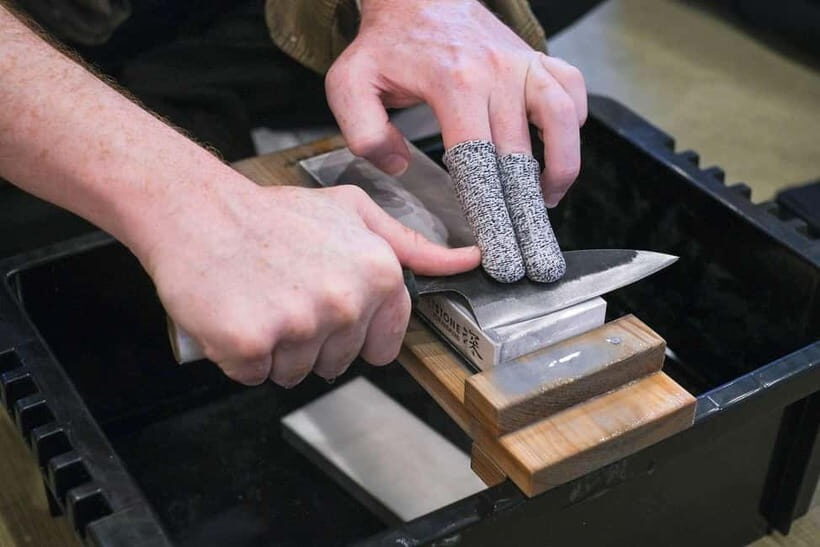
The workshop is set up for an easy start. You meet at BUB ACTIVITY CENTER in Taito-ku, Asakusa, inside the Heiwa Building. Plan to take the elevator up to the 5th floor. Once you’re inside, the atmosphere shifts from regular tourist Tokyo to something calmer and more focused.
A crew member helps you put on a light version of the haori they provide. It’s there to protect your clothes from accidental stains, which matters because you’ll be working carefully and deliberately. Then you get a unique badge with your name written in Japanese letters. It sounds small, but it adds real momentum. You stop being a visitor and start being part of the craft.
Before sharpening starts, you’ll take a seat and get tea or juice, with soft drinks available too. This is not dead time. It’s when you get the cultural framing: why Japanese knives matter, and how the ideas behind swords show up in kitchen tools.
A few more Tokyo tours and experiences worth a look


The quick sword-and-knife lesson you’ll actually remember
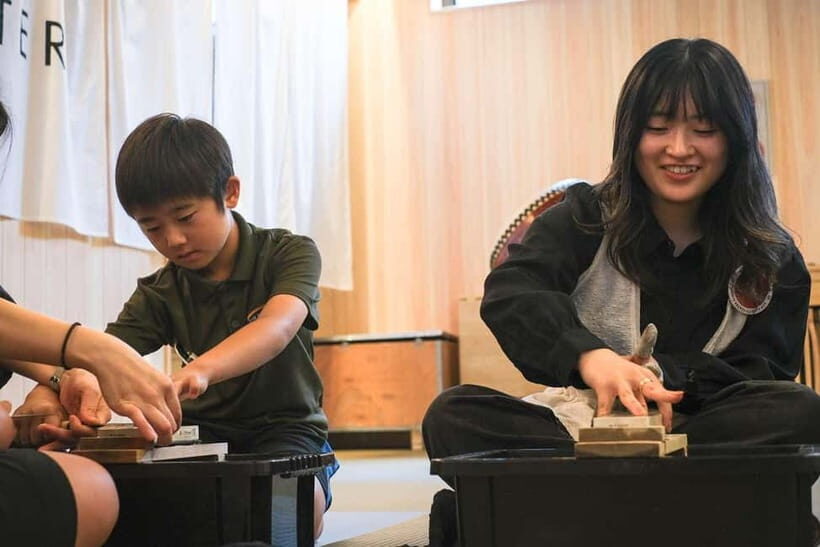
The workshop doesn’t just throw tools at you. You learn the background story right away, from a friendly Japanese master with English support. You’ll hear about the history of Japanese knives and swords, including how Japanese swords like katanas relate (in concept and craftsmanship) to the broader metalworking tradition.
One review highlighted a beginner-friendly comparison between Japanese katanas and western swords, which is exactly the kind of framing that helps you make sense of what you’re holding. Another strong theme in the reviews: the staff stay energetic, fun, and ready to answer questions, so the history portion doesn’t feel like homework.
In my view, this is one of the best parts for value. You’re paying for more than a souvenir. You’re buying a mini cultural lesson that changes how you’ll shop after. Several people noted they left more confident about what kind of Japanese knife to buy next, which is the real win if you’re the type who likes to cook.
You might find that the workshop also helps you understand knife care and why the sharpening process isn’t random. It’s also why they correct your movements while you work.
Choosing your blade: up to five options, with smart tradeoffs
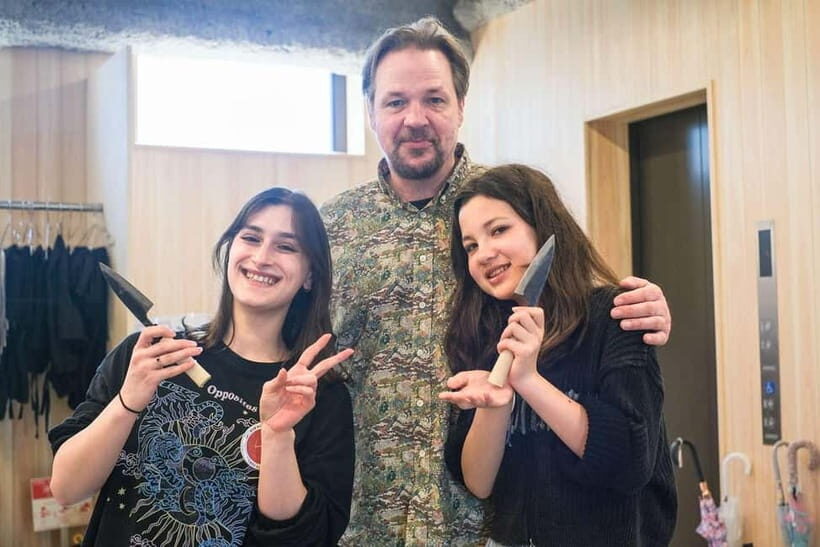
Then comes the main decision: what are you sharpening today? You can choose the blade type you’d like, with up to 5 types of knives available. Some options can have a small additional charge, so it’s worth thinking ahead about your goals.
The workshop clearly distinguishes between the included basic knife and the upgrade choices. The included take-home item is a standard size multi-tasking knife. It’s designed to be a practical first step if you want a usable kitchen tool, not a display piece.
If you want to sharpen something more specific, the workshop also references bigger or more specialized blade types, including usuba, deba, and petit yanagiba. Expect there may be an added fee for those larger types.
One review mentioned upgrading to an all-purpose knife for a small add-on fee, which fits the logic: if you cook a bit of everything, a multi-tasking or all-purpose shape can make more everyday sense than a specialty blade.
Here’s the consideration I’d keep in mind: if you choose a specialized knife, you’re not just sharpening harder steel or a different profile. You’re also taking on a more complex “what do I do with this later?” question. If your goal is a versatile home knife, start with the included standard option and only upgrade if you already know what you want.
Tea, rules, and a calm, guided sharpening rhythm
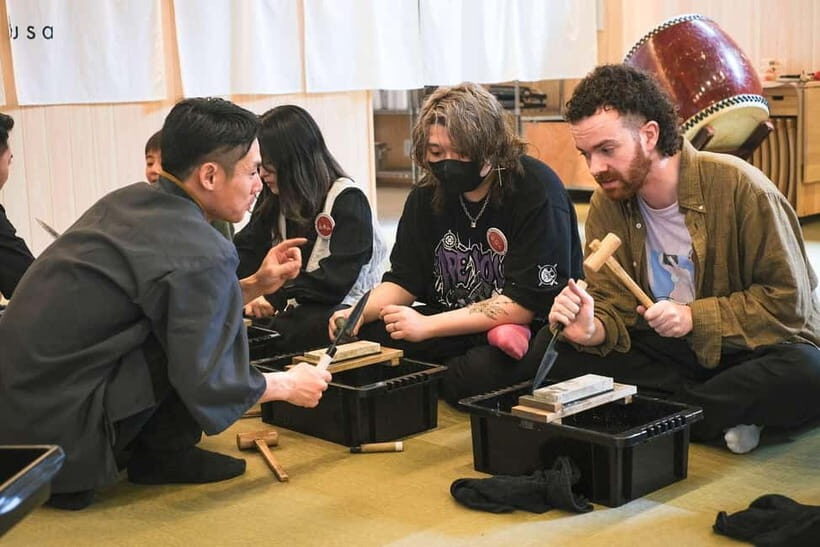
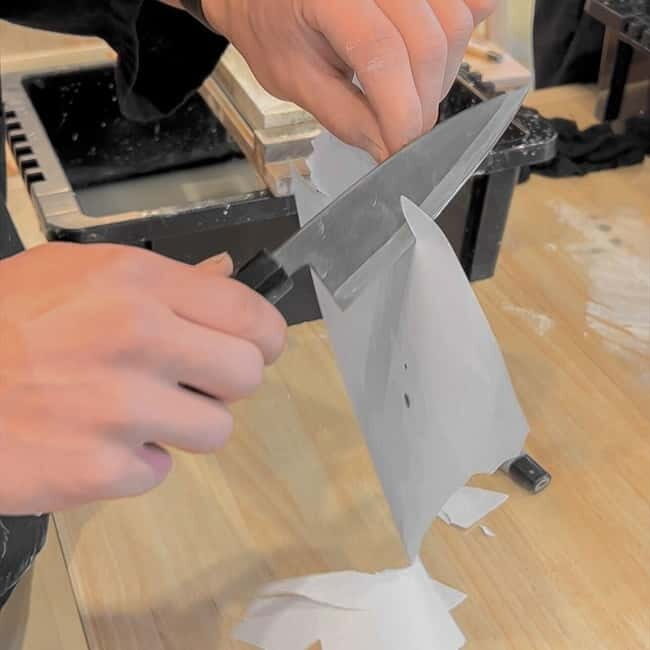
Once your blade is selected and sized, you’ll begin the sharpening step. This is where the workshop turns hands-on and slightly meditative. The instruction emphasizes concentration, and you’ll feel that right away once you start.
Several reviews point out how tactile it is. That tracks with what you’ll likely notice: sharpening is not abstract. You can feel the difference as the blade changes through the process.
Staff members—multiple guides are referenced in reviews, including Agata and Mori—stay close. English-speaking crew members are there throughout. They don’t just watch from the side. They help you correct your movements in a polite, practical way, which is key if your first attempt feels awkward.
If you like “learn by doing,” this section will land well. You’re not expected to be a metalworker. The class is beginner-friendly, and that shows in how guidance is delivered: check your angle, slow down, focus, then try again.
One review specifically mentioned how the process was hard work but worth it, with staff repeatedly checking that things are being done right. That’s what gives you confidence that your final souvenir is more than decoration.
Engraving your name in Japanese: fun, but plan for patience
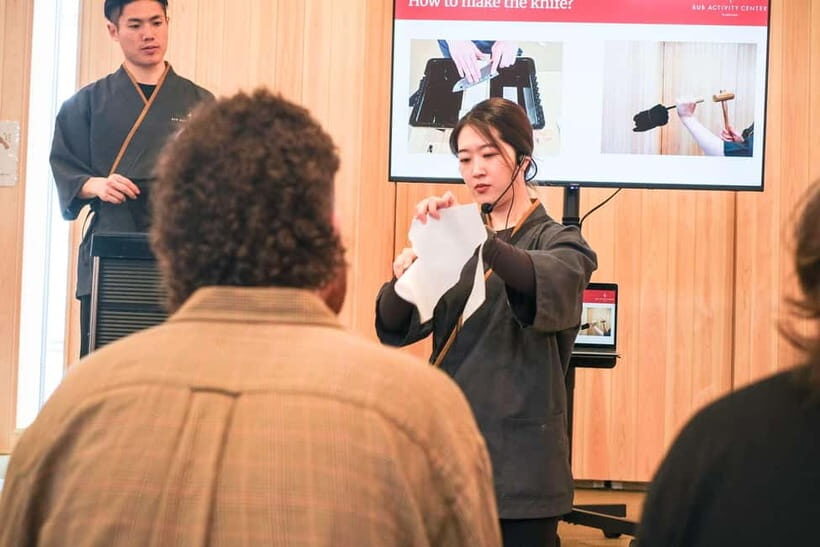
After sharpening, the workshop shifts from edge-work to detail-work: engraving.
You’ll engrave your name in Japanese letters on the handle. The workshop also allows more creative personalization. You can engrave a picture or something else you imagine—so this isn’t limited to perfect calligraphy.
A delicate crew member teaches you Japanese basics if you’re interested, and the bilingual staff make explanations simple for different English levels. Reviews mention staff being attentive and patient during engraving, and that really matters here. If you’ve never done this kind of writing, you need help translating the idea into real engraved marks.
I’d also take a cue from one review that suggested the workshop could improve handle engraving options. That’s a fair note for anyone who cares deeply about the exact look of characters. If you want absolute precision, plan to spend time on your characters and accept that your result may reflect your comfort level that day.
Also: the engraving step creates an emotional payoff. You’re literally taking ownership—your name becomes part of the object.





The traditional hammer step that turns a project into a finished knife
Once your handle is ready, the craft reaches its satisfying finale. You’ll attach the handle using a traditional hammer, completing the piece like a finished artwork.
You’ll hear the sound of effort as the process goes together. It’s one of those steps that doesn’t sound dramatic on paper, but in the room it feels real—like you’re seeing the last link in a chain of careful work.
At this point, you’re not just carrying a souvenir. You’ve assembled something with your own customization choices. That changes how you’ll value it later, especially once you put it in your kitchen and use it.
What you actually take home: knife, key-holder, snacks, and packaging
The included take-home item is a standard size multi-tasking knife, plus the customized crafting experience and assembly you did during the class. You also get a customized key-holder with a unique design, which is a nice touch if you like small Tokyo souvenirs that aren’t mass-produced.
You’ll also get aesthetic packaging, Japanese snacks, and tea. Reviews repeatedly mention the overall presentation, and that matters because the workshop isn’t just about learning—it’s about leaving with something you can show.
One practical detail to treat seriously: you’ll need to manage your knife box. The workshop notes that you should put the knife box into your check-in luggage, or you can ask staff to ship it. If you’re tight on luggage space, ask early about the shipping option so you’re not scrambling at the end.
Also, check your plan for when you’ll use the knife. The workshop gives you a start with sharpening skills and care context, and several reviews say it made them more confident buying additional knives in Japan afterward.
Price and value: $161 for a skill, not just a photo
At $161 per person, this isn’t the cheapest activity in Tokyo. But it also isn’t just a beginner demo you walk away from.
You’re paying for:
- a guided, hands-on sharpening session
- engraving with help for Japanese letters
- assembly of the handle using a traditional method
- a usable take-home knife (standard size multi-tasking)
- snacks, tea/soft drinks, and aesthetic packaging
- a personalized key-holder
The cost makes more sense when you compare it to what a practical kitchen tool + instruction would cost elsewhere. Even if you decide to upgrade to larger knife types like usuba/deba/petit yanagiba, the workshop frames those as add-ons, not hidden surprises.
My balanced take: if you love cooking, want a skill you can use at home, or simply want a souvenir with real meaning, the price can feel fair. If you only want something quick for a few photos, you might find it more work than you expect.
Logistics that matter: timing, location, and who it suits best
The workshop runs about 90 minutes (roughly 1.5 hours). In a city full of half-day plans, this length is a strong fit. It’s long enough for real hands-on learning, but short enough that you can still do dinner plans afterward.
Location is a big plus. It’s in the heart of Tokyo, in the Asakusa area, and it’s described as easy to reach by public transport. That means you can slot it into a day with temples and street wandering without needing a taxi strategy.
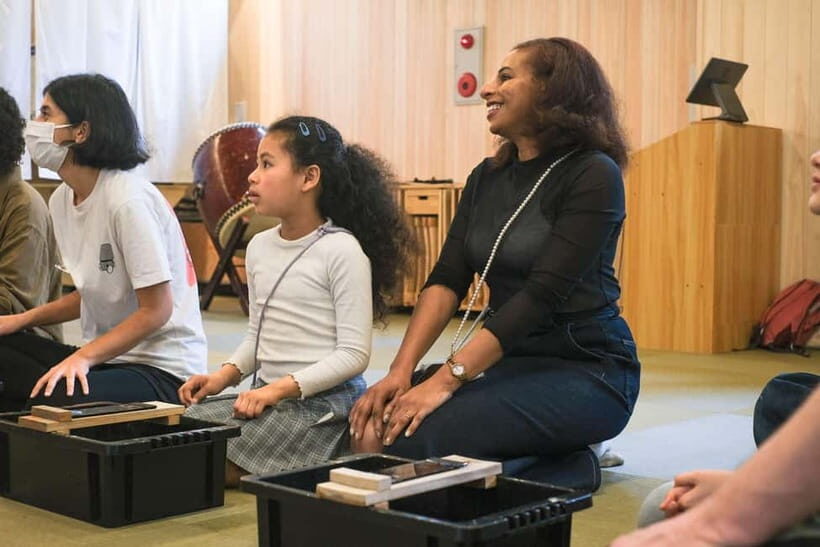
It also fits beginners. You don’t need prior experience. Reviews even mention a parent-and-child setup that worked well, and that the guides kept things engaging throughout.
Wheelchair accessibility is listed, which is useful to know if you need step-free access. The meeting point does require elevator access to the 5th floor, so build in a little time to find the right route inside the building.
Finally, note the straightforward rules: alcohol and drugs are not allowed.
Should you book the Tokyo knife sharpening and engraving workshop?
I’d book this if you want a hands-on Tokyo experience that gives you both a skill and a personal take-home object. The strongest reason to go is the combination: you sharpen, you engrave, and you assemble, with English support and constant correction. That’s why reviews keep praising the staff and the feel of learning through touch.
It’s also a great fit if you’re the type who likes to ask questions. The guides (including Agata and Mori, plus other named staff like Lisa and Joe in reviews) come across as ready to explain the why behind the how.
I’d think twice if you hate slow, careful tasks. This isn’t a quick craft where you slap on a sticker and leave. It’s focused work, and it rewards patience.
FAQ
Where is the meeting point?
You meet at BUB ACTIVITY CENTER in Tokyo, Taito-ku, Asakusa, 2 Chome 6-11, Heiwa Building. Take the elevator to the 5th floor.
How long is the workshop?
The duration is about 90 minutes (about 1.5 hours).
What is the price, and what’s included?
The price is listed as $161 per person. Included items are a standard size multi-tasking knife to take home, the customized crafting experience, Japanese snacks and drinks, bilingual staff assistance, aesthetic packaging, and a customized key-holder.
Do you choose which knife to sharpen?
Yes. You can choose the type of blade you want to sharpen (up to 5 types are available) and the size.
Are there extra fees for certain knife types?
Yes. Some larger or specialized types of knives can have an additional charge, including usuba, deba, and petit yanagiba.
Is this workshop suitable for beginners?
Yes. It is suitable for beginners and no prior experience is required.
Do you provide support for English speakers?
Yes. The instructor and staff support are listed as English, and bilingual staff assistance is included to keep explanations clear.
Can someone watch if they are not participating?
Yes, but an observation fee is charged on site if friends or family come to observe instead of participate.
What should I do with the knife box after the workshop?
You should put your knife box into your check-in luggage, or you can ask the staff to ship it.
Is alcohol allowed during the workshop?
No. Alcohol and drugs are not allowed.