REVIEW · TOKYO
Tokyo: Meiji Shrine and Shinto Culture Walking Tour
Book on Viator →Operated by Traveling Tokyo · Bookable on Viator
Tokyo can feel loud; this tour quiets it. You’ll walk straight into Meiji Jingu’s calm forest and get practical explanations of Shinto ritual that most self-guided visits skip. The one downside: it’s an outdoor stroll, so rain can turn the pace into a careful shuffle.
What I especially like is that the group stays small, so you can actually ask questions instead of just orbiting your phone camera. The vibe is friendly and respectful, and the guidance can be spot-on even when the weather is gray—people have praised guides like Yumi, Sara, Matt-san, Haydn, and Benjamin for making the customs easy to follow and not weird.
In This Review
- Key highlights worth your time
- Meiji Jingu’s forest and the Harajuku location trick
- The torii approach: big wood, big meaning
- Emperor Meiji and Empress Shoken: why this shrine exists
- The Shinto ritual walkthrough you’ll actually use later
- Walking the grounds with context, not just footsteps
- Small group size: better questions, less waiting
- Price and value: $18 for a “translator” of etiquette
- Logistics that keep your day stress-free
- What to do before you go (so you enjoy it more)
- Who this tour is best for
- Should you book the Tokyo Meiji Jingu Shinto Culture Walking Tour?
- FAQ
- How long is the Tokyo Meiji Shrine and Shinto Culture Walking Tour?
- How much does the tour cost?
- What is included in the tour price?
- What is not included?
- Is there a mobile ticket?
- How big is the group?
- Where do I meet the guide?
- Where does the tour end?
- Is cancellation free?
Key highlights worth your time
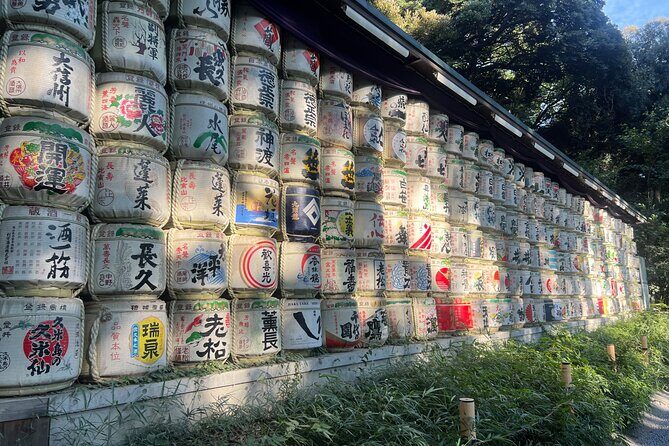
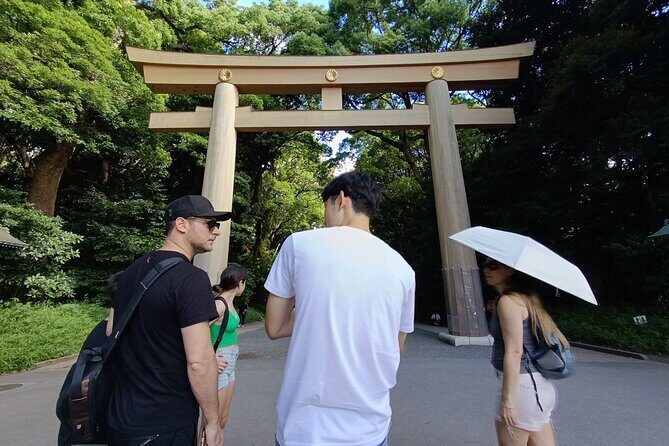
- A sacred torii you can’t ignore: the largest wooden myojin-style torii in Japan (12 meters tall, 17.1 meters wide)
- Shinto basics that change how you look: you’ll learn what the rituals mean and when to do them
- A guide who helps with etiquette: bowing and ritual cleaning become doable, not confusing
- A real small-group feel: max 15 people for better questions and pacing
- An easy, central start point: meeting at Starbucks near Harajuku, with the tour ending back there
Meiji Jingu’s forest and the Harajuku location trick
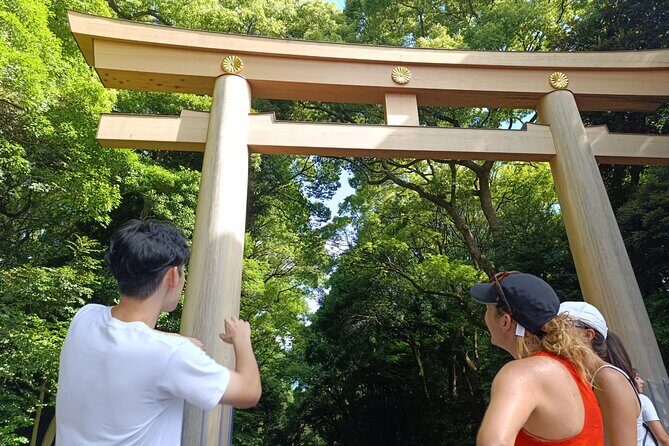
Meiji Jingu is one of those Tokyo places where you step through the gate and the city sound fades. You’re in/near Harajuku, yet the shrine grounds are designed to feel separate—more like a breathing space than a tourist stop.
This is exactly why a guided visit works well. Without context, you’ll still enjoy the atmosphere, but with a guide you understand why the atmosphere is built that way. The big theme you’ll keep hearing is respect: to the deified spirits, to the space, and to the rituals that visitors take part in.
And yes, the setting is beautiful. The shrine sits within a massive artificial forest of around 70 hectares, so the walk feels like a green hallway that pulls you away from the pavement.
You can also read our reviews of more walking tours in Tokyo


The torii approach: big wood, big meaning
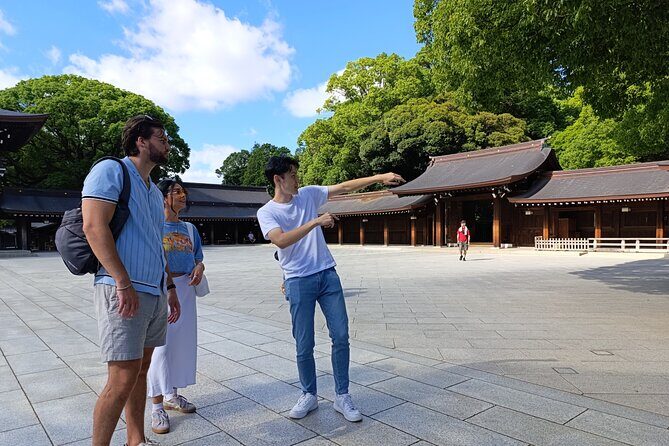
The tour’s first real wow-factor is the torii gate experience. You enter through towering torii gates, and then the approach widens into a forest path that slows your steps naturally.
One detail that really sticks: the myojin-style torii here is the largest wooden one of its kind in Japan—12 meters tall and 17.1 meters wide. Standing under something that size does something to your brain. It’s not just a photo spot. It signals that you’re entering a sacred threshold, not strolling through a park.
When you have a guide, you don’t just admire it—you also learn what to do when you pass. Shinto etiquette can feel vague if you’ve never seen it, and your guide will help you get the flow right, including the simple movements like bowing at the gates.
Emperor Meiji and Empress Shoken: why this shrine exists
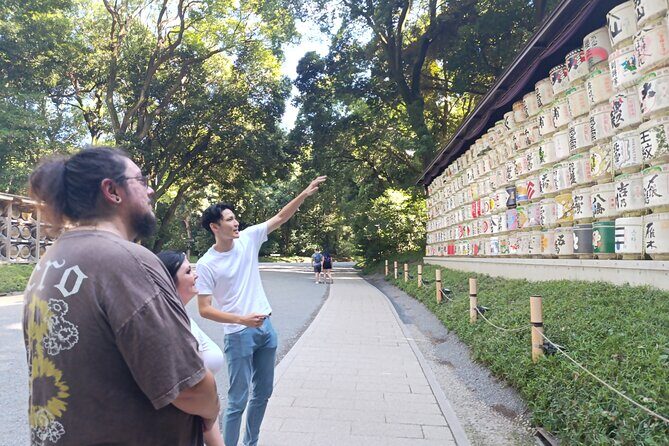
Meiji Jingu is dedicated to Emperor Meiji and his consort, Empress Shoken. The shrine was established in 1920, and the whole place is built around honoring their memory in a Shinto context.
What I like about learning this early is it changes your visit from sightseeing to participation. You start seeing details as part of a system—signs, pathways, ritual spaces—rather than random shrine architecture.
A guide can also connect the dots between the person being honored and the modern Japan story. Several guides have been praised for explaining Emperor Meiji’s achievements and the Meiji restoration in a way that feels clear, not like a lecture. That matters because it helps you remember what you’re looking at when the crowds and camera flashes fade.
The Shinto ritual walkthrough you’ll actually use later
Here’s the best reason to book: your guide helps decode rituals that are easy to miss when you’re alone. Shinto practices often look simple from the outside—wash, bow, walk forward, say nothing—but the order and purpose matter.
You’ll likely encounter the basic rhythm of visiting. People use ritual cleaning so they can approach in a more proper state. And when bowing at key points, you’re not performing for the camera—you’re showing respect to the space and spirits you’re approaching.
Guides have been praised for making these customs feel peaceful and doable. One theme that keeps showing up in the tour experience: you come away with a short list of what to do and when to do it. That’s practical value in Tokyo, where you might otherwise spend your time guessing.
Walking the grounds with context, not just footsteps
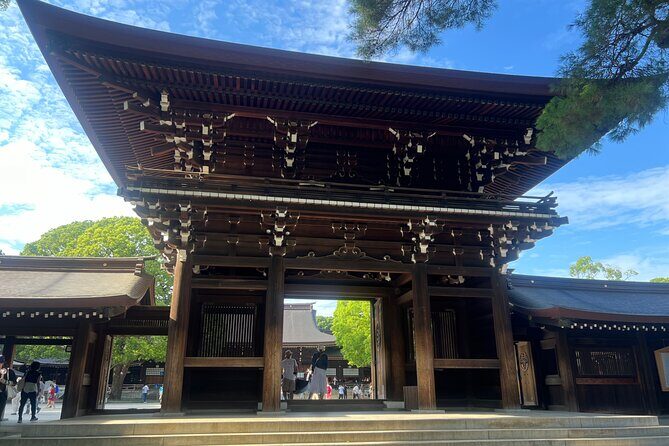
The tour is about pace and focus. It’s designed for a roughly two-hour visit, so you get enough time to experience the shrine’s main flow without burning your whole day.
The walk includes the forest approach and key moments along the shrine grounds. You’re not sprinting between stops; the route is meant to let you see how Meiji Jingu creates calm. The artificial forest does the work for you, but it helps when a guide explains what you’re seeing as you go.
One underrated benefit: you’ll notice more details because you know what matters. Instead of thinking, That’s a gate. That’s a building. You start thinking, That’s a threshold. That’s a ritual area. It’s the difference between looking and understanding.






Small group size: better questions, less waiting
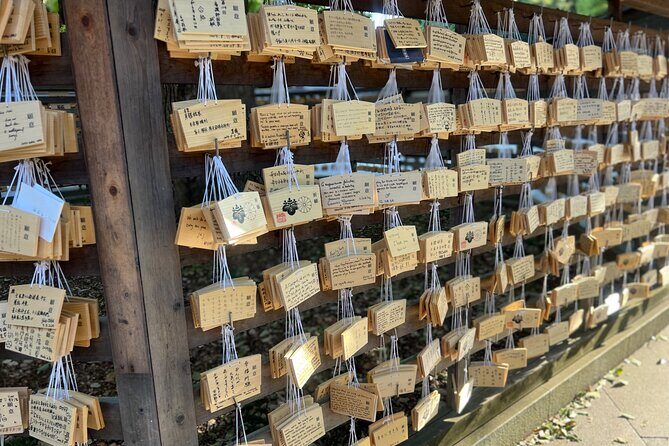
This tour caps at 15 travelers, and that’s a big deal for a shrine experience. In places like this, the best questions aren’t always planned. You’ll notice something odd, or you’ll wonder why people act a certain way, and you’ll want an answer right then.
A small group helps because the guide can move with you and keep the pace comfortable. It also cuts down the “follow-the-leader” chaos that can happen when groups are too large.
In the feedback, people repeatedly mention guides being friendly and accommodating, and that they asked questions during the walk. That’s what you’re buying with a small-group tour: conversation and correction, not just a soundtrack of facts.
Price and value: $18 for a “translator” of etiquette
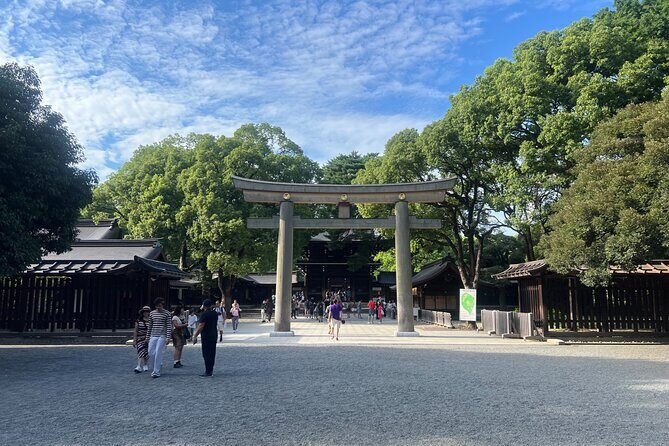
At $18 per person, this is one of the more affordable guided shrine experiences you can find in Tokyo. The big value move is that it pairs a guide with an included admission ticket (so you’re not doing extra ticket math in your head).
You also get historical insights into the district, not just a summary of shrine facts. That combination matters because it helps you place Meiji Jingu in the larger Tokyo map—especially since Harajuku is right nearby and many people pair these areas anyway.
Is it a luxury tour? No. But it doesn’t need to be. You’re paying for something tangible: explanations for what to do, what you’re seeing, and how Shinto visiting works.
If you tend to enjoy guided cultural context—especially where etiquette matters—this price feels fair.
Logistics that keep your day stress-free
The meeting point is simple and central: Starbucks Coffee With HarajukuJapan, address listed as 150-0001 Tokyo, Shibuya, Jingūmae, 1-chōme1430 WITH HARAJUKU. The tour also ends back at the meeting point, which helps you stay oriented if you’re combining it with other Harajuku or Shibuya plans.
You’ll get a mobile ticket, which is handy in Tokyo where paper tickets can become a clutter problem. The tour is also said to be near public transportation, so you shouldn’t need a complicated route plan to get there.
Weather is your only real wildcard. Because it’s a walking tour, rain means slower steps and more careful footing. One thing you can count on: a good guide will keep the experience coherent even when the sky is doing its thing.
What to do before you go (so you enjoy it more)
You don’t need to study Shinto beforehand, but you’ll enjoy the tour more if you come in with two attitudes:
- Expect quiet focus at key moments.
- Treat etiquette like part of the experience, not an obstacle.
If you’re the type who loves photos, great—just remember the best moments are often the ones where you’re not rushing. Keep some time in your head for simple bowing and cleaning moments. Those are the scenes where the guide’s explanations pay off.
Also, wear shoes you can walk in comfortably. A shrine visit is still a walk through grounds and paths. Plan to stay present, not just covering ground.
Who this tour is best for
This is a strong fit if you want:
- A guided way to understand Shinto rituals
- A calm break from Tokyo’s high-energy streets
- A small-group experience where questions are welcome
- A high-impact introduction to Meiji Jingu without guessing the rules
It’s also ideal if you like cultural context while traveling, especially in Japan where manners and sequence matter.
If you’re the type who hates guided tours and prefers to wander with zero structure, you might prefer solo time. But if you want the meaning behind what you’re doing—this tour delivers that.
Should you book the Tokyo Meiji Jingu Shinto Culture Walking Tour?
Yes—if you want your Meiji Jingu visit to feel like more than scenery. For $18, you get a structured stroll through one of Tokyo’s most important shrine sites, plus a guide who helps you understand why rituals look the way they do and how to participate respectfully.
Skip it only if you’re strictly looking for unguided freedom with no etiquette coaching and you’re comfortable figuring Shinto customs out on your own. Otherwise, this is a smart, low-stress way to see a major shrine and leave with real clarity.
FAQ
How long is the Tokyo Meiji Shrine and Shinto Culture Walking Tour?
The tour lasts about 2 hours.
How much does the tour cost?
The price is $18.00 per person.
What is included in the tour price?
The tour includes a tour guide and historical insights, and the admission ticket is included for the shrine visit.
What is not included?
Tips are not included.
Is there a mobile ticket?
Yes, the tour uses a mobile ticket.
How big is the group?
The tour has a maximum of 15 travelers.
Where do I meet the guide?
You meet at Starbucks Coffee – With HarajukuJapan (150-0001 Tokyo, Shibuya, Jingūmae, 1-chōme1430 WITH HARAJUKU).
Where does the tour end?
The tour ends back at the meeting point.
Is cancellation free?
Yes, free cancellation is available. You can cancel up to 24 hours in advance for a full refund.