REVIEW · TOKYO
Tokyo Private Tour by Car with English speaking driver
Book on Viator →Operated by Funfare Tours · Bookable on Viator
Tokyo is a lot. A private car tour makes it manageable. This kind of outing is great when you want major sights without stitching together trains and walking marathons, and you get hotel pickup and drop-off so you can just focus on the day ahead. You’ll also have the option of an English-speaking guide for deeper context, which is handy when you want more than photos.
I like how the route is built around big, recognizable landmarks—Tsukiji, Senso-ji, Meiji Jingu, Shibuya Crossing—yet still leaves room to shape the day around your interests. The pacing is also realistic for a 10-hour window, with time blocks that let you actually see things, then return to the car before the fatigue hits.
One thing to weigh: this is primarily a car-based experience, and the amount of on-the-ground guiding and in-car commentary can vary. If timing matters for you (for example, closures on certain days), you’ll want to confirm expectations with your driver up front.
In This Review
- Key things that matter before you go
- Why a Private Car Tour Works So Well in Tokyo
- Getting Picked Up, Dropped Off, and Staying Low-Stress
- The 10-Hour Plan: How the Route Fits Tokyo’s Must-Sees
- Tsukiji Fish Market: Iconic Tokyo Seafood Energy
- Senso-ji Temple in Asakusa: Big Faith, Big Sights
- Tokyo Skytree: The One Ticket You’ll Actually Pay For
- Imperial Palace Grounds: History at a Slower Pace
- Meiji Jingu Shrine: A Quiet Reset in the Middle of City Stops
- Takeshita Street (Harajuku): Fashion Street Energy Without the Footwork
- Shibuya Crossing: The Photo Stop With Real Energy
- Odaiba: Futuristic Waterfront Time (and Possible Extra Costs)
- English Speaking Driver vs Optional Guide: What You Should Expect
- Price and Value: When $453.24 Feels Smart
- Who This Tour Is Best For
- Should You Book This Tokyo Private Car Tour?
- FAQ
- How many people can be in the private group?
- How long is the Tokyo private car tour?
- Is hotel pickup and drop-off included?
- Is the driver English speaking?
- Is there an optional guide?
- What is included in the tour price?
- Do I need to buy tickets during the tour?
- Is Tokyo Skytree ticket price included?
- Can I cancel for a full refund?
- How far in advance do people usually book?
Key things that matter before you go
- Hotel pickup and drop-off mean less time “getting around,” more time seeing Tokyo
- English-speaking driver with the option for a guide if you want extra context
- Route planning stays flexible, so you can adjust stops to match your group’s vibe
- Most admissions are free, with Tokyo Skytree as the main paid add-on
- Car comfort is part of the value, especially in hot or rainy weather
Why a Private Car Tour Works So Well in Tokyo
Tokyo rewards planning, but it can punish poor planning. The city is fast, dense, and packed with neighborhoods that each have their own rhythm. With a private car, you skip the mental load of route-finding and transfers, and you also avoid the constant stop-start of train stations and crowded transfers.
This tour style is especially good if your group has mixed energy levels. One person wants temples; another wants shopping streets; someone else just wants to sit down every so often. The car gives you that flexibility without forcing everyone to move at the same pace.
And yes, it’s still a sightseeing day—just a less exhausting one. When you’re done with the big sights, you can save your energy for dinner plans, an evening stroll, or a second neighborhood later.
You can also read our reviews of more private tours in Tokyo


Getting Picked Up, Dropped Off, and Staying Low-Stress
The biggest practical win here is pickup offered along with hotel drop-off. That means your day doesn’t start with figuring out transit from your hotel to your first stop. It also means you’re not stuck at the end of the day trying to work out how to get home while you’re tired.
You’ll ride in an air-conditioned vehicle, and the price covers parking fees and a fuel surcharge. Those may sound like minor details, but they matter in Tokyo, where parking and traffic costs can blow up the budget fast if you’re doing this with multiple taxis.
Also, this is a private group setup (up to 6). That tends to keep the schedule calmer than a shared tour where you’re waiting on strangers.
The 10-Hour Plan: How the Route Fits Tokyo’s Must-Sees

The day is built around a tight sequence of landmarks with set time windows at each stop. The total sightseeing time sums to roughly the advertised 10 hours, which is a good sign for people who want structure.
Here’s what that looks like in real life: you’ll do the major classics on the same schedule, then end with area variety—Shibuya Crossing and Odaiba—so you’re not stuck only in temples or only in shopping.
Below is what each stop is best for, plus a couple of watch-outs.
Tsukiji Fish Market: Iconic Tokyo Seafood Energy
Tsukiji Fish Market is first on the list, with about 1 hour 15 minutes. Admission for this stop is free, so this is a low-risk start to the day.
What makes Tsukiji worth a visit in a private-car day is the atmosphere and the sheer scale. The market is described as one of the world’s largest fish markets, and that’s exactly the kind of place that benefits from arriving early and not rushing.
Watch-out: Tsukiji is a very “stay aware of your surroundings” type of spot. In a car tour, the main goal is to get a good look, take in the energy, and then move on before you lose time.
Senso-ji Temple in Asakusa: Big Faith, Big Sights
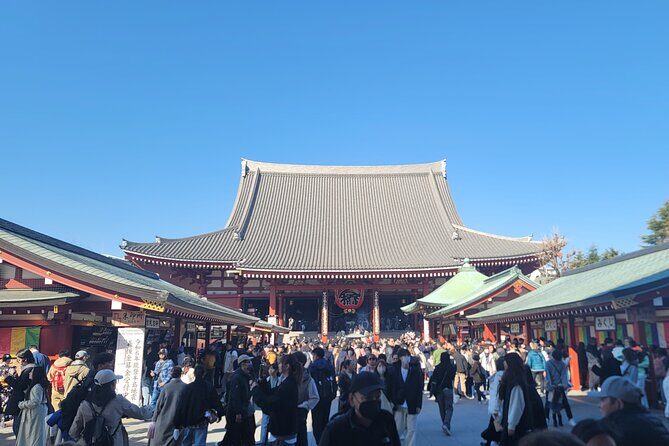
Next up is Senso-ji Temple in Asakusa, with about 1 hour 30 minutes and free admission. This is one of Japan’s most revered and visited Buddhist temples, and it shows immediately once you arrive.
This stop is a strong “first Tokyo temple” choice because it’s both meaningful and visually memorable. It also works well for groups, because you can linger for photos, then step back and regroup without feeling like you’re missing the whole show.
Watch-out: If you’re expecting a strict, guided walk inside, keep in mind that car tours can vary in how much accompaniment you get on-site versus curbside drop-offs. If you want someone to explain what you’re seeing, plan to choose the guide option (or ask for it).
A few more Tokyo tours and experiences worth a look


Tokyo Skytree: The One Ticket You’ll Actually Pay For
Tokyo Skytree is allocated about 1 hour 30 minutes. Admission here is not included, and the ticket cost is listed as ¥2,500 per person.
If you’re going to add just one paid attraction, Skytree is often the most practical one on this route because it’s purpose-built for panoramic views. You’ll have enough time to get oriented, take photos, and enjoy the skyline from above.
Watch-out: Add the ticket step to your mental schedule. If you’re coming from other stops, you’ll want a smooth handoff from car to ticket timing so you don’t lose the best part of your 1.5-hour window.
Imperial Palace Grounds: History at a Slower Pace
Imperial Palace is on the list next, with around 45 minutes and free admission. It’s framed as a symbol of Japan’s imperial legacy, with sprawling gardens and moats.
This is a helpful change of pace after the more sensory stops. The time block is short, so treat it like a “see it, take it in, then move” moment rather than a deep, hours-long exploration.
Important reality check: The day’s flow can be affected by closures. One issue that popped up in feedback is that the Imperial Palace may be closed on Mondays, and a guest had to point this out to the driver. If your trip includes a Monday, confirm the plan early and don’t assume every stop will run as written.
Meiji Jingu Shrine: A Quiet Reset in the Middle of City Stops
Meiji Jingu Shrine is given about 45 minutes with free admission. It’s described as a serene spiritual space dedicated to Emperor Meiji and Empress Shoken.
This stop balances the itinerary nicely. After temples and crowds, Meiji Jingu offers a calmer feel—an intentional reset so your day doesn’t turn into nonstop “looking at things.”
Watch-out: Even though the time is shorter, it’s a good place to slow down. If your group keeps rushing, you’ll miss the point of this stop. If you want it to be restorative, plan to actually take your time for a few minutes.
Takeshita Street (Harajuku): Fashion Street Energy Without the Footwork
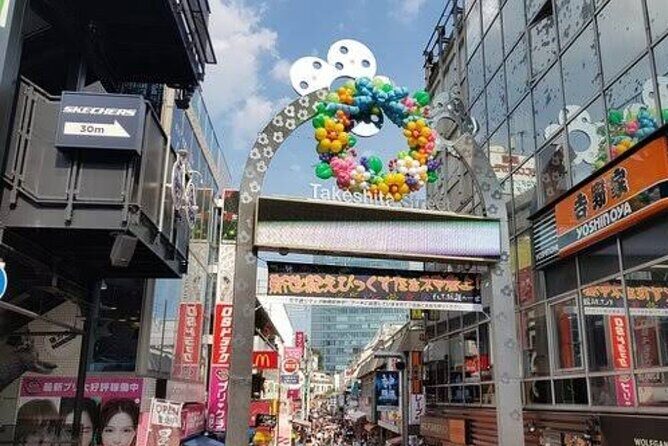
Takeshita Street is next, with about 1 hour 15 minutes and free admission. This is the Harajuku fashion street stop, known for avant-garde style and creative expression.
In a car tour, this is a great “people watching + quick browsing” stop. You can see what’s happening, take photos, and step out without needing a long, tiring walk across multiple districts.
Watch-out: This is the kind of place where it’s easy to get distracted and then realize you’re behind schedule. Keep an eye on time and use the car as your “anchor” so the day stays on track.
Shibuya Crossing: The Photo Stop With Real Energy
Then you hit Shibuya Crossing, scheduled for about 45 minutes with free admission. The crossing is described as the world’s busiest pedestrian crossing and a symbol of Tokyo’s urban life.
Even if you’ve seen it a hundred times online, being there matters. It’s one of those Tokyo moments that’s easier to enjoy when you’re not sprinting across streets or figuring out where to stand.
Watch-out: If you’re sensitive to crowds or noise, manage your expectations. This stop is short for a reason—it’s an experience, not a long hangout.
Odaiba: Futuristic Waterfront Time (and Possible Extra Costs)
Finally, Odaiba District is allotted about 45 minutes. Admission is listed as not included here, though that doesn’t automatically mean you’ll pay at every corner—it just signals that some attractions in the area may have their own fees.
Odaiba is described as a futuristic artificial island with technology, entertainment, and waterfront views. It’s also a nice end to the itinerary because it feels different from the temple-heavy first half.
Watch-out: Because “Odaiba” can mean a few different attractions, clarify what your driver plans for this segment. If you want only viewpoints and waterfront scenery, you might spend less. If you want specific attractions, plan for extra tickets.
English Speaking Driver vs Optional Guide: What You Should Expect
The tour includes an English-speaking driver, and there’s also an optional guide for deeper insights. That’s a strong combo because you get both logistics and explanation—but only if you choose it (or if your experience includes it as described for your booking).
Here’s what to keep in mind based on real feedback patterns:
- Some guests praised drivers who were extremely friendly, knowledgeable about Japan and Tokyo, and great at handling requests.
- Others felt the experience was more like a car service than a true guided tour, especially when they weren’t taken inside sites or were left to figure things out curbside.
- One recurring complaint was a lack of commentary during driving, even though the experience description suggests there would be narration.
If you care about history, context, or logistics at each stop (what to look for, what to expect, why it matters), make sure your day includes the optional guide. And if you’ll be okay with more of a transportation-focused day, the driver-only version can still work well—especially if your group prefers independent exploration.
It can also help to ask your driver early in the ride how they’ll handle timing and explanations. Staff like Muneeb and Bhatti were specifically mentioned for making the day feel well guided and smooth.
Price and Value: When $453.24 Feels Smart
The price is $453.24 per group (up to 6) for about 10 hours. That means the real cost depends on filling the seats.
- If you fill all 6 spots, you’re paying roughly $75 per person.
- If you only have 2 or 3 people, it will feel more expensive per person—because it’s still priced for a private vehicle and parking/fuel costs.
Where the value usually lands well is when you compare it to the cost and hassle of multiple taxis or DIY planning across far-flung neighborhoods in a single day. You’re paying for time saved, less walking, and the convenience of hotel pickup and drop-off.
The included costs matter, too: air-conditioned vehicle, parking fees, and fuel surcharge are covered. That removes a layer of uncertainty from your day.
The only clearly stated extra ticket cost is Tokyo Skytree at ¥2,500 per person. Most other stops list free admission, which helps keep the day from turning into a ticket-heavy shopping list.
Who This Tour Is Best For
This is a strong fit if:
- you’re a first-timer who wants top Tokyo hits in one day
- you’re traveling with family and want less walking strain
- you have limited time and you’d rather ride comfortably than navigate the city between neighborhoods
- you want flexibility to tailor stops without rebuilding a day from scratch
It may feel less satisfying if:
- you want a fully escorted, guide-led experience at every site
- you expect detailed commentary during the drive and you’re not sure it’ll be provided in your specific booking
- you’re scheduling around tight closure windows and can’t handle changes
Should You Book This Tokyo Private Car Tour?
If you want an efficient Tokyo day with hotel pickup, a private car, and classic stops packaged into a realistic 10-hour plan, I think this is a solid booking. The big value is time and comfort: you spend less effort getting between areas and more attention on the sights that matter to most first-timers.
That said, I’d book it with one clear mindset: confirm how guiding works for your group. If you want explanations, choose the option that includes an on-the-ground guide, and ask about commentary in the car. Also, if your trip includes days when places might close (like the Monday Imperial Palace issue that came up), double-check before you arrive.
If you match that approach, this tour can feel like the smart shortcut through Tokyo.
FAQ
How many people can be in the private group?
The tour is priced per group and is available for up to 6 people.
How long is the Tokyo private car tour?
The duration is approximately 10 hours.
Is hotel pickup and drop-off included?
Yes, pickup and drop-off are offered.
Is the driver English speaking?
Yes, the driver is an English speaking driver.
Is there an optional guide?
There is an optional guide available for deeper insights, while you can also tailor how the experience is handled.
What is included in the tour price?
The included items are an air-conditioned vehicle, parking fees, and a fuel surcharge.
Do I need to buy tickets during the tour?
Tokyo Skytree requires a ticket that is not included (¥2,500 per person). Other listed stops have free admission.
Is Tokyo Skytree ticket price included?
No. Tokyo Skytree is not included and costs ¥2,500 per person.
Can I cancel for a full refund?
Free cancellation is available up to 24 hours in advance for a full refund.
How far in advance do people usually book?
On average, this tour is booked about 44 days in advance.