REVIEW · NARA
Nara World Heritage PRIVATE TOUR
Book on Viator →Operated by 888tour · Bookable on Viator
Nara is temple drama, up close. This private walking tour is a tight route through World Heritage icons and the deer-filled streets that make the city feel unlike anywhere else in Japan. I especially love that you get a deer-feeding moment built into the plan, not tacked on as an afterthought.
Two more things I like: the tour keeps you moving at a human pace while hitting the big hitters around Todai-ji and Nara Park, and entrance costs are handled so you spend less time figuring out tickets and more time looking at what you came to see. One drawback to consider: on hot days (and yes, August can run past 35°C), you’ll want shade, water, and patience because it’s still an outdoor walking experience.
In This Review
- Quick Hits: What Makes This Nara Private Tour Work
- Entering Nara Like a Pro: A Tight Route Without the Guesswork
- Price and Value: What $96.67 Per Person Actually Covers
- Start Smart at Todai-ji Museum and the Nandaimon Gate
- Inside Todai-ji: Seeing the Giant Buddha the Right Way
- Nara Park Deer Time: The Sacred Feeding Moment
- Ukimido Pavilion at Sagiike: A Quiet Pause With Real Visual Reward
- Ending With Kōfuku-ji and Its Five-Story Pagoda
- Timing, Crowds, and Summer Heat: How to Make It Feel Easy
- Choosing the Right Guide Style for Your Group
- Who This Nara Tour Suits Best
- Should You Book This Nara World Heritage Private Tour?
- FAQ
- How long is the Nara private tour?
- What is included in the tour price?
- Where do we meet, and where do we finish?
- Is the tour truly private?
- What should I bring for hot weather?
- What if the weather is poor or I need to cancel?
Quick Hits: What Makes This Nara Private Tour Work

- Private, guided walking: You’re not stuck matching someone else’s pace or interests.
- Deer feeding is included: One packet of cracker is provided, so you can join the sacred-deer moment with less hassle.
- Todai-ji essentials, in order: You start with the museum area, then the Nandaimon gate, and finish at the main temple grounds.
- A real Nara Park loop: Time is set for the park’s deer and the calm break at Ukimido Pavilion.
- Kōfuku-ji wraps with impact: The tour ends with the famous five-story pagoda viewpoint stop.
Entering Nara Like a Pro: A Tight Route Without the Guesswork
Nara can feel slightly chaotic at first, even if you’ve done your homework. Temples cluster in a way that’s beautiful, but it also means you can lose time bouncing between maps, entrances, and crowd bottlenecks. This is why a private guide route works so well: you get a clear order, and you stop at places that actually connect to each other.
You’re looking at a 3 to 4 hour experience on foot that’s designed for first-timers. That time window matters. It’s long enough to see the major landmarks, but short enough that you don’t end up tired, sunburned, and behind schedule when you still want to explore on your own.
And because it’s private, the route isn’t a public group stampede. Your guide can keep things practical for your party, whether you’re traveling as a couple, family, or small group.
You can also read our reviews of more private tours in Nara
Price and Value: What $96.67 Per Person Actually Covers
Let’s talk value in plain terms. At $96.67 per person, you’re paying for three things that are hard to replicate on your own without time costs:
- Guiding time (a professional guide for the full walking block)
- Entrance fees (the tour includes admission tickets for the temples/shrines you visit)
- A managed route (so you’re not spending your limited vacation hours on logistics)
If you’re the type who hates ticket lines and prefers a smooth flow, the included admissions can make the price feel more reasonable than it first appears. Also, the deer-feeding part isn’t something you want to plan while you’re already juggling temple times and crowd flow.
Do note the “private” part doesn’t automatically mean “free time for detours.” A private tour is still structured, so if you want lots of long side-stops, you’ll likely need to ask your guide early and keep expectations realistic for a half-day.
Start Smart at Todai-ji Museum and the Nandaimon Gate
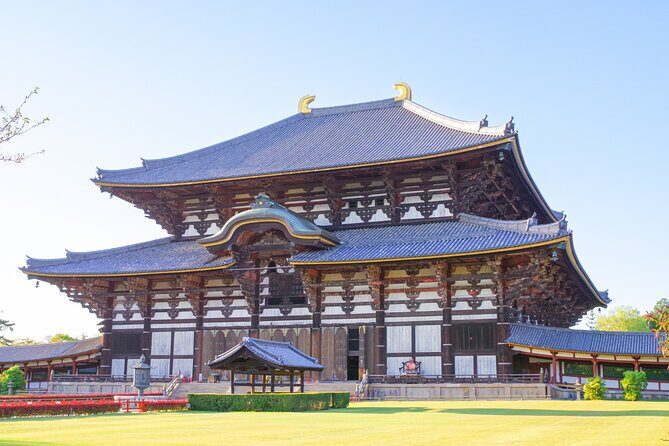
Your tour begins at Todai-ji Museum inside the Todai-ji Sougou Bunkou Center area. This is a smart opening because it helps you get oriented before you step deeper into the temple complex. It’s the kind of start that makes the later stops make more sense.
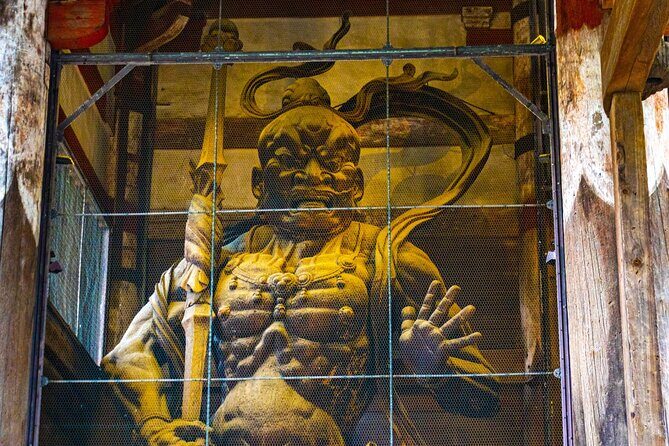
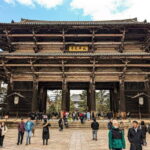
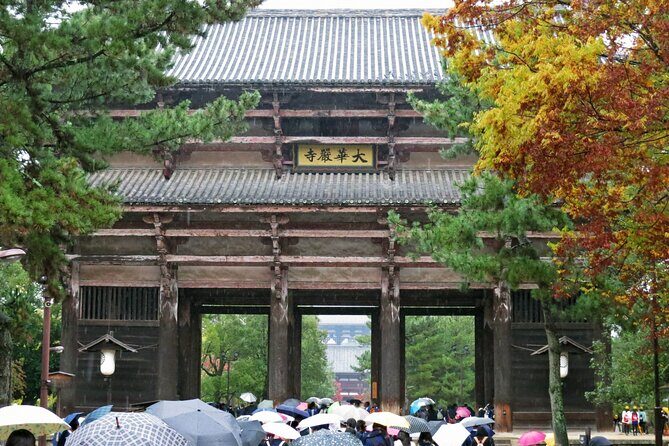
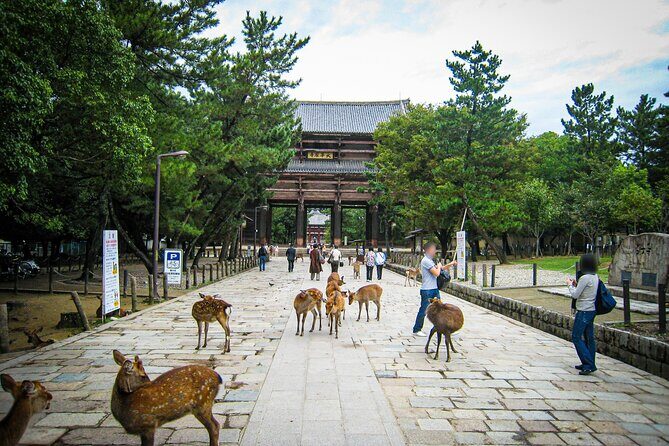
From there, you move to Todai-ji Nandaimon (the Great South Gate). It’s a main gate stop—fast, but meaningful. The tour gives you a quick look at the gate’s scale and structure, including the fact that it was rebuilt in the 13th century. Even if you’re not the type to remember dates, this kind of framing helps your eyes catch details instead of just taking photos.
One practical upside here: you’re not thrown straight into the largest crowds first. The early gate and museum sequence gives you a warm-up. And if you’re sensitive to crowds, starting early in your day generally helps throughout Nara, especially at Nara Park.
Inside Todai-ji: Seeing the Giant Buddha the Right Way
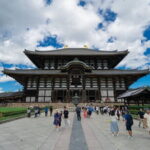
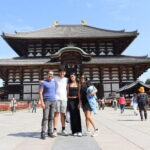
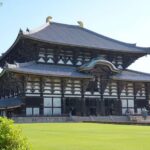
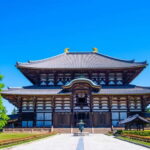
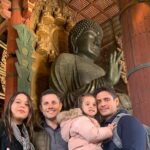
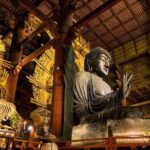
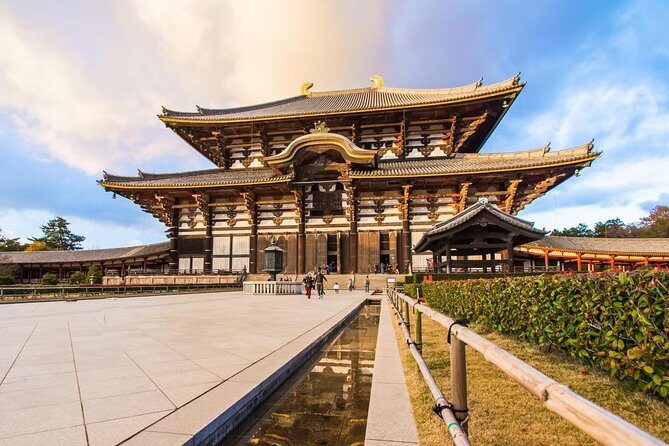
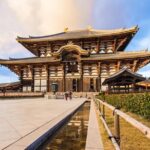
Next comes Tōdai-ji Temple, the heart of the route. This is where you’ll feel the reason the place has World Heritage status. The grounds are large, and nature surrounds the temple complex in a way that makes the scale feel even bigger.
The headline is the large Daibutsu (Great Buddha statue)—it’s famous for being the largest Buddha statue in Japan. But what makes this stop work on a guided tour is that you don’t just look at the size. You also get context that turns the experience from sightseeing into understanding.
Time is about 1 hour 5 minutes here, including the temple visit. That’s usually enough for:
- a first full look at the main hall area
- a slower moment to notice details
- time to regroup if your group moves at different speeds
A small consideration: if you strongly prefer wandering with no structure at all, a set temple stop can feel slightly programmed. Still, the structure is what keeps this tour efficient, and you can always add your own free exploration after the guided segment.
Nara Park Deer Time: The Sacred Feeding Moment
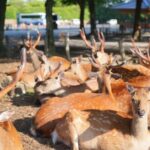
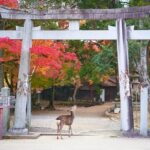
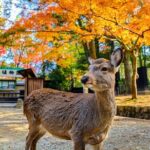
Then it’s off to Nara Park, where the city’s most famous cast members move freely around you. Nara Park is huge—about 660 hectares—and it’s home to around 1,200 freely roaming deer.
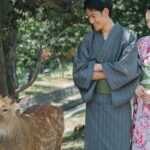
Here’s the unique part: the tour includes a deer-feeding experience. You get one packet of cracker for feeding. And you’re not just randomly handing food to animals. The guide explains the cultural idea behind the deer being revered as messengers of the gods, which changes your whole attitude in that moment. It stops being a theme-park gimmick and becomes something more meaningful.
This is also where pacing matters. The park is wide, and deer are everywhere. You’ll want to stay aware of your surroundings so you can enjoy the moment instead of getting distracted by scrambling or dodging. The goal is to watch and participate without turning it into chaos.
In terms of time, you get about 35 minutes at Nara Park. That’s a sweet spot for most people: long enough to see deer repeatedly, but not so long that you miss the later stops or cook yourself in the sun.
You can also read our reviews of more historical tours in Nara
Ukimido Pavilion at Sagiike: A Quiet Pause With Real Visual Reward
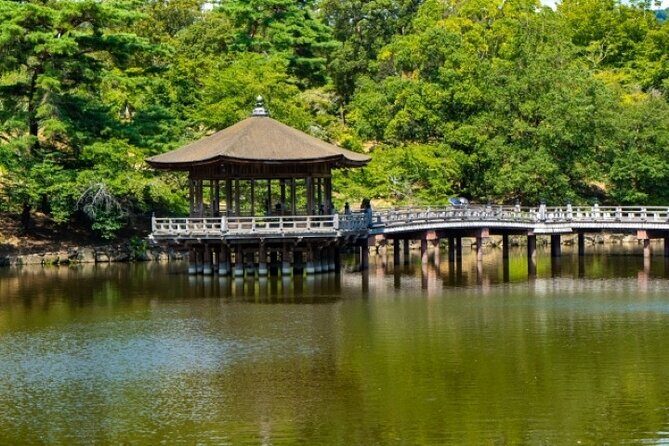
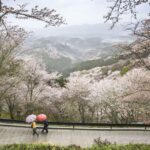
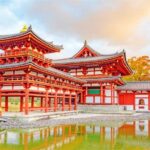
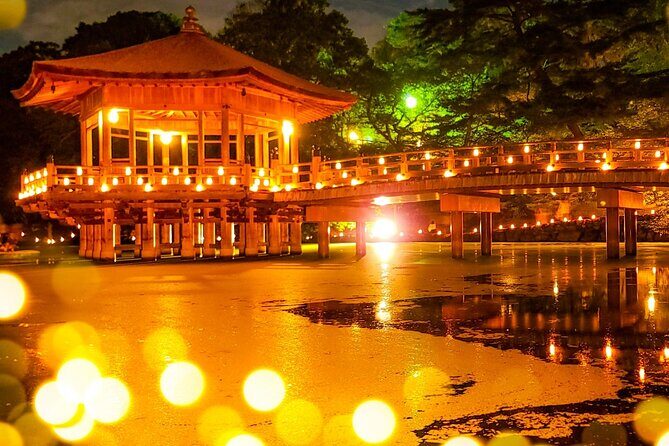
After the energy of the deer area, the tour gives you a calmer, scenic stop: Ukimidō Pavilion at Sagiike. This pavilion is hexagonal and famously described as floating on the water, surrounded by trees.
The best part is the visual layering. On a clear day, you can see the sky’s blue, the trees’ green, and the reflection in the water. Even if the sky isn’t perfect, the idea is solid: this is a break that lets you reset your eyes after temple and park excitement.
Your time here is about 30 minutes. That’s enough to:
- take photos from a couple of angles
- pause and just watch the water
- enjoy a slower moment without feeling like you’re waiting around
One practical note: this stop can be weather-dependent for the most dramatic reflections. If the day is hazy or rainy, the pavilion still has charm, but you might get less of that crisp mirror effect.
Ending With Kōfuku-ji and Its Five-Story Pagoda
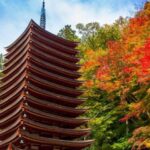
To close, you head to Kōfuku-ji, famous for its Five-Story Pagoda. The tour highlights the pagoda as a tall traditional structure, originally built in 730, and it stands about 50 meters tall.
This stop is a classic “finale” move because it’s vertical. After flat walking paths, deer grazing scenes, and broad temple grounds, your eyes get to rise to something towering and structured. Even if you only have half an hour, it tends to leave a memorable impression.
Time allocated is about 30 minutes. That fits well as an ending point because it gives you enough time for a good look without stealing your evening plans.
Timing, Crowds, and Summer Heat: How to Make It Feel Easy
This is an outdoor walking tour, and Nara in summer can be brutal. The tour information specifically warns that August can exceed 35°C, so this isn’t a “just wear sunscreen” situation. If you travel in peak summer, you should treat heat prep as part of the itinerary.
Here’s what helps you enjoy it:
- Bring water and keep sipping, even before you feel thirsty
- Consider shade tools like a parasol for breaks
- Wear light, breathable layers you can tolerate in direct sun
- Plan your day so you’re not arriving already dehydrated or running late
Crowds are another factor. Nara Park can get packed, and starting early in the day is a simple strategy that usually pays off.
Also, since this is private, you can usually adjust micro-moments. If you need a quick rest, ask. If someone in your party is slower, tell the guide early so the pacing can stay comfortable.
Choosing the Right Guide Style for Your Group
One thing I appreciate about private tours is that you get to match your expectations to the guide. This one has strong feedback around friendly, polite guiding and guides who explain details in a way that makes the places easier to connect to.
Guide names that showed up in experience notes include George and Kimu. There’s also a mention of a guide called Kim, which suggests different guide assignments depending on your date.
The only real caution: some people prefer a more conversational, interactive style. If your group wants back-and-forth questions or lots of tailored explanations, set that expectation at the start. A good guide will read the room.
Who This Nara Tour Suits Best
This tour fits you well if:
- you’re visiting Nara for the first time and want a smart overview
- you like temple sights but also want the deer moment as a real activity
- you want less planning stress and more time to actually look
- you prefer a private route with included entrance tickets
It may feel less ideal if:
- you hate guided structure and want total freedom with no fixed stops
- you’re traveling during extreme heat and aren’t willing to take heat precautions seriously
If you’re coming from Kyoto for a half-day plan, this kind of route can be a solid way to get Nara’s main highlights without turning the day into a marathon.
Should You Book This Nara World Heritage Private Tour?
Yes—if you want a smooth, efficient Nara visit that mixes the big icons with the one-of-a-kind deer feeding experience. The included admissions reduce friction, the route hits major landmarks you’d otherwise spend hours mapping, and the pacing is built around a realistic half-day rhythm.
I’d book it especially if you:
- want first-timer coverage without feeling overwhelmed
- care about getting context while you look
- are traveling with kids, where patience and pacing can make or break the day
Just be honest with yourself about weather. If you’re going in peak summer, prepare like a local: hydrate, shade up, and plan for slower steps during the hottest hours. When you do that, this tour can feel like Nara’s highlights—without the mental load.
FAQ
How long is the Nara private tour?
It runs about 3 to 4 hours.
What is included in the tour price?
You get a professional tour guide, entrance fees for the temples and shrines visited, and one packet of cracker to feed a deer.
Where do we meet, and where do we finish?
The start is at Todai-ji Museum inside the Todai-ji Sougou Bunkou Center in Nara. The end point is Kintetsu-Nara Station. Since it’s private, you may disperse at a location based on your destination, with the listed station as a guide.
Is the tour truly private?
Yes. Only your group participates.
What should I bring for hot weather?
The tour warns that summer heat—especially August—can exceed 35°C. Bring water and consider shade options like a parasol to help prevent heatstroke.
What if the weather is poor or I need to cancel?
The experience requires good weather. If it’s canceled due to poor weather, you’ll be offered a different date or a full refund. You can cancel for a full refund up to 24 hours in advance.