REVIEW · TOKYO
Tokyo: Tsukiji Fish Market Seafood & Street Eats
Book on Viator →Operated by With Japan · Bookable on Viator
Tsukiji eats start before Tokyo wakes. This English-speaking guide setup is great for asking real questions, and the small group keeps you from getting lost in a crowd. The trade-off is simple: food is on your tab, so you’ll want a plan (and a big appetite).
In about 2.5 hours, you’ll start at a temple, then walk into two different sides of the Tsukiji food world. Expect history plus nonstop food cues, from how the market works to what to order first when you see a line.
Guides named Haru, Toko, and Ryo show up in the reviews with very different styles—some are extra kid-friendly, others stay very food-focused. If you want a morning that fits a tight schedule without feeling rushed, this is a solid pick.
In This Review
- Key things to know before you go
- Tsukiji in 2.5 Hours: A smart morning route
- Price and logistics: what $42 covers
- Where you meet and how to show up ready
- Tsukiji Hongwanji Temple: a calm start with real texture
- Tsukiji Fish Market: learning the story while you plan your first bites
- Tsukiji Jogai Market: street food energy and more places to sample
- Getting real value: the guide is the product
- What to eat (and how not to overspend)
- Small group size: why max 10 really changes the feel
- Weather and expectations: know what can change
- Who this tour suits best (and who should think twice)
- Should you book this Tsukiji Fish Market and Street Eats tour?
- FAQ
- How long is the Tsukiji Fish Market and Street Eats tour?
- Is food included in the tour price?
- What is included in the $42 price?
- What group size is this tour?
- Where do I meet the guide?
- What happens if the weather is bad?
- Can I cancel for free?
Key things to know before you go
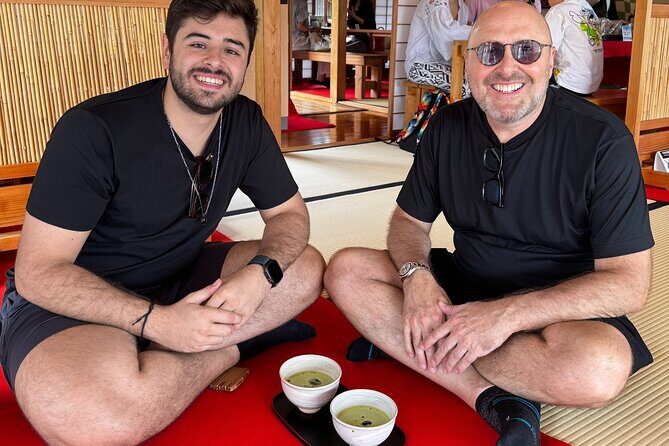
- Small group (max 10): more time to ask questions instead of being swept along
- English-speaking support: your guide helps you choose, not just explain
- Temple + market combo: Tsukiji Hongwanji Temple gives context before the seafood chaos
- Two market areas: Tsukiji Fish Market followed by Tsukiji Jogai Market street-food shopping
- Food not included: you buy your tastings, so bring an eating budget
Tsukiji in 2.5 Hours: A smart morning route
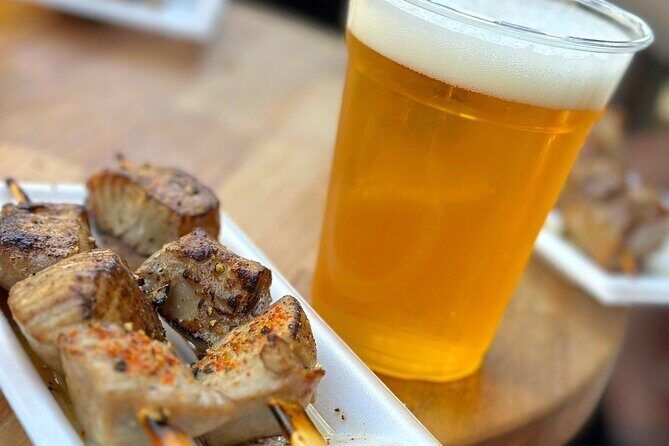
If you only have a slice of time in Tokyo, this kind of tour works because it’s built around momentum. You’re not trying to “research your way through Tsukiji.” You walk, you look, you ask, and then you eat your way through the stalls your guide points out.
I like the pace here. At roughly 2 hours 30 minutes, you get market energy without burning half your day. That matters in Tokyo, where you’re often hopping between neighborhoods and trying to keep your legs fresh.
The tour also makes a practical promise: you’re going somewhere famous, but you’ll be given direction. Tsukiji can feel overwhelming fast—especially if you don’t read menus or don’t know what’s worth lining up for. A good guide helps you spend your money on food that actually hits.
You can also read our reviews of more shopping tours in Tokyo

Price and logistics: what $42 covers
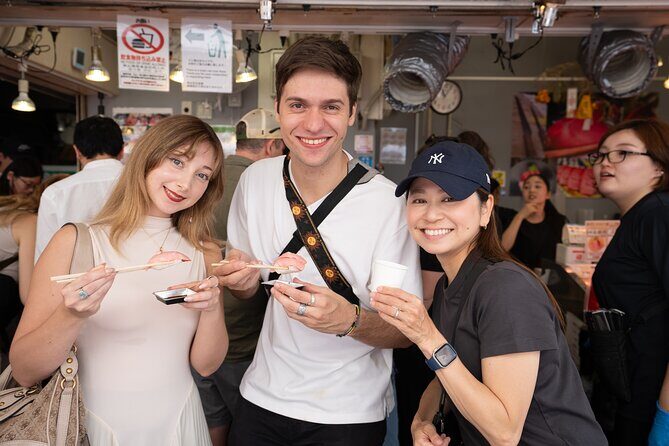
The price is $42 per person, and it’s not just paying for someone to walk next to you. You’re covering:
- a local Japanese English-speaking guide
- entry/entry tickets for Tsukiji Jogai Market and Tsukiji Hongwanji Temple
- guidance through two market stops
- a small-group experience (max 10 travelers)
- a mobile ticket format
What’s not included is the big obvious piece: foods and drinks. That’s stated clearly, and it’s the part you control. You can spend lightly on a couple bites or go bigger with multiple seafood items. The best value comes when you use the guide to make faster, smarter choices.
Think of the tour as paying for navigation, timing, and taste guidance. If you’re the type who enjoys tasting, this tends to work out well. If you want an all-inclusive meal experience with set dishes, you’ll need to look elsewhere.
Where you meet and how to show up ready
You start at 3-chōme-9-10 Tsukiji, Chuo City, Tokyo 104-0045, Japan, and the tour ends back at the meeting point. It’s also described as being near public transportation, which is useful because Tsukiji is one of those places where the walk to the “right entrance” can be longer than you’d expect.
Bring your “market brain.” Even in a small group, you’re going to be moving through tight lanes and busy stalls. Wear shoes you’re comfortable in for a couple hours of walking.
Also, plan for the fact that you’re arriving hungry. Multiple guides in the reviews are described as steering people toward top picks like fatty tuna, sashimi, and other market staples. If you eat nothing before you meet, you’ll have a better time choosing and not feeling rushed while your stomach catches up.
Tsukiji Hongwanji Temple: a calm start with real texture
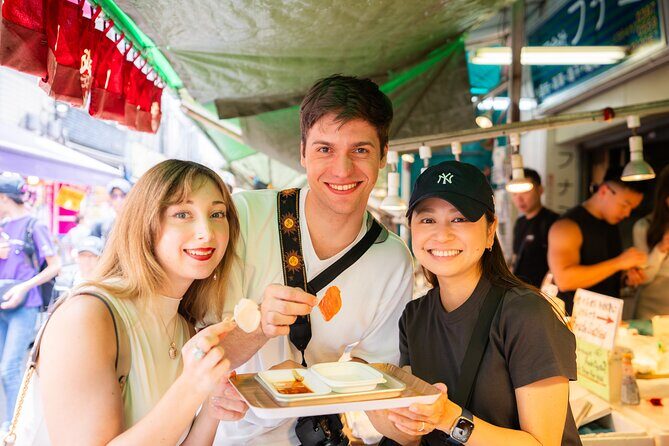
The tour begins with a stop at 築地本願寺 (Tsukiji Hongwanji Temple). This is a nice way to break up the experience. Before you hit fish stalls, you get a different kind of Tokyo scene—religious architecture and a sense of place.
The benefit isn’t just scenic. A temple stop gives you context for what you’re seeing next. Tsukiji isn’t only about seafood as a product; it’s also about culture, routines, and how food ecosystems fit into everyday city life.
Is it “food related”? Not directly. But it helps the market feel less random and more like part of a working tradition. If you usually skip these types of stops, don’t worry—you’re only adding a meaningful pause before the action ramps up.
Tsukiji Fish Market: learning the story while you plan your first bites
After the temple, you head to Tsukiji Fish Market. This is the world-famous area known for tuna-auction culture, and the tour frames the market through history and food traditions as you walk through.
Here’s the practical value: the market is famous, but fame can make you waste time. A guide helps you avoid the trap of buying the first thing that looks good. You’re learning what the market is for and how people typically select food, then you get direction on what to taste while you’re there.
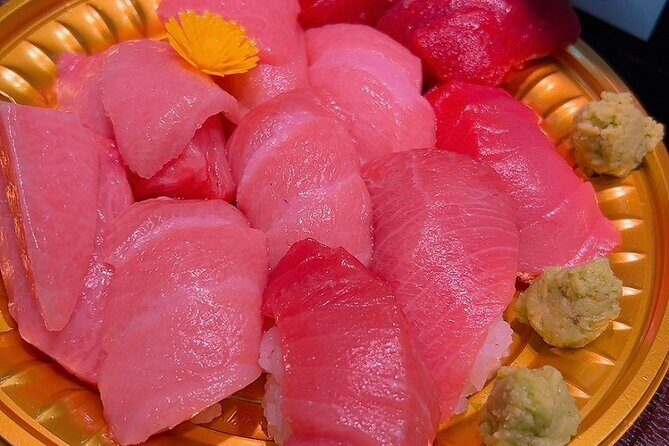
The reviews highlight how guides like Haru can guide you toward standout picks, including fatty tuna. One review also specifically calls out the guide waiting in line so the group didn’t have to shuffle around and lose time. That’s a big deal in a place where lines can form quickly.
What you can expect to encounter in the market zone:
- stalls and food counters clustered around seafood and quick bites
- spots offering items like tuna sashimi and other fresh preparations
- a mix of “grab and eat” snacks and small dining opportunities
One caution: the tour includes entry details for the market stop per the itinerary, but your actual food costs are still yours. So when you spot a must-try item, you’ll want to budget in real time.
A few more Tokyo tours and experiences worth a look

Tsukiji Jogai Market: street food energy and more places to sample
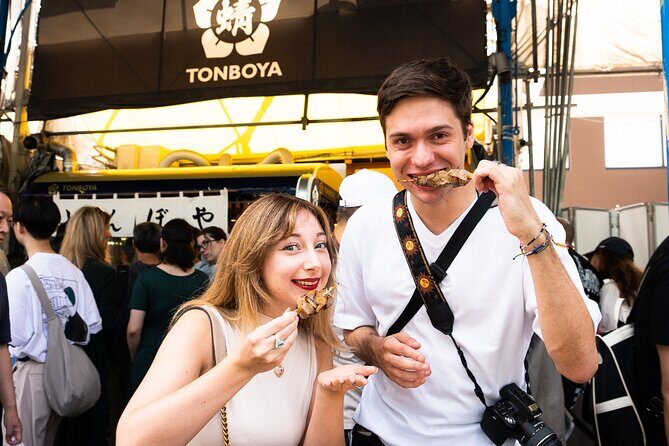
Next comes Tsukiji Jogai Market, which is where the experience becomes more “eat-and-wander.” This area is described as a vibrant market packed with history, culture, stalls, and shops selling fresh seafood and Japanese street food.
The timing works well: you’ve already gotten the market context from the first fish market stop. Now you’re free to focus on taste and variety. This part is also listed with entry/entry included, which helps keep the tour value tidy.
From the reviews, the kind of foods people end up trying can include:
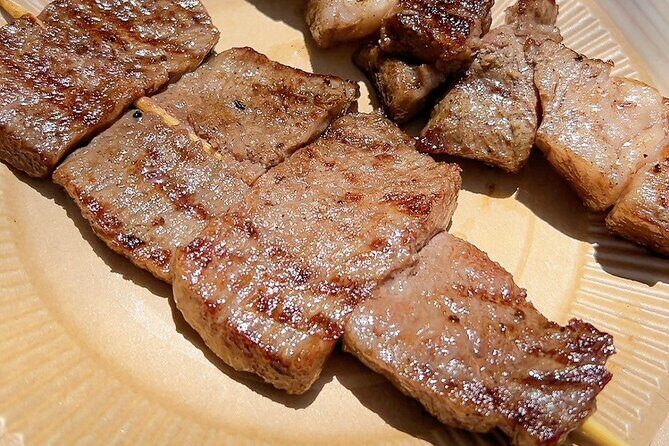
- super fresh tuna sashimi (including different fatty cuts)
- seafood rice crackers
- tuna kabobs
- eel and scallops
- a sit-down option featuring items like giant crabs
Not every stop guarantees every item. But it gives you a sense of the range. Your guide’s job is to match your group’s appetite and preferences to what’s available.
If you have kids in your group, this is often a good stage. One review specifically praises a guide named Toko for being patient and friendly with children. If your goal is to keep everyone happy while still tasting real market food, this second market area makes it easier.
Getting real value: the guide is the product
In a market like Tsukiji, the guide matters more than you might expect. You’re not paying for a Wikipedia-style lecture. You’re paying for a working relationship with the maze.
The reviews show a few standout guide strengths:
- Haru: accommodating (including accessibility-related routing), early arrival habits, and proactive line management. People mention he’ll wait in queue for popular tuna places so you don’t spend your time stuck.
- Ryo: more food-forward, designed for people who want strong tastes rather than a history field trip.
- Toko: strong with kids, patient, and good at keeping the experience comfortable for families.
So how do you choose? Match the guide style to what you want from the morning. If you’re there for the food and you’re confident ordering, you’ll love a guide who prioritizes “best bites now.” If you’re traveling with kids or a mixed-age group, you’ll appreciate patience and planning more than the strictest schedule.
What to eat (and how not to overspend)
Because foods and drinks aren’t included, the best strategy is simple: go in with a few target categories, then let the guide help you prioritize.
Here’s a practical approach you can use in both market areas:
- Start with one “wow” item: something tuna-focused like fatty tuna sashimi or a tuna specialty
- Add one snack: rice crackers or a simple bite you can move around with
- Consider one bigger share plate if your group is hungry: crab or eel or scallops show up as examples in the reviews
- Keep water and drinks in mind so you don’t get stuck paying surprise amounts later
You don’t have to order everything. Tsukiji is heavy on seafood richness, and it adds up fast. If you’ve already had breakfast elsewhere, you might shift to lighter tastings and save the heavier items for later in your Japan trip.
Also, lines are part of the experience. Instead of fighting them, lean on your guide’s plan. When your guide helps manage queue time, you usually get better results than random stall hopping.
Small group size: why max 10 really changes the feel
The tour caps at 10 travelers, and that’s a meaningful number here. Tsukiji’s main challenge isn’t that it’s huge—it’s that it’s crowded and confusing. In bigger groups, you often end up following blindly while your questions go nowhere.
With a small group, you can do two helpful things:
- ask what you should try first, based on what the market currently has
- clarify how to order, what to look for, and which stalls are worth the time
This is where the English-speaking guide earns their keep. You don’t just get translation. You get context for choice.
It’s also a calmer way to experience a famous market. One of the reviews even frames the tour as a great quick option during mealtime—meaning it’s designed for a “go now, eat well, move on” rhythm rather than a slow walk that kills your energy.
Weather and expectations: know what can change
This is a good-to-know detail: the experience requires good weather. If it gets canceled due to poor weather, you’ll be offered a different date or a full refund.
So plan like a grown-up. Don’t stack a fragile schedule right after this without a buffer. If the tour shifts, you’ll want flexibility to keep your day smooth.
If the day is rainy, markets can still be fun, but movement gets harder. If you’re someone who hates slipping on wet pavement, bring shoes with decent grip.
Who this tour suits best (and who should think twice)
This tour is a strong match if:
- you have a tight morning schedule and want a structured way to see Tsukiji
- you want English guidance so you can pick better food faster
- you like tasting lots of small items instead of one set meal
- you’re traveling with kids or a multigenerational group and want patience and pacing
It may be less ideal if:
- you want a fully included meal plan with zero extra spending
- you’d rather wander completely on your own and aren’t interested in guided recommendations
- you’re uncomfortable in crowds or narrow walking spaces (even with a small group)
Should you book this Tsukiji Fish Market and Street Eats tour?
I’d book it if your goal is a food-first morning with help navigating the famous spots. The biggest strengths are the small group size and the way the guide turns market chaos into a manageable eating plan. Guides named Haru, Toko, and Ryo show that the tour can flex: from family-friendly pacing to straight-up “get the best bites” focus.
Just go in with one mindset: you’re paying for guidance and entry, not for the food. If you’re ready for that, you’ll get a lot out of the experience in a short window.
FAQ
How long is the Tsukiji Fish Market and Street Eats tour?
The duration is approximately 2 hours 30 minutes.
Is food included in the tour price?
No. Foods and drinks are not included, and you purchase what you eat at your own expense.
What is included in the $42 price?
The tour includes a local Japanese English-speaking guide, and entry/admission for Tsukiji Jogai Market and Tsukiji Hongwanji Temple. The Tsukiji Fish Market stop is also described as having an admission ticket included in the itinerary.
What group size is this tour?
This experience has a maximum of 10 travelers.
Where do I meet the guide?
The meeting point is 3-chōme-9-10 Tsukiji, Chuo City, Tokyo 104-0045, Japan, and the tour ends back at the meeting point.
What happens if the weather is bad?
The experience requires good weather. If it’s canceled due to poor weather, you’ll be offered a different date or a full refund.
Can I cancel for free?
Yes, you can cancel for free up to 24 hours in advance of the experience start time for a full refund.