REVIEW · TOKYO
Nikko Full-Day Private Walking Tour with Government-Licensed Guide (Tokyo DEP.)
Book on Viator →Operated by Japan Guide Agency · Bookable on Viator
Nikko in one day, without the stress. What I like most is the government-licensed English-speaking guide who keeps the schedule realistic, and the flexible itinerary where you choose 3–4 stops from the Nikko highlights list. It also cuts out the guessing game of walking times and train/bus connections.
There is one catch to plan for: the tour price covers the guide and the curated flow, but transportation, entrance fees, lunch, and other personal costs are not included. So your real day budget depends on how you get to Nikko and which paid sights you pick.
Pickup is offered, and you’ll meet your guide on foot within a designated Tokyo area (Asakusa is listed as the start point). At the end, the guide drops you off at your hotel or anywhere else you want—handy if you’re continuing on to another part of Tokyo that night.
In This Review
- Key things I’d bank on before you book
- A government-licensed guide is the real value in Nikko
- Price and what you still pay: the honest budget math
- A practical way to estimate your total cost
- How the flexible route works (and how to choose your 3–4 stops)
- My rule for picking 3–4 stops
- Stop 1: Nikko Tosho-gu—start with the Tokugawa story
- Waterfalls and lake time: Kegon Falls + Lake Chuzenji
- Senjogahara Field and Kanmangafuchi Abyss: the nature stops with personality
- Senjogahara Field
- Kanmangafuchi Abyss
- Rinno-ji Temple and Taiyūin: Tokugawa royalty, but in a calmer frame
- Rin’nōji Taiyū-in (Mausoleum of Iemitsu)
- Rinno-ji Temple
- Futarasan Shrine and Shinkyō Bridge: the classic Nikko entrance vibe
- Kirifuri Waterfall and the observation option: choosing drama vs viewpoint
- Akechidaira Observation Area (ropeway note)
- Tamozawa Imperial Villa Memorial Park, Botanical Garden, and Kanaya Hotel History House
- Nikko Tamozawa Imperial Villa Memorial Park
- Nikko Botanical Garden
- Kanaya Hotel History House
- A 9-hour private walking day: timing tips that actually help
- Who this Nikko tour is best for (and who may want to DIY)
- Should you book this private Nikko full-day walking tour?
- FAQ
- How many Nikko stops can we choose?
- Does the price include entrance fees and lunch?
- Is transportation to Nikko included?
- Where do we meet, and where will the guide drop us off?
- Is this tour mostly walking?
- Is the Akechidaira ropeway available during 2026–2027?
Key things I’d bank on before you book
- Licensed guide + smoother navigation: you’re not spending your day decoding signage or timing between scattered sights
- Choose 3–4 stops, not a fixed loop: waterfalls, lakes, shrines, gardens—your “best day in Nikko” style
- A strong mix of big icons and calmer walks: Toshogu, Shinkyō Bridge, Kanmangafuchi, and more
- Hotel pickup available, with end-of-tour drop-off: easier start and fewer hassles at the finish
- Budget for what’s not included: transit and entrance fees can meaningfully change your total cost
- Plan around seasonal closures: the Akechidaira ropeway is closed for maintenance from Jan 16, 2026 to Aug 31, 2027
A government-licensed guide is the real value in Nikko
Nikko is the kind of place where it’s easy to over-plan or under-plan. The sights are spread out enough that a DIY day can turn into constant “wait, where is that again?” moments. This private walking tour is built to prevent that.
You get a government-licensed guide (Tokyo DEP is named) who handles the route planning between the places you care about. In practice, that matters most when you’re trying to fit temples, waterfalls, and scenic stops into one day without sprinting.
The guides connected to this experience also sound very service-focused. In reviews, I saw repeat praise for guides like Seizo Kamiuto, Yoshii Kenichi, Kazu, and others for being punctual, organized, and willing to adjust the day around preferences. One guide (Kazu) is specifically noted as fluent in English and French, which is great if you want a more nuanced explanation. Another (Yusuke) is praised for staying in touch and making schedule amendments based on what the group wanted to see.
You can also read our reviews of more walking tours in Tokyo
Price and what you still pay: the honest budget math
The tour is listed at $224.02 per person for about 9 hours. For a private, licensed guide day trip, that can be fair—especially if you’re the type who would otherwise spend hours researching routes, entrance timing, and what to cut.
But don’t treat it like an all-in package. The tour does not include:
- transportation fees (for getting to Nikko and getting around on your own)
- entrance fees
- lunch
- the Nikko Pass mentioned as 4,520 JPY per person
- private transportation
So the value comes from where you’ll feel it: less confusion, smoother logistics, and a guide who can steer you to the right blend of cultural sites and nature stops based on your priorities.
A practical way to estimate your total cost
Before you book, estimate your day like this:
1) Add Nikko transportation costs you’ll personally cover.
2) Decide if you want the all-area Nikko Pass (listed at 4,520 JPY per person, not included).
3) Add entrance fees for the specific sights you choose from the available list.
If you’re traveling with a small group and you’d rather pay for comfort and clarity than grind through logistics, this format usually makes sense.
How the flexible route works (and how to choose your 3–4 stops)
This tour isn’t a one-size-fits-all circuit. Instead, you pick from a list of landmarks—temples, waterfalls, lakes, gardens, and scenic points—and the guide builds a bespoke itinerary around that.
That approach is great for three situations:
- You only have one day in Nikko and want the top picks.
- Your group has mixed interests (culture people plus nature people).
- You want to avoid the biggest crowd patterns by choosing wisely.
One review even hints at autumn-leaves timing benefits—basically, using a planned day to avoid wasting time when it’s packed.
My rule for picking 3–4 stops
Choose:
- One “major temple/shrine” anchor (Toshogu is the usual first choice)
- One waterfall or dramatic nature stop (Kegon or Kirifuri)
- One calm add-on (lake, gorge, bridge, garden)
- Optional: a second temple/heritage site if your feet are good and you’re not stopping for long meals
Even though each listed stop is shown as about 30 minutes, real time expands if you want photos, bathroom breaks, or time to watch the crowd flow.
You can also read our reviews of more guided tours in Tokyo



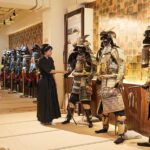
Stop 1: Nikko Tosho-gu—start with the Tokugawa story
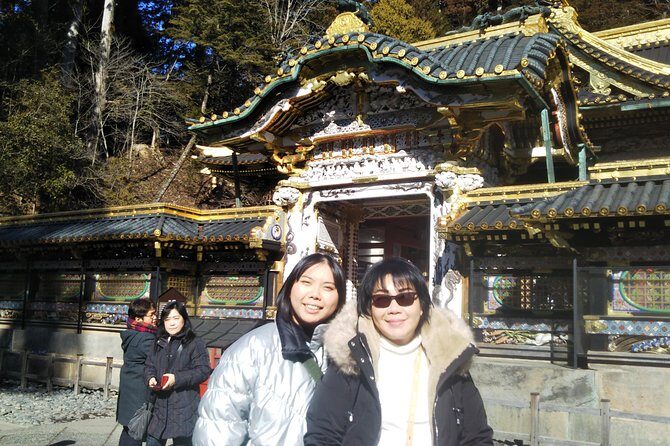
Most days begin with Nikko Tosho-gu, the final resting place of Tokugawa Ieyasu, founder of the Tokugawa Shogunate. It’s surrounded by shrines and temple spaces, so it sets the tone right away: Nikko is not just pretty scenery. It’s political power, religion, and art all braided together.
Why this stop works early:
- You’re fresher in the morning.
- The complex layout feels easier before you’ve accumulated fatigue.
- It gives you context for the rest of the day—especially when you later visit other Tokugawa-related sites.
What to consider:
- Admission ticket not included, so if you’re counting yen, confirm what you’ll pay before you arrive.
- It’s busy in peak seasons, so you’ll appreciate having a guide who can manage pacing.
Waterfalls and lake time: Kegon Falls + Lake Chuzenji
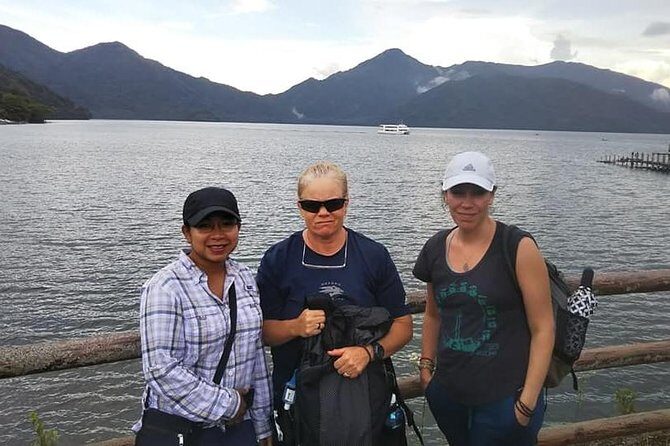
Kegon Falls is the big one for waterfall lovers. Water drops about 97 meters from Lake Chuzenji down to the rocks below. There’s also a mention of a special lift that helps visitors reach viewpoints.
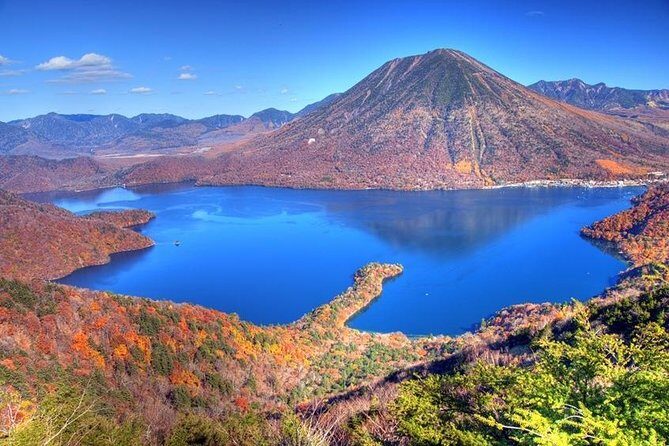
Then Lake Chuzenji is the natural follow-up. It’s described as the largest lake in Tochigi, framed by 25 kilometers of nature. The lake area has a resort story too: it was a summer destination for foreigners in the late 1800s to early 1900s, and the area included villas linked to that era.
Why I like stacking these two:
- Falls satisfy your wow-factor.
- The lake gives you a slower beat to reset.
- Chuzenji’s setting helps you understand why people return to Nikko even when they’re not temple people.
What to consider:
- Kegon Falls shows admission not included.
- Your enjoyment depends on weather. If visibility is weak, you can still enjoy the waterfall, but you’ll want to keep expectations flexible for the lake views.
Senjogahara Field and Kanmangafuchi Abyss: the nature stops with personality
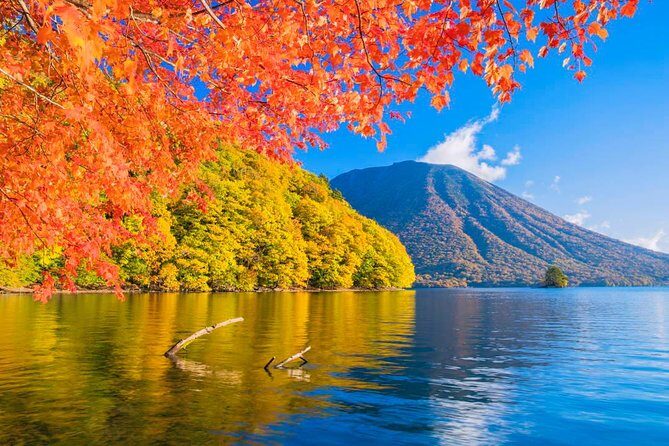
Two options on the list act like a palate cleanser between big heritage sites.
Senjogahara Field
Senjogahara translates to battlefield, tied to a myth that the gods of Mount Nantai and Mount Akagi fought over neighboring lakes. Even if you’re not big on mythology, the name alone signals: this place is meant to feel dramatic.
It’s a good choice when:
- You want atmosphere without climbing into another major temple complex.
- Your group needs a break from indoor structures.
Kanmangafuchi Abyss
Kanmangafuchi Abyss is a gorge near central Nikko formed by an eruption of Mount Nantai. It’s only a few hundred meters long, but it’s enjoyed from a riverside walking trail, which makes it feel active without being exhausting.
Why it’s often a crowd-pleaser:
- You’re outside, walking at a gentle pace.
- You get a natural feature that still feels “Nikko,” not just countryside generic.
In one review, Seizo Kamiuto is specifically mentioned as having guided guests to Kanmangafuchi, and that match—nature stop plus clear interpretation—seems to be one of the most liked combinations.
Rinno-ji Temple and Taiyūin: Tokugawa royalty, but in a calmer frame
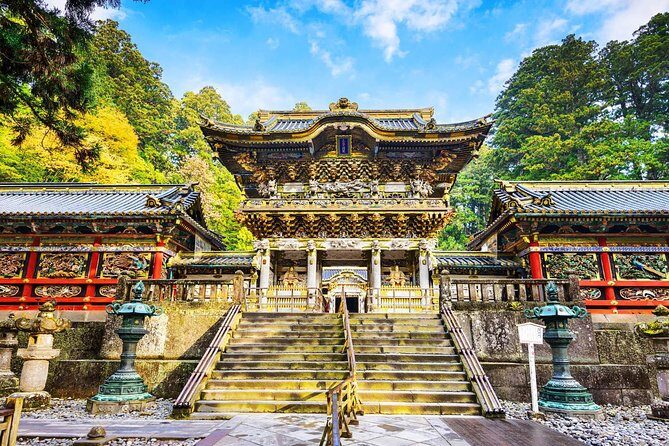
If you want more than Toshogu, the options around Rinno-ji are excellent.
Rin’nōji Taiyū-in (Mausoleum of Iemitsu)
Taiyūin is the mausoleum complex for Tokugawa Iemitsu, the third Tokugawa shogun. It’s described as lavish and resembling nearby Toshogu in layout and architecture. This is a great stop if you want a second dose of Tokugawa-era design language—just with a different vibe than the main Toshogu complex.
Rinno-ji Temple
Rinnoji is called Nikko’s most important temple, founded by Shodo Shonin in the 8th century. The main building, Sanbutsudo, is mentioned as part of the complex—so you’re getting a more Buddhist-centered anchor point after the Tokugawa mausoleum emphasis.
Why these are valuable as a pair:
- You see both the shrine/temple sacred tradition and the shogun-era monumental side.
- A guide can help you connect symbolism and layout without making you feel like you need a textbook.
What to consider:
- Both options list admission tickets not included, so they can add cost depending on what you pick.
Futarasan Shrine and Shinkyō Bridge: the classic Nikko entrance vibe
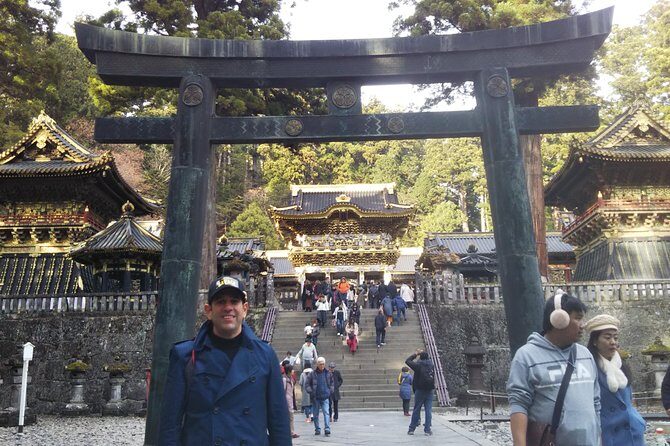
If you’ve ever seen photos of Nikko’s famous entrance bridge, you’re probably thinking of Shinkyō Bridge. It stands at the entrance to Nikko’s shrines and temples, and it technically belongs to Futarasan Shrine. It’s also ranked as one of Japan’s three finest bridges.
The bridge stop works best when:
- You want an iconic photo moment early or late in the day.
- You want a short stop that still feels important.
Futarasan Shrine is older than its more lavish neighbor and was founded in 782 by Shodo Shonin. If you choose the full set of heritage basics—Toshogu plus Futarasan/Shinkyō—you’ll end up with a satisfying “before the big complex” context.
What to consider:
- Shinkyō is free in the list.
- Futarasan is also free, so this is one of the better value stops if you want a “big Nikko moment” without extra tickets.
Kirifuri Waterfall and the observation option: choosing drama vs viewpoint
Kirifuri Waterfall is located below the Kirifuri Highlands, a few kilometers northeast of the temples and shrines of Nikko. It’s described as a two-tiered waterfall about 75 meters high. Again, admission is listed as not included, but the stop is marked as a classic nature payoff.
Akechidaira Observation Area (ropeway note)
The list also includes Akechidaira Observation Area near the top of the Irohazaka Slope. It’s presented as a viewpoint with sweeping views over a winding road and dramatic mountain scenery.
Important practical detail: ropeway is closed for maintenance from January 16, 2026 until August 31, 2027. So if your goal is the observation access via ropeway, you’ll want a plan B—or choose it only if you’re comfortable with the access situation during that closure window.
Tamozawa Imperial Villa Memorial Park, Botanical Garden, and Kanaya Hotel History House
Not every Nikko stop has to be waterfall or temple.
Nikko Tamozawa Imperial Villa Memorial Park
This is where Edo and early Meiji architecture meet. The villa is described as having 106 rooms, built in Nikko in 1899 using parts of a residence (the description notes parts were reused). If you like architecture and palace-scale design, this can be a strong switch from shrine intensity.
Nikko Botanical Garden
The Nikko Botanical Garden is owned and maintained by the University of Tokyo. That gives it a research-garden feel rather than just tourist landscaping. Admission is listed as not included.
Kanaya Hotel History House
The Kanaya Hotel History House is a historical building tied to the earlier version of the famous Kanaya Hotel. It’s a nice choice if you want the “Nikko as a resort world” angle, without needing a long museum session.
What these shared stops do for your day:
- They add variety so you don’t burn out on ornate structures back-to-back.
- They fit well when your group likes history but wants lighter walking and fewer crowds.
A 9-hour private walking day: timing tips that actually help
This is a private tour, and it’s described as a walking tour. Even with 30-minute time blocks per stop, your day will stretch based on:
- how crowded you are at each complex
- how long you linger for photos
- how quickly your group moves between the locations your guide selects
So, go in with a “small plan” mindset:
- Pick the stops you truly care about, not the full list.
- Decide in advance if your group wants a long lunch or a quick break.
- Wear shoes you trust on uneven temple paths and outdoor trails.
One review praises guides for making the most of limited time, like Mari Noda, who is praised for a perfect mix of nature and culture. That tells me the best results come when you arrive with priorities and let the guide do the threading.
Who this Nikko tour is best for (and who may want to DIY)
You’ll likely love this tour if you:
- want a private, licensed guide who can flex the day
- care about both nature (waterfalls/lake/gorge) and culture (Toshogu, Rinnoji, shrines)
- hate spending your one Nikko day juggling transit and entrance planning
You might consider DIY instead if:
- your group is very budget-focused and you don’t mind doing logistics research
- you’re already comfortable building a Nikko route on your own
- you plan to stay longer than a single full day and want freedom beyond a 9-hour framework
Should you book this private Nikko full-day walking tour?
If your goal is a strong Nikko highlights day with less friction, I’d say yes, especially if you want that “guide brain” handling the route and you’re picking your 3–4 favorite stops.
Book it if:
- you’re short on time and want Tosho-gu + at least one waterfall or nature stop
- you value clear English interpretation (reviews highlight fluent guides, including Kazu’s English and French)
- you’d rather pay for efficiency than trade your day for research
Skip or rethink it if:
- you’re expecting the price to cover transport and entrances (it doesn’t)
- you’re planning around the Akechidaira ropeway during 2026–27 without a backup plan
If you do book, keep your budget flexible for transit, entrances, and lunch, and pick your stops with a simple rule: one anchor heritage site plus nature drama, then one calmer add-on.
FAQ
How many Nikko stops can we choose?
You choose a customizable itinerary of 3–4 sites from the list of Nikko landmarks provided. The guide then builds the route around those choices.
Does the price include entrance fees and lunch?
No. The tour does not include entrance fees or lunch, and it also does not include other personal expenses.
Is transportation to Nikko included?
No. Transportation fees are not included, and the tour lists the Nikko Pass all area ticket (4,520 JPY per person) as not included. You’ll pay for your own transit.
Where do we meet, and where will the guide drop us off?
You meet on foot within a designated Tokyo area, with Asakusa Station listed as the start point. The guide will drop you off at your hotel or anywhere else you want.
Is this tour mostly walking?
Yes. It’s described as a walking tour, and you meet the guide on foot.
Is the Akechidaira ropeway available during 2026–2027?
No. The ropeway is listed as closed for maintenance from January 16, 2026 until August 31, 2027.