REVIEW · TOKYO
Old Town Tokyo: Shinagawa-Juku Walking Tour
Book on Viator →Operated by Trip Designer Inc. · Bookable on Viator
Forget getting lost in old Tokyo. This small-group walk through Shinagawa-Juku traces the Old Tokaido Road with an English-speaking guide, plus hot drinks to keep you moving comfortably for about three hours. You’ll slip into back alleys and find landmarks you’d likely miss on your own.
I especially like how the route turns ordinary streets into a timeline of Edo-era life. You get temples and shrines placed in context, and you’re not just looking at buildings—you’re learning why this area mattered to travelers heading between Tokyo and Kyoto.
The one thing to consider: it’s weather-dependent, and lunch isn’t included, so come hungry for sightseeing or plan a bite before or after.
In This Review
- Key things I’d focus on before you go
- Why Shinagawa-Juku Works Better Than a Random Walk
- Starting at Kitashinagawa: Easy Access and a Real End Point
- The 3-Hour Pace: What You’re Really Paying For
- Stop 1: Shinagawa-Ura Park and the Fishing Village Shoreline
- Stop 2: Kyu-Tokaido Street and the Tokyo-to-Kyoto Traveler Route
- Stop 3: Hozenji Temple and the Quiet Power of Side Lanes
- Stop 4: Shotokuji Temple on Shinbaba Street (Especially in Autumn)
- Stop 5: Ebara Jinja Shrine, Rain Prayers, and the Meguro River
- Stop 6: Shinagawa Shrine and the Fujizuka Mini-Fuji Tradition
- How a Guide Like Charlotte Turns Streets into a Story
- Price and Value: Is $94.88 Fair for This Walk?
- Who Should Book This Shinagawa-Juku Tour (and Who Might Skip)
- Should You Book It?
- FAQ
- Where does the tour start?
- How long is the Shinagawa-Juku walking tour?
- How big is the group?
- What’s included in the price?
- Are any of the stops free to enter?
- Is lunch included?
- Does the tour include transport or hotel pickup?
- What happens if the weather is bad?
- Is cancellation free?
Key things I’d focus on before you go
- Small group (max 8): easier to hear your guide, even when you’re tucked into narrow streets.
- Old Tokaido Road theme: the walk has a clear storyline, not random stop-and-photo energy.
- Coffee/tea included: hot drinks help a lot when Tokyo mornings or evenings feel chilly.
- Mix of religious sites: from a serene temple courtyard feel to a shrine with a mini-Fuji tradition.
- Multiple free stops: many sights have free entry, with Shinagawa Shrine’s admission handled for you.
Why Shinagawa-Juku Works Better Than a Random Walk
Tokyo can feel like a video game: fast, shiny, and perfectly planned. But the Shinagawa area is different. This walk guides you into older-feeling lanes where you can sense how people moved through town before everything became “easy mode.”
The big win here is the theme. The Old Tokaido Road runs through the story of Japan’s post towns, inns, and river-and-shore life. When you connect the dots—fishing near the water, lodging for travelers, side streets where smaller temples tucked in—you understand the area faster than by wandering.
I also like that the tour is built for people who care about culture but don’t want a headache. The route is tight enough that you’re always doing something meaningful, and the guide helps you avoid that awkward moment where you’re staring at a map while others walk on.
One practical tip: wear comfortable shoes. This is a walking tour with short stops that still add up to a solid stroll.
You can also read our reviews of more walking tours in Tokyo

Starting at Kitashinagawa: Easy Access and a Real End Point
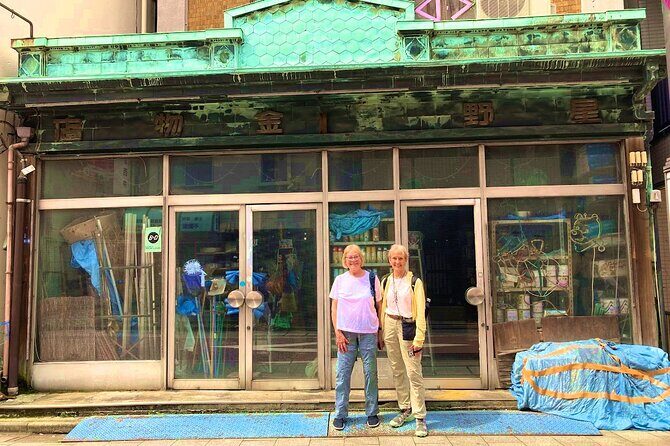
The tour starts at Kitashinagawa Station, and it’s only one stop from Shinagawa Station. That matters because Shinagawa is a major hub—so you’re not stuck with a complicated transfer just to reach the start.
You’ll meet at Kitashinagawa Station (look for the tour instructions for the exact gate/spot at that address). From there, you’ll walk through the Shinagawa-Juku area, and the tour ends at Shimbamba Station. An end point on a different station is helpful: it saves you from backtracking across the same streets.
Also, this is a mobile ticket tour, and you’re close to public transportation. That makes it easier to adjust if you’re running late or you want to pair the walk with other nearby plans.
If you’re planning your day: give yourself a buffer around the 3-hour mark so you’re not rushing when you should be looking up at older storefronts, temple gates, and signage.
The 3-Hour Pace: What You’re Really Paying For
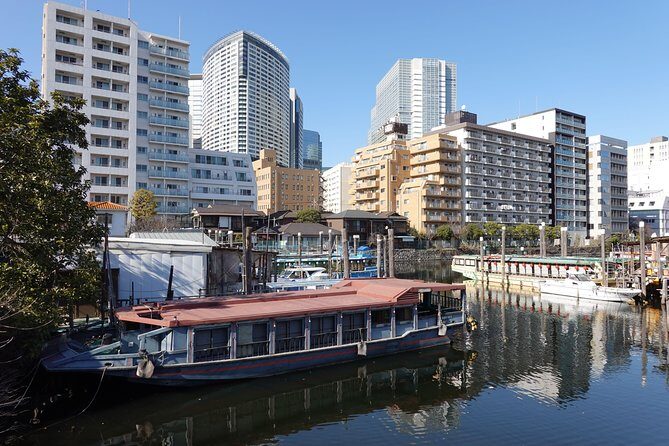
At $94.88 per person, this isn’t a “cheap and cheerful” activity. But the price makes more sense when you factor what’s included and what a guide saves you.
You’ll have an English-speaking guide for about 3 hours, and you also get coffee and/or tea. Hot drinks aren’t just a nice touch. They keep your energy steady during pauses, especially if you’re out in cooler months or early morning.
The tour is small-group, capped at 8 travelers. In a dense old-city area, that limit matters. Fewer people means the guide can actually steer the group through back streets without turning the experience into a bottleneck.
One thing it does not include is lunch or transport fees. So treat this as a “core experience” and plan a meal on your schedule. If you want lunch nearby, start browsing a bit before the tour or reserve one for afterward—don’t assume the tour will handle it.
Stop 1: Shinagawa-Ura Park and the Fishing Village Shoreline
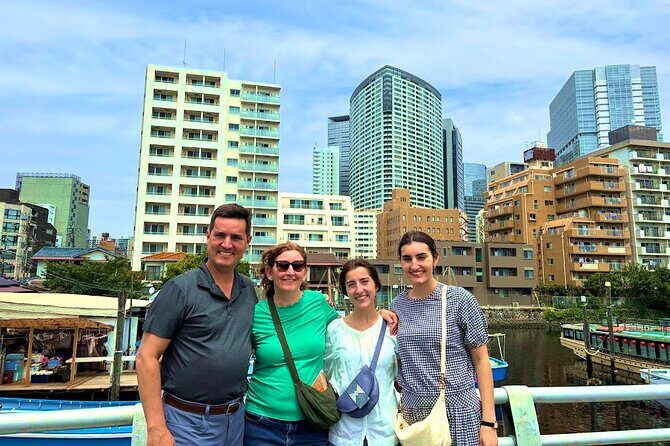
Your first stop is Shinagawa-Ura Park, a place where the Edo-era coastline story begins. In earlier times, this shore supported fishing. A small but prosperous fishing village grew there, and the area’s identity was tied to the water.
Even though commercial fishing isn’t the focus today, the point of starting here is smart: you get a sense of what the shoreline meant before the tour moves you onto the traveler route through town. It’s easier to understand the post-town logic once you’ve pictured the everyday economy nearby.
How to enjoy this stop: take a minute to look at the way the area sits relative to the water and roads. You’re not “solving” a mystery—you’re building a mental map. That map becomes useful at later stops when you see how streets relate to movement and commerce.
It’s also a short visit—about 15 minutes—with free admission.
Stop 2: Kyu-Tokaido Street and the Tokyo-to-Kyoto Traveler Route
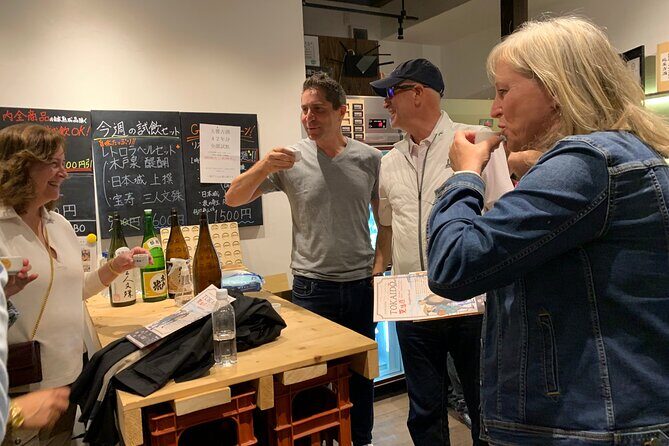
Then you shift to the main storyline: Kyu-Tokaido Street. This was tied to the earliest stop for travelers traveling from Tokyo toward Kyoto. Think of it as a service zone for people in transit.
Historically, the Tokaido route depended on inns, shops, and practical support. This street reflects that reality. The route was lively not because it was “fun sightseeing,” but because it had a job to do: keep travelers fed, housed, and supplied.
This stop also helps you see why older districts survive. Fires changed Tokyo’s map repeatedly, and places that remained give you a rare continuity. When you’re walking here with a guide, you’ll notice the street has a character that feels older than the modern city wrapping around it.
This is scheduled for about 1 hour, and entry is free. Use that time to look beyond the obvious—pay attention to street alignments and building edges. Those small clues are part of how Edo-era routes still show up in everyday Tokyo.





Stop 3: Hozenji Temple and the Quiet Power of Side Lanes
After Kyu-Tokaido Street, you’ll branch into smaller streets and find Hozenji Temple. This is where Shinagawa’s “local” texture becomes the main event.
You’ll notice a temple tucked away from the bigger road feel. The area includes side streets and old houses, and the description you’ll get on the walk points out that greenery can cover residential spaces nearby. You’re also in for a specific visual detail: you can see a water well located in the middle of a residential lane.
That well matters for the atmosphere. It’s not about impressive architecture; it’s about daily life. In a city this modern, that kind of everyday continuity is what makes the area memorable.
Time-wise, it’s brief—around 10 minutes—and entry is free. Don’t rush photos. Spend a little time just watching where the lane leads and how the temple quietly claims a corner of the neighborhood.
Stop 4: Shotokuji Temple on Shinbaba Street (Especially in Autumn)

Next up: Shotokuji Temple, reached after time on Shinbaba Street. This stop is short—about 5 minutes—but it’s designed to change the mood.
The standout seasonal detail is that it’s especially pretty in autumn, when it’s surrounded by maple trees. Even if you’re not traveling in fall, you’ll still get the sense that the temple grounds play nicely with changing seasons, which is a big part of how Japanese religious sites are experienced throughout the year.
You’ll also hear about something unusual: the temple has a distinctive fence. That’s the kind of detail that’s hard to “accidentally” notice on your own, and it gives you something specific to look for besides a general temple gate photo.
Entry is free here. My advice: keep your camera ready, but also pause long enough to notice how the fence and surrounding street work together visually. It’s that blend of built structure and everyday neighborhood that makes this stop satisfying even at a small time cost.
Stop 5: Ebara Jinja Shrine, Rain Prayers, and the Meguro River
Then you move to Ebara Jinja Shrine, a site with a very long timeline—established in 709. It’s worshipped as the home of the dragon god, and people come to pray for rain.
This is one of those stops where the “why” of a shrine is more interesting than the “what.” If you’re used to seeing shrines as decorative stops, this one gives you the functional view: religion tied to weather, agriculture, and community survival.
You’ll also learn it’s located next to the Meguro River. That river placement connects nicely with the idea of Shinagawa as a place where water shaped daily life—from fishing to travel logistics to spiritual hopes.
This stop runs about 10 minutes and entry is free. If you’re visiting on a rainy-feeling day or during a dry period, it’ll land differently. The tradition is old, and the need people prayed for is timeless.
Stop 6: Shinagawa Shrine and the Fujizuka Mini-Fuji Tradition
The final anchor stop is Shinagawa Shrine, and this one holds the tour’s most distinctive cultural detail: the fujizuka, a mini-Fuji. It was built for worshippers who couldn’t climb the real Mt. Fuji, usually due to lack of strength or money.
That’s the kind of detail that makes you appreciate how traditions adapt. People still want access to meaning, and communities find a way to provide it locally.
Shinagawa Shrine was founded in 1187 as a guardian of the nearby post-town. So it closes the loop on the tour’s big theme: this area wasn’t just a place with pretty lanes. It was part of a traveler system, and the spiritual landscape supported daily life and safe journeys.
You’ll spend about 50 minutes here, and admission is included. That longer time is on purpose. It’s not just a quick stamp-and-go; it’s a chance to watch how the shrine feels at a slower pace and to connect the mini-Fuji idea back to the post-town story you’ve been building the whole walk.
How a Guide Like Charlotte Turns Streets into a Story
One reason this tour is so easy to enjoy is the way the guide keeps things understandable while still being specific. In particular, the guide name Charlotte stands out from past experiences: friendly, and strong at connecting city culture, history, and even practical basics like how the subway system fits into getting around.
That matters because it changes your day. If you only learn about the past, you can walk away with nice memories but no clue how to use them. When a guide also helps you think about movement—what to do next, how to orient yourself with transit—you get a tour that extends beyond the three hours.
I also like that the guide approach supports listening in a small group. With up to 8 travelers, you’re not fighting for hearing in tight spaces. You can actually follow the narrative: what you’re seeing, why it matters, and what to look for in the next lane.
The hot drinks help too. When you’re comfortable, you pay attention.
Price and Value: Is $94.88 Fair for This Walk?
Let’s talk value plainly. $94.88 sounds steep if you compare it to self-guided walking tours. But this price is for a guided, small-group experience with several built-in costs handled for you.
Here’s what you’re effectively buying:
- 3 hours of an English-speaking guide
- hot drinks (coffee and/or tea)
- free admission for multiple stops (Shinagawa-Ura Park, Kyu-Tokaido Street, Hozenji Temple, Shotokuji Temple, Ebara Jinja Shrine)
- Shinagawa Shrine admission included
- a route that reduces the risk of getting lost in an older part of Tokyo
The savings isn’t just money. It’s mental stress. The Old Tokaido route theme is the kind of thing that’s easy to miss if you’re wandering without context. A guide helps you turn “I walked around” into “I understood the district.”
You still need to handle lunch and transport fees yourself, so factor that into your overall day budget. But if you want a focused Old Town Tokyo experience without spending your time hunting for the right street, this price starts to feel reasonable.
Also, it’s popular enough that bookings happen roughly 37 days in advance on average, so if your dates are firm, don’t wait until the last minute.
Who Should Book This Shinagawa-Juku Tour (and Who Might Skip)
This is a great fit if:
- you love history and culture and want Edo-era context without heavy homework
- you prefer small groups and easy listening
- you want a route that follows an actual story, not just a list of photos
- you’ll enjoy temples and shrines that feel tied to daily life and travel routes
You might skip it if:
- you only want big “major sight” moments and not smaller, quieter sites
- you’re not comfortable with walking for about 3 hours
- you need lunch provided as part of the experience
If you’re doing a Tokyo itinerary that includes other neighborhoods too, this tour works well as a “local texture” block. Shinagawa isn’t only a transport hub. With the right route, it turns into a compact lesson on how travelers, water, and worship shaped the old city.
Should You Book It?
I’d book this tour if you want a guided walk where the streets actually explain themselves. The combination of a small-group size, a clear Old Tokaido Road theme, and included coffee/tea makes it comfortable and efficient.
Skip it if you’re expecting a full-day food-and-attractions festival, or if you’re trying to fit lunch into the tour schedule (since it isn’t included). Also, keep an eye on weather. This kind of experience is best when you can walk comfortably between stops.
If your travel style is “show me the real Tokyo texture, but make it easy,” Shinagawa-Juku is a smart bet.
FAQ
Where does the tour start?
The tour starts at Kitashinagawa Station (Kitashinagawa, Shinagawa City, Tokyo). It’s one stop from major Shinagawa Station.
How long is the Shinagawa-Juku walking tour?
It lasts about 3 hours (approx.).
How big is the group?
The tour has a maximum of 8 travelers.
What’s included in the price?
Included are coffee and/or tea and an English-speaking guide. Shinagawa Shrine admission is included as part of the tour.
Are any of the stops free to enter?
Yes. Shinagawa-Ura Park, Kyu-Tokaido Street, Hozenji Temple, Shotokuji Temple, and Ebara Jinja Shrine are listed as free admission stops.
Is lunch included?
No, lunch is not included.
Does the tour include transport or hotel pickup?
No. It does not include transport fees or hotel pick-up/drop-off (though pick-up/drop-off is available for an extra fee).
What happens if the weather is bad?
The tour requires good weather. If it’s canceled due to poor weather, you’ll be offered a different date or a full refund.
Is cancellation free?
Yes. You can cancel for free up to 24 hours in advance for a full refund. If you cancel less than 24 hours before, the amount paid is not refunded.