REVIEW · TOKYO
Tokyo:Enjoy street food & Japanese food culture at Tsukiji Market
Book on Viator →Operated by gotcha · Bookable on Viator
Tsukiji food feels like a backstage pass. This 3-hour walk takes you beyond fish auction fame into the everyday flavors of the Tsukiji Outside Market, with an English-speaking guide setting the context so you know what you’re eating. I especially like that it starts with a real local landmark, not just a snack run.
I also like the snack tastings with a story, from seasoned seaweed and dried fish to roast beef sushi and oysters or sashimi. The guides named in reviews, like Yoshi and Yuki (and also Haruka and Hiro in other comments), focus on food culture, not just the menu, so you leave with a clearer sense of how Japanese meals are built.
One thing to consider: it’s not wheelchair accessible, and you’ll do some walking on market paths, so choose it only if you have moderate mobility.
In This Review
- Key highlights you’ll feel fast
- Tsukiji after the big fish market era
- Meeting at Tsukiji Honwanji: where your food walk starts
- Tsukiji Honganji Temple: a calm first stop before the snacks
- Tsukiji Jogai Market: the real food action is in the snack tasting
- 海幸橋棟 lunch stop: buying your meal without losing the group
- Namiyoke Shrine: why the sea still matters here
- Price and value: what $100.34 realistically covers
- How to make the most of snack-heavy market walking
- Guide style matters here: Yoshi, Yuki, Haruka, and Hiro
- Who should book this Tsukiji street food tour
- Should you book this Tsukiji food tour?
- FAQ
- What food is included in the tasting?
- Is lunch included in the tour price?
- Do I need to worry about allergies?
- How many people are in the group?
- Is the tour wheelchair accessible?
- Where does the tour start and end?
- Is there free cancellation?
Key highlights you’ll feel fast
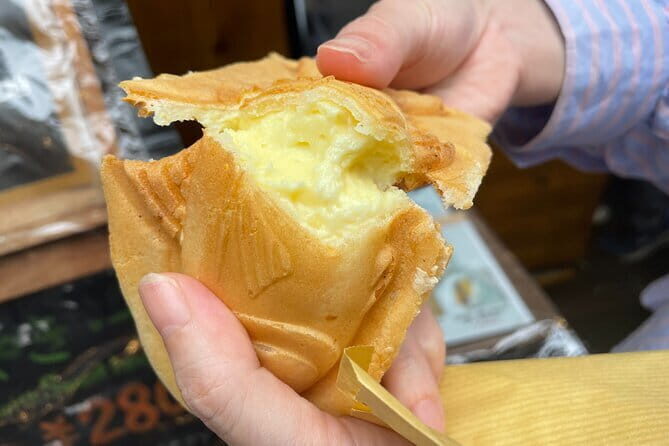
- Small group size (max 6) means better pacing, easier questions, and time to actually taste instead of rushing.
- Temple + shrine stops (Tsukiji Honganji Temple and Namiyoke Shrine) add a local, spiritual layer to the food.
- English-speaking guidance helps you understand what’s in front of you, including food culture topics like dashi when the guide explains it.
- Snack variety that covers seafood and meat gives you a sampler without needing to plan each bite.
- Lunch is yours to buy at a designated spot later, so you control what you spend.
Tsukiji after the big fish market era
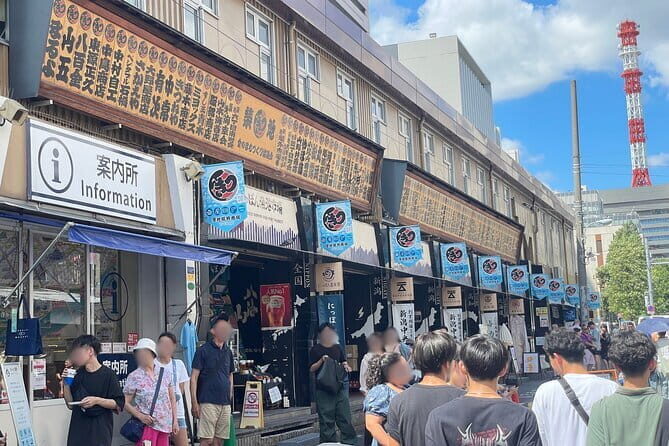
Tsukiji is one of those Tokyo places people expect to look a certain way. But the fish market scene changed, and today you’ll get a clearer view of what Tsukiji has always been good at: food, shopping, and people watching.
This tour leans into the Outside Market side of Tsukiji, the area that still draws crowds for everyday Japanese foodstuffs. You’re not just chasing raw seafood photos. You’re learning how the neighborhood sells tastes—dry snacks, small bites, and meal components that make Japanese cooking work.
The “why” matters. When you understand the setting, each snack feels like part of a bigger system rather than random street food.
You can also read our reviews of more food & drink experiences in Tokyo
Meeting at Tsukiji Honwanji: where your food walk starts
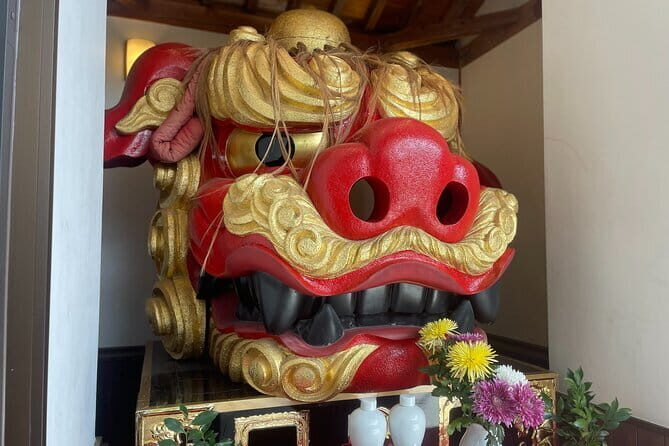
You start at 築地本願寺 正門 (Tsukiji Honwanji), near the temple frontage. It’s a good starting point because it gets you into Tsukiji’s tone right away: part religious complex, part old neighborhood.
From there, the tour guides you into the flow of the area and sets expectations. You’re going to taste several items, and you’ll also have time to pause and look at what merchants sell and how people move through the streets.
Duration is about 3 hours, which is long enough to feel like a food tour, but short enough that you can still handle the rest of Tokyo that day.
Tsukiji Honganji Temple: a calm first stop before the snacks
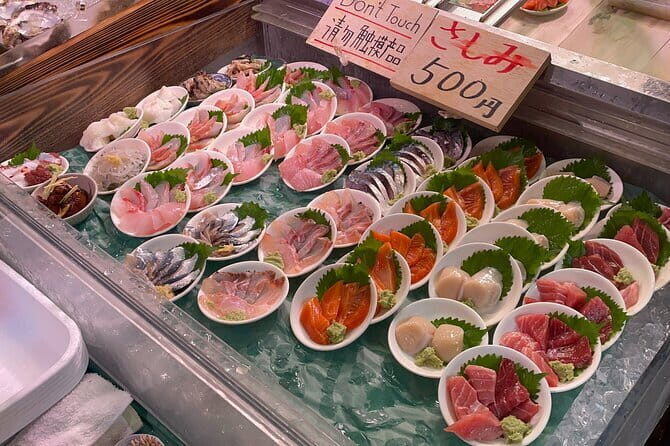
Stop one is Tsukiji Honganji Temple (Tsukiji Hongwanji). You’ll spend about 20 minutes here, and admission is free.
What makes this stop worth your time is the design. The temple incorporates architectural influences from other parts of Asia, including styles associated with India. That mix creates an atmosphere that feels different from what many people expect at a standard city temple.
Practically, it also works as a warm-up. You get a quick reset before the market portion, so your feet and attention are ready for the tastings and tighter walking lanes later.
Tsukiji Jogai Market: the real food action is in the snack tasting
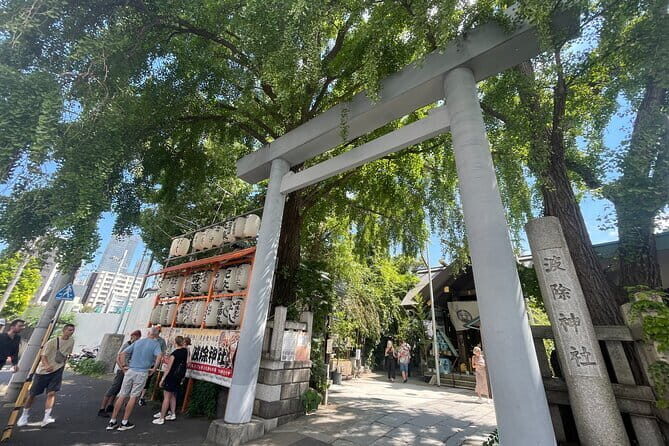
Next comes Tsukiji Jogai Market, the Outside Market area. Plan on about 1 hour here.
This is where you start treating your guide like a map. The tour isn’t a buffet where everyone gets the same thing. Instead, you buy a set of tasting snacks at recommended stores, like:
- seasoned seaweed
- dried fish
- roast beef sushi
- oysters or sashimi
- bean snacks
Two useful notes here. First, the snacks include seafood and meat, so if you have allergies, the tour explicitly asks you to tell your guide in advance. Second, you’ll also have chances to pick other items on your own if you want something specific.
A lot of Tsukiji tours stop at the headline foods. This one pushes you to notice the snack logic: dry goods, small bites, and items that work as quick meal pieces. That’s a big deal if you want food culture, not just a single photo-worthy moment.
海幸橋棟 lunch stop: buying your meal without losing the group
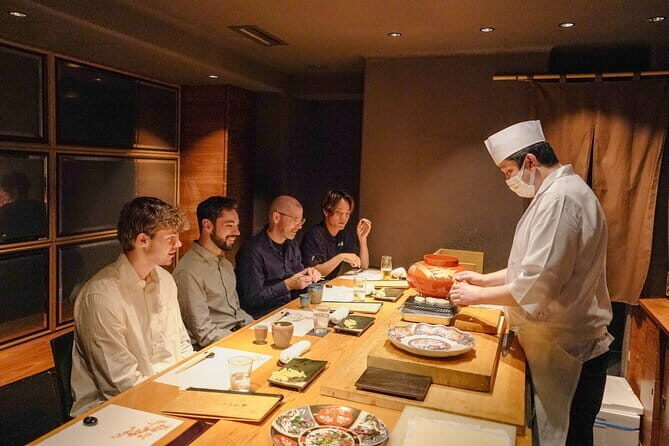
Later, you go to 築地魚河岸 海幸橋棟, where you can purchase lunch. This part is about 1 hour 10 minutes, and admission is free.
Here’s the key setup: you’re having snack time from the Outside Market, and then you buy lunch you choose yourself. The lunch fee is not included, so you’ll be budgeting an extra amount beyond the tour price.
Why I think this structure is a smart value choice: it lets you try a curated set of snacks (included) and then personalize the bigger meal. If you’re the type who wants one big seafood dish, you can spend your lunch money that way. If you’d rather keep costs lower, you can choose a simpler boxed meal option.
Also, because this stop is guided, you’re not alone trying to decode which counters to trust. You get the “what’s typical here” context, then you decide.
In comments from guides and tastings, people mention seafood like king crab and sea urchin, along with items such as lobster crackers. You should treat those as examples of what you might encounter through the day’s shop choices, not a guaranteed menu.
A few more Tokyo tours and experiences worth a look

Namiyoke Shrine: why the sea still matters here
Stop four is Namiyoke Shrine, about 30 minutes. Admission is free.
This shrine is tied directly to Tsukiji’s identity. People have worshipped here since the market began, and market workers prayed for the safety of the sea for many years. That focus makes the connection between food and livelihood feel real, not like a tourist story pasted onto a street corner.
What I like about ending here is tone. After eating and shopping, you get a short moment of stillness that explains why locals care so much about the work behind the food.
It’s also a helpful way to close the tour. When you leave a shrine, you tend to notice the streets differently. You start seeing the market as a working neighborhood, not just an attraction.
Price and value: what $100.34 realistically covers
The price is listed at $100.34 per person, with about 3 hours of guiding and tastings. On average, it’s booked around 7 days in advance, which tells you demand is steady.
Here’s where the value lands:
- Tour guide is included, and the guide role is not just “lead the group.” Reviews highlight that guides teach food culture and history, which is a huge part of why this tour works.
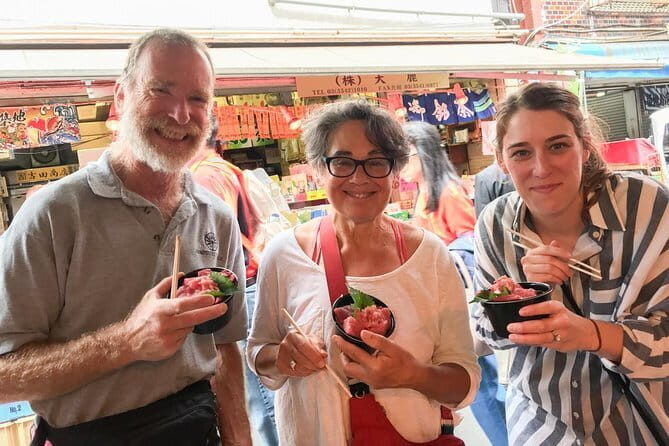
- Snacks are included, including a mix of dry and fresh-ish items such as seaweed, dried fish, roast beef sushi, and oysters or sashimi, plus bean snacks.
- Admission is free for the major included stops, so you’re not paying extra just to enter.
The only major “cost surprise” is lunch and any extra shopping. Lunch is explicitly not included, and shopping cost depends on what you buy in each store.
So the fair expectation is: $100.34 gets you guided context plus a solid snack run. Then you add your lunch choice on top, like you would at any market day when you actually want to eat a real meal.
For many people, that setup is better than paying a higher price for a set lunch you might not want.
How to make the most of snack-heavy market walking
Tsukiji rewards smart pacing. Since tastings happen across multiple stops, you’ll enjoy the tour more if you keep a few habits in mind.
First, keep room in your stomach. You’re going to sample multiple snack types, including seafood options. If you arrive starving, you may feel it by the time lunch arrives.
Second, use the small group size to your advantage. With up to 6 travelers, your guide can help explain what you’re tasting and help you pick additional items if you want them. That’s especially useful if you’re cautious about flavors or textures.
Third, be upfront about food concerns. The tour says snacks include seafood and meat, and you should inform the guide about any other allergies. This is one of those “small effort, big payoff” things.
Guide style matters here: Yoshi, Yuki, Haruka, and Hiro
A standout theme in reviews is how friendly and helpful the guides are, along with the way they connect food to Japanese culture.
You’ll see names like Yoshi and Yuki in comments about learning and great tastings, and Haruka gets mentioned for giving recommendations when people got a little turned around in the number of food spots. Another name, Hiro, comes up in connection with learning about topics like dashi and how it’s used.
Even if your guide uses different examples than someone else’s, the goal is the same: you want to understand what you’re eating and why it matters in Japanese food culture.
That’s what turns Tsukiji from a checklist into a real experience.
Who should book this Tsukiji street food tour
This tour is a good fit if you:
- want to eat Japanese market snacks without guessing your way through
- like learning food culture, not just collecting photos
- prefer small groups and an English-speaking guide
- want to see Tsukiji’s temple and shrine connection, not only the shopping streets
It might be less ideal if you:
- need wheelchair accessibility (the tour is not wheelchair accessible)
- want a fully sit-down meal included in the price, since lunch is extra
- dislike walking through market areas with uneven foot traffic and moderate movement
Should you book this Tsukiji food tour?
I’d book it if you want a guided, snack-centered Tsukiji day that feels grounded in daily food culture. The combination of Outside Market tastings plus stops at Tsukiji Honganji Temple and Namiyoke Shrine gives your visit shape and meaning, not just consumption.
If you’re price-sensitive, treat it like this: the tour price buys the guide and snacks, and you handle lunch and any extra shopping yourself. If that matches your style, you’ll likely get a lot out of the experience.
FAQ
What food is included in the tasting?
The tour includes snacks such as seasoned seaweed, dried fish, roast beef sushi, oysters or sashimi, and bean snacks. You can also buy other items yourself at the market.
Is lunch included in the tour price?
No. Lunch is not included, and you purchase it later at the lunch stop after snacking in the Outside Market.
Do I need to worry about allergies?
Yes. Since the included snacks include seafood and meat, you should inform the guide about any other allergies.
How many people are in the group?
The tour has a maximum of 6 travelers.
Is the tour wheelchair accessible?
No. The tour is not wheelchair accessible.
Where does the tour start and end?
It starts at 築地本願寺 正門3-chōme-15-1, Tsukiji, Chuo City, Tokyo 104-0045 and ends at Namiyoke Shrine6-chōme-20-37, Tsukiji, Chuo City, Tokyo 104-0045.
Is there free cancellation?
Yes. You can cancel for a full refund up to 24 hours in advance of the experience’s start time.