REVIEW · TOKYO
From Tokyo: Nikko UNESCO Heritage Private Guided Tour
Book on GetYourGuide →Operated by Travel On Peaks · Bookable on GetYourGuide
Nikko shrine views with zero Tokyo stress. I love the way this Nikko UNESCO route strings together famous places like Shinkyo Bridge and Toshogu Shrine without feeling like you’re sprinting. I also love the pause for lunch at Ryuzu no Chaya, where you can try yuba specialties while Ryuzu Falls does the background acting.
One thing to consider: this is an 8-hour loop with lots of stops, so you’ll want to pace yourself. If you’re dreaming of a long, slow onsen soak or lots of roaming time with zero structure, you may feel a bit rushed.
That said, the “private” part matters. You get free hotel pickup and drop-off in central Tokyo, an air-conditioned vehicle, and an English-speaking guide who can adjust the plan to your interests.
In This Review
- Key Things That Make This Nikko Tour Worth It
- Why This Tokyo-to-Nikko Day Trip Feels Easier Than DIY
- From Tokyo Pickup to Shinkyo Bridge: Getting Oriented Fast
- Practical tip
- Toshogu Shrine: The UNESCO Main Event, Timed So You Can Breathe
- Ryuzu Falls and Ryuzu no Chaya: Lunch With a Waterfall View
- A detail worth planning for
- Kanmangafuchi Abyss + Jiunji Hondo Temple: A Different Kind of Nikko
- Nikkozan Rinnoji Temple: Short Stop, Worth It
- Secret Forest Walk: Cedar Trails and Quiet Shrines
- How to get more out of it
- Lake Chuzenji: Big Scenery Break Before the Final Falls
- Kegon Falls: The Grand Finale Moment
- Price and Value: What $376 per Group Really Buys
- Who This Tour Suits Best (and Who Might Feel It’s Too Much)
- Booking Tips Before You Go
- Should You Book This Nikko UNESCO Private Guided Tour?
- FAQ
- Is this a private tour or shared group
- How long is the Nikko tour
- Does the tour include hotel pickup and drop-off
- What are the main stops during the day
- Is lunch included, and what kind of food is it
- What languages are the guide and tour conducted in
Key Things That Make This Nikko Tour Worth It
- Private pacing: You choose how much time you spend at each stop, instead of following a big group.
- UNESCO hits without the stress: Shinkyo Bridge and Toshogu Shrine are built into a guided day flow.
- Ryuzu no Chaya yuba lunch: A proper meal break with waterfall views.
- Secret forest time: Cedar-lined trails and hidden-shrine style stops add calm between the landmarks.
- Two fall moments: Ryuzu Falls and Kegon Falls both make the day feel like nature is driving.
- Onsen village atmosphere: The plan can include time at Kinugawa or Yunishigawa villages, where the pace feels local.
Why This Tokyo-to-Nikko Day Trip Feels Easier Than DIY
Nikko is gorgeous, but doing it on your own can turn into a logistics puzzle. Trains, transfers, timing, and figuring out where to eat all compete with actually enjoying the day. This tour solves that by rolling Tokyo pickup, round-trip transport, and a guide into one plan.
The value is not just that you get a driver. You’re buying a guided route that hits major highlights like Shinkyo Bridge, Toshogu Shrine, and the falls—while still leaving breathing room. You can spend extra minutes looking at details inside temples or take a slower walk when the forest path calls your name.
And there’s a practical bonus: the vehicle is modern and air-conditioned, which helps a lot when you’re dealing with long stretches on the road. Add to that the bottled water, tea, and coffee, and you’re set up for a day that doesn’t feel like survival.
You can also read our reviews of more guided tours in Tokyo

From Tokyo Pickup to Shinkyo Bridge: Getting Oriented Fast
Your day starts with hotel pickup in central Tokyo. The key here is simplicity: you’re not wrestling with schedules or figuring out where to meet a group. Once you’re in the vehicle, you can sit back and let the guide handle the transitions.
The first major stop is Shinkyo Bridge. This is usually the kind of place where you’ll instantly understand why Nikko has fans. It’s an iconic crossing—photogenic, atmospheric, and perfectly placed for a first wow moment.
Your guide gives context and helps you manage time. You’ll get around an hour for the stop and guided tour, which is long enough to take photos, listen, and then actually enjoy the area instead of rushing through.
Practical tip
Wear shoes with solid grip. Some areas around bridges and temple approaches can be a little slick, especially in cooler seasons.
Toshogu Shrine: The UNESCO Main Event, Timed So You Can Breathe
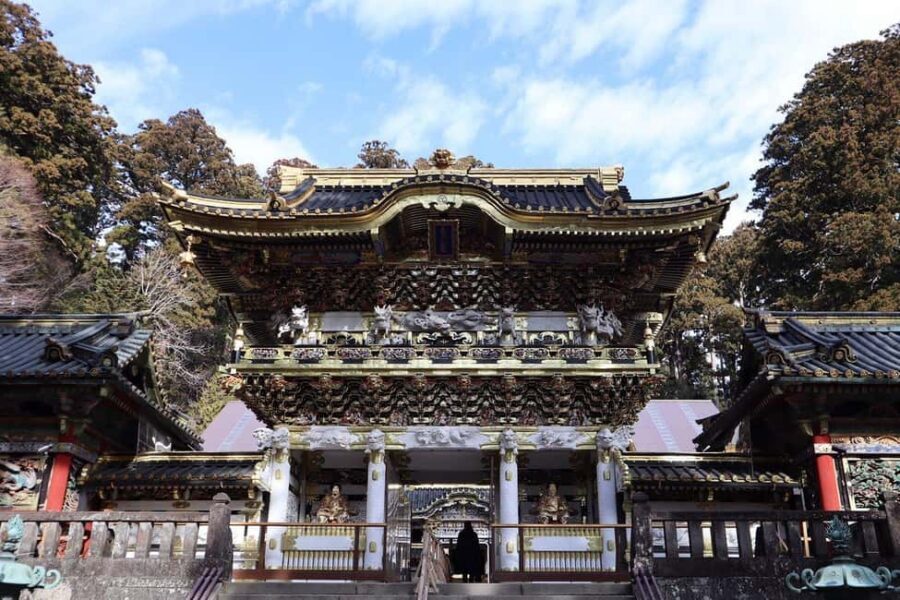
Next up is Nikko Toshogu Shrine, one of the big names in Japan’s UNESCO story. If you’ve only seen shrine photos online, you might not expect how visually busy and detailed the place is—carvings, colors, symbolism. It’s the kind of site where time matters, because details reward slower looking.
You’re scheduled for about an hour with photo stops and guided time. That sounds short, but it works because your guide can point out what’s worth your attention. Instead of scanning randomly, you’ll know what you’re looking at and why it matters.
I like that this stop isn’t treated like a one-minute check box. With a guide, you can pick up the stories behind the design—without the day turning into a lecture. And because it’s a private setup, you can ask questions that fit your curiosity, not just whatever a group leader has time to cover.
Ryuzu Falls and Ryuzu no Chaya: Lunch With a Waterfall View
The day’s emotional reset happens at Ryuzu Falls. You get a photo stop and guided time there, but the standout is the extended break: about two hours total, including lunch and free time.
Lunch is at Ryuzu no Chaya, a teahouse-style stop set up for a relaxing meal while you look out toward the waterfall. The menu is known for yuba specialties—yuba is tofu skin, and in Japan it can be lightly flavored and surprisingly satisfying.
What I like most about this lunch stop is that it’s not just food. It’s a planned pause in your day. When you’re doing UNESCO temples and scenic stops in one day, you need a moment where your brain stops trying to memorize everything.
You can also read our reviews of more private tours in Tokyo
A detail worth planning for
If you tend to get cold easily, consider bringing a light layer. Even when the weather is decent in Tokyo, mountainous areas can feel cooler around waterfalls.
Kanmangafuchi Abyss + Jiunji Hondo Temple: A Different Kind of Nikko
After Ryuzu Falls, the route turns toward Kanmangafuchi Abyss and Jiunji Hondo Temple. This part of Nikko feels more like the quiet, slightly eerie cousin of the famous shrine sites.
The stop includes about an hour of guided time with photo opportunities. The abyss area is known for its dramatic setting, and the temple element adds balance. You’re not just seeing “pretty views,” you’re seeing a place with atmosphere—something a bit more offbeat than the postcard spots.
This is also where your guide’s pacing really shows. If you prefer photos and a walk, you can focus on that. If you want a bit more temple time or want to understand the symbolism, you’ll be able to do that without having to ask for it in a group setting.
Nikkozan Rinnoji Temple: Short Stop, Worth It
Then comes Nikkozan Rinnoji Temple. You’re scheduled for about 30 minutes with guided and photo time.
Because the stop is shorter, you don’t want to treat it like a quick photo dump. Instead, use it to read the place properly—watch for details, notice how the site feels, and let it be a break from the busier stops.
This short timing is actually a smart design choice. It keeps you moving, but it still gives you a chance to enjoy a temple stop as more than a checkbox. After long drives and earlier landmarks, this kind of pause feels good.
Secret Forest Walk: Cedar Trails and Quiet Shrines
One of the most interesting parts of the day is the secret forest stop and the experience described as cedar-lined trail walking and hidden-shrine style exploration.
You’ll have about an hour here, with photo and guided time. This is the part that makes the day feel less like a tourist circuit and more like a guided wander. Forest walking also changes the pace—your eyes stop hunting for the next landmark and start relaxing on the surroundings.
In cooler seasons, you might also catch wildlife activity. For example, one guide experience included noticing monkeys and deer in the forest while on the route—so it’s not just scenic. It can be lively, too.
How to get more out of it
Slow down. If you rush this part, you’ll miss what makes it special. Bring your camera, but also give yourself time to just stand and look.
Lake Chuzenji: Big Scenery Break Before the Final Falls
Next is Lake Chūzenji, with about an hour of photo stop, guided visit, and time to take in the area.
This stop matters because it gives your day a wider horizon. After shrines, temples, and forest paths, the lake is a reset for your senses. It also gives you a new kind of photo opportunity—water, mountains, and changing light.
If you’re the type who likes to step outside of the main monument rush, this is your moment. Use it to stretch, breathe, and recalibrate before the final big nature hit.
Kegon Falls: The Grand Finale Moment
Finally, you’ll reach Kegon Falls, with another hour for photo stop and guided time.
This is one of the main waterfall viewpoints in the Nikko region, and the timing in the day works because it lands as a finale. By now you’ve built context—your guide has helped you understand the landscape and spiritual framing of the region. So when you stand in front of the falls, it feels like the full story, not a random last stop.
A private guide also helps here with small choices: where to stand for the best view, what to watch for, and how long to linger so you enjoy it instead of feeling like you’re catching it on the clock.
Price and Value: What $376 per Group Really Buys
The price is $376 per group (up to 6 people) for an 8-hour private day. On paper, private tours can look pricey. In practice, the value comes from avoiding four costs you’d likely pay yourself:
- Transport coordination: a modern, air-conditioned vehicle with Tokyo pickup and return.
- A guide for the whole day: English-speaking professional guidance across multiple sites.
- A built-in meal: lunch at Ryuzu no Chaya is included.
- Reduced decision fatigue: you spend less time planning and more time enjoying.
If you’re traveling as a small group, the per-person cost becomes much easier to swallow. And if you’re a couple or solo traveler, the value shifts from “cheap” to “worth it,” especially if you want the freedom to adjust the route to your interests.
Also, the guide flexibility is real. One guide experience included accommodating a special request for a quiet stop to handle a business call using provided Wi-Fi. That’s not something you’d get if you’re relying entirely on your own schedule and crowded meeting points.
Who This Tour Suits Best (and Who Might Feel It’s Too Much)
This tour is a strong match if you want:
- A private Nikko UNESCO day trip without the stress of transit planning
- Famous sites plus quieter breaks like a secret forest walk
- A meal that’s part of the experience, not an afterthought
- A guide who can adapt the plan to your interests
It may feel less ideal if you want:
- A very slow, unstructured day where you can linger for hours at one place
- Deep immersion into onsen time (this tour can include onsen village life like Kinugawa or Yunishigawa, but it’s still a day tour with many stops)
- A totally off-the-beaten-path itinerary beyond what’s already built into the route
For families and older travelers, the pacing and private vehicle are often the right trade-off. The day is designed to be manageable, and the only real requirement you bring is a pair of comfortable shoes.
Booking Tips Before You Go
A few things will make the day smoother:
- Think about your priorities: Are you shrine-first, waterfall-first, or nature-and-quiet-first? Your guide can tailor within the day’s flow.
- Bring a light layer: mountainous areas can feel cooler, especially near water.
- Plan for photos: the day has several photo stops, so have your battery ready.
- Use the guide’s intelligence: if you want a calm spot or less crowded timing, ask. Private tours are the time to do that.
Also note that the tour is wheelchair accessible, and the vehicle is built to handle that kind of comfort need.
Should You Book This Nikko UNESCO Private Guided Tour?
If you want a day that feels organized but not rigid, I think this is a smart choice. You get the major Nikko UNESCO landmarks, two big waterfall moments (Ryuzu and Kegon), and at least one slower nature pause with cedar-trail walking. The Ryuzu no Chaya yuba lunch is also the kind of included meal that actually adds value, because it’s tied to a specific scenic setting—not just a restaurant stop.
Book it if you’re short on time in Japan and want a reliable, low-stress way to see Nikko well. Skip it if your dream day is mostly soaking and wandering with no schedule at all.
FAQ
Is this a private tour or shared group
This is a private group tour, so you travel with your party and have an English-speaking professional guide with local expertise.
How long is the Nikko tour
The total duration is 8 hours.
Does the tour include hotel pickup and drop-off
Yes. There is free hotel pickup and drop-off in Tokyo. If your accommodation is in central Tokyo (23 wards), you wait in the hotel lobby or main entrance.
What are the main stops during the day
The day includes Shinkyo Bridge, Nikko Toshogu Shrine, Ryuzu Falls (with lunch at Ryuzu no Chaya), Kanmangafuchi Abyss and Jiunji Hondo Temple, Nikkozan Rinnoji Temple, a secret stop, Lake Chūzenji, and Kegon Falls.
Is lunch included, and what kind of food is it
Yes. Lunch is included at Ryuzu no Chaya, where you can enjoy yuba dishes while viewing Ryuzu Falls.
What languages are the guide and tour conducted in
The guide can provide service in English and Japanese.