REVIEW · KYOTO
TREASURES of Kyoto: Fushimi Inari, Kiyomizu Temple, and more!
Book on Viator →Operated by Kyoto Fun · Bookable on Viator
Four hours in Kyoto, before the big crush. This tour is built for time-tight days, using included taxi rides between highlights so you’re not burning your morning in transit. I especially like the early timing that’s meant to help you sidestep bus crowds.
You’ll also get a small group format (max 12), which makes it easier to ask questions and keep your plan on track. One thing to consider: it’s a fast-hit morning, and if you want slow wandering or lots of unscheduled detours, this kind of route may feel a bit rushed—especially when you factor in all the walking around shrines and temple grounds.
In This Review
- Key Points at a Glance
- Why This 7:00 am Kyoto Highlights Loop Works for Tight Schedules
- Getting From Fushimi Inari to Kiyomizu by Taxi (and Why It Saves Your Energy)
- Stop 1: Fushimi Inari-taisha and the Torii Gate Photo Maze
- Stop 2: Kiyomizu-dera in the Early Calm
- Wandering the Cobblestoned Streets After the Big Sights
- Small Group Size Means Real Questions for Your Guide
- Price and Value: Does $98.53 for 4 Hours Make Sense?
- What Could Go Wrong? When This Morning Feels Too Tight
- Practical Tips to Make Your Morning Feel Effortless
- Should You Book Kyoto Fun’s Treasures of Kyoto Tour?
- FAQ
- What is the duration of the tour?
- How much does it cost?
- What time does the tour start?
- Where is the meeting point?
- Where does the tour end?
- What are the main stops?
- Is admission included?
- How big is the group?
- Is there a mobile ticket?
- What happens if the weather is bad?
- Is free cancellation available?
Key Points at a Glance
- 7:00 am start designed to help you arrive at the big sights before the crowds show up
- Taxi fares included during the tour, so you gain time and energy between stops
- Fushimi Inari and Kiyomizu-dera are handled end-to-end, with clear time blocks
- Admission is part of the plan: Fushimi Inari is free, and Kiyomizu-dera is included
- Max 12 people means your guide can actually answer questions
- Mobile ticket for an easier morning checkout-and-go
Why This 7:00 am Kyoto Highlights Loop Works for Tight Schedules
If your Kyoto days are stacked—temple today, neighborhood tomorrow, train schedule later—this style of tour is the antidote to decision fatigue. The whole experience runs about 4 hours, starting at 7:00 am, with a route that hits two of the most famous stops and then adds time to roam a preserved district.
The morning timing is the real engine here. Those early hours matter at places like Fushimi Inari-taisha and Kiyomizu-dera, where crowds can turn photos and pacing into an obstacle course. A planned schedule also means you don’t have to keep re-checking transit connections while you’re half-awake.
And yes, there’s a bit of “Kyoto speed-run” energy. You get a lot of icons in a short window, but you’ll still be out and about on foot within each site.
You can also read our reviews of more tours and experiences in Kyoto.



Getting From Fushimi Inari to Kiyomizu by Taxi (and Why It Saves Your Energy)
Here’s where this tour earns its keep: the price includes taxi fares during the tour. Kyoto is charming, but moving between major sights can still take time—especially when you’re trying to hit the popular places early.
So instead of spending your limited morning budget on transfers, you’re spending it on the actual sights. That also helps if you’re traveling solo or with someone who doesn’t love sprinting across stations with a map in one hand and a coffee in the other.
It also creates a smoother flow for the guide’s pacing. They can keep you on schedule, rather than waiting on slower connections. For a 4-hour experience, that kind of time protection is huge.
Stop 1: Fushimi Inari-taisha and the Torii Gate Photo Maze
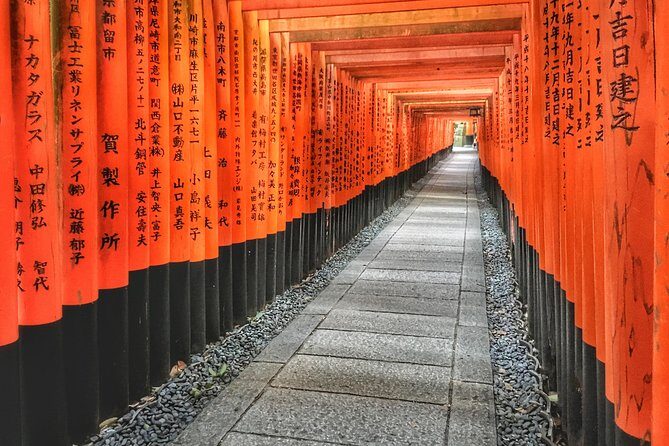
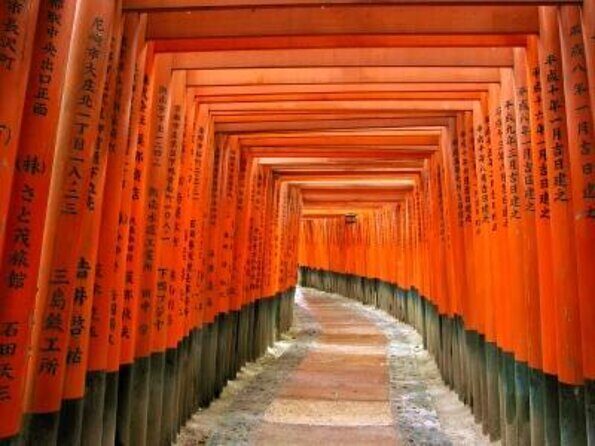
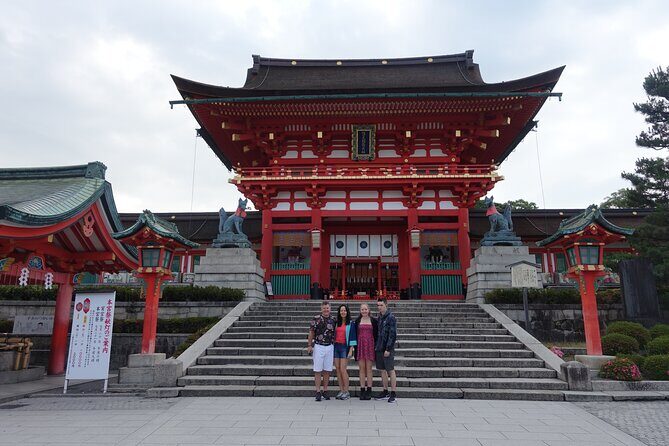
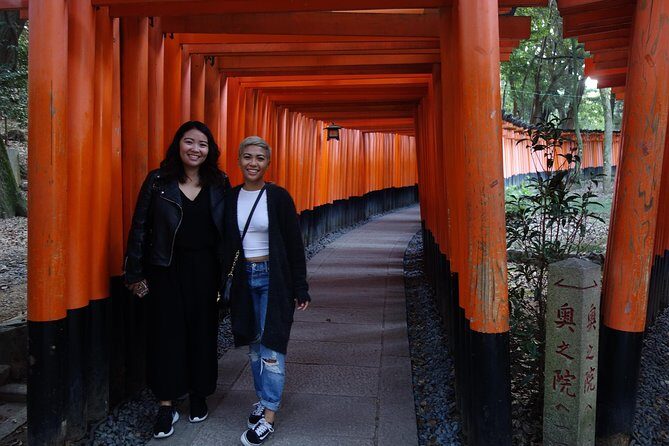
Your morning begins at Inari Station (Fukakusa Inarionmaecho, Fushimi Ward) and the first stop is Fushimi Inari-taisha Shrine. You’ll have about 45 minutes here, and admission is free—so you can focus on the experience, not ticket math.
What you’ll be doing is walking through the famous maze of sacred torii gates. It’s a visual experience first, but there’s also meaning behind it, and the guide explains the history as you go. If you’re hoping to get photos without fighting shoulder-to-shoulder lines, the early timing helps a lot.
A quick practical note: torii lanes invite you to linger, but the tour is designed to keep a steady rhythm. You’ll get a chance for photos, yet you’re still moving. If you’re the type who wants to stop every few steps for a perfect angle, you might feel the time boundary—though the guide’s explanation helps fill that “what am I looking at?” gap.
Stop 2: Kiyomizu-dera in the Early Calm
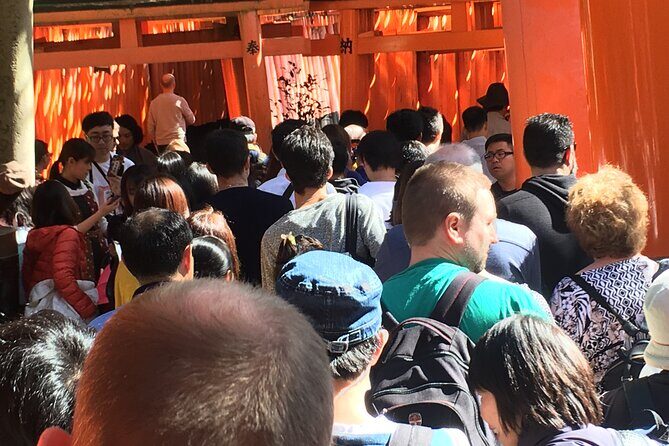
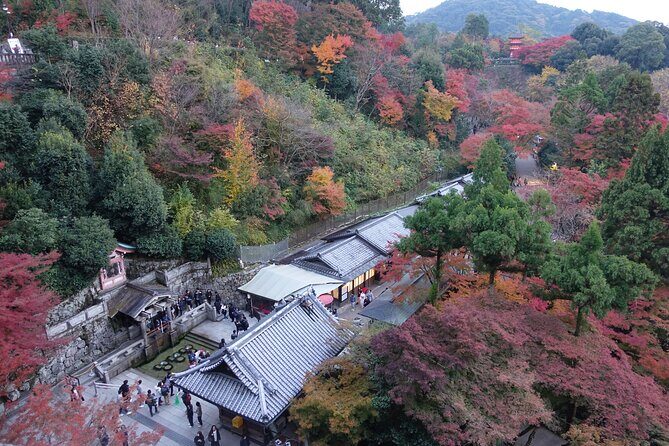
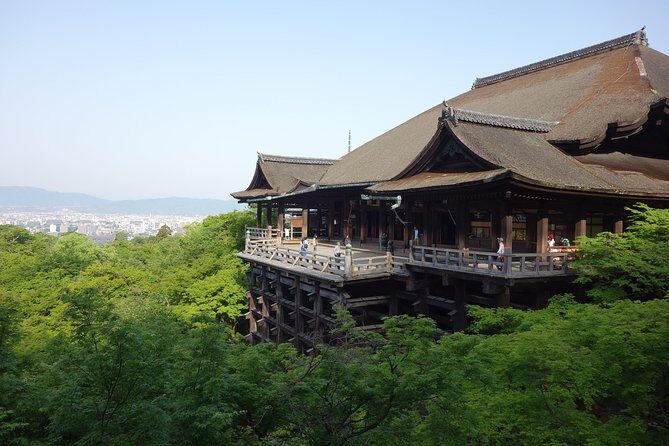
Next up is Kiyomizu-dera Temple, one of Kyoto’s icons. You’ll spend about 1 hour, and admission is included in the tour plan.
This is the stop where the early-morning quiet can feel almost unfair. Kiyomizu-dera has sweeping views over the city, and seeing it in the calmer hours makes the viewpoints easier to enjoy. Think: fewer interruptions, less waiting, and a better chance to actually take in the scene rather than just recording it.
There’s also a bigger “sense of place” at Kiyomizu-dera than at many temples. Even if you’ve only read about it, you’ll recognize why it’s so famous once you’re there—this is the kind of temple that people plan entire Kyoto days around.
The only drawback is the usual one: you’ll need to move through active areas of a major temple complex. The tour uses taxis between locations, but within the temple grounds, you’re still doing the walking.
Wandering the Cobblestoned Streets After the Big Sights
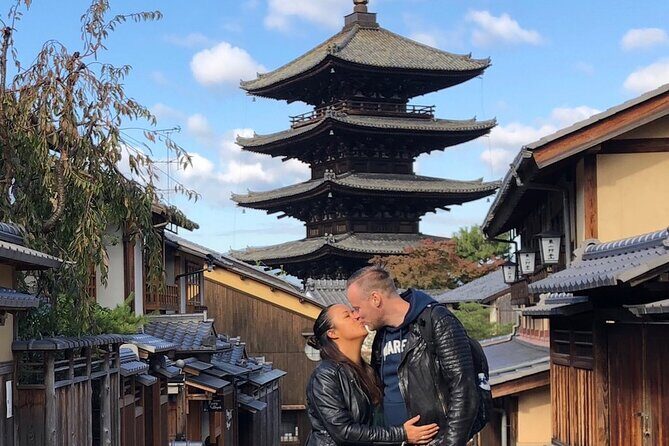
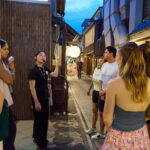
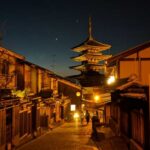
After the two major landmarks, you’ll have time to wander a preserved district with cobblestoned streets, quaint shops, and old-style townhouses. This is the part that turns the tour from “checklist” into “Kyoto day.”
In a morning structured around big-name sites, this neighborhood time gives you a breather. It also helps you see a different side of Kyoto—less monumental and more everyday. You’re not just transported between attractions; you’re also getting a taste of the kind of street-level atmosphere people travel to experience.
You probably won’t get a deep guidebook-style explanation for every shop window, since the focus stays on highlights. But that’s okay. This segment is for letting the morning breathe.



Small Group Size Means Real Questions for Your Guide
This is a small-group tour, capped at 12 people. That number matters more than you might think. When a tour group is big, the guide becomes a traffic controller. With a smaller group, the guide can respond to questions and adjust pacing.
One standout detail from the experience is the guide’s impact. In the positive feedback, Niall is singled out as amazing, informative, and genuinely into Japanese culture. That kind of energy matters on a short tour: you want the “why” behind what you’re seeing, not just where to stand for a photo.
On the flip side, there’s also a negative review that complains the guide wasn’t helpful and that the value wasn’t there. That’s a reminder that guidance quality can vary by day, group chemistry, or simple misalignment in expectations. This tour is structured and time-managed, so if you wanted a looser, more customized morning, that difference can show up quickly.
Still, the small group format is one of the best indicators that you’ll have a good chance to interact rather than just listen.
Price and Value: Does $98.53 for 4 Hours Make Sense?
The price is $98.53 per person for about 4 hours. For many Kyoto highlights, that might sound high until you break it down into what you’re actually buying.
You’re getting:
- Taxi transportation between stops, with taxi fares included
- Entry handling for Kiyomizu-dera (admission included)
- Fushimi Inari access (admission is free)
- A planned route with timed blocks meant to reduce crowd friction
- A small group experience with guide access
- A mobile ticket, which reduces morning fuss
So the value isn’t only about admissions. It’s about time, convenience, and avoiding stress. If you were to replicate this on your own, the taxis (or equivalent transport) and your time spent coordinating would likely eat into your morning fast.
The one place value might feel thin is if you’re already comfortable self-navigating Kyoto and you’re okay arriving on your own super early. In that case, you could arguably do parts without paying for a structured guide. That’s where expectations really matter.
What Could Go Wrong? When This Morning Feels Too Tight
This tour is most comfortable when you want a fast, efficient highlights run with expert pacing. It may feel like not-enough if you’re the type who loves to linger for long explanations, slower photography, or long unscheduled detours.
Weather is another real factor. The experience notes it requires good weather, and if it’s canceled due to poor conditions, you’ll be offered another date or a full refund. If your Kyoto week is unpredictable, keep your schedule flexibility in mind.
Finally, one more practical consideration: the itinerary is built around iconic areas. Iconic places get busy. The whole plan is designed to help you avoid the worst crowds, but it can’t erase the fact you’re still visiting top sights.
Practical Tips to Make Your Morning Feel Effortless
I’d plan for this like an early-day mission. You’re starting at 7:00 am, which is great for crowds, but it means you’ll want to be ready to move right away.
A few smart prep ideas:
- Wear comfortable shoes you can walk in for shrine-temple grounds. Taxis help between stops, but you’ll still be on foot at each site.
- Bring your camera planning brain. With torii gates at Fushimi Inari, it’s easy to get caught aiming and forgetting your next photo angle.
- Go with a “watch and then wander” mindset. You’ll see big highlights first, then get time for the preserved district. That structure works best when you don’t try to turn every moment into an unscheduled detour.
- Be flexible on photo expectations. The early timing helps, but Kyoto is still Kyoto.
And if you’re sensitive to how fast something moves, the best way to enjoy a short tour is to ask your guide a question at each stop. It turns a timed walk into something richer.
Should You Book Kyoto Fun’s Treasures of Kyoto Tour?
Book it if you want the biggest Kyoto hits in one clean 4-hour morning, and you like the idea of taxis included so you’re not spending your day trapped in transit. This is a strong choice for first-time visitors, time-strapped planners, and anyone who wants structure without doing research.
Skip it or think twice if you prefer total freedom, don’t want a schedule, or you’re already confident you can piece together the same highlights yourself early in the morning. Also consider that a short guided route may feel limiting if you love long stays and slow wandering over getting multiple icons done quickly.
Bottom line: if you’re aiming to maximize Kyoto without maximizing stress, this tour is one of the more practical ways to do it—especially with the early start and the taxi help built in.
FAQ
What is the duration of the tour?
The tour runs for about 4 hours.
How much does it cost?
It costs $98.53 per person.
What time does the tour start?
The start time is 7:00 am.
Where is the meeting point?
The meeting point is at Inari Station (Fukakusa Inarionmaecho, Fushimi Ward, Kyoto).
Where does the tour end?
The tour ends at Sanjūsangendō Temple (657 Sanjūsangendōmawari, Higashiyama Ward, Kyoto).
What are the main stops?
The tour includes Fushimi Inari-taisha Shrine and Kiyomizu-dera Temple, plus time to wander a preserved district with cobblestoned streets and shops.
Is admission included?
Fushimi Inari-taisha Shrine admission is free, and Kiyomizu-dera Temple admission is included.
How big is the group?
The tour has a maximum of 12 travelers.
Is there a mobile ticket?
Yes, the tour uses a mobile ticket.
What happens if the weather is bad?
The experience requires good weather. If it’s canceled due to poor weather, you’ll be offered a different date or a full refund.
Is free cancellation available?
Yes, you can cancel for a full refund up to 24 hours before the experience start time.