Kyoto by bike feels like you’re moving with the city, not around it. This 3.5-hour ride plus a 30-minute town walk helps you reach calm spots along the river and ancient neighborhoods you’d miss on foot. I especially love the riverside route and the way the tour mixes big-name landmarks with quieter, lived-in streets.
You’ll also get a relaxed Gion stroll after the bike portion, with clear explanations of geisha culture and time to wander photogenic lanes. One thing to consider: it’s not for everyone—if you’re traveling with kids under 9 or you can’t comfortably ride a bike, this tour won’t work for you.
In This Review
- Key Highlights You’ll Actually Care About
- Why Cycling This Route Makes Kyoto Make Sense
- The Sanjo Ohashi Meeting Point: Get Your Bearings Fast
- Riverside Bike Time: Breeze, Stops, and the Calm Kyoto You Want
- Hidden shrine + spring water stop
- Imperial Palace area: big, but worth slowing down
- Zen temple pause: quiet contrast
- Shimo-gamo Shrine (UNESCO): Forest Atmosphere on a Bike
- The River Junction and the Lighted Return
- Gion or Pontocho on Foot: Geisha Culture Without the Confusion
- Flower towns and photogenic streets
- Geisha culture explained clearly
- Restaurant and bar recommendations that match your mood
- Snack and Tea Break: A Small Inclusion That Feels Like Kyoto
- Price and Value: Is $73 Worth It?
- Rain or Shine: How This Stays Practical
- Who This Tour Is Best For (and Who Should Skip It)
- Should You Book Cycle Kyoto’s Hidden Gems & Gion Stroll?
- FAQ
- How long is the tour?
- How much does it cost?
- Where do we meet for the tour?
- Is this tour good for families?
- Can I join if I can’t ride a bike?
- What’s included in the price?
- Do I need to pay extra for an electric bike?
- What should I bring?
Key Highlights You’ll Actually Care About
- Riverside start for an easy rhythm before the stops get more interesting
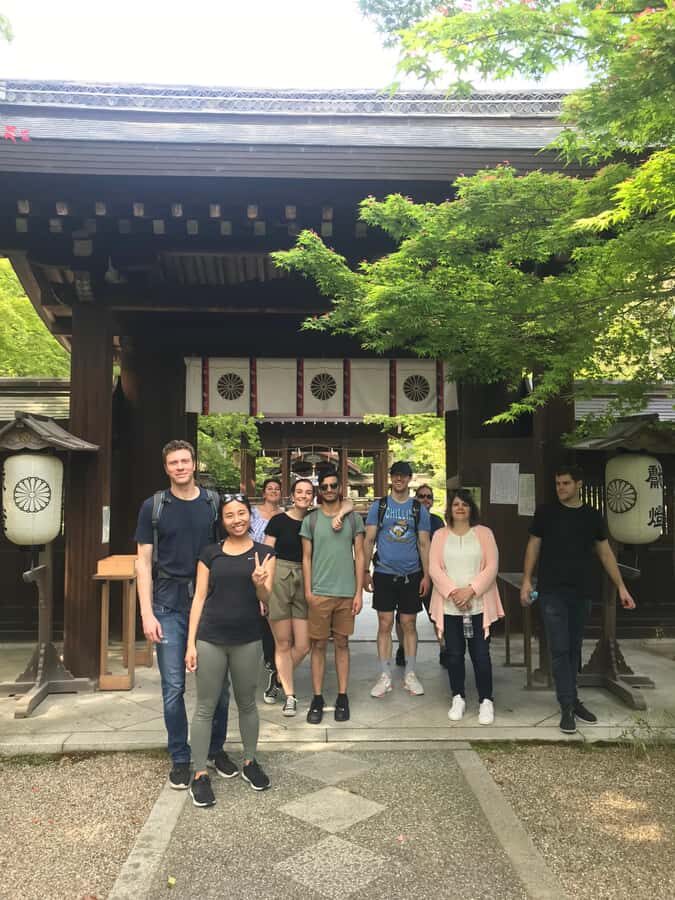
- Spring water pause at a small shrine stop (simple, refreshing, very Kyoto)
- Imperial Palace area + a Zen temple for both scale and atmosphere
- Shimo-gamo Shrine (UNESCO) with its forest feel and standout buildings
- Lighted riverside return for that end-of-day glow
- Gion or Pontocho walking time with geisha culture explained in plain terms
Why Cycling This Route Makes Kyoto Make Sense
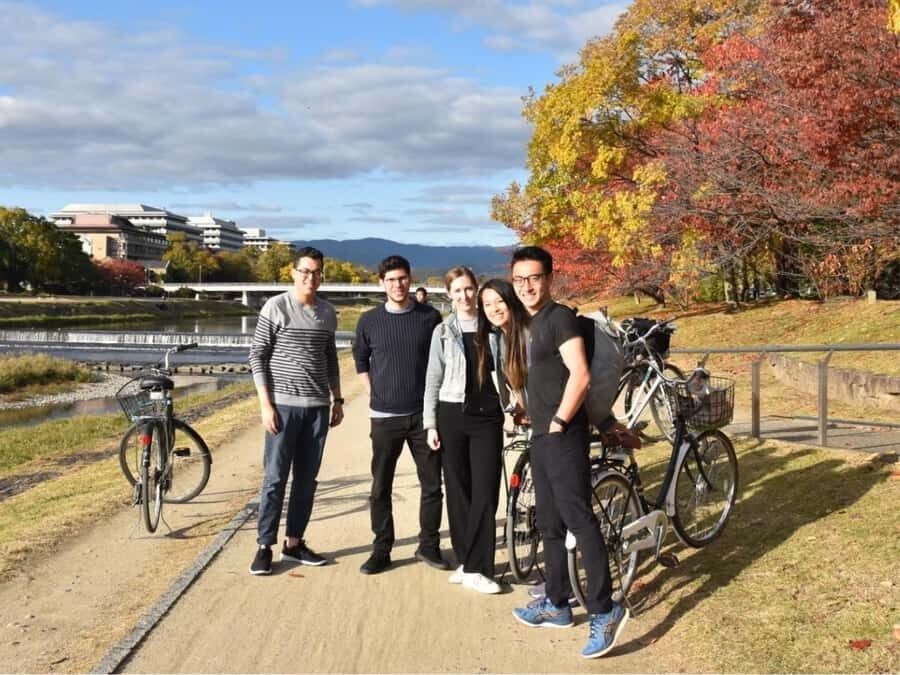
Kyoto can be overwhelming fast. The streets are tight, sights are spread out, and buses drop you in the middle of crowds. Cycling changes the whole experience because you cover ground without feeling rushed. You also get a kind of freedom that walking alone can’t give you—you can drift toward quiet corners, then regroup when it’s time for the next stop.
On this tour, the pacing is built around variety. You start on a peaceful riverside road, then you move into shrine-and-temple territory, then into residential and university areas, and finally you transition to the entertainment district for a slower, human-scale stroll. That order matters. It keeps the morning calm, the mid-tour interesting, and the late part more atmospheric.
Most importantly, you’re not stuck only with the famous highlights. You’ll see Kyoto’s everyday edges—the routes, neighborhoods, and side streets that feel local rather than staged.
You can also read our reviews of more cycling tours in Kyoto

The Sanjo Ohashi Meeting Point: Get Your Bearings Fast
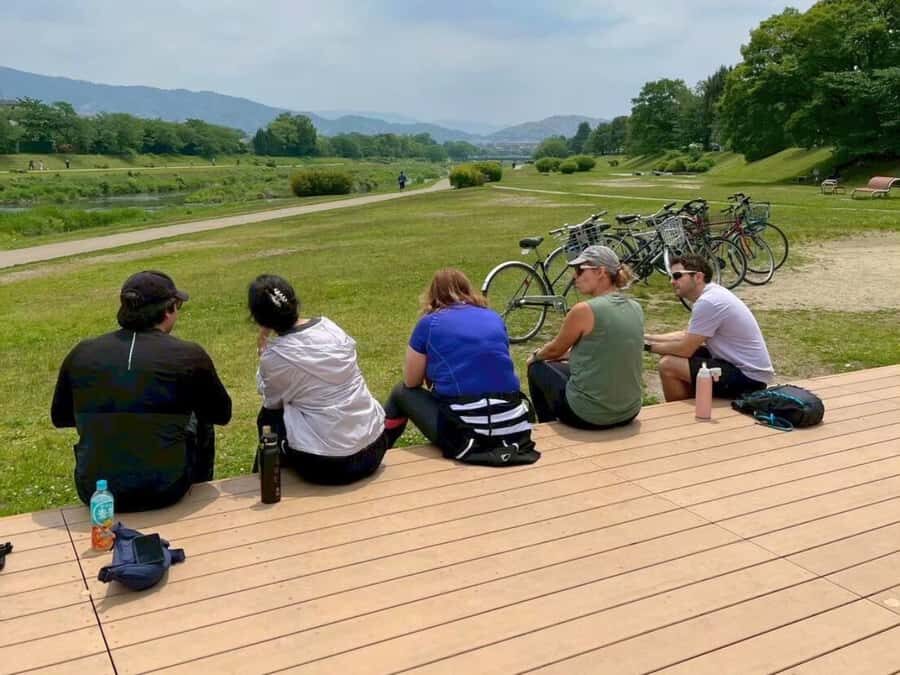
The tour starts at the Kneeling man statue at the southeast corner of Sanjo Ohashi intersection. It’s right by the bridge, so once you locate the statue, everything gets easy. If you’re coming by subway, the practical tip is to exit to the surface first, then find the statue. That saves time and stress compared to trying to navigate from underground.
It ends back at the same meeting point. So you’re not adding extra transfers or trying to guess how to get home after you’ve already spent your energy cycling.
If you like clear logistics, you’ll appreciate how straightforward the start and finish are.
Riverside Bike Time: Breeze, Stops, and the Calm Kyoto You Want
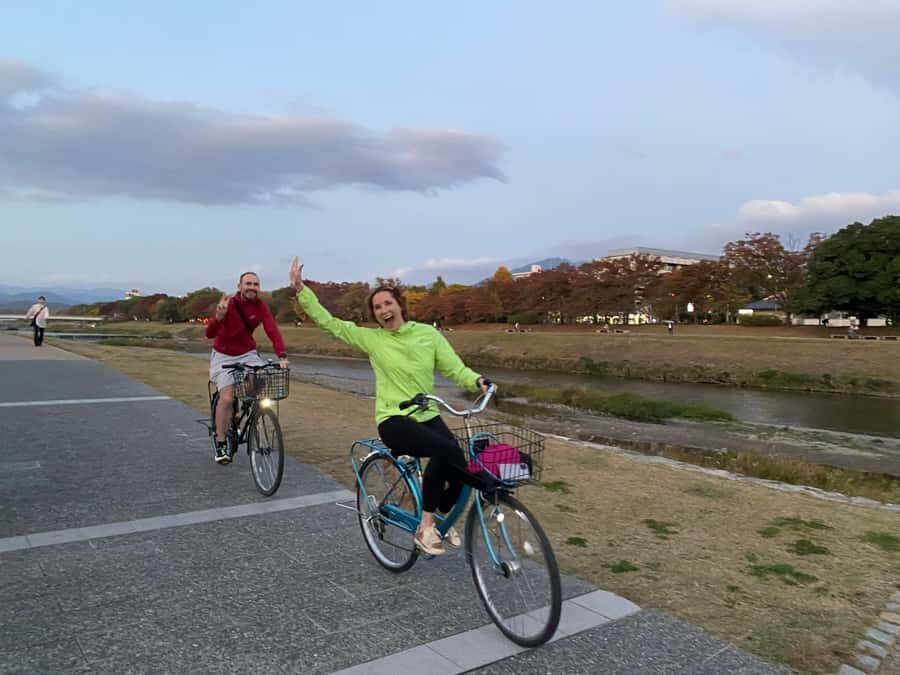
The bike portion is the heart of the day: about 3.5 hours of cycling plus planned stops that break up the ride. You’ll travel on a nice bike through parts of Kyoto that feel open-sky and breezy, especially early on. The first stretch is a riverside road, which is exactly the right warm-up. It lets your legs find their rhythm and gives you a sense of direction before the tour starts stacking sights.
Hidden shrine + spring water stop
Early in the ride, you stop at a smaller, tucked-away shrine. The bonus here is simple: you can try pure natural spring water. It’s one of those tiny moments that feels very Kyoto—quiet, not a performance, just part of the place.
Imperial Palace area: big, but worth slowing down
After that, you’ll head toward the Imperial Palace. Even if you’ve seen photos before, the scale hits in person. It’s one of those stops where the guide’s route helps you understand what you’re looking at—rather than just circling the perimeter and hoping it clicks.
A possible drawback: because the Imperial Palace is large and formal, it can feel a bit structured compared to the more intimate shrine moments. If you want mostly small, peaceful places, you may feel the stop is more about seeing “the big official Kyoto” than soaking up tiny details.




Zen temple pause: quiet contrast
Then you’ll visit a famous Zen temple. This is the right contrast after palace grandeur. Temples like this often reward slower attention: the calm mood, the architecture, the sense of space. The guide’s job here is to translate what you’re seeing into something you can actually feel, not just read.
Shimo-gamo Shrine (UNESCO): Forest Atmosphere on a Bike
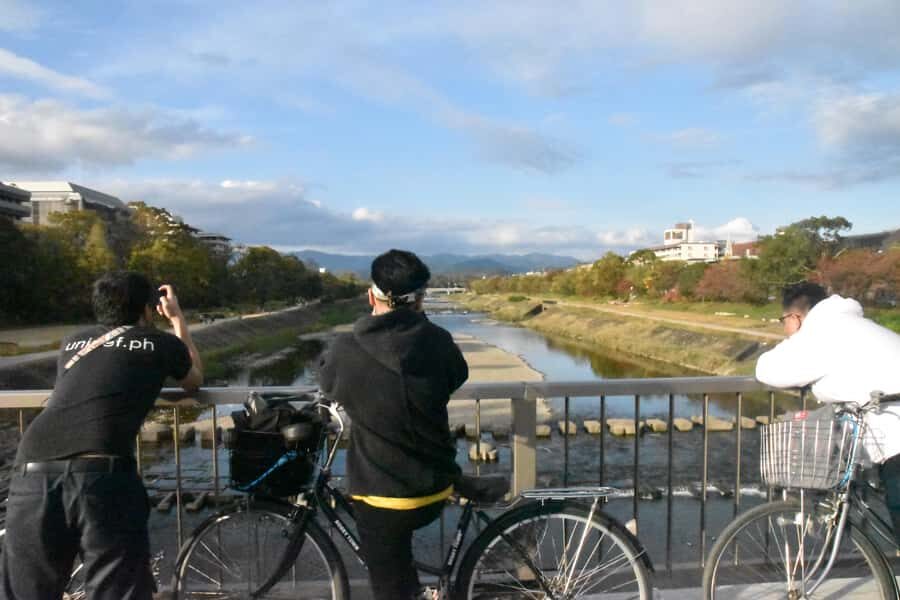
One of the most memorable stretches comes later when you arrive at Shimo-gamo Shrine, a UNESCO World Heritage site. The key detail isn’t just the name—it’s the atmosphere. You get a more “primitive forest” feel, along with beautiful buildings that look like they belong to the landscape instead of sitting next to it.
This is where cycling really pays off. You reach the site with less friction than if you were trying to piece together transit and walk segments. And you arrive with an energy that’s not too exhausted. You’re ready to slow down once you’re there.
If you’re traveling with kids who can handle biking (this tour isn’t for kids under 9), this shrine part is often a sweet spot. It’s visually interesting, calmer than a busy street, and it makes the day feel like more than just moving through Kyoto.
The River Junction and the Lighted Return
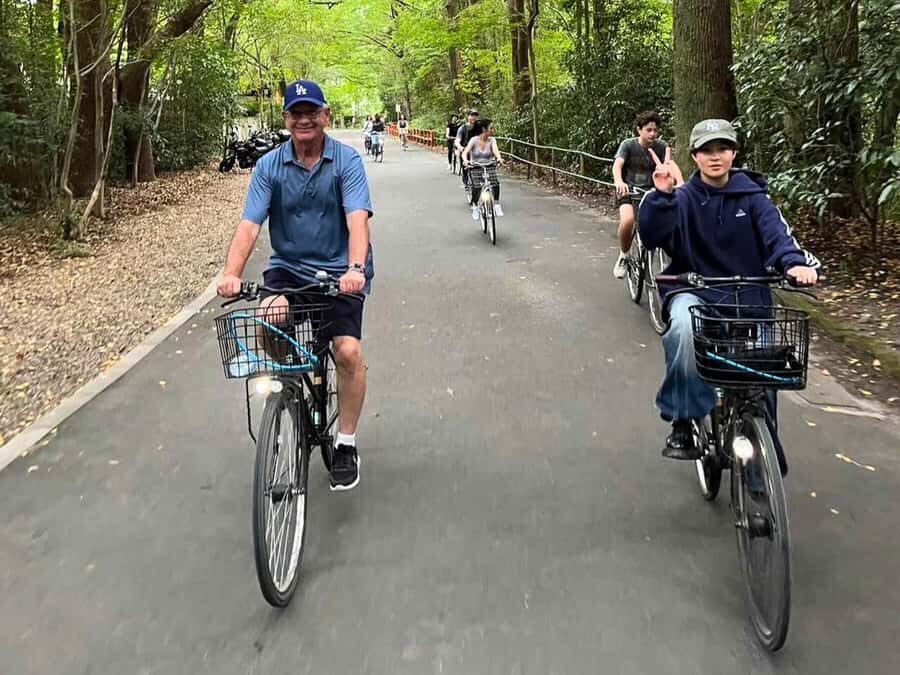
After the shrine visit, you ride down toward a unique river junction point. Then the tour follows a scenic riverside back route described as lighted-up. That’s a great moment for photos, but also for mood. You’re no longer in pure sightseeing mode—you’re transitioning into atmosphere time.
Practical note: since it’s an evening-feeling section, bring your camera and keep water handy. Also, don’t underestimate how tired your hands can get if you’re gripping too tightly. Relax your shoulders and let the bike do the work.
Gion or Pontocho on Foot: Geisha Culture Without the Confusion
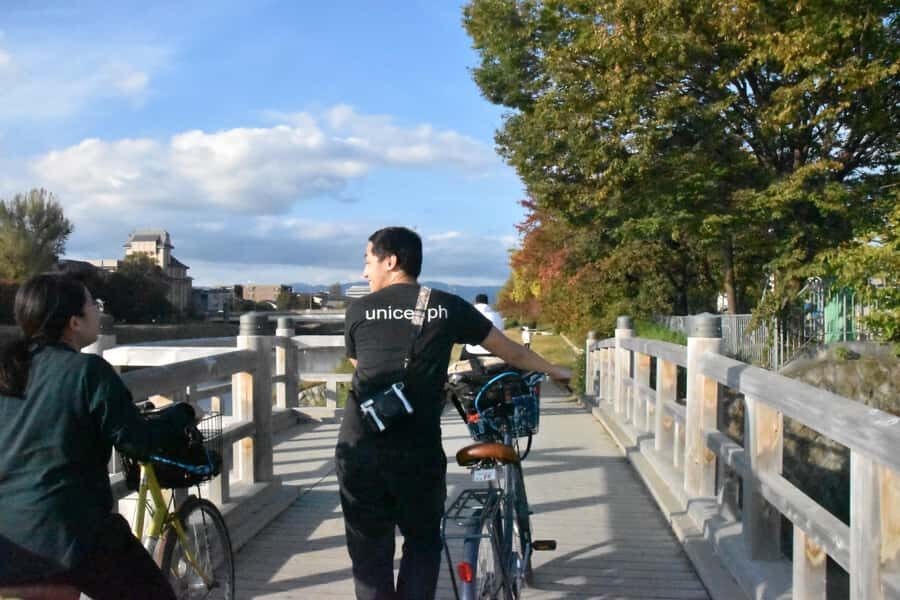
Once the bikes are back, you switch to a 30-minute town walk through the entertainment district of Gion or Pontocho. This is a smart choice because the area works better on foot. Narrow streets, small details, and pedestrian-only vibes mean you’d never get the same feeling from cycling.
Flower towns and photogenic streets
You’ll visit main “flower town” areas (the places connected to geisha culture) and see streets that are genuinely photogenic—because the street design and buildings were made to be experienced slowly.
Geisha culture explained clearly
Here’s where the guide adds real value. You’ll get an explanation of the geisha system in a way that’s easy to understand, not a complicated lecture. And if you’re lucky, you may spot a geisha. That’s not something you can schedule, but having the guide point out what to look for helps you stay respectful and not turn it into a spectacle.
A small consideration: Gion and Pontocho are popular areas. Even with a guided route, you’ll still feel the district’s buzz. If you’re craving total quiet, this is the “Kyoto show” part of the day, not the “hidden-from-everyone” part.
Restaurant and bar recommendations that match your mood
During the walking portion, the guide shares restaurant and bar ideas based on what you want. This is more useful than generic “try this famous place” advice because it helps you turn the tour into a night plan. Want something casual? Something local? You’ll get options aligned to that.
Snack and Tea Break: A Small Inclusion That Feels Like Kyoto
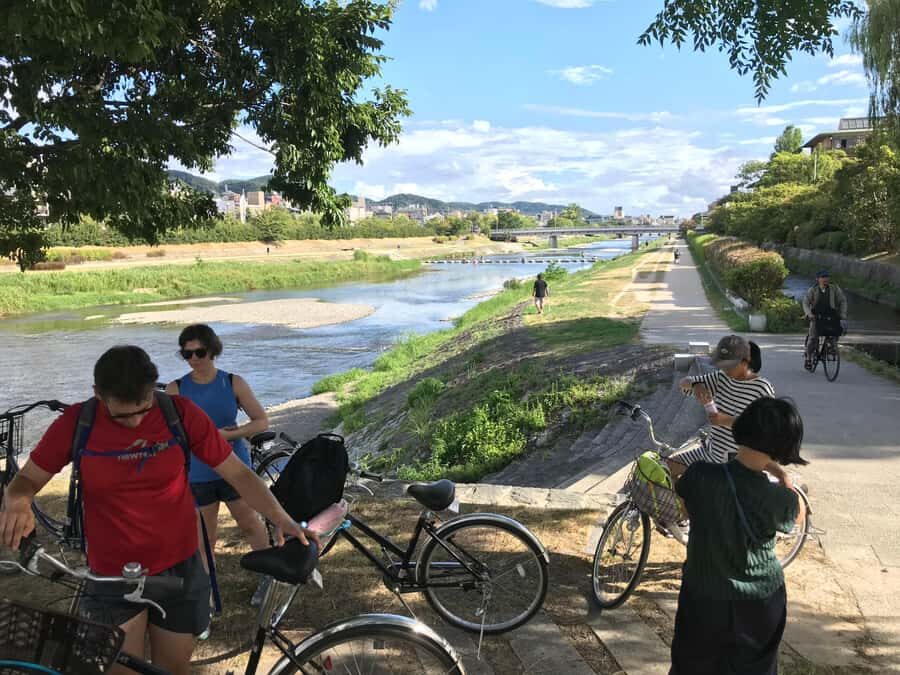
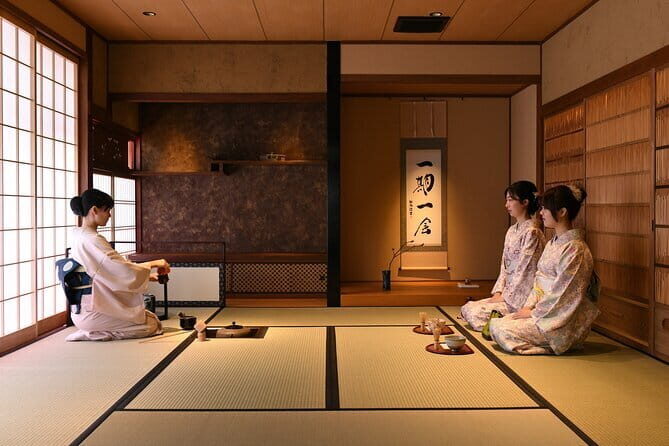
The tour includes Japanese sweet snacks at a traditional snack shop, plus Japanese tea. These pauses matter because they give you a break from riding and sight-hopping. Also, Kyoto isn’t just temples and streets—it’s flavor, too.
One of the nicest parts is that this snack-and-tea stop fits the rhythm of the tour. It doesn’t feel like a forced stop designed to sell you something. It feels like you’re taking part in daily local culture for a short moment.
Price and Value: Is $73 Worth It?
At $73 per person, you’re paying for more than transportation. You’re getting:
- A rental bike
- Guided route planning through multiple distinct areas
- Included snacks and tea
- Entrance fees for temple or shrine as an alternative plan when it rains
You’re also getting a two-mode format: a long cycling segment plus a short walking segment. That mix helps you cover distance while still letting you slow down for areas like Gion and Pontocho.
The only extra cost that might come up is for an electric bike request: it’s 1,000 yen payable on the spot. If you’re worried about biking energy, ask in advance mentally whether you’ll want help. But if you’re comfortable riding a normal bike, you can keep it simple and avoid the extra fee.
Rain or Shine: How This Stays Practical
This tour runs rain or shine. The important part for your planning is that entrance fees can be covered as an alternative plan in rain. So the day doesn’t turn into “nothing but weather.” You’ll still have structured stops, and your guide will adjust so the time stays meaningful.
What to bring to make rain or heat easier:
- Comfortable shoes (you’ll walk after the bike)
- A camera
- Water
- Weather-appropriate clothing
Also, since luggage or large bags aren’t allowed, pack light. Think day-trip small: a crossbody or small backpack you can keep close.
Who This Tour Is Best For (and Who Should Skip It)
This tour is aimed at people who want a smoother way to see Kyoto without racing around on foot.
It’s a great match if:
- You want family-friendly sightseeing (it’s not for kids under 9)
- You can ride a bike comfortably for several hours
- You like a mix of big landmarks and calmer residential/shrine areas
- You’d enjoy the cultural explanation during the Gion walk
It’s not a match if:
- You can’t ride a bike
- You’re traveling with small kids under 9
- You have pets with you (pets aren’t allowed)
- You need to carry luggage or large bags
One more practical note: the experience is offered in English, which makes the “why this place” explanations easier to absorb.
Should You Book Cycle Kyoto’s Hidden Gems & Gion Stroll?
If your Kyoto trip plan includes both “must-see” sights and at least a little time for quieter corners, I’d book this. The value is strongest when you want variety without logistical stress: riverside cycling early, UNESCO shrine atmosphere mid-tour, and a calmer walking phase in Gion with simple cultural context.
The decision comes down to one question: can you ride a bike for about 3.5 hours and enjoy being outdoors even if the weather shifts? If yes, this tour is a very efficient way to see Kyoto beyond the standard loop, without turning it into a full-day scramble.
FAQ
How long is the tour?
The bike ride takes about 3.5 hours, followed by a 30-minute town walk.
How much does it cost?
The price listed is $73 per person.
Where do we meet for the tour?
Meet at the Kneeling man statue at the southeast corner of Sanjo Ohashi intersection. The tour ends back at the same meeting point.
Is this tour good for families?
Yes. It’s described as perfect for families, but it is not suitable for children under 9.
Can I join if I can’t ride a bike?
No. The tour is not suitable for people who can’t ride a bike.
What’s included in the price?
Included are the rental bike, Japanese sweet snacks at a traditional snack shop, Japanese tea at the same snack shop, and any entrance fees for a temple or shrine if it becomes an alternative plan during rain.
Do I need to pay extra for an electric bike?
If you request an electric bike, there is an extra 1,000 yen fee, paid on the spot.
What should I bring?
Bring comfortable shoes, a camera, water, and weather-appropriate clothing.