REVIEW · TOKYO
Full Day Tour at Mt. Fuji, Onsen, Lake Kawaguchi and Yamanaka
Book on Viator →Operated by Hotel Takitei · Bookable on Viator
Mt Fuji in one day means you need less logistics. This tour bundles round-trip transport, scenic stops around the Fuji Five Lakes, and a plan that keeps you moving without the stress of trains and transfers. I like that it’s structured enough to feel efficient, yet flexible in how you spend your time at the lakes.
I especially like the simple ticketing and meeting setup—you use a mobile ticket and you’ll meet your guide who holds a yellow Gogoday flag at the meeting point. Another big plus is the day’s pacing: you get dedicated time at each highlight, with bottled water included to keep the long drive from feeling like a chore.
One thing to watch: day-tripping around Fuji and Hakone is weather- and traffic-dependent. If crowds, road delays, or cloud cover hit, you may end up with shorter time at stops, and Mt Fuji visibility isn’t guaranteed.
In This Review
- Key things I’d watch before you go
- A Fuji day trip that handles the hardest part: getting there
- Seasonal planning: Arakurayama Sengen Park vs Mt Fuji 5th Station
- Arakurayama Sengen Park: a strong viewpoint when Mt Fuji 5th Station isn’t in the plan
- Mt Fuji 5th Station: what 2,305 meters feels like (and what to accept)
- Lake Kawaguchiko: the Fuji Five Lakes stop with easy scenic choices
- Lake Yamanaka: swan lake atmosphere plus an onsen or a boat ride
- Transport reality check: long roads, group limits, and comfort
- Guides and meet-up: the yellow flag method (and named examples)
- Price and value: what $49.97 covers, and what costs extra
- Who this tour suits best (and who should tweak the plan)
- Should you book this Mt Fuji, onsen, and lakes tour?
- FAQ
- Which stops do you visit, depending on the season?
- Are boat and hot spring fees included?
- Is lunch included?
- Can I do the boat cruise and the hot spring at Lake Yamanaka?
- What if I can’t see Mt Fuji due to weather?
- How do I find the guide at the start?
- Can I cancel for a full refund?
Key things I’d watch before you go
- Seasonal swap: you either go to Mt Fuji 5th Station (Apr 26–Sep 30) or Arakurayama Sengen Park (Oct 1–Apr 25)
- You choose at Lake Yamanaka: boat ride or hot spring time, not both
- Budget for extras: boat and onsen have separate entrance fees, plus lunch isn’t included
- Meeting is visual: your guide holds a yellow Gogoday logo flag—arrive about 15 minutes early
- Comfort varies: one past guest noted a carpool-style older van with tight legroom for taller people
- Expect flexibility: weekend/holiday traffic can push the schedule past 8 p.m., and stop times may be adjusted
A Fuji day trip that handles the hardest part: getting there
If you’ve ever tried to DIY Mt Fuji from Tokyo, you know the annoying parts: timing, transfers, and the sheer time spent coordinating rides. This tour cuts that work out for you with an air-conditioned vehicle plus pickup and drop-off from a designated point. You sit back while a professional driver does the long stretches, and you get bottled water to keep the day from feeling dry and frantic.
The other reason I like this style of tour is that it’s built for real sightseeing. You’re not stuck in one long scripted lecture. Instead, you get blocks of time where you can walk, take photos, and choose how you want to experience each stop—especially around the lakes where the views do a lot of the talking.
Value is a big part of the appeal here. At about $49.97 per person for a ~10-hour day, you’re paying for transport, guiding support, and a route that would be more time-consuming (and often more expensive) if you pieced it together yourself.
A few more Tokyo tours and experiences worth a look
Seasonal planning: Arakurayama Sengen Park vs Mt Fuji 5th Station
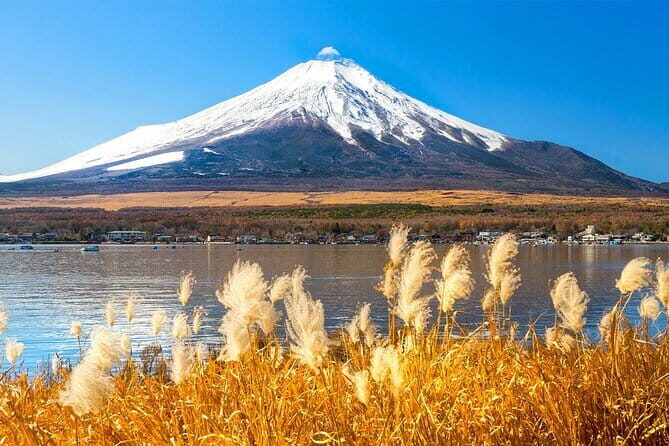
Japan’s seasons shape this itinerary. From Apr 26 to Sep 30, the plan includes Mt Fuji 5th Station. From Oct 1 to Apr 25, you swap that for Arakurayama Sengen Park instead.
That matters for your expectations. Mt Fuji 5th Station is about altitude and scale—you’re up at roughly 2,305 meters, where the mountain feels like it’s right on top of you. Arakurayama Sengen Park, on the other hand, is a viewpoint stop. It’s listed as a popular photo spot in its own right, and it tends to fit the cooler months when the mountain area changes how people travel.
If you’re flexible with travel dates, you’ll still get a great day of scenery either way. Just pick the season that matches what you want most: altitude at the mountain, or a viewpoint and surrounding park experience.
Arakurayama Sengen Park: a strong viewpoint when Mt Fuji 5th Station isn’t in the plan
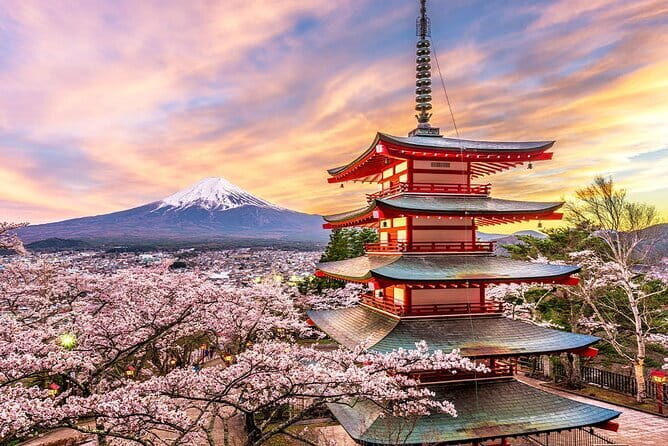
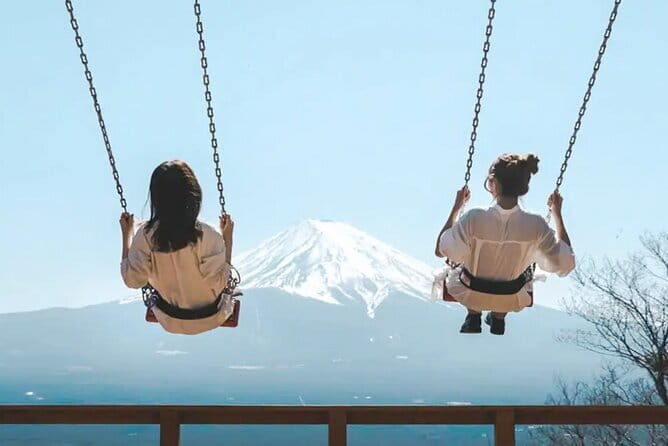
When Arakurayama Sengen Park is the mountain stop, the goal is simple: get a vantage point and enjoy the atmosphere. You’ll have about 1 hour here, and the park is specifically associated with Mount Fuji photography—so you’re likely to see people clustering at the lookouts for that classic view angle.
This stop also tends to feel more relaxed than higher-elevation sites. You can wander a bit, take photos at your pace, and use the hour to breathe before you head into the lake area. The time window is short enough that you won’t feel stuck, but long enough that you can actually enjoy the walk and not just snap one quick picture.
The one practical consideration: scenic spots near Fuji can get crowded, especially around peak travel seasons. If you want photos with fewer people in them, plan to arrive ready to move quickly once you’re there.
Mt Fuji 5th Station: what 2,305 meters feels like (and what to accept)
For Apr 26 through Sep 30, you go to Mt Fuji 5th Station for about 40 minutes. At this elevation, you’re clearly higher up than you’d be from the Tokyo plain, and the mountain’s presence feels different—more like a looming landmark than a distant postcard.
It’s also the kind of stop where timing and weather matter. The tour specifically notes that visibility of Mt Fuji cannot be guaranteed, and conditions can shift fast. That doesn’t make the stop pointless; it just means you should keep your plan flexible in your head. Even if the view is partly blocked, you’ll still get the experience of being at the halfway point of Japan’s highest peak.
Because the stop time is relatively short, I’d treat it like a focused breather rather than a full exploration. Take your photos early, do a quick circuit, and then enjoy the moment rather than worrying that you’ll miss something big.
Lake Kawaguchiko: the Fuji Five Lakes stop with easy scenic choices
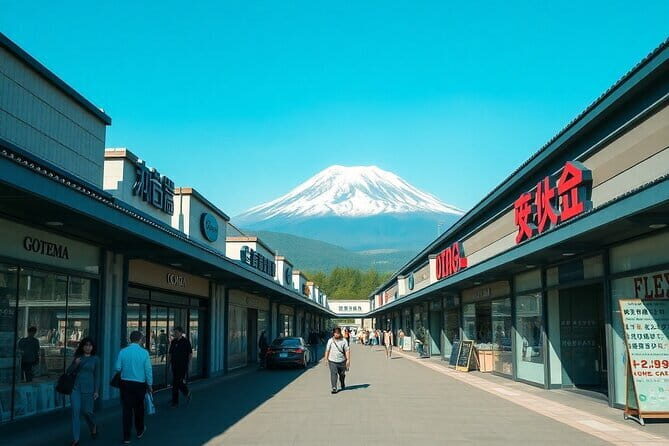
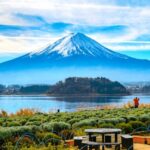
At Lake Kawaguchiko, you get about 1 hour to explore the largest of the Fuji Five Lakes. This is where the day starts to feel slower in a good way. Instead of “climb or drive,” you’re choosing how to spend time around the water—walks, views, and seasonal highlights.
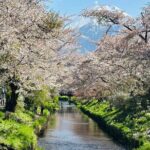
You’ll also have an option tied to Oishi Park, which the tour description connects with seasonal scenes like cherry blossoms. The practical takeaway: your exact photo moments may change by the month, but the core experience stays consistent—open lake views with Mt Fuji as the headline when visibility cooperates.
One thing to keep in mind: Lake-area stops are great for photos, but they can become crowded too. If you dislike dense crowds, aim to spend more time on slower side paths and viewpoints rather than only the most obvious spots.
A few more Tokyo tours and experiences worth a look

Lake Yamanaka: swan lake atmosphere plus an onsen or a boat ride
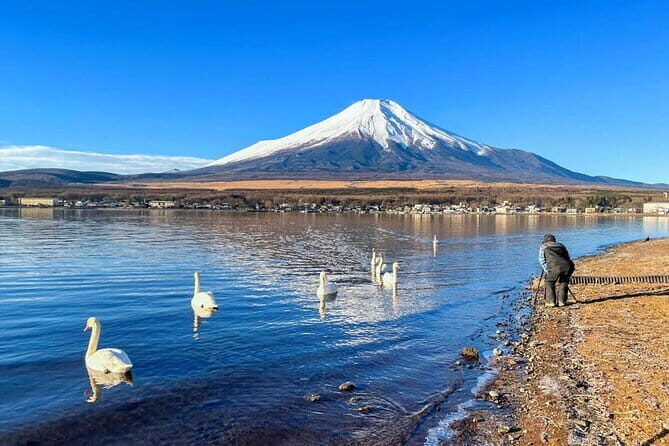
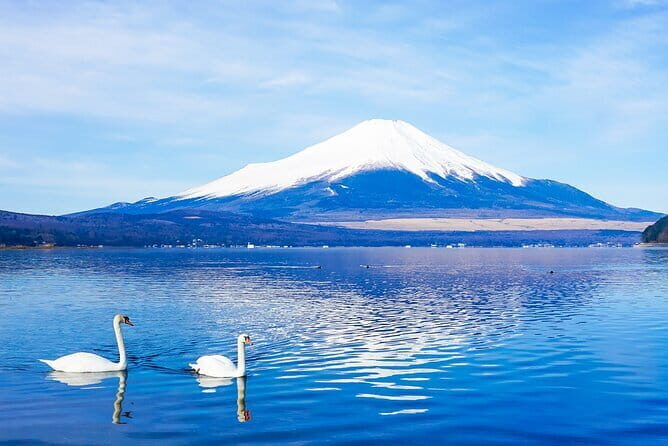
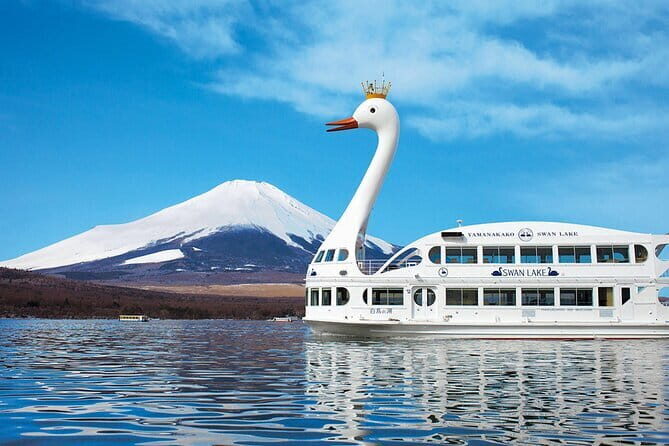
This is the stop that feels like a payoff. Lake Yamanaka is nicknamed Swan Lake in winter for the visitors that show up then, and you’ll get about 1 hour 10 minutes here.
The best part is that you can choose how you want to end the day:
- a scenic swan-shaped boat cruise (boat ticket is not included; listed at $8 per person), or
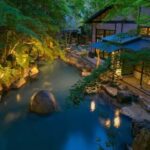
- a hot spring (onsen) experience (onsen fee is not included; listed at $8 per person).
Here’s the rule that affects your planning: due to time constraints, you can only do one at Lake Yamanaka, not both. So if soaking in hot water is your priority, pick onsen. If you want the motion and the water views, go for the cruise.
Also, plan around how the day has been running. If earlier stops ran long because of traffic, you might have less room for detours. The tour notes that stop times can be shortened or adjusted in peak periods, so your best strategy is to keep your Lake Yamanaka plan simple and decisive.
Transport reality check: long roads, group limits, and comfort
A 10-hour day trip means you’ll feel the ride, even when it’s comfortable. You’re in an air-conditioned vehicle with a professional driver, and the tour includes bottled water and pickup/drop-off from a designated point. That said, vehicle comfort can still vary depending on the group size and the vehicle type.
One past guest specifically noted that the ride wasn’t great and that the van felt old, with legroom that wasn’t reasonable for someone around 5 ft 8 in and taller. So if you’re tall or you hate cramped seats, I’d set expectations now. Bring whatever helps you travel comfortably (a light layer, neck pillow if you use one, and something to keep your legs moving during longer stretches).
Group size is capped at 40 travelers, which usually helps prevent chaos. Still, the schedule can flex. The tour warns that weekend and holiday traffic may delay the return time past 8 p.m., and stop durations may be shortened or adjusted. Your guide and driver overtime fees are covered, but the day may run late if roads are jammed.
Guides and meet-up: the yellow flag method (and named examples)
The meet-up process is one of those small details that makes or breaks a day. Your guide will hold a yellow flag with the Gogoday logo at the meeting point. You just tell them the name you used when booking, and you join the group. The tour asks you to arrive about 15 minutes early, and it’s no refund for late arrivals or no-shows.
On the guiding side, the tour provides multilingual explanations and is set up as a shared group with guests from various countries. That’s a good fit if you want context without needing a private, one-on-one lecture.
From past experiences with this operator, you might run into guides such as Damon, BC, Mario, or Laner—all named by guests as being fun, organized, and helpful. In other words, you’re not relying on silence and random wandering; there should be some real guiding support as you move between stops.
One balanced caution: a negative comment also mentioned limited English depth from one driver and that some historical/cultural info wasn’t provided. So if you want a lot of detailed Mount Fuji history, treat this as a sightseeing + logistics day rather than a full academic tour.
Price and value: what $49.97 covers, and what costs extra
The base price—about $49.97 per person—is attractive for a day trip that includes round-trip transport, bottled water, a multilingual guide, and a pro driver. In Tokyo, once you add private transfers and paid guiding support, you can easily end up with a much higher total.
But you should budget for the add-ons that are clearly listed:
- Boat ride at Lake Yamanaka: about $8 per person (not included)
- Onsen at Lake Yamanaka: about $8 per person (not included)
- Fuji Shibazakura Festival entrance: about $8 per person (not included)
- Lunch: not included
Since you can only pick one of the Lake Yamanaka activities, it’s helpful to decide early. If your “must do” is onsen, add $8. If it’s a cruise, add $8. Either way, the paid extras are small compared with what the transport+full-day structure covers.
One more practical money tip: the tour recommends bringing some cash because some scenic spots and restaurants may accept cash only. This is common in outlying areas, and it saves time when you’re hungry.
Who this tour suits best (and who should tweak the plan)
This fits best if you want:
- a mostly guided day with clear stop times,
- a transport solution without managing trains and connections,
- and enough free time at the lakes to walk and take photos at your own pace.
It’s also a good choice for families and larger groups because the tour notes multiple vehicle sizes and a group cap of 40.
You might choose a different option if:
- you’re extremely sensitive to cramped seating on long rides,
- you expect deep, continuous commentary throughout the entire route,
- or you hate the idea that schedule adjustments happen during peak traffic or bad weather.
Also, if hot springs are important, do check the tattoo policy. The tour states that if your tattoo is smaller than a palm and there’s only one, you may cover it with a tattoo sticker. If it’s large, entry into Japanese hot springs is not permitted.
Should you book this Mt Fuji, onsen, and lakes tour?
I’d book it if you want a smooth day trip that maximizes Mt Fuji area highlights without you playing transportation chess all day. The biggest wins are the round-trip logistics, the seasonal Fuji planning, and the fact that you finish with a real choice at Lake Yamanaka—boat or onsen.
I would hesitate if you’re relying on perfect Mt Fuji views or if you’re picky about vehicle comfort and want a lot of historical storytelling. The tour itself openly warns about traffic delays and visibility changes, so your enjoyment will match your flexibility.
FAQ
Which stops do you visit, depending on the season?
From Apr 26 to Sep 30, you visit Mt Fuji 5th Station. From Oct 1 to Apr 25, you go to Arakurayama Sengen Park instead.
Are boat and hot spring fees included?
No. The boat ticket is listed at $8 per person, and the onsen entrance fee is also $8 per person. Both are not included in the tour price.
Is lunch included?
No. Lunch is not included, so plan to cover it yourself during the day.
Can I do the boat cruise and the hot spring at Lake Yamanaka?
No. Due to time constraints, you can choose either the boat ride or the hot spring experience, but not both.
What if I can’t see Mt Fuji due to weather?
Visibility is unpredictable. The tour notes that Mount Fuji visibility cannot be guaranteed, so you should be prepared for weather changes.
How do I find the guide at the start?
Your guide holds a yellow flag with the Gogoday logo at the meeting point. Arrive about 15 minutes early, and tell the guide the name you used when booking.
Can I cancel for a full refund?
Yes. You can cancel up to 24 hours in advance for a full refund. If you cancel less than 24 hours before, the amount paid won’t be refunded.