REVIEW · HIROSHIMA
Hiroshima:Guided Virtual Tour/PEACE PARK TOUR VR
Book on GetYourGuide →Operated by TABIMACHI-GATE HIROSHIMA CO.,LTD · Bookable on GetYourGuide
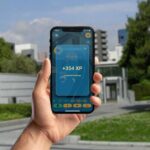
Some places hit you with facts; this one hits you with perspective. The Hiroshima Peace Park VR experience uses a live English guide and VR scenes based on testimonies to help you “see” Hiroshima before, during, and after August 6. What I love most is the way the guide—examples include Yoko Shimada, Kazuko, and Hiroshi—turns the visit into an active conversation, not a one-way lecture. A fair consideration: it’s a small VR group tour, so you’ll share the experience with up to 6 people and the timing can be strict if you’re late.
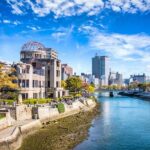
The flow is simple: you start at the Peace Park Rest House, walk key spots like the Atomic Bomb Dome and the Aioi and Motoyasu Bridges, then the headset work lands those locations inside a timeline. I also like that the experience openly connects the shrinking number of hibakusha stories to why this kind of interpretation matters today—so the memorial doesn’t stay frozen in the past. The emotional weight is real, and if you’re uncomfortable with sober historical content, plan for a slower, steady pace.
In This Review
- Key Highlights You’ll Feel Fast
- Hiroshima Peace Park VR With a Live Guide: What Makes It Different
- Price and Value: Is $32 a Good Deal?
- Meeting at Hiroshima City Peace Memorial Park Rest House: Simple Logistics
- The 80-Minute Rhythm: How the Tour Flows
- Stop 1: Hiroshima Peace Park Rest House and Getting Oriented
- Stop 2: Atomic Bomb Dome Through VR Reality
- Stop 3: Aioi Bridge (T-Bridge) and the Sense of Place
- Stop 4: Motoyasu Bridge and the Recovery Story
- Return to the Rest House: Reflection and Closing Dialogue
- Rain, Group Size, and the VR “Short Version” Reality
- Who This Tour Fits Best (and Who Might Want Something Else)
- The People Factor: Guides Make This Tour
- Should You Book This Hiroshima Peace Park VR Tour?
- FAQ
- Where is the meeting point?
- How long is the tour?
- What does the price include?
- Is food included?
- How many people are in the group?
- What language is the tour offered in?
- What if I’m late?
- What happens if it rains?
- Can I store luggage at the Rest House?
- Is this tour private?
Key Highlights You’ll Feel Fast

- A local Hiroshima English guide leads fieldwork-style questions and discussion, not just narration
- VR scenes tied to hibakusha testimonies bring Hiroshima’s cityscape, August 6, and recovery into focus
- You visit major Peace Park landmarks in a logical walking loop, including the Atomic Bomb Dome and bridges
- Small group size (max 6) keeps the conversation human-scale
- Rain or shine format with a short VR option if weather is heavy
Hiroshima Peace Park VR With a Live Guide: What Makes It Different

Hiroshima Peace Park can feel like two things at once: a beautiful memorial space and a hard-to-process set of events. This tour adds a third layer by pairing the real-world walk with VR renderings that map to what atomic bomb survivors described and what photos show from 1945. The result is not “entertainment.” It’s more like a guided field exercise where you keep one eye on the present and the other on the past.
One reason it works is the guide’s role. From what I’ve seen in the way guides like Yoko Shimada and Hiroshi are described, the best part isn’t only the information—it’s the back-and-forth. You’re encouraged to ask questions and respond to prompts along the route. For many visitors, that changes the tour from a quiet stare into a conversation that lasts longer than the 80 minutes.
Another reason I think it’s strong value: you’re not paying for VR alone. You’re paying for the combination—VR goggles rental plus an English-speaking guide who helps translate difficult material into something you can understand without flattening it. At $32 per person for an 80-minute, guided, headset-included experience, that pairing is usually where the “worth it” lives.
You can also read our reviews of more guided tours in Hiroshima

Price and Value: Is $32 a Good Deal?

Let’s talk value in practical terms. You’re paying around $32 for a guided English tour plus VR goggles rental. That’s important because VR hardware and guided interpretation both cost money to run well, especially when you keep groups small (up to 6). You’re also spending time walking between major Peace Park sites, which many self-guided visits skip—yet the guide’s presence is what makes the connections click.
You’ll also save yourself from the headache of figuring out how to “stage” VR moments yourself. Instead of showing up and trying to match your own mental timeline, you get stops planned so the VR headset work aligns with what you’re physically standing near. That structure matters when history is heavy and your attention is scattered.
What’s not included is also clear: transportation to the meeting place and food and drinks. If you’re budgeting your day in Hiroshima, plan those separately. But for the core experience—English guide, VR headset rental, and the timed Peace Park route—$32 is pretty reasonable.
Meeting at Hiroshima City Peace Memorial Park Rest House: Simple Logistics

You’ll meet at the Hiroshima City Peace Memorial Park Rest House, at the tourist information counter on the first floor. The organizer asks you to arrive at least 5 minutes before your reservation time. That isn’t just bureaucracy—when VR is involved, the timing has to work so everyone’s headset moments line up.
Two timing rules are worth taking seriously. If you don’t arrive 10 minutes after the start time (not later than 10:40 a.m. as stated), you won’t be able to join. And if there’s a delay, you may get a shortened VR version, especially if weather forces adjustments.
One small heads-up: the Rest House doesn’t offer luggage storage inside the building. If you’re arriving with bags, plan to carry them or store them elsewhere before you meet.
The 80-Minute Rhythm: How the Tour Flows

This isn’t a long marathon tour. It’s a focused loop designed to fit into an 80-minute window with guided walking between key Peace Park points. You’ll start with a short guided introduction and move into the main landmark sequence, with VR moments layered in at stops along the way.
The tour is live guided in English, and the format includes audio (also in English). The small group size—max 6—means you’re more likely to get direct answers from your guide and actually hear each other when questions come up.
If you’re the type of visitor who hates being rushed, this tour may still feel paced. But the structure is intentional: it gives you a sequence to hold onto while the VR timeline re-creates what the area looked like before the bombing, what the August 6 aftermath felt like, and how the city rebuilt.
Stop 1: Hiroshima Peace Park Rest House and Getting Oriented

You begin at the Peace Park Rest House, and you get a guided walk and sightseeing for about 20 minutes before the main landmark leg. Think of this as mental setup. The guide frames what you’re about to see and helps you understand how the VR timeline will connect to the physical space.
I like tours that do orientation well, because Peace Park is visually peaceful. That can lull your brain into treating it like a park first and a memorial second. A good introduction gets you ready to read the sites as evidence—of human loss, survival, and decision-making that followed.
This first segment is also where you’ll get into conversation mode. Multiple guides are praised for asking field questions and encouraging dialogue. That matters because you’ll want a way to process what you see once the VR headset switches on.

Stop 2: Atomic Bomb Dome Through VR Reality
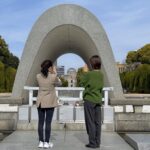
Next comes the Atomic Bomb Dome, with about 20 minutes for guided viewing and walking. In a self-guided visit, it’s easy to treat the Dome as a powerful photo location. With this tour, it’s more than a landmark. VR helps you connect the building and surrounding area to how Hiroshima looked before August 6 and how the bombing changed everything.
The tour’s VR is based on survivor testimony and photographs from the time. You’re transported back in time, then carried forward into the city’s recovery. That doesn’t replace the memorial’s meaning—but it helps your brain stop treating 1945 as a distant story and start treating it like something that happened in the exact space you’re standing in.
One key emotional detail from the way guides are described: you may hear context tied to real hibakusha accounts. For example, Lori’s review notes how the guide began with the story of Eizo Nomura, an A-bomb survivor who was reported to be about 170 meters from the hypocenter. That kind of specific framing makes the Dome feel less abstract.
Stop 3: Aioi Bridge (T-Bridge) and the Sense of Place

After the Dome, the tour moves to Aioi Bridge (T-Bridge), where you get around 15 minutes of guided sightseeing and walking. Bridges are easy to overlook in memorial tours, but they’re perfect for this format. They’re literal points of connection—between sides of the river, between locations, between past and present.
In this tour, VR is used to re-create the cityscape and the aftermath timeline, so the bridge becomes part of the story rather than a background element. You’re likely to notice how a familiar modern scene can become unrecognizable when the headset overlays the past.
This stop is also a good place to ask your guide questions—especially if you’re trying to understand how the city recovered and changed. The guide’s role is to help you connect what you’re seeing to survivor descriptions, not just to list facts.
Stop 4: Motoyasu Bridge and the Recovery Story
The final main viewing stop is Motoyasu Bridge, again with about 15 minutes for guided sightseeing and walking. If Aioi feels like a transition point, Motoyasu often feels like a wrap-up of the route’s geography: you’re still in the Peace Park area, but the tour pushes you toward the recovery narrative.
VR helps here by moving from destroyed reality into the city’s rebuilding. That’s important because memorial tourism can sometimes stop at the moment of harm. This experience keeps going long enough to show what happened next—how the community lived, rebuilt, and carried forward the meaning of peace.
Kazuko is specifically praised for starting with a hibakusha story (Eizo Nomura) and then continuing the VR experience along that same personal impact theme. That approach makes the recovery part feel grounded in human outcomes rather than vague optimism.
Return to the Rest House: Reflection and Closing Dialogue

You head back to the Peace Park Rest House to finish. When you come back, the tour wraps with time to talk through what you thought of each other and what the experience meant to you. That last discussion piece is rare in many guided tours, and it’s one of the reasons this format lands well.
I also think this closing dialogue is a practical way to process heavy material. Once the VR sequence ends, you still have questions—about how survivors explained what happened, how Hiroshima changed, and what peace means beyond slogans. A guide-led conversation lets you turn raw emotion into understanding.
The tour’s framing matters too: it notes that the number of hibakusha testimonies has gradually decreased over nearly 80 years since the war. That isn’t presented as a scare tactic. It’s presented as urgency: you’re participating in a way of keeping those memories understandable for people today.
Rain, Group Size, and the VR “Short Version” Reality
This experience runs rain or shine. If it’s raining heavily, you’ll still do the fieldwork in the Peace Park area, and then you’ll watch a shortened VR version for about 5 minutes at the Rest House after the field portion. That’s a key consideration if you booked expecting the full VR timeline.
Group size is limited to 6 participants, and the tour is not private, so you’ll share the experience with other visitors. The good news is that small group scale tends to keep the conversation manageable. The trade-off is that your questions and timing may be influenced by what others want to know.
Duration is listed at 80 minutes, and the route includes several walking segments. Comfortable shoes help. You’re not hiking up a mountain, but you are walking between major Peace Park sites.
Who This Tour Fits Best (and Who Might Want Something Else)
This is a good match if you want your Hiroshima visit to include more than a photo stop. You’ll probably appreciate VR history most if you like structure: a guided route, a timeline, and a chance to ask questions as you go. The fact that guides like Yoko Shimada and Hiroshi are praised for answering questions and bringing personal context from their families and surroundings is a strong signal that the human layer matters here.
It can be a good fit for couples, small families (depending on comfort with emotional content), and solo travelers who don’t want to do everything alone. If you’re visiting Hiroshima for the first time and want a focused, interpretive experience within 1.5 hours, this format is practical.
You might want to consider another style of visit if you’re sensitive to emotionally heavy history or if you strongly prefer fully self-paced sightseeing. This tour is paced, structured, and built around the gravity of the subject.
The People Factor: Guides Make This Tour
The guide is repeatedly the headline reason people feel satisfied. Yoko Shimada is praised for being kind and taking care to respond to questions. Hiroshi is praised for combining historical knowledge with personal stories from his family and environment, which adds texture beyond dates and locations. Kazuko is credited with beginning with Eizo Nomura’s survivor story and then linking it to the VR experience.
That matters because Hiroshima Peace Park can be overwhelming. A good guide helps you hold the story in your mind instead of just absorbing it for a moment. Here, guides also facilitate dialogue along the way and end with an exchange about what you thought of each other, which turns a visit into a shared learning experience.
Should You Book This Hiroshima Peace Park VR Tour?
Book it if you want a guided Hiroshima Peace Park walk where VR is used as a meaning-making tool, not a gimmick. At $32 with English live guidance and VR headset rental, you’re paying for interpretation—especially the kind that connects survivor testimony to the exact places you’re visiting. If you prefer structured history with time for questions, this tour fits.
Skip or consider alternatives if you need total flexibility or you’re likely to arrive late. VR experiences are schedule-driven, and the tour notes you may miss participation if you’re too late. Also, if heavy rain is likely during your planned slot, keep in mind the VR may be shortened to about 5 minutes after fieldwork.
If your goal is to leave Peace Park with a clearer timeline and a deeper connection to what people lived through, this is one of the most direct ways to do it—walking the memorial landmarks while your guide connects them to survivor accounts.
FAQ
Where is the meeting point?
You meet at the Hiroshima City Peace Memorial Park Rest House, at the tourist information counter on the first floor.
How long is the tour?
The tour duration is listed as 80 minutes.
What does the price include?
The price includes VR goggles rental and an English-speaking guide.
Is food included?
No. Food and drinks are not included.
How many people are in the group?
The tour is a small group limited to 6 participants.
What language is the tour offered in?
The tour is offered in English, including audio.
What if I’m late?
You should arrive at least 5 minutes before your reservation time. If you do not arrive within 10 minutes after the start time (until 10:40 a.m.), you will not be able to participate.
What happens if it rains?
The tour runs rain or shine. If it is raining heavily, you will be able to watch a short version of the VR for about 5 minutes at the Rest House after the fieldwork in Peace Park.
Can I store luggage at the Rest House?
No. The Rest House does not allow luggage storage inside the building.
Is this tour private?
No. It is not a private tour, so you may share it with other customers.