REVIEW · HIROSHIMA
Hiroshima Peace & History: 3-Hr Private Walk with Local Guide
Book on Viator →Operated by Alex · Bookable on Viator
Shocking in three hours? Only if you’ve never had Hiroshima explained by a local. This private 3-hour walk keeps you moving through the city’s peace symbols without turning the day into a checklist, starting outside the busy Peace Memorial area and building context as you go. I like that the route includes both “before and after” Hiroshima, not just the famous centerpiece sites.
Two things I really liked: first, the calm, grounded opening at Shirakami Shrine before you step into the heavy museum-and-monuments mood. Second, the focus on clear storytelling at Peace Memorial Park—so you understand what you’re seeing (and why it matters) instead of just scanning plaques.
One consideration: this is mostly a walking experience in a solemn setting. If you’re sensitive to the subject matter or you prefer lots of breaks and slower pacing, ask Alex to soften the schedule within the 3 hours—and wear shoes you trust.
In This Review
- Key Things You’ll Notice on This Hiroshima Walk
- Getting Oriented: Shirakami Shrine and a City That Existed Before the Bomb
- Former Bank of Japan Hiroshima: A Survivor Building With Everyday Meaning
- The Historic Streetcar Ride: A Local Shortcut With Character
- Entering Peace Memorial Park: More Than Famous Photos
- The Hypocenter Monument and the Quiet Weight of Exact Location
- Atomic Bomb Dome: The Symbol You Need Context For
- Peace Bell: A Simple Moment That Can Feel Personal
- Children’s Peace Monument and Sadako Sasaki: The Cranes’ Real Meaning
- Cenotaph for the Atomic Bomb Victims and the Flame of Peace: Reading the Design
- Ending at the Peace Memorial Museum Entrance: Good Finish, Easy Next Step
- Price and Value: Is $162.59 Worth It for a Private 3 Hours?
- Timing and Pace: What 3 Hours Feels Like on the Ground
- What You’ll Get From Alex’s Style (and Why That Matters)
- Who Should Book This Peace & History Walk
- Should You Book This Hiroshima Peace Walk?
- FAQ
- FAQ
- How long is the Hiroshima Peace & History private walk?
- What’s the group size for this private tour?
- How much does the tour cost?
- Where does the tour start and end?
- What does the tour include?
- Is food included?
- Are tickets included for the stops in the park area?
- Does the tour end at the Peace Memorial Museum so I can keep going?
- What should I know about the Peace Memorial Museum hours?
- Is cancellation available if my plans change?
Key Things You’ll Notice on This Hiroshima Walk
- You start away from the big monuments, with Shirakami Shrine and the Former Bank of Japan to frame the city’s life beyond the bombing site.
- A short streetcar ride is included, which makes the tour feel like Hiroshima travel, not a guided museum line.
- Peace Memorial Park is handled with context, including quieter spots that many people miss when they rush.
- You get your “why” for each landmark, from the Hypocenter Monument to the Flame of Peace and Cenotaph layout.
- Kids’ memorials and Sadako Sasaki come through clearly, tied to the paper cranes you’ll see around the park.
- It ends at the Peace Memorial Museum entrance, so you can choose whether to continue on your own.
Getting Oriented: Shirakami Shrine and a City That Existed Before the Bomb
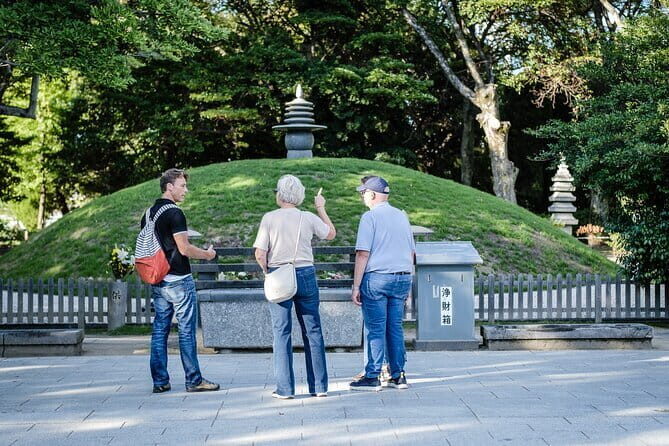
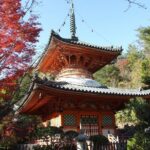
Most Hiroshima walking tours start where the headlines start. This one starts by doing something smarter: you begin at Shirakami Shrine, a quiet local spot that helps you understand that Hiroshima wasn’t only the atomic bombing. Even before you reach the memorial grounds, the atmosphere shifts from “tour mode” to “human scale.”
From there, you move into a city-history mindset. That matters because the Peace Memorial Park can feel overwhelming if you only know the big names. A shrine-and-city start helps your brain make room for what comes next.
You’ll also appreciate that admission to key stops on this walk is free, including the shrine. That keeps the day focused on learning and walking rather than constant ticket stops.
You can also read our reviews of more walking tours in Hiroshima
Former Bank of Japan Hiroshima: A Survivor Building With Everyday Meaning
One of the most interesting stops early on is the Former Bank of Japan Hiroshima. It’s a building that survived the atomic bombing, which makes it powerful on a visual level. But the value here is how the story connects to Hiroshima’s commercial life—what the city was doing, not just what happened.
When you step briefly inside (when it’s open), you get a sense of the texture of pre-1945 city life: the idea that this was a working place. That kind of context makes the later memorial symbolism hit harder, in a grounded way.
The trade-off? If you’re the type who wants maximum time at each site, the inside viewing window can feel short since the whole walk is about staying in motion for about 3 hours.
The Historic Streetcar Ride: A Local Shortcut With Character
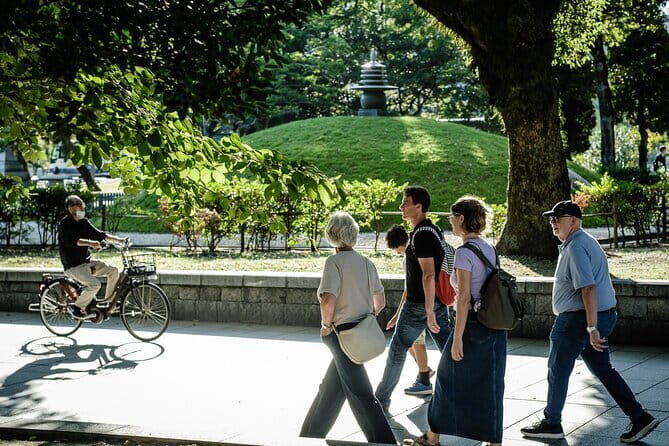
A short ride on Hiroshima’s historic streetcar is included. This is not just transport—it’s a reset button. Streetcar time helps you breathe between heavy stops, and you experience Hiroshima at a local speed instead of a “photo sprint.”
The best part is the practicality: the fare is included, and the ride helps keep the tour smooth without you having to figure out routes mid-day. It also signals something subtle: Hiroshima travel often mixes memory sites with normal city life, and this tour leans into that.
Entering Peace Memorial Park: More Than Famous Photos
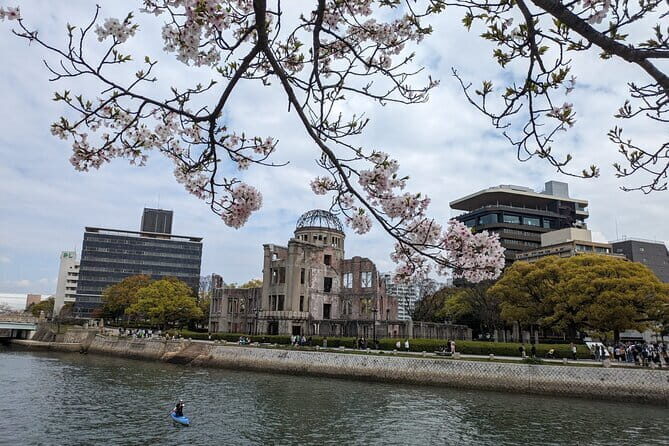
Once you’re in Peace Memorial Park, the walk stays focused but not rushed. You’ll hit the landmarks that everyone recognizes, like the Atomic Bomb Dome, but you’ll also get the missing links—what each piece is doing visually and symbolically.
This is where the guide (Alex, in the real-world examples) makes a real difference. The stories are aimed at clarity, not trivia. The goal is that when you look at the Dome, Flame, and Cenotaph, you understand the relationship between them instead of treating them like separate photo spots.
One reason this approach works: Hiroshima’s memorial design can feel abstract if you only know the headline. When you learn what you’re looking for, you start seeing the plan.
The Hypocenter Monument and the Quiet Weight of Exact Location
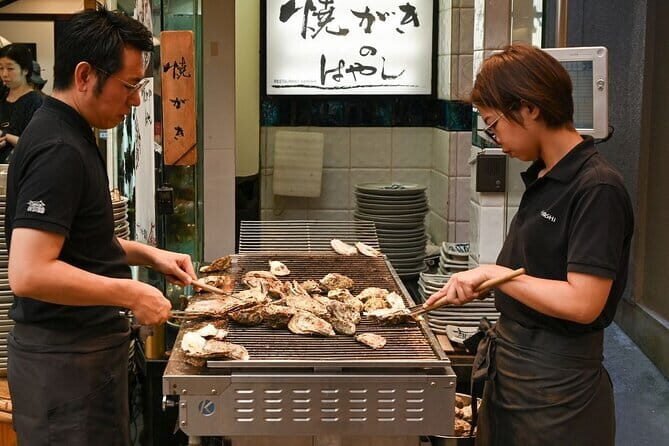
The Hypocenter Monument is easy to overlook if you move too fast through the park. On this walk, it gets its proper moment. The monument marks the exact spot beneath the explosion, and its simple design is part of the point—small, restrained, and direct.
I like this stop because it steers you toward accuracy. It’s not a dramatic sculpture moment. It’s a reminder that history happened at a precise place, and that exactness is part of the reason people treat this ground with care.
If you’re using the park as your main emotional stop, plan to slow your pace here. This is a good spot to take a breath and let the meaning land.
You can also read our reviews of more guided tours in Hiroshima




Atomic Bomb Dome: The Symbol You Need Context For
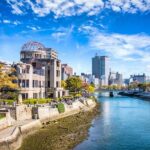
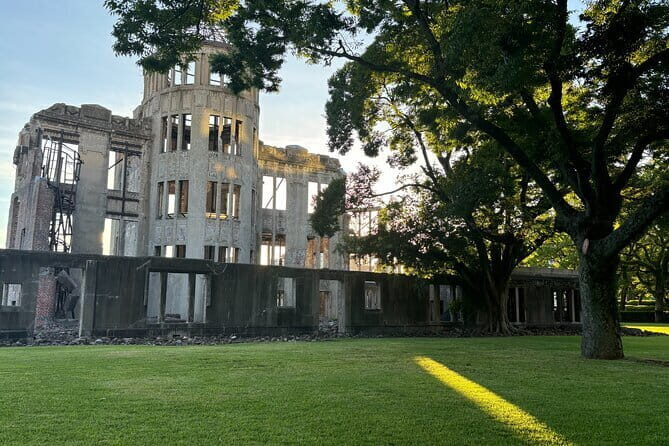
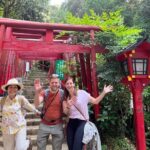
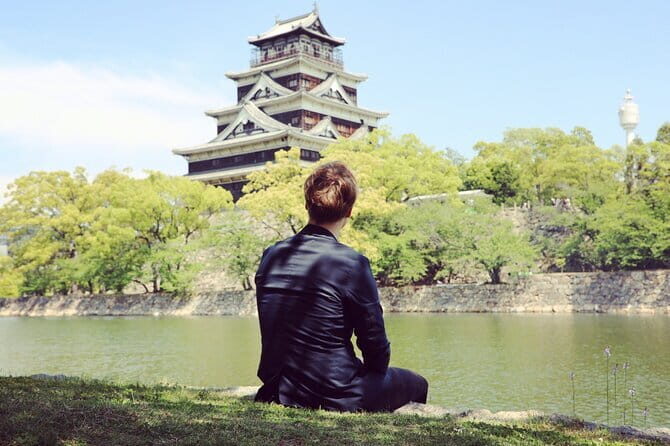
Yes, the Atomic Bomb Dome is the headline view. But the real value comes from how it’s framed. You discuss its history and why it’s preserved as it was after the bombing, and how it functions as a symbol of peace today.
The Dome can look like a standalone monument at first glance. With the context you get on this walk, it starts to feel like the center of a bigger story—one tied to the Flame of Peace and the Cenotaph in how they visually align with the memorial axis.
Practical tip: take a moment before photos. Look once, read the meaning you were given, then take your picture. Your photos will feel less like souvenirs and more like a record of understanding.
Peace Bell: A Simple Moment That Can Feel Personal
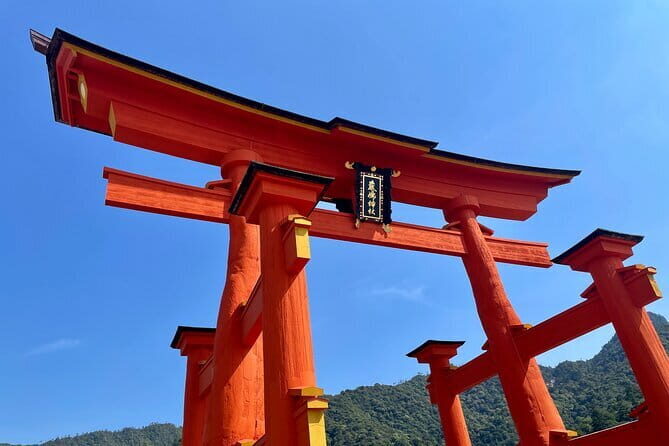
The Peace Bell is one of those features that’s easy to skip because it looks optional. During this walk, you’re given the chance to ring it if you wish. It’s described as a reflective moment shared by visitors from around the world.
I like that this stop isn’t forced. It gives you a choice: either participate for a personal gesture or just watch and absorb the atmosphere. Either way, it breaks the rhythm just enough to keep the walk from feeling like a straight line of seriousness.
Children’s Peace Monument and Sadako Sasaki: The Cranes’ Real Meaning
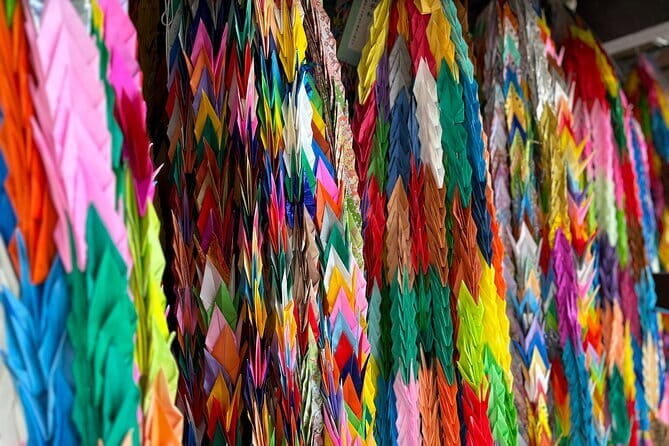
If you’ve seen paper cranes in the park, you’ll want to understand why they’re there. This walk includes a stop at the Children’s Peace Monument, which ties into the story of Sadako Sasaki and the meaning behind the cranes.
This part of the experience can hit hard, but it also brings the message into human focus. The story gives the symbol a face and a reason, so you’re not just looking at a display. You’re recognizing a way people chose to remember and to hope.
A quick note: this is also where the park’s meaning becomes broader than the adults’ story. The memorial design keeps returning to children because the event’s impact didn’t stay abstract.
Cenotaph for the Atomic Bomb Victims and the Flame of Peace: Reading the Design
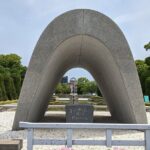
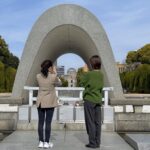
You pause at the Cenotaph and the Flame of Peace to connect the visual symbols to the Dome. Instead of treating them as separate stops, you learn how they relate—both visually and symbolically.
This is one of the best “guided understanding” moments on the whole walk. Park memorials aren’t always intuitive, especially if you arrive with only partial background. The guide helps you read the layout like an argument: the Dome as a physical mark, the Cenotaph as a focus, and the Flame as an ongoing reminder.
Ending at the Peace Memorial Museum Entrance: Good Finish, Easy Next Step
The tour ends along the symbolic line connecting the Dome, Flame, and Cenotaph at the entrance to the Peace Memorial Museum. That’s a good stop to end on because it leaves you options. If you want more detail, you can continue independently from there.
If you don’t want more museum time, you still leave with a clearer “map of meaning.” Either way, the timing works: you get context before the heavier information is optional, not forced.
Price and Value: Is $162.59 Worth It for a Private 3 Hours?
The price is $162.59 per group up to 6 for about 3 hours, with a mobile ticket. That sounds steep until you do the math—and compare it to the cost of public transport plus the value of having a focused local guide handle the meaning for you.
Here’s the value I see:
- Private time means you can ask questions, slow down at the spots that hit hardest, and adjust pacing.
- The guide includes a short streetcar ride (fare included), which reduces hassle.
- The route mixes big memorial landmarks with context outside the park, so you don’t just buy access—you buy understanding.
If you’re traveling solo, the per-person cost rises compared to a group tour. But for couples, small families, or small friend groups, it often feels like the smartest way to keep the day from becoming a stressful memory-marathon.
Also, the average booking window is about 60 days in advance, so planning ahead helps you lock in a time that fits your Hiroshima schedule.
Timing and Pace: What 3 Hours Feels Like on the Ground
This is an efficient route, not a long wandering day. You’ll spend time at key stops—some quick moments, some longer pauses—so you see the main storyline without losing the thread.
You’ll also appreciate that the tour is described as flexible and customizable. In real-world examples, Alex adjusted the pace to fit what the group wanted, even making space for a coffee chat for one group. That’s a small detail, but it matters: it keeps the walk from feeling like a rigid script.
Weather can matter in any Hiroshima outdoor walk. If rain shows up, wear something quick-dry and bring a small umbrella. One group noted staying dry, but I wouldn’t count on that.
What You’ll Get From Alex’s Style (and Why That Matters)
The name that shows up in the real feedback is Alex. The praise pattern is clear: he explains Hiroshima in a way that’s easy to follow, but still meaningful. The stories don’t feel like a lecture; they feel like guided attention.
That matters because Hiroshima’s memorials ask you to think, not just look. Alex’s approach gives you clarity about what happened and what daily life looked like around it. You end the walk with a better sense of how the city lived before, endured after, and continues to remember.
A key plus: Alex was also flexible with how time was spent. If you have a preference—more park time, more city context, a short pause for a drink—this private format gives you room to steer.
Who Should Book This Peace & History Walk
This tour is ideal if you:
- Have limited time and want a strong introduction to Hiroshima’s Peace Memorial Park area.
- Prefer a local guide who connects symbols to context.
- Want a mix of major landmarks plus the kind of details people miss when they rush.
It might not be the best fit if you:
- Want a longer, unstructured day.
- Need a very slow pace with lots of breaks.
- Plan to spend the entire half day inside museums; this tour ends at the museum entrance, not deep inside it.
Should You Book This Hiroshima Peace Walk?
I’d book it if you want a clear, respectful path through Hiroshima’s most important sites in a way that actually makes sense. The best part is the balance: you start with everyday roots and a survivor building, ride a local streetcar, then enter Peace Memorial Park with guidance that connects the dots.
It’s also a strong choice for small groups who want privacy and flexibility without building a route yourself. If you want depth but only have a short window, this hits the sweet spot.
FAQ
FAQ
How long is the Hiroshima Peace & History private walk?
It runs for about 3 hours.
What’s the group size for this private tour?
It’s private, for up to 6 people per group.
How much does the tour cost?
The price is $162.59 per group.
Where does the tour start and end?
It starts at LUCKY BAKERY, 5-5 Motomachi, Naka Ward, Hiroshima, and ends at the entrance of the Peace Memorial Museum, 1-2 Nakajimachō, Naka Ward, Hiroshima.
What does the tour include?
It includes a private walking tour, an English-speaking local guide, a short streetcar ride with fare included, and the ability to customize the itinerary.
Is food included?
No. Food and drinks are not included.
Are tickets included for the stops in the park area?
Admission is listed as free for the stops mentioned on the walk, including the shrine and key memorial sites.
Does the tour end at the Peace Memorial Museum so I can keep going?
Yes. It ends at the museum entrance so you can continue independently if you want.
What should I know about the Peace Memorial Museum hours?
The museum hours provided are 8:00 AM to 8:00 PM, Monday through Sunday, for the date range 07/01/2024–02/24/2027.
Is cancellation available if my plans change?
Yes. You can cancel for free up to 24 hours in advance for a full refund.
If you tell me your travel dates and how much time you have in Hiroshima (plus whether you prefer more park time or more city context), I can help you decide if this 3-hour format is the right fit.