REVIEW · TOKYO
Japanese Knife Skills & Tuna Don/Sushi Workshop in Tokyo
Book on GetYourGuide →Operated by 日本割烹道協会 · Bookable on GetYourGuide
Sharp blades, fast hands, real food.
In this Tokyo class, you get the full Japanese cooking sequence in just 2 hours: knife culture first, then you slice fresh sashimi yourself. I especially like the hands-on feel—this is not just watching from a safe distance—and the way the instructor connects craftsmanship to flavor. You’ll also get a guided lunch you made, with miso soup and sake.
One thing to consider: the fish can vary based on availability, and it’s not suitable for people with food allergies. Also, it’s designed for adults and teens (not children under 12), so come with comfortable clothes and a willingness to work with a kitchen setup.
In This Review
- Key things to notice before you go
- Knife skills in Tokyo, without the intimidation
- The knife culture intro and your first look at the tools
- Sashimi slicing practice: where precision becomes muscle memory
- Sharpening on a whetstone: the skill behind the sharpness
- Your zuke don or sushi set lunch, plus miso and sake
- Kappodo costume, certificate, and the take-home recipe
- Price and value: why $127 can make sense
- Who should book this workshop (and who shouldn’t)
- Practical tips for your 2-hour Tokyo session
- Should you book the Japanese Knife Skills & Tuna Don/Sushi Workshop?
- FAQ
- How long is the Japanese Knife Skills & Tuna Don/Sushi Workshop in Tokyo?
- What is the price per person?
- How many people are in the group?
- What languages are the instructors?
- What will I cook and eat?
- Is there a sharpening component?
- What do I need to bring?
- Where is the meeting point?
- Is it suitable for children or people with allergies?
Key things to notice before you go
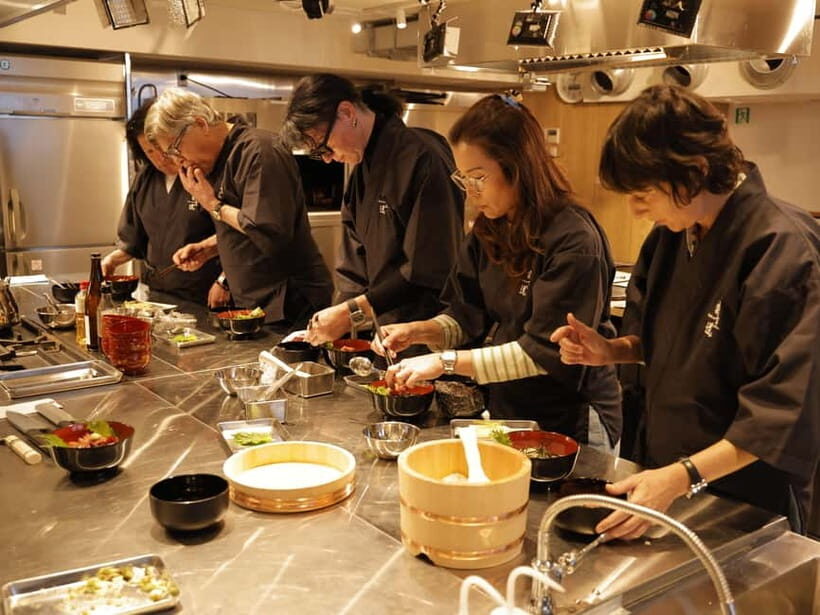
- Small group of up to 8 means you actually get time with the knife and sharpening tools.
- Sashimi slicing practice is the main event, and you start with a live performance first.
- Whetstone sharpening techniques are taught step-by-step, not left as a mystery.
- Lunch is part of the lesson: you’ll eat what you make with miso soup and sake.
- A handmade recipe to take home helps you recreate the dish after you leave Tokyo.
- Kappodo costume rental and a participation certificate turn the class into a full experience, not just a meal.
Knife skills in Tokyo, without the intimidation
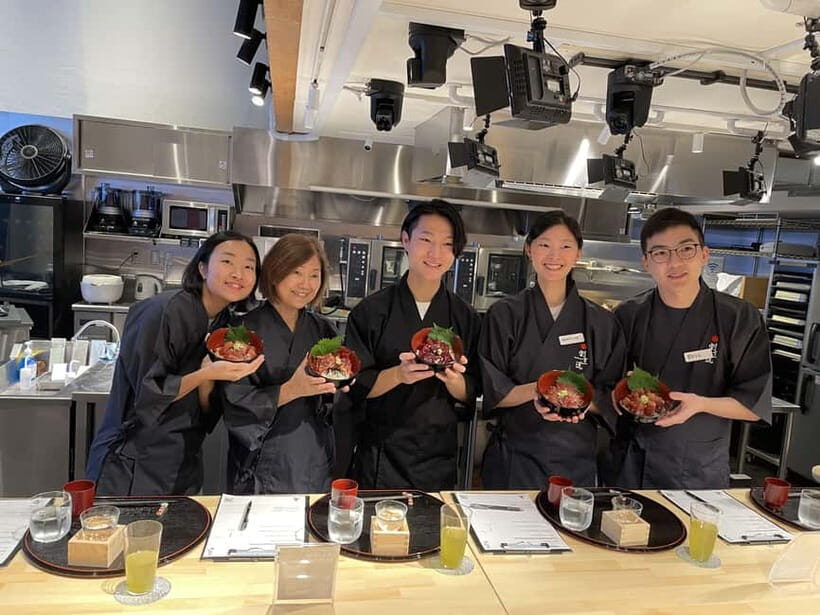
Japanese knives have a reputation for being scary. This workshop is the opposite. It’s structured so you learn the basics in the room, then you apply them right away on real food.
You start with an explanation of how Japanese blades are made to perform, and why the sharpening and edge care matters. The point isn’t “fancy knives.” It’s practical: the sharper the edge and the better the technique, the cleaner the cut. Cleaner cuts also mean better texture for sashimi, and that’s what you’re aiming for.
If you’ve watched sushi chefs at work and thought, I want that skill, this is one of the few formats that actually teaches it. You also get a small group setting, so you’re not competing for attention.
A few more Tokyo tours and experiences worth a look

The knife culture intro and your first look at the tools
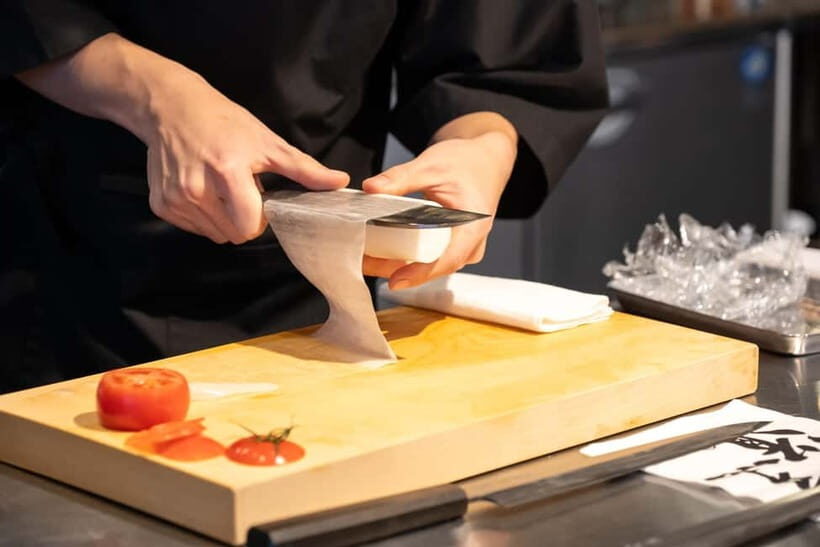
Before you touch food, you’ll get an orientation to Japanese knife culture—why these blades are prized and what makes them different from many Western knives. You’ll also learn how to identify what you’re using and why a particular technique matters for different tasks.
Then the workshop moves into the equipment side: you’ll learn about the knives themselves and how they connect to the cooking process. The class includes ingredients and tools, so you don’t need to track down anything before arriving. You just bring comfortable clothes and show up ready to work.
One subtle benefit here: the intro makes the rest of the class make sense. When you later sharpen a blade on a whetstone, you’ll understand why you’re doing each motion. It’s not just a ritual. It’s edge maintenance.
Sashimi slicing practice: where precision becomes muscle memory
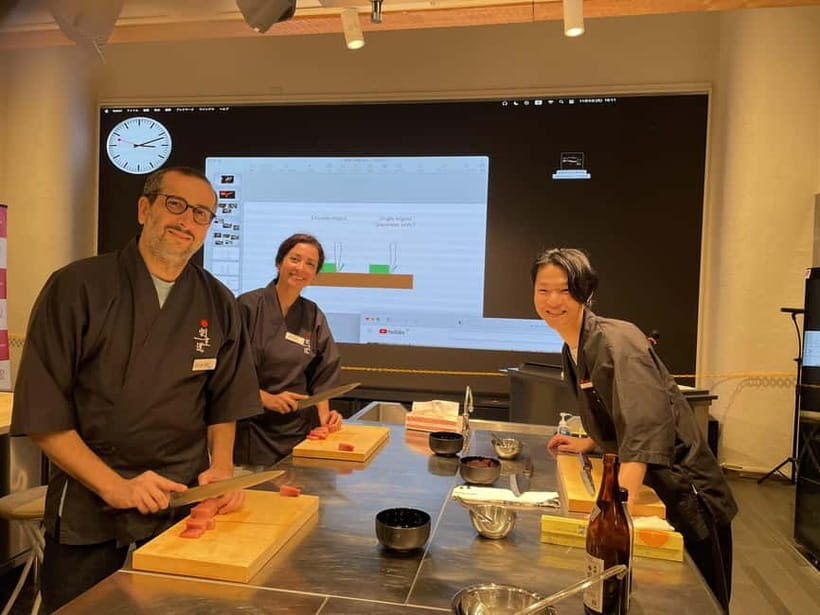
The highlight is the sashimi work. First, your instructor demonstrates knife skills performance—watch the cutting technique up close, including how the blade angle and motion create clean slices. After that, you hold the knife and practice cutting tuna sashimi yourself.
This is the part you’ll remember after the class. It’s also the part that changes how you think about cooking at home. Instead of guessing how chefs get such clean cuts, you learn what to focus on: grip stability, controlled movement, and steady, confident pacing.
From the feedback, people love this practical section most. The reason is simple: it’s the difference between passive food viewing and active skill-building. When you slice the tuna yourself, you can actually feel the blade doing its job—especially if it’s properly sharpened beforehand.
Fish used may vary depending on availability, so don’t plan on a specific cut beyond tuna being part of the experience. But the technique training is the same.
Sharpening on a whetstone: the skill behind the sharpness
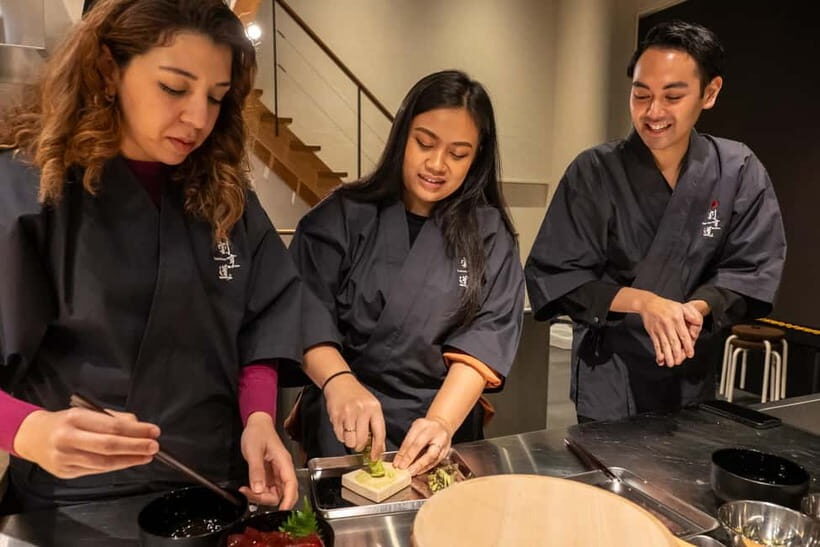
After you’ve sliced, you learn the sharpening techniques using a whetstone. This is a key part of the workshop, and it’s also the part that many short classes skip.
You get guided, step-by-step instruction. The goal is to help you understand how to maintain an edge, not just memorize one move. Once you practice sharpening basics, you’ll realize why Japanese chefs are so serious about blade care. Good sharpening turns a knife into a tool that cuts with less pressure—more control, cleaner results.
And even if you don’t become a whetstone person overnight, you’ll leave knowing what to look for: even contact, consistent technique, and the idea that sharpening is an ongoing practice, not a once-a-year event.
Your zuke don or sushi set lunch, plus miso and sake
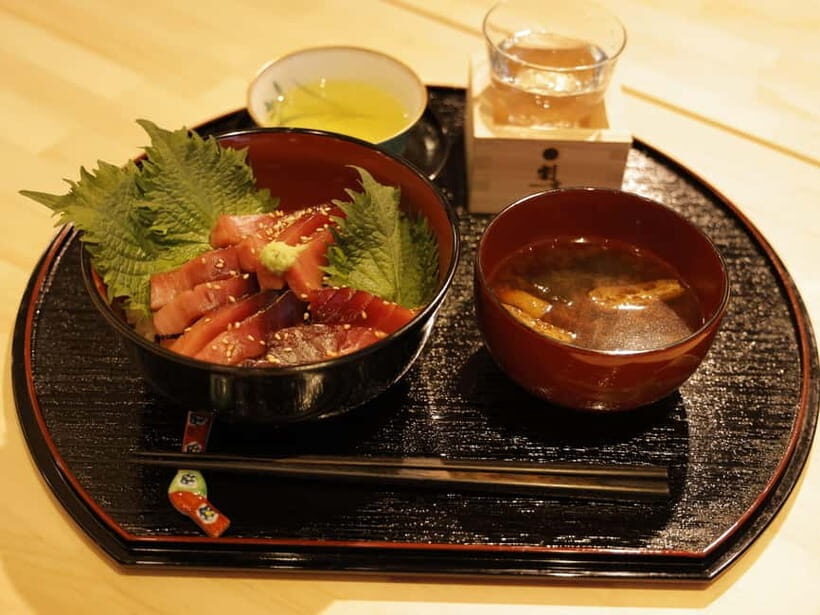
Now for the payoff: you’ll cook and eat what you made. The workshop focuses on tuna zuke-don—a rice bowl topped with marinated sashimi—or a 10-piece sushi set. Either way, you’re learning a Japanese style of turning fresh fish into a meal with balance.
You’ll also make miso soup, and you’ll get sake tasting as part of the session. Green tea is included too, which is a nice reset after the salty, savory flavors of fish and miso. The result is a full sit-down meal, not a snack between lessons.
What I like about tying lunch to the knife skills lesson is that it removes the guesswork. You learn technique, then taste the results immediately. If your slicing is clean and your seasoning is right, you can tell. That feedback loop is powerful.
One practical note: the class includes a lunch portion that’s generous, with fish, soup, and sake included. Come hungry and plan on leaving satisfied.





Kappodo costume, certificate, and the take-home recipe
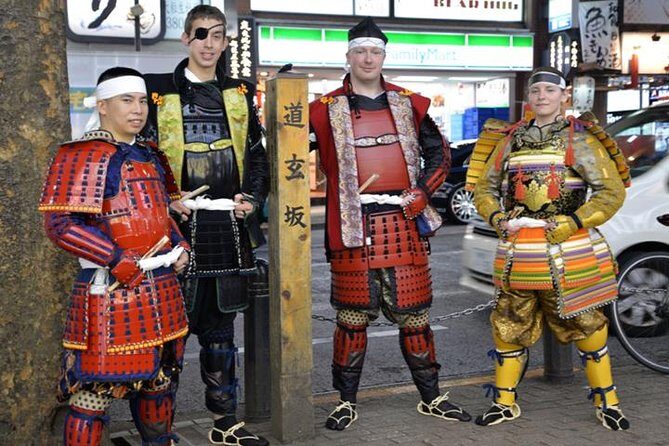
This workshop doesn’t just end when you wipe your hands. You get a participation certificate, plus the experience includes a kappodo costume rental. It’s a light touch, but it makes the event feel more like a cultural activity than a purely technical class.
The most valuable take-home item is the recipe. The class is designed so you can recreate the dish after you get back home. That matters because the “value” of a workshop isn’t only what happens in Tokyo. It’s whether you can repeat the results later.
There’s also a bonus: you can get 10% off items at the 1F Shop on the same day as your workshop visit. If you’re interested in knife-related accessories or related items, that’s a smart moment to shop while your lesson is fresh.
Price and value: why $127 can make sense
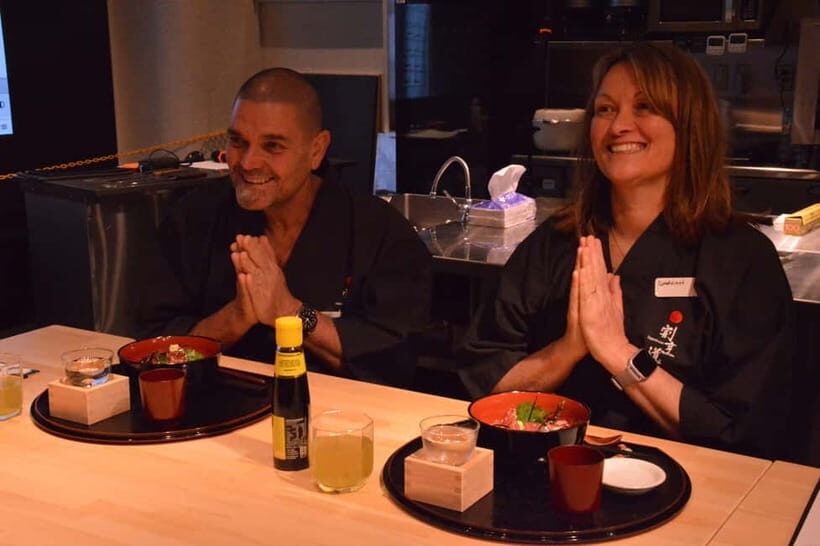
At $127 per person for a 2-hour workshop, you’re paying for three things at once: instruction, hands-on practice with tools and ingredients, and a meal that includes miso soup plus sake.
Here’s how I think about value in Tokyo classes:
- Knife instruction isn’t cheap, and sharpening on a whetstone requires time and supervision.
- The sashimi slicing practice uses real fresh fish, not training substitutes.
- The lunch is built into the lesson, so you’re not paying extra for food elsewhere.
Could you learn some knife basics from videos at home? Sure. But the cost difference buys you feedback and corrections in the moment. It also buys you the chance to eat what you made, instead of treating the cooking as a separate project.
If you like food skills that transfer—things you can actually use—this price is easier to justify.
Who should book this workshop (and who shouldn’t)
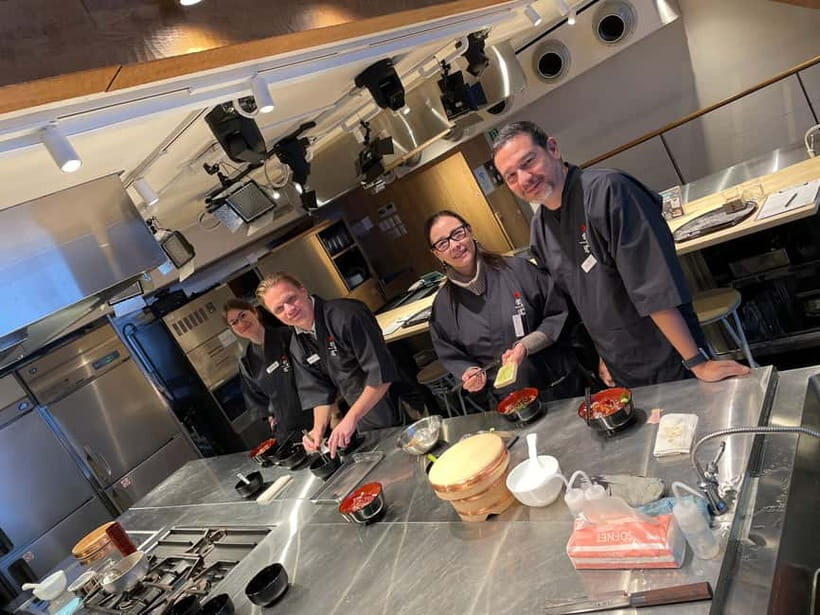
This is a great fit if you:
- want a hands-on Japanese cooking experience, not a museum-style demo
- care about the connection between sharpening and results
- like tuna, sushi, or zuke-don flavors
- enjoy small-group classes where you’re not waiting your turn forever
It’s not a good fit if:
- you have a food allergy (the activity is not suitable for people with allergies)
- you’re traveling with kids under 12
- you’d rather watch than participate
You’ll also do better if you wear comfortable clothes. You’ll be in a cooking setup, and you’ll be learning motions that need space and normal movement.
Practical tips for your 2-hour Tokyo session
A few small things can make the session smoother.
- Wear comfortable clothes you can move in. You’ll be handling knives, and you’ll likely be leaning and turning with the workspace.
- Fish availability may change, so keep expectations flexible on the exact fish situation.
- The instructors speak English and Japanese, which helps if you want clear explanations without stress.
- The meeting point is identified by samurai-style murals painted on the building—look for that visual marker when you arrive.
Also, go with a learning mindset. You’re not trying to be the world’s fastest sushi slicer. You’re trying to learn the repeatable technique so the results make sense.
Should you book the Japanese Knife Skills & Tuna Don/Sushi Workshop?
I’d book it if you want skill-focused Japanese food training in a short window. The workshop earns its keep because it blends knife technique, sharpening, and a real tuna-based meal in one small-group format. The chance to slice sashimi yourself is the part that feels most “worth it,” since that’s the moment you stop watching and start understanding.
I wouldn’t book it if you have food allergies or you strongly prefer passive experiences. And if you’re expecting a long, in-depth history tour, this isn’t that—it’s a practical cooking class with craftsmanship at the center.
If you like taking home a recipe and an actual technique you can practice later, this is a smart Tokyo day plan.
FAQ
How long is the Japanese Knife Skills & Tuna Don/Sushi Workshop in Tokyo?
The workshop lasts 2 hours.
What is the price per person?
It’s $127 per person.
How many people are in the group?
The group is limited to 8 participants.
What languages are the instructors?
The instructor speaks English and Japanese.
What will I cook and eat?
You’ll learn Japanese knife skills and prepare a tuna zuke-don (rice bowl) or a 10-piece sushi set. The meal includes miso soup, sake, and green tea.
Is there a sharpening component?
Yes. You’ll learn knife sharpening techniques using a whetstone with step-by-step guidance.
What do I need to bring?
Wear comfortable clothes suitable for cooking.
Where is the meeting point?
You’ll meet at a building with samurai-style murals painted on it.
Is it suitable for children or people with allergies?
It’s not suitable for children under 12, and it’s not suitable for people with food allergies.