REVIEW · TOKYO
Hands-On Japanese Craft in Tokyo with Mochi Wagashi & Matcha
Book on Viator →Operated by Patia's Japanese Cooking Class · Bookable on Viator
Make a uchiwa, then eat and drink. This Tokyo class is built around a hands-on craft you can actually use: designing a round paper uchiwa with pressed flowers and origami-style decoration, then taking it home as a souvenir. Afterward, you get a cup of matcha latte, made from powdered green tea and milk.
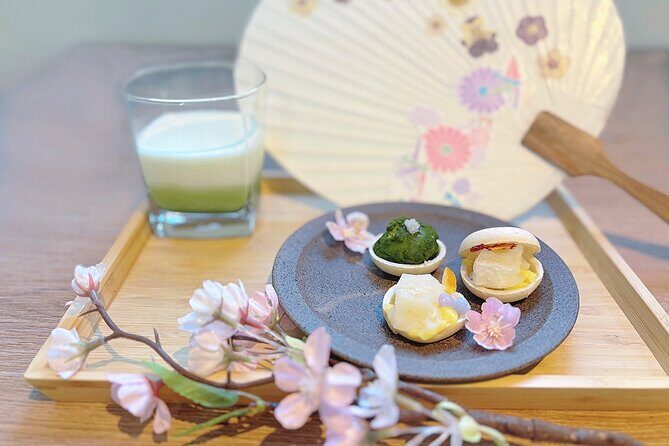
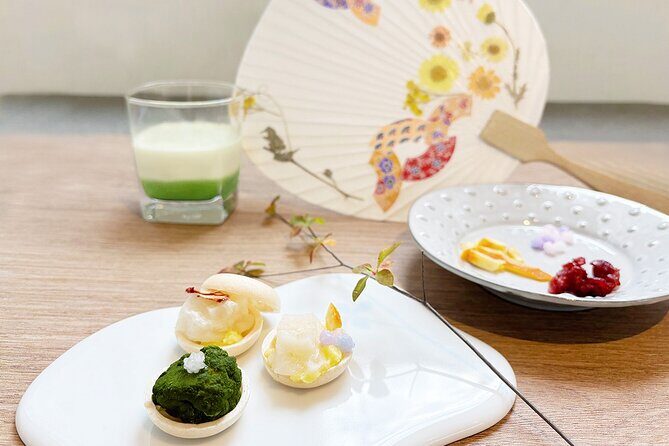
I love that the art side feels guided, not intimidating. Your materials are prepared, so even if you think you are not the crafty type, you can still build something that looks intentional (and very you). I also like the tasting plan: modern monaka with a crispy wafer stack (custard cream, mochi, and dried fruit), plus a Kokedama-style sweet shaped like a moss ball.
One practical catch: there is no hotel pickup, so you’ll need to get yourself to the meeting point in Tokyo on time.
In This Review
- Key things I’d circle before you book
- Designing your uchiwa fan: pressed flowers, origami accents, and a set finish
- A small advice that saves frustration
- Matcha latte time: how the milk makes it smoother and easier
- If you dislike matcha, don’t panic
- Wagashi pairing: modern monaka with custard cream, mochi, and dried fruit
- What this pairing does well
- Time, pace, and small-group comfort in Tokyo
- Price and value: what you get for $78.69
- Should you book this hands-on uchiwa and matcha session?
- FAQ
- FAQ
- How long is the uchiwa, matcha, and wagashi experience?
- What is the price per person?
- What’s included in the ticket?
- What do I make during the class?
- What are the two wagashi options?
- Is hotel pickup included?
- Where does the experience start and end?
- How many people are in the group?
- What if I need to cancel, or the weather is bad?
Key things I’d circle before you book
- Take-home uchiwa fan made by you, with a nature-and-plant vibe
- Pressed flowers and paper accents so your design has real texture
- Matcha latte for first-timers because milk keeps it smoother and less bitter
- Modern monaka built with crispy wafer, custard cream, mochi, and dried fruit
- Kokedama-inspired dessert shaped like a moss ball plant
- Small group setting with a maximum of 15 people
Designing your uchiwa fan: pressed flowers, origami accents, and a set finish
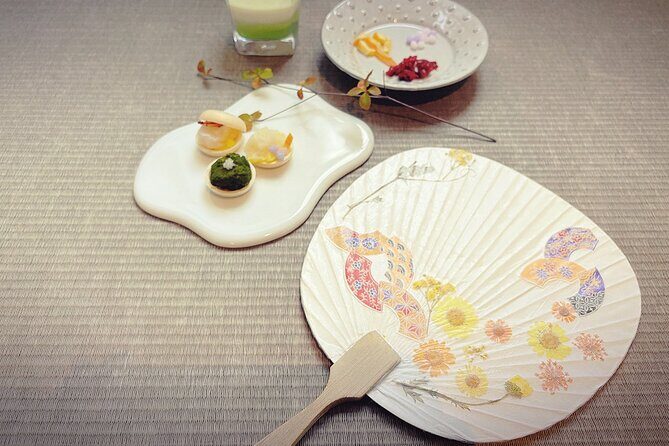
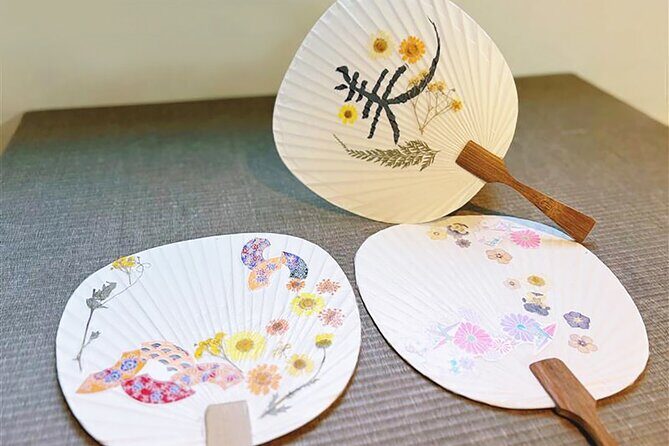
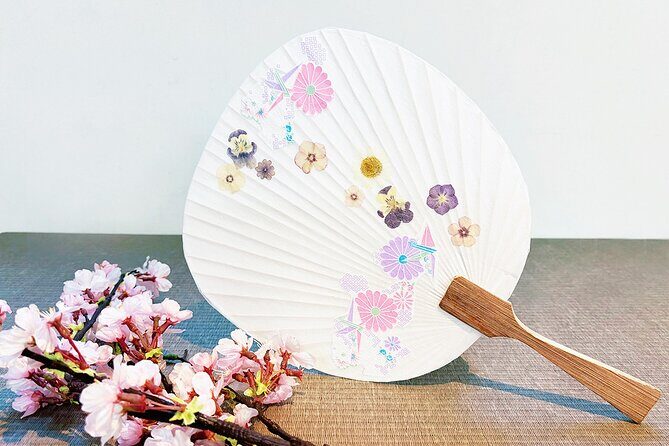
This is the core of the experience: you’ll make a Japanese uchiwa fan, the kind people use in summer to create a quick breeze. The fun part is that your fan is not just colored. You’re working with a mix of pressed flowers and decorative paper elements, including Japanese-patterned origami-style pieces.
In practice, the class moves like a friendly craft workshop. You start with the round paper fan base, then you choose where your botanical pieces and paper bits go. Your instructor gives you the structure, so you are not standing there wondering what goes where. You get to see how different placements change the final look, and that makes it easier to relax and just play.
One detail that matters for the final result: the session includes setting or pressing the design elements so they stay put. That’s a big deal for souvenirs. A fan you can take home should survive the trip from the studio to your kitchen table, and this approach is aimed at that.
Bring your phone and plan to take photos while you work. This is one of those activities where the “before and after” is instant—your blank fan turns into something unique pretty quickly. And because you’re using dried/pressed natural elements, each finished uchiwa tends to look a little different even when people start with the same materials.
A few more Tokyo tours and experiences worth a look


A small advice that saves frustration
Keep your design simple if you’re nervous. You can always go heavier on one focal area (like a flower cluster near the center) and let the rest be clean. That way, you still get that handcrafted look without feeling rushed by too many tiny pieces.
Matcha latte time: how the milk makes it smoother and easier
After the craft, you shift from hands-on art to a hands-on drink. Matcha is powdered Japanese green tea, and it’s famous for being intense—often more bitter than people expect. The “latte” version changes that. You mix the matcha with milk, which makes the flavor creamier and generally easier to enjoy.
I like that the experience treats matcha like something you can learn, not something you either love or hate on day one. The class format is approachable: you get steps you can follow, and you end up with a cup you can understand. If you have never ordered matcha before, this is the version that usually feels most familiar because milk softens the edge.
One more reason I think this part is worth your time: you do not just drink it and move on. The experience ties the drink to the broader culture of seasonal taste and everyday rituals. You see how “powder + technique” turns into something you can sip slowly while you admire your finished fan.
If you dislike matcha, don’t panic
Even the milder matcha latte won’t suddenly make someone love green tea. But it gives you a fair try. And because it’s part of a shared workshop, it feels like a cultural moment instead of a risky food bet.
Wagashi pairing: modern monaka with custard cream, mochi, and dried fruit
Now for the sweet part, and it’s not just one thing. You get two Japanese sweets, designed to give you two different textures and moods.
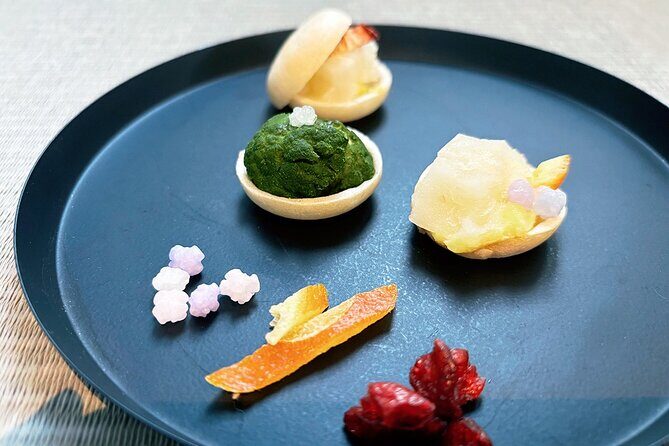
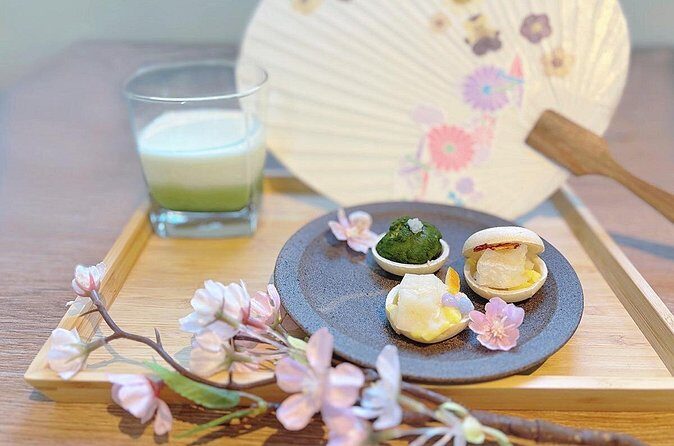
First up is modern monaka. Traditional monaka is crisp wafers filled with sweet fillings. Here, the twist is in the stack and toppings: you’ll get a crispy wafer with custard cream and mochi, then finished with dried fruit. That combination matters. The wafer brings crunch, mochi adds chewy spring, and dried fruit adds little pops of sweetness and aroma.
The other practical benefit is how friendly it can be for people who are not into sweet red bean paste. The program’s monaka version is positioned as enjoyable even if red bean is not your favorite. In other words, you’re getting a Japanese classic reworked in a way that works for more palates.
Next, you’ll try the Kokedama-inspired sweet, shaped like a cute little moss ball. Kokedama is a style of Japanese gardening where plants grow in a ball of soil covered with moss. Translating that idea into wagashi gives you something playful as well as “wow, I’ve never seen this before” photogenic.





What this pairing does well
You’re getting contrast in one sitting: crisp, chewy, soft, and visual cuteness. It also gives you a way to remember the experience beyond the fan. If the uchiwa is your crafted souvenir, the desserts are your taste-memory souvenirs.
Time, pace, and small-group comfort in Tokyo
The whole experience is about 1 hour 30 minutes. That time box is short enough that it’s easy to fit into a day of sightseeing, but long enough to actually complete the craft and enjoy the tasting.
Group size is capped at 15, which is a sweet spot. Big enough to have a social energy, small enough that instructions are more likely to land. In the real world of Tokyo, that matters. You don’t want to fight for attention while you’re trying to place delicate flower elements on paper.
You’ll also use a mobile ticket, which keeps things simple. No printing. Just show up with your ticket access on your phone.
There is no hotel pickup or drop-off. That affects planning more than you might think. Tokyo is very workable once you know where you’re going, but you still need to build in extra time for getting to the meeting point and finding the exact location.
And one important note: the experience requires good weather. That detail is on the activity’s rules, so if Tokyo is acting weird on the day you booked, double-check the day-of status through your booking app.
Price and value: what you get for $78.69
At $78.69 per person, this class isn’t a “cheap snack and a quick photo” kind of experience. You’re paying for three concrete things that would each cost money on their own:
- Instruction and materials for a take-home uchiwa fan
- A made-and-tasted matcha latte
- Two types of wagashi (modern monaka and a Kokedama-style sweet)
The value equation improves because the program includes tasting food right after crafting. You’re not left with a half-finished souvenir and a separate plan for dessert.
The one thing that can reduce value for some people is the lack of hotel pickup. If you’re staying far from the meeting area, transport time and cost become part of your real total. If you’re already in central Tokyo or near where you’ll be that day, this is easier to justify.
Should you book this hands-on uchiwa and matcha session?
I’d recommend booking if you want a practical, hands-on cultural activity with a clear payoff. You make a real object you can use later, and you get a matcha and wagashi break that feels like part of the same story.
It also fits well if you like things that are visual and tactile. Pressed flowers on paper are memorable, and the moss-ball Kokedama sweet is the kind of dessert that sparks instant curiosity.
I’d be more cautious if you absolutely hate matcha or you’re looking for a long, slow craft session with lots of time to perfect details. This is a short workshop with a structured flow. It’s meant to be fun and finishable.
One final reason to feel confident: this experience has a 5-star rating with a 100% recommendation from 11 past participants. That kind of consistency usually means you’re not relying on luck for the experience to be well-organized.
FAQ
FAQ
How long is the uchiwa, matcha, and wagashi experience?
It lasts about 1 hour 30 minutes.
What is the price per person?
The price is $78.69 per person.
What’s included in the ticket?
You get matcha latte and two types of wagashi.
What do I make during the class?
You design and decorate your own uchiwa (Japanese fan) using pressed flowers and origami-style materials, and you can take it home.
What are the two wagashi options?
They are a modern monaka (crispy wafer with custard cream, mochi, and dried fruit) and a Kokedama-inspired sweet shaped like a moss ball.
Is hotel pickup included?
No, hotel pickup and drop-off are not included.
Where does the experience start and end?
It starts in Tokyo, Japan, and ends back at the same meeting point.
How many people are in the group?
The maximum group size is 15 travelers.
What if I need to cancel, or the weather is bad?
You can cancel for free up to 24 hours before the experience starts for a full refund. The activity also requires good weather; if it’s canceled due to poor weather, you’ll be offered a different date or a full refund. If the minimum number of travelers isn’t met, you’ll be offered a different date/experience or a full refund.