REVIEW · TOKYO
Japanese Traditional Sweets making
Book on GetYourGuide →Operated by 日本文化体験 庵an東京 AN TOKYO · Bookable on GetYourGuide
Nerikiri turns dessert into craft. In this 65-minute class at AN TOKYO Japanese Culture Experience, you shape seasonal Nerikiri using Kyoto-made white/red bean paste, and yes, you get to eat what you make right there. One thing to plan for: the flow is fairly tight, so if you’re slow with your hands, you may feel a bit rushed.
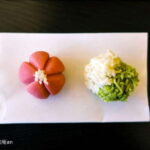
What I really like is that you don’t just copy one sweet. You make two distinct seasonal pieces, including a flower design and a Kinton Nerikiri, so you leave with variety and a couple of chances to get your technique looking good.
In This Review
- Quick highlights (the stuff that matters)
- Nerikiri at AN Tokyo: a 65-minute wagashi workshop that feels like art class
- The hands-on rhythm: flower Nerikiri, then Kinton Nerikiri
- Kyoto bean paste and seasonal choices: why this class tastes more authentic
- Classroom reality: seeing instructions, managing your coat, and keeping the pace
- Price and value: what $11 buys you, plus the optional add-ons
- Who this Nerikiri workshop suits best (and who might want a different style of class)
- Should you book this Nerikiri making class?
- FAQ
- What sweets will I make?
- How long is the experience?
- Can I eat the sweets during the class?
- What’s included in the price?
- Are there extra costs?
- Will there be English help?
- Do children pay for the experience?
Quick highlights (the stuff that matters)
- Kyoto long-established bean paste (white and red) forms the real flavor base.
- Two seasonal Nerikiri: a flower-shaped sweet plus a Kinton Nerikiri.
- You eat on the spot, so the class ends with instant payoff, not just photos.
- Structured timing: expect quick instructions and fast transitions between steps.
- Photo moment included, so you can show off your plated mini artwork.
- Optional extras: a take-out box costs extra, and a certificate is available for a fee.
Nerikiri at AN Tokyo: a 65-minute wagashi workshop that feels like art class
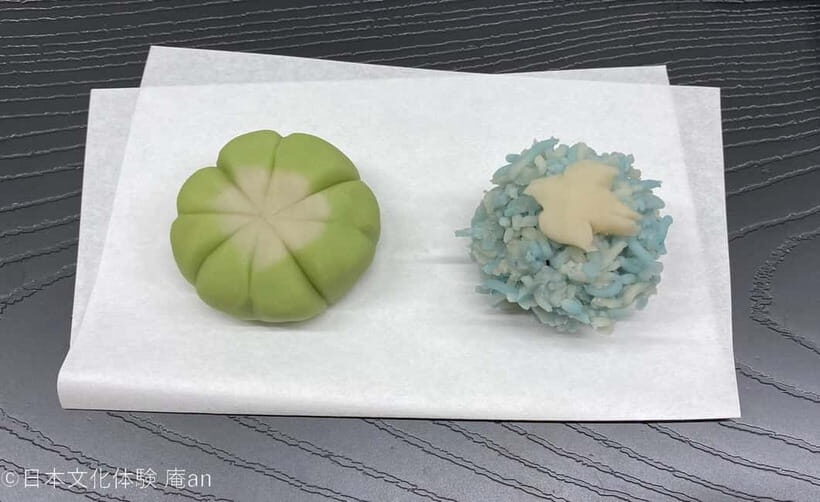
If you’ve ever wondered why Japanese traditional sweets look so perfect, this is the answer you can touch. Nerikiri are shaped paste sweets (wagashi) where the skill isn’t just taste. It’s form, texture, and how the surface catches the light when you plate it.
This experience runs for 65 minutes and focuses on making two seasonal sweets. Even the way the activity is framed helps: you’re guided through the making process, then you finish by placing your creations on a plate like a finished artwork. That part matters, because Nerikiri are meant to be looked at as much as eaten.
You’ll use white/red bean paste made in Kyoto by long-established shops, which is a big deal for flavor. The paste isn’t described as some generic ingredient; it’s clearly presented as a key quality point of the class. For you, that means your end results are more likely to taste like the real thing, not like a shortcut dessert.
Also, the class is set up to work for both solo and group participants. If you’re traveling alone, this kind of structured hands-on session is one of the easiest ways to avoid that awkward “everyone is busy and I’m just standing here” feeling.
A few more Tokyo tours and experiences worth a look

The hands-on rhythm: flower Nerikiri, then Kinton Nerikiri
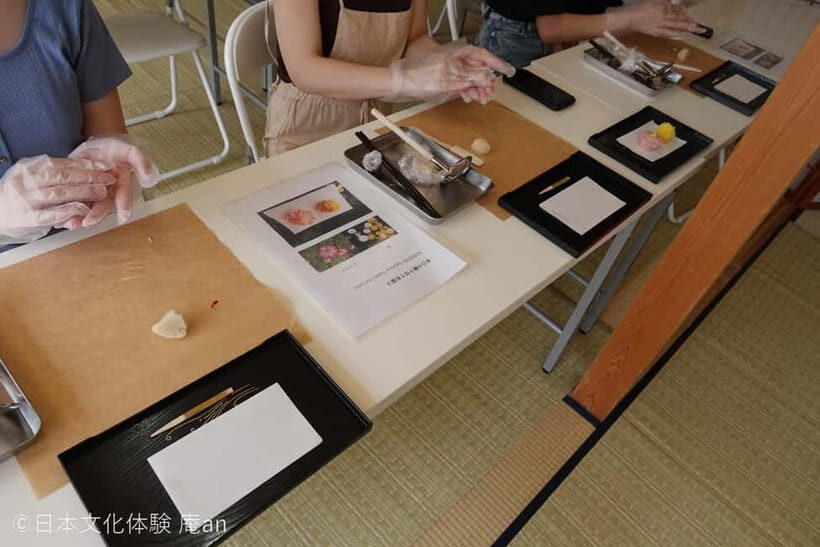
Your session starts with an explanation of Japanese traditional sweets, then you move into shaping. The whole flow is built around practical steps, and the pacing is the defining feature.
You begin with a flower-shaped Nerikiri. This first piece is a good on-ramp because it gives you a clear goal: shape the paste so it reads as a flower, not just a blob. When the instructor has you work on this stage, you’re learning the core movements—how to handle the paste, how to shape without tearing, and how to make edges look intentional.
Then you transition to Kinton Nerikiri. This second sweet is where the experience feels more like a real workshop, because you’re building a second “version” of the technique. You get to compare how different shapes look and how the paste behaves when you’re making something with its own visual style.
After the main work time, you’ll have a picture time, and then you move into the eating portion. That sequence is smart for you: it keeps the class from turning into a rushed snack. You finish, pose, and then taste—so you can actually enjoy the difference between what you made and what it becomes once you eat it.
One practical consideration: the class is described as structured, and there are hints in feedback that it can feel compressed. If you like to linger over details, choose a seat where you can see clearly, and keep your focus on one step at a time. If you’re traveling with someone who has slower motor skills, you’ll want to mentally prepare for the timeline.
Kyoto bean paste and seasonal choices: why this class tastes more authentic
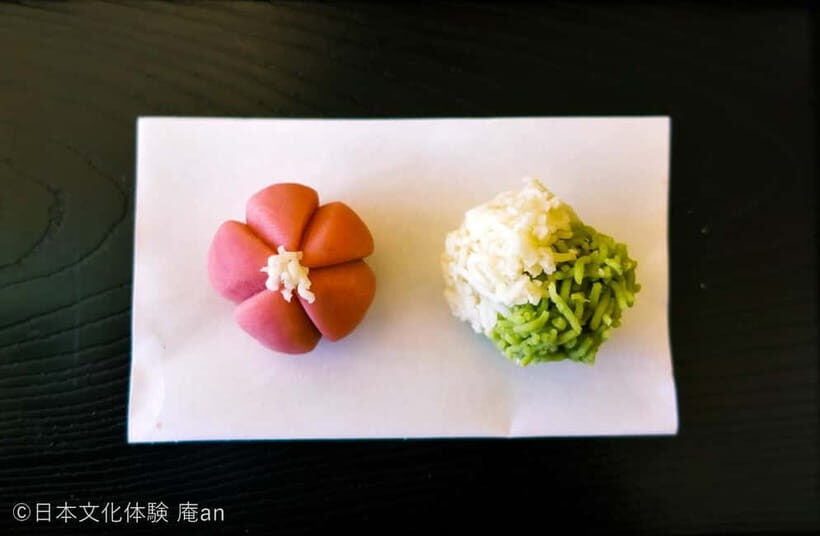
The experience is upfront about ingredient quality: you use white and red bean paste produced by Kyoto’s long-established shops. Even if you’ve had bean paste desserts before, this matters because flavor changes depending on the paste—its sweetness, how smooth it is, and how it holds structure when shaped.
Then there’s the “seasonal” part. You’re making two seasonal Japanese sweets, which means your creations are tied to timing and mood rather than being a year-round design. That’s one reason this workshop is more interesting than simply learning a single method. Seasonal sweets are part of why wagashi connects to Japanese culture beyond ingredients—they’re visual storytelling.
Here’s what you should expect in taste and texture terms, based on what the class emphasizes:
- Bean paste is the foundation, so sweetness level and smoothness are the main flavors you’ll notice.
- Nerikiri are designed to be soft and shaped, not crisp—so you’re mostly judging how well the sweet holds together and how it melts or softens as you eat.
- Since you eat what you make, you’ll get immediate feedback on whether your shaping changed the eating experience.
And because the class encourages you to try during the experience, tasting doesn’t feel like an afterthought. You’re not just learning theory; you’re learning with your mouth involved too.
Classroom reality: seeing instructions, managing your coat, and keeping the pace
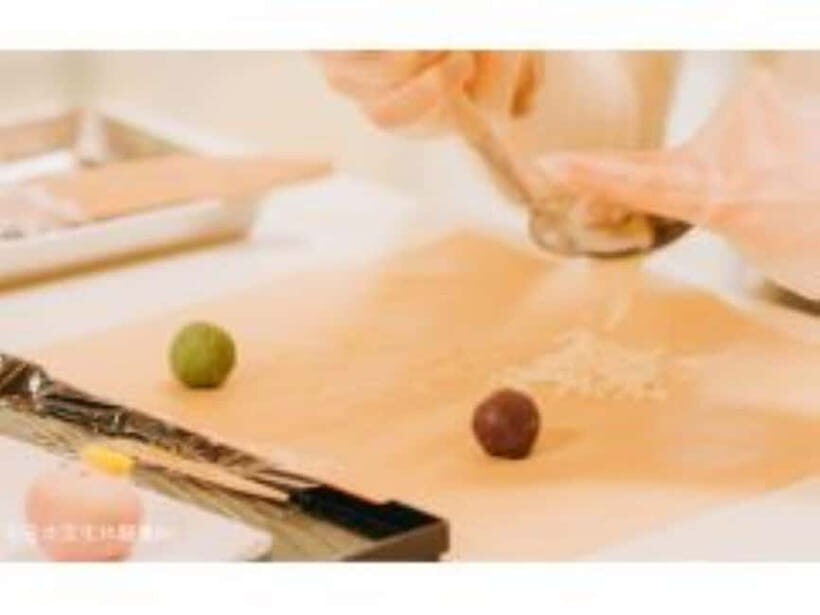
This is where your comfort planning pays off.
The experience is designed for a group setting, and feedback indicates it can be a larger room situation. If you’re at the back, you might struggle to see the shaping process clearly. So do yourself a favor: arrive a little early, and aim for a position where you can watch hands and tools, not just listen.
There’s also the practical matter of personal items. One piece of feedback specifically points out that there isn’t a dedicated place to hang coats, so people had to leave bags and coats on the floor. That’s not a deal-breaker, but it is a detail you’ll want to prepare for:
- Wear something you can move easily in.
- Bring minimal luggage for the class.
- Keep a small area around your seat so your bag doesn’t become a trip hazard during shaping.
Now about timing. The class is 65 minutes long and follows a set sequence: explanation, flower making, Kinton Nerikiri making, photo time, then eating before leaving. If you’re prone to taking breaks mid-step, you’ll probably feel the pressure. Instead, commit to staying with the instructor’s pace and focus on finishing each shape as asked.
Finally, there’s a general rule that the event may not be held for delays. Translation: if you run late, don’t assume they’ll slow down for you. If you’re on transit in Tokyo, build in a buffer.
Price and value: what $11 buys you, plus the optional add-ons
At about $11 per person, this workshop is priced in a way that makes sense for a hands-on cultural class. You’re not paying for a talk. You’re paying for materials, guidance, and the chance to produce two seasonal Nerikiri you can eat on the spot.
What’s included is a set of the Nerikiri making experience. That typically covers the base ingredients and instruction needed to make the two sweets—so you’re not also paying for each component separately.
What’s not included is also straightforward:
- A sweets take-out box costs 100 JPY.
- An experience completion certificate costs 300 JPY.
For you, that means there’s a clean decision point. If you just want to enjoy what you make, you don’t need any extras. If you like to bring a souvenir home, the take-out box is available for a small fee. And if you want a certificate (for nominative certificates, names need to be provided in advance), you can add that too.
One more value angle: you’re getting both the making and the eating. Some classes feel like you’ll just watch the end result. Here, you finish by eating your own sweets, which makes the experience feel complete.






Who this Nerikiri workshop suits best (and who might want a different style of class)
This class is a strong match if you:
- Want a short, structured cultural workshop instead of a long, open-ended one.
- Like the idea of making something pretty enough for a photo moment but still ending with real food you can taste.
- Are curious about wagashi and want to work with white/red bean paste from Kyoto long-established shops.
- Prefer experiences that are friendly for solo travelers, where you can focus on your piece while still being part of a shared room activity.
It may be less ideal if you:
- Need lots of time for each step. The class is designed for 65 minutes, and feedback suggests the pacing can feel quick.
- Get anxious when you’re expected to keep up and finish tasks under time pressure.
- Really care about finding a comfortable spot for coats and bags, since there may not be a dedicated coat area.
If you’re traveling with kids, there’s at least one clear note: children under 2 who sit on their parents’ laps are free of charge. For older kids, the data here doesn’t confirm pricing rules, so you’d want to check directly before you rely on assumptions.
Should you book this Nerikiri making class?
I’d book it if your goal is to learn the basics of Nerikiri shaping, make two seasonal sweets, and taste them the same day. The value is solid for the time, and the ingredient story—Kyoto long-established bean paste—is the kind of detail that usually correlates with better results.
Skip it or think twice if you dislike rushed formats. If you’re the type who needs slow, careful coaching, this is a 65-minute class with a set sequence, and the pace is part of the design. In that case, pick a seat where you can clearly see the instructor’s hands and consider arriving early so you don’t add stress on top of the timeline.
Also, if you’re sensitive to room setup, come ready for the reality that coat storage may be limited. Bring light, plan for minimal gear, and focus on the craft.
If you want a one-session hands-on bite of Japanese tradition in Tokyo, this is a practical choice—especially if you like the idea of turning paste into something that looks intentional.
FAQ
What sweets will I make?
You’ll make two seasonal Japanese sweets called Nerikiri. The class includes a flower-shaped Nerikiri and a Kinton Nerikiri.
How long is the experience?
The experience lasts about 65 minutes, including time to eat on the spot.
Can I eat the sweets during the class?
Yes. You can eat the sweets on the spot as part of the experience.
What’s included in the price?
The price includes a set of the Nerikiri making experience.
Are there extra costs?
Yes. A sweets take-out box costs 100 JPY, and an experience completion certificate costs 300 JPY.
Will there be English help?
English translation is provided as much as possible. If you want to add more English support, you can contact the provider.
Do children pay for the experience?
Children who sit on their parents’ laps are free of charge if they are under 2 years old.
If you tell me your travel dates and whether you prefer slower or fast-paced classes, I can help you decide if this format fits your style.