REVIEW · TOKYO
Kaisendon and Sashimi Cutting Workshop
Book on Viator →Operated by 割烹道 · Bookable on Viator
A knife lesson you can actually eat. In Tokyo’s Nishiazabu, this hands-on class has you practicing sashimi knife technique and then turning your cuts into a kaisendon-style seafood bowl. It’s short, very practical, and runs in a small group.
I especially love the way you get direct coaching from Naoya Kumagai, with English support from the team at Kappodo. You also leave with a complete meal you made yourself—kaisen-don over vinegared rice, plus miso soup and sake.
One thing to consider: at about 1 hour 30 minutes, it’s not a “learn everything about knives” course. It’s focused on cutting sashimi well enough to enjoy your bowl, not on full knife mastery, and you’ll want to bring yourself with the willingness to handle knives and raw fish briefly.
In This Review
- Key highlights I’d plan around
- Where the workshop happens in Nishiazabu, and how the session moves
- Meet Naoya Kumagai and the English support team
- The flour dumpling warm-up: why you start with something else
- Cutting sashimi yourself: what you actually learn in practice
- Building your kaisendon bowl: where craft meets lunch
- Price and value: what $160 buys you (and what it doesn’t)
- Who should book this workshop (and who should think twice)
- Should you book? My decision guide
- FAQ
- How long is the Kaisendon and Sashimi Cutting Workshop?
- What will I make during the class?
- Do I need to bring my own knife?
- How many people are in a class?
- What food and drinks are included?
- Is there any discount or certificate included?
- What is the cancellation policy?
Key highlights I’d plan around
- Small group size (max 4) for real hands-on attention
- Practice cutting with flour dumplings before touching the sashimi
- You cut sashimi yourself using a sashimi knife
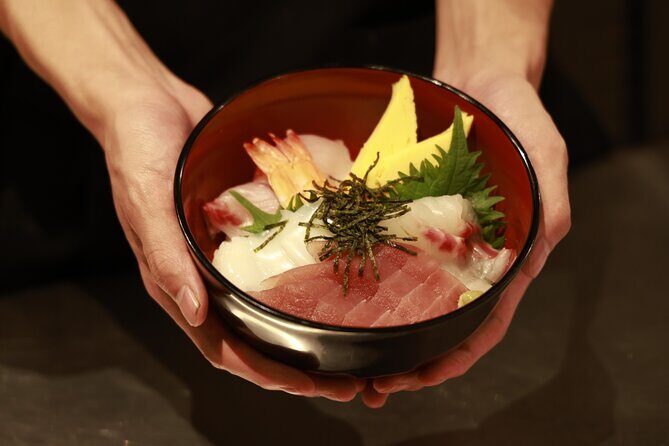
- Build your own kaisendon bowl over vinegared rice
- Miso soup and sake tasting to finish the experience properly
- Certificate plus a same-day 10% shop discount at the 1F store
Where the workshop happens in Nishiazabu, and how the session moves
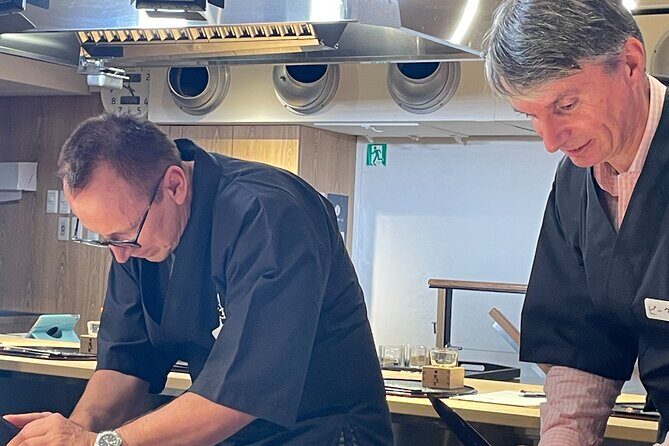
The class meets at Kappodo H.Q / Tokyo D kitchen Studio / Cooking Workshop, in Nishiazabu (Minato City), at DK ビル (2-chōme, 21-12). The area is listed as being near public transportation, and the ticket is mobile, so you can keep it simple on arrival.
Timing works in a tight flow. You register, then you’ll start with a greeting and a short introduction. After that, the session shifts into instruction and demo, then hands-on practice, then your bowl-making, and finally tasting time. The whole thing is designed to feel like one continuous craft lesson, not a stop-and-go cooking class.
If you’re choosing a time slot, look for the session that matches your Tokyo day. The schedule includes blocks like 10:45/12:45 registration with activities beginning around 11:00/13:00, and it runs in that same rhythm: knife lecture, demonstration, practice, make-your-bowl, then tasting.
A few more Tokyo tours and experiences worth a look
Meet Naoya Kumagai and the English support team
The teaching is centered on knife technique, and the instructor is Naoya Kumagai. Expect a brief lecture on Japanese sashimi knives and how technique matters. This isn’t theory for theory’s sake. The goal is to give you the mental picture you can use immediately, while you’re holding the knife.
You’ll also see a demonstration on how to use Japanese knives—how the motion and angle connect to clean cuts. In the reviews, people specifically praise the instruction and the fact that it’s friendly and easy to follow, including strong English support from the team (names shared in the feedback include Weixin alongside Naoya). That combination matters because knife work is hard to learn from vague instructions.
You’ll feel it right away: when someone corrects your grip or points out a cutting angle, it’s not abstract. It changes your next cut.
The flour dumpling warm-up: why you start with something else
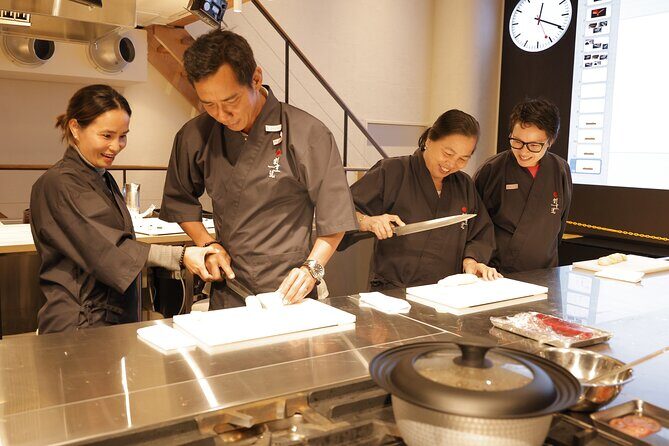
Before anyone asks you to cut sashimi, you practice with flour dumplings. This is one of the most practical parts of the class, because it separates control from bravado.
Dumplings let you:
- get used to holding the knife safely and confidently
- practice the motion without worrying about ruining expensive fish
- learn what a “good cut” feels like with your body and wrist
In other words, you’re training the technique rather than just playing surgeon with a new tool. That structure is also why this class works even if you’ve never cut anything with a Japanese knife before. You can focus on learning.
Cutting sashimi yourself: what you actually learn in practice
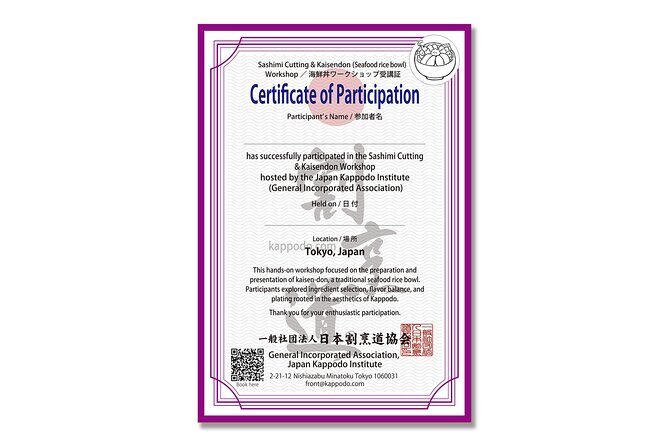
Here’s the core of the experience: each participant uses a sashimi knife to cut a piece of sashimi. Then you put the cut sashimi on top of vinegared rice to create your bowl.
The class is set up in stages. First, there’s knife practice using flour dumplings. Then comes sashimi cutting for each person. The point isn’t just that you cut something. The point is that you practice repeatedly, so you can adjust.
From the guidance and the kind of practice people report, you’ll likely pay attention to cutting angles and how they affect the look and texture of the slices. One reviewer specifically mentioned learning about cutting different fish and different cutting angles, and that matches the overall format: you’re not watching a single perfect cut once. You’re doing the work.
A quick piece of advice for you: treat it like a short skills workshop, not a performance. If you’re tense, your cuts get stiff. If you stay calm and follow the cues, you’ll get better fast—within the class timeframe.
Building your kaisendon bowl: where craft meets lunch
Once your sashimi is cut, you build your kaisen-don / kaisendon bowl. The key detail is what sits under the fish: vinegared rice. That matters because it changes the whole eating experience. The rice isn’t just a base; it’s part of the balance that makes the bowl feel like a proper Japanese meal instead of just fish on rice.
During the bowl-making stage, the class shifts from cutting to assembly. This is your moment to use what you learned: place the sashimi neatly on top, so it looks like food you’d actually want to order in Japan—and so the portioning makes sense for tasting.
Then tasting time arrives, and you’ll eat what you made. Miso soup is included as part of the meal experience. And sake is part of the finish: alcoholic beverages are included, and sake tasting is available during the tasting window.
If you like food experiences that end in eating something you truly made, this is that kind of class.





Price and value: what $160 buys you (and what it doesn’t)
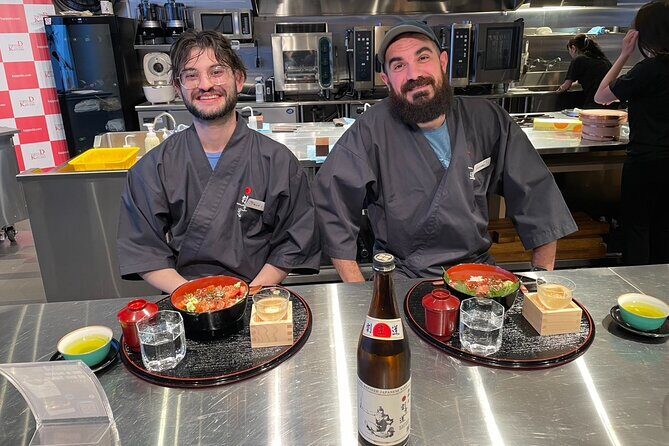
At $160 for about 1 hour 30 minutes, this isn’t a “cheap activity.” But it’s also not just entertainment. The value comes from what’s included and what you’re practicing.
You get:
- all tools used in the lesson
- a tour guide
- alcoholic beverages
- the lunch you make (your seafood bowl)
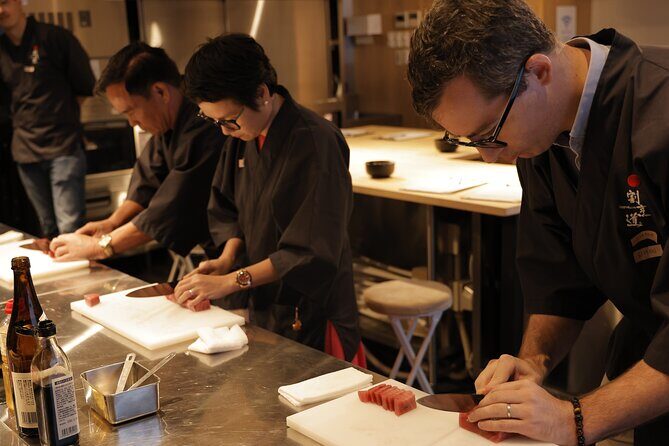
- a certificate of participation
- a 10% discount on items at the 1F shop on the same day as your workshop visit
Two small group realities also matter for value. First, the max group size is 4 travelers, which makes coaching more immediate. Second, the instruction includes both explanation and hands-on correction, not just a one-time demo.
What isn’t included: private transportation. Also, this workshop is focused on sashimi cutting and your bowl. If you’re hoping for a deep, full-time knife sharpening course, you’d need a different class. The information mentions a separate “Tokyo Keen Japanese Knife and Sashimi Workshop” if you want more about Japanese knives and sharpening.
My take: if you’re considering buying a Japanese knife, this kind of workshop can save you from wasting money on the wrong expectations. You’ll learn what the technique actually demands before you spend.
Who should book this workshop (and who should think twice)
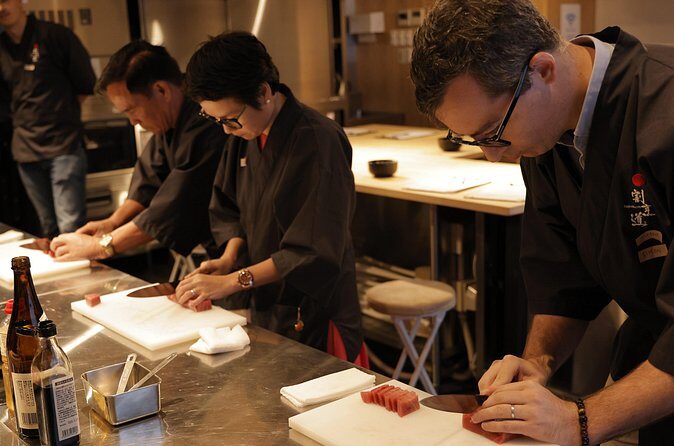
This is a great fit if you want:
- hands-on Tokyo food culture, not just watching
- a short, structured skill class with coaching
- a meal that ties directly to what you practiced
- a deeper understanding of sashimi cutting angles and knife basics
- a fun way to learn Japanese knife etiquette while you’re in the city
It’s also especially appealing if you’re the type who likes to bring skills home. The class isn’t pretending you’ll become a professional fishmonger. But it gives you a starting point you can build on later.
Who might think twice:
- If you’re expecting a broad cooking class with lots of unrelated recipes, this is narrow by design.
- If you don’t want to cut raw sashimi at all, that comfort factor matters, because the activity is built around you using a sashimi knife.
Should you book? My decision guide
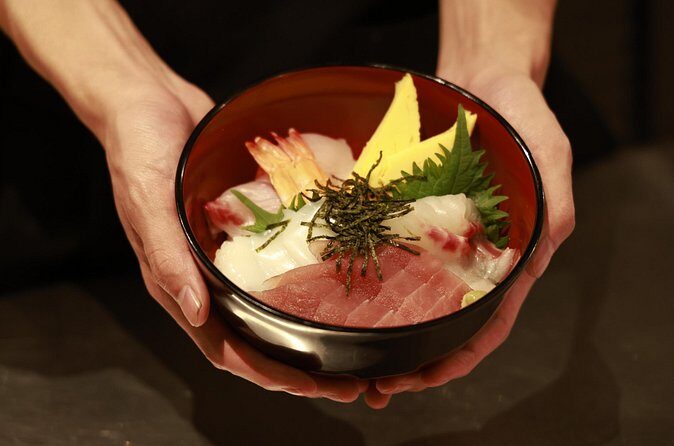
If your goal is to leave Tokyo with something tangible—better knife confidence, cleaner slicing skills, and a kaisendon bowl you built yourself—then yes, book it. The small group size, the flour dumpling warm-up, the hands-on sashimi cutting, and the fact that you eat what you make all line up into one satisfying arc.
If your goal is only to taste Japanese food and you’d rather skip technique, you might feel the time is too craft-focused for you. But if you’re curious about how Japanese knives are used and you want that skill to connect to your lunch, this class has the right balance.
One practical strategy: plan to use that same-day 10% discount at the 1F shop if you’re shopping for related tools or items. The workshop gives you context, and the discount gives you a reason to act while it’s fresh.
FAQ
How long is the Kaisendon and Sashimi Cutting Workshop?
The workshop runs for about 1 hour 30 minutes (approx.).
What will I make during the class?
You’ll cut sashimi with a sashimi knife, then place it on top of vinegared rice to make a seafood bowl called kaisendon (kaisen-don).
Do I need to bring my own knife?
No. The session includes all tools used in the lessons.
How many people are in a class?
The workshop has a maximum of 4 travelers.
What food and drinks are included?
You’ll have lunch made from your bowl (the seafood bowl you create), plus miso soup and alcoholic beverages. Sake tasting is also available during tasting time.
Is there any discount or certificate included?
Yes. You’ll receive a certificate of participation, and you can enjoy 10% off items at the 1F shop on the same day of your workshop visit.
What is the cancellation policy?
You can cancel for a full refund if you cancel at least 24 hours in advance. If you cancel less than 24 hours before the experience starts, the amount paid is not refunded.