REVIEW · TOKYO
Kamakura Full Day Tour with Licensed Guide and Vehicle from Tokyo
Book on Viator →Operated by Japan Guide Agency · Bookable on Viator
Kamakura is a quick getaway with serious culture. This private tour blends temples, shrines, gardens, and sea air with a licensed multilingual guide in a comfortable vehicle, so you’re not wrestling trains and transfers all day. Two highlights I really like: the chance to see the big-name sights like Hasedera and Kotoku-in, plus the calm, photo-friendly stops that feel slower than Tokyo. One thing to consider: guide English quality can vary, so if you’re traveling for language help, it’s worth asking questions before you commit.
You get a structured day that still feels flexible, because you’re choosing 3–4 sites from the Kamakura “greatest hits” list. The tradeoff is that your exact route can shift with traffic, so build in a little patience for timing and stay ready to adjust.
At around 8 hours including travel time from Tokyo, this is best for people who want to see more in less hassle. Entrance fees, lunch, and personal expenses are on you, and the day is weather-dependent.
In This Review
- Key Things to Know Before You Go
- Why Kamakura Feels Different With a Private Car and Licensed Guide
- How the 8-Hour Schedule Works (and How to Pick Your 3–4 Stops)
- Hasedera Temple: Kannon Statues, Gardens, and Sea Views
- Kotoku-in Great Buddha: Seeing Amida at 11.4 Meters
- Kencho-ji Temple: Zen Temple Energy and That Classic Bell Moment
- Tsurugaoka Hachimangu and Hokoku-ji Bamboo: Shrine Center to Tea Break
- Yuigahama Beach and Komachi Street: Ocean Air, Then Snacks and Shopping
- Eisho-ji Nunnery: Quiet Temple Time Near Tsurugaoka
- Price and Value for a Group Up to Four
- Tips to Make the Day Run Smoothly
- Should You Book This Kamakura Full Day Tour?
- FAQ
- How long is the Kamakura full day tour?
- What does the tour price include?
- Are pickup and mobile tickets included?
- Are entrance fees and lunch included?
- Can I choose which places to visit?
- What’s included versus not included for the guide?
- What happens if the weather is bad?
Key Things to Know Before You Go
- Private vehicle from Tokyo saves time versus piecing together trains, especially if you want multiple temple areas.
- Licensed guide (English + multilingual) helps you understand what you’re seeing, not just pass landmarks.
- Choose 3–4 stops so the day matches your interests instead of ticking boxes no one cares about.
- Most iconic sights are grouped efficiently, including Hasedera, Kotoku-in, Zen temple areas, and Tsurugaoka Hachimangu.
- Some sections cost extra: many temple admissions aren’t included, and Hokoku-ji’s tea has a small fee.
- Crowds are real near Komachi Street and Yuigahama Beach, so you’ll want smart timing.
Why Kamakura Feels Different With a Private Car and Licensed Guide
Kamakura works best when you’re moving through neighborhoods that feel separate—temple hill areas, shrine centers, then down to beach and shopping streets. Doing it solo is doable, but it can turn into a lot of walking back and forth with limited time.
That’s why I like the format here: a government-licensed guide plus a private vehicle. You’re not stuck figuring out which bus actually goes where. Instead, your guide helps you connect the dots: what a temple worships, why it matters historically, and what to look for while you’re there. In one happy experience, the guide Kei kept the day moving smoothly across multiple temples and shrines, and the group still had enough time to actually enjoy the gardens and viewpoints.
Another big win: you can ask for small tweaks on the fly. For example, if you care more about Zen atmosphere, you can lean into Kencho-ji style spaces. If you love scenic photo stops, you’ll naturally gravitate toward places where you can see the ocean.
The only caution I’d flag is human: one past booking reported that the guide’s English was very hard to understand. That doesn’t mean it will happen to you, but it does mean you should treat language as part of the planning. If English clarity is essential, ask how they handle language support and confirm what multilingual means for your specific language.
You can also read our reviews of more guided tours in Tokyo

How the 8-Hour Schedule Works (and How to Pick Your 3–4 Stops)
The day runs about 8 hours total, and that includes travel time between Tokyo and Kamakura, which is about an hour each way. In practice, you’re probably looking at roughly half a day of sightseeing plus a bit of cushion—so selection matters.
Here’s the smart way to choose your 3–4 sites:
- If it’s your first Kamakura visit, I’d pick at least one “wow statue” stop (Kotoku-in) and one “garden + viewpoint” stop (Hasedera). That combo gives you scale and scenery fast.
- If you want the calmer side, add Zen or nunnery time (Kencho-ji and Eisho-ji).
- If you want food and atmosphere, keep Komachi Street on your list and possibly Yuigahama Beach—just don’t expect beach quiet mid-day.
Also note that traffic can change timing. The operator says travel time and tour details may shift due to road conditions, so don’t pack your day like a robot. The private format still helps, but it won’t eliminate reality.
Hasedera Temple: Kannon Statues, Gardens, and Sea Views
Hasedera (Hasedera Temple) is one of those places that makes you slow down without forcing it. The big draw is the eleven-headed statue of Kannon, a goddess of mercy, in the Kannon-do Hall. The statue is 9.18 meters tall, gilded, and meant to be seen from inside the main building—so you’re not just looking at something from a distance.
What I like about Hasedera for a first-time Kamakura day is the combination: indoor artwork plus outdoor grounds. You get the classic temple-garden experience, and the site’s layout makes ocean viewpoints possible. Even when the view is hazy, the contrast between sea air and temple calm is part of the appeal.
Timing reality check: the tour block is about 1 hour, and admission isn’t included. If you’re sensitive to long queues or want more time for photos, you’ll appreciate choosing Hasedera as one of your priority stops.
If you’re traveling with a guide, ask what to look for inside the hall. A good guide will help you understand what you’re seeing and why it’s treated with reverence.
Kotoku-in Great Buddha: Seeing Amida at 11.4 Meters
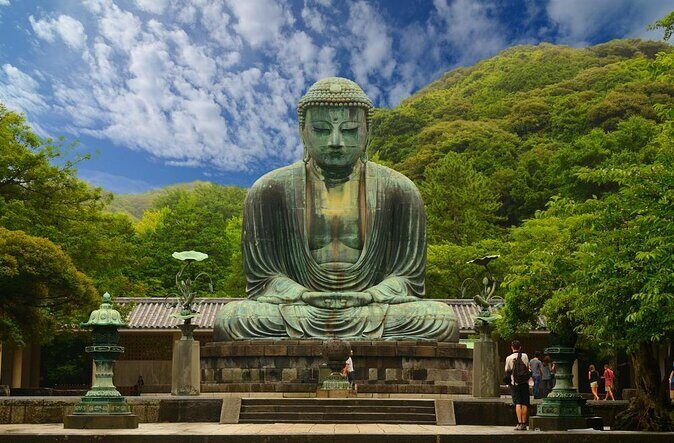
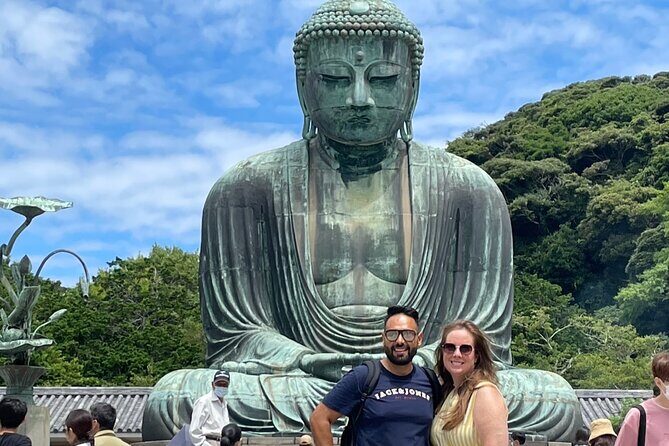
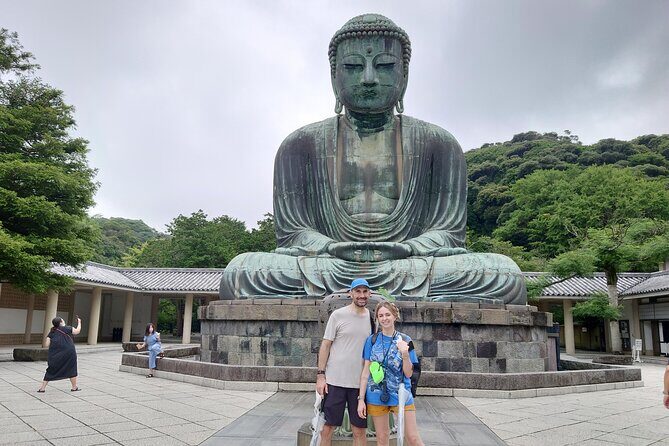
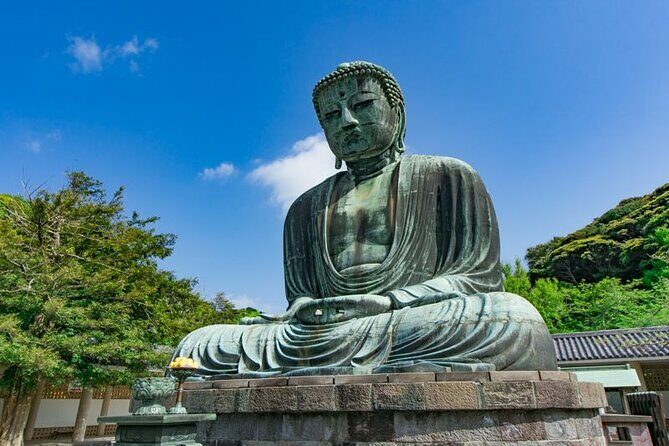
Kotoku-in is famous for one reason: the Great Buddha of Kamakura. This is a bronze statue of Amida Buddha sitting on Kotokuin Temple grounds, and it’s 11.4 meters tall. In Japan terms, it’s an icon-level sight.
The feeling here is different from many temple visits. You’re not just inside an ornate space. You’re encountering scale. Stand back, then move closer and notice the surfaces and how the statue anchors the grounds around it.
The tour gives you about 1 hour at this stop. Again, admission isn’t included, so plan for that expense on top of the tour price. Still, if you’re choosing only a few stops, Kotoku-in is the one I’d keep.
Kencho-ji Temple: Zen Temple Energy and That Classic Bell Moment
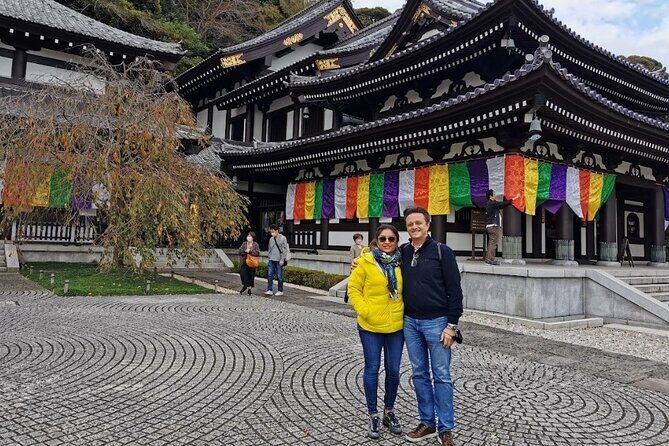
Kenchōji is the #1 of Kamakura’s “five great Zen temples,” and it has an old foundation story: it was founded in 1253 by Hojo Tokiyori, with its first head priest being Rankei Doryu, a Zen priest from China.
What you’ll notice fast is how the site stretches. The complex is smaller than its peak days, but it still covers a wide area, climbing from the entrance gate up into forested hills behind. After you pass through the Sanmon gate, there’s a temple bell (Bonshō) on the right that’s designated a national treasure.
The tour slot is about 30 minutes, which is shorter than Hasedera or Kotoku-in. That makes Kencho-ji a good choice if you want a Zen fix but you also want to preserve time for other areas. If you feel you’ll want more than 30 minutes for quiet photos or a longer walk through the grounds, consider swapping out another stop so Kencho-ji stays on the top tier.
A few more Tokyo tours and experiences worth a look

Tsurugaoka Hachimangu and Hokoku-ji Bamboo: Shrine Center to Tea Break
This is one of the best pairings on the list because the mood changes on purpose.
First, Tsurugaoka Hachimangu Shrine. It’s dedicated to Hachiman, the patron god associated with the Minamoto family and samurai more broadly. Deified spirits of Emperor Ojin (identified with Hachiman) and other associated figures are enshrined here too. The tour gives you about 1 hour. Admission is free, so it’s an easy “included value” stop inside the tour day.
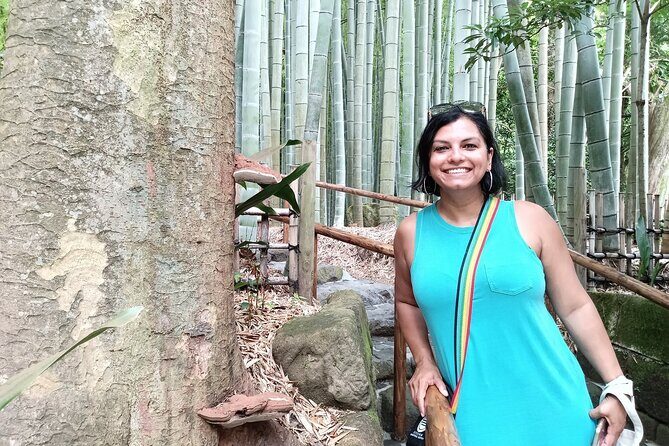
Then, Hokoku-ji Temple. This is where the senses shift. Behind Hokokuji’s main hall is a small bamboo grove with over 2,000 bamboo stalks. The pathways are narrow, and the bamboo dark greens create that shaded hush that makes you want to speak softly even if you’re not told to.
The tour gives about 1 hour here, and it’s not just “look at bamboo.” Narrow routes lead through to a tea house, where you can sit and enjoy matcha tea for a small fee. You also get shallow caves carved into hillside areas behind the temple, believed to hold ashes of later Ashikaga lords.
If you’re planning your day: this is the spot where I’d slow down. Use the tea time, and let the guide explain what you’re seeing, not just where to stand for a photo.
Yuigahama Beach and Komachi Street: Ocean Air, Then Snacks and Shopping
After temple time, Kamakura hits a different gear—seafront energy and street-level browsing.
Yuigahama Beach is a major beach with a big flat stretch and, yes, it can be very crowded. The practical advantage is convenience: it’s just a short walk from Kamakura Station. The tour allots about 30 minutes, with free access, so it works as a reset break before you head into shopping and food.
Then you’ve got Komachi-dori (Komachi Street), running parallel to Wakamiya Oji from near the station to Tsurugaoka Hachimangu. It’s a shopping street where you can eat, snack, and buy souvenirs. The tour gives about 1 hour, and it’s free to enter.
Two food ideas tied to this area:
- Try hatosabure, dove-shaped biscuits. They’re a Kamakura-style souvenir you’ll see repeatedly.
- If you’re hungry, look for simple local bites; one past experience mentioned buckwheat noodles served with hot soup on Komachi Street.
Here’s my practical advice: pick one “snack mission” and don’t try to sample everything. With crowds, you’ll waste time waiting. One good bite, then keep moving.
Eisho-ji Nunnery: Quiet Temple Time Near Tsurugaoka
Eisho-ji (英勝寺) is described as the only surviving nunnery in Kamakura. It’s near Tsurugaoka Hachimangu and has a reputation for seasonal blooms, tied to a founder connected with the Tokugawa family in the early Edo period.
What makes it worth adding is the quiet contrast. You get a peaceful bamboo grove and a graceful Amida Buddha statue said to be by sculptor Unkei. The tour gives only about 10 minutes, and admission isn’t included, so treat this stop as a calm punctuation mark—short, serene, and photo-friendly if you arrive at the right moment.
If you love slow, understated spaces, keep Eisho-ji. If you’d rather allocate time to something with bigger “hold your attention” impact, consider skipping it and using the extra minutes elsewhere.
Price and Value for a Group Up to Four
At $1,026.90 per group (up to 4), you’re paying for four things at once: private transportation, a licensed guide, and a structured day that’s hard to replicate efficiently on public transit in real time.
Is it cheap? No. But value in day tours isn’t only about dollars—it’s about how much you can realistically see without spending your whole day traveling. With Kamakura spread across multiple zones, the private car matters.
How I’d judge the value:
- If you’re traveling as a small group (up to four), the per-person cost drops fast compared with doing multiple independent tours.
- If you care about learning—temple meanings, what statues represent, why a shrine is dedicated where it is—the guide component justifies a lot of the price.
- If you only want one or two big sights, you may find the cost harder to justify.
Entrance fees and lunch are not included. Many stops are likely to add extra small costs, especially if you pick places with paid admission. Still, the tour can be worth it if you choose stops you truly want, then use the time savings to enjoy rather than rush.
Tips to Make the Day Run Smoothly
Here’s how to set yourself up for a low-stress Kamakura day:
- Start with priorities, not a wish list. With only 3–4 sites, you’ll enjoy the ones you chose more.
- Ask your guide for language support early. One past booking complained that English was difficult to follow. You want clear explanations, not guessing.
- Wear shoes for temple walks. Even short garden loops add up when you’re hopping between areas.
- Plan for extra time near crowds. Komachi Street and Yuigahama can get busy.
- Budget for tea and admissions. Hokoku-ji tea has a small fee, and most temple admissions are not included.
- If you need child safety seats, contact the operator. Rear-facing car seats aren’t available, and seat options are limited.
Also keep in mind the day requires good weather. If weather is poor, you’re offered a different date or a refund, so check forecasts as your date approaches.
Should You Book This Kamakura Full Day Tour?
Book it if:
- You want a private, efficient Kamakura day from Tokyo.
- You care about understanding what you’re seeing, not just taking photos.
- Your group can use the vehicle value (up to four people).
- You want a mix of major landmarks and quieter temple moments like Hokoku-ji and Eisho-ji.
Skip it or reconsider if:
- You’re extremely sensitive to English explanation quality and don’t want any risk there—since one experience reported serious comprehension problems.
- You’d rather DIY with public transit and already know how to group Kamakura sights efficiently.
If you do book: pick your 3–4 stops with intention, ask questions about language expectations, and treat the day like a focused tour with a few “big stop” anchors. That’s the sweet spot.
FAQ
How long is the Kamakura full day tour?
The duration is about 8 hours, and it includes travel time from Tokyo to Kamakura and back.
What does the tour price include?
The price includes a licensed local English-speaking guide and a private vehicle, plus a customizable itinerary of 3–4 sites selected from the tour options.
Are pickup and mobile tickets included?
Pickup is offered, and the tour uses a mobile ticket.
Are entrance fees and lunch included?
No. Entrance fees, lunch, and other personal expenses are not included.
Can I choose which places to visit?
Yes. You can customize your tour by selecting 3–4 sites from the list of expected stops.
What’s included versus not included for the guide?
Guide entry fees are only covered for sights listed in the tour’s expected options, while other entrance fees are not included.
What happens if the weather is bad?
This experience requires good weather. If it’s canceled due to poor weather, you’ll be offered a different date or a full refund.