REVIEW · KYOTO
Kyoto Evening Gion Food Tour Including Kaiseki Dinner
Book on Viator →Operated by Arigato Japan KK · Bookable on Viator
Kaiseki in Gion feels like time travel. This Kyoto evening tour pairs an easy stroll along the Kamo River with a guided look at historic lanes in Gion and Shirakawa, then hands you a proper 10-course kaiseki dinner.
I love how the walk sets context before you sit down. I also love that the group stays small (up to 10), so you actually get answers while you’re moving.
One thing to consider is the price: you’re paying for the dinner experience as much as the stroll. If you prefer casual food over formal courses, you may feel the cost more than the walking part.
In This Review
- Key Things I’d Pay Attention To
- Gion at 5:00 pm: your evening starts by the Kamo River
- From Japan Kanji Museum & Library to Gion’s first old-street views
- Strolling Gionmachi, Shirakawa, and Hanamikoji for real Kyoto atmosphere
- Spotting Gion’s entertainment culture without turning it into a hunt
- Pontocho and kaiseki: what the 10-course dinner experience actually gives you
- How the food tastings during the walk set you up for the meal
- Dietary options, green tea, and the one-included-drink rule
- Group size, walking pace, and why weather matters
- Price and value: is $276 worth a kaiseki dinner plus walking context?
- Who this Kyoto evening Gion food tour suits best
- Should you book this Kyoto Evening Gion Food Tour with Kaiseki Dinner?
- FAQ
- What time does the tour start?
- How long is the Kyoto Evening Gion Food Tour?
- Where do we meet and where does it end?
- What’s included with the kaiseki dinner?
- Are there dietary options available?
- Is there an age requirement for drinking?
- Is the group size limited?
Key Things I’d Pay Attention To
- A 5:00 pm start that hits Kyoto’s “evening lights” mood before dinner.
- Kamogawa and Kamo River terraces: a scenic warm-up walk before Gion.
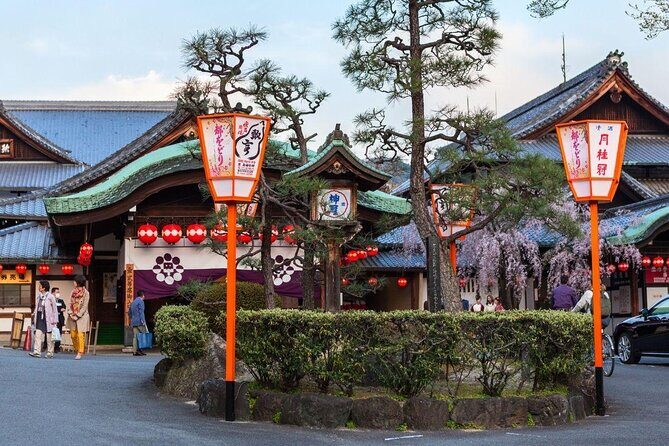
- Gion + Shirakawa back alleys: old wooden streets, teahouses, and local landmarks.
- 10-course kaiseki dinner in Pontocho with green tea and dessert.
- Small group size (max 10), which makes the guide’s pacing feel more personal.
- Dietary support listed as Vegetarian, Pescatarian, and Gluten-Free Friendly.
Gion at 5:00 pm: your evening starts by the Kamo River
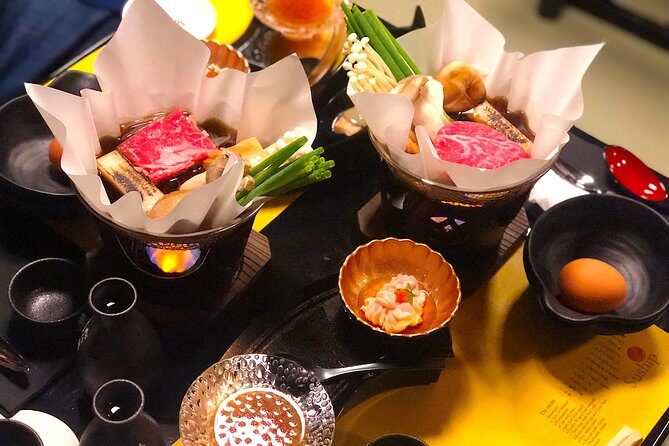
Kyoto nights have a special rhythm. Starting at 5:00 pm means you’re not just sightseeing in daylight and rushing to dinner. You catch the shift in atmosphere as the Kamo River area warms up with evening activity and the streets start to glow.
You meet at Japan Kanji Museum & Library (551 Gionmachi Minamigawa, Higashiyama Ward). From there, you head on foot toward the river, crossing the Kamogawa bridge and following the terraces along the Kamo River. This is a great “starter course” moment, because the setting tells you what the rest of the evening is about: Kyoto is about pacing, not speed.
Two practical tips help here. First, wear shoes you can walk in for a few solid hours. Second, Kyoto in the evening can be damp—if rain threatens, bring something light you can layer and use fast.
You can also read our reviews of more food & drink experiences in Kyoto
From Japan Kanji Museum & Library to Gion’s first old-street views
The first stop is quick: Japan Kanji Museum & Library, with free admission. Even if you don’t linger, it’s a smart way to start. It reminds you you’re not just going to “pretty streets.” You’re stepping into a city where language, craft, and tradition show up in daily life.
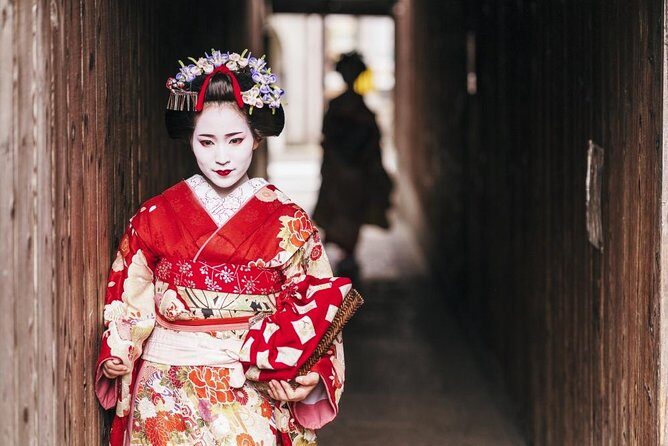
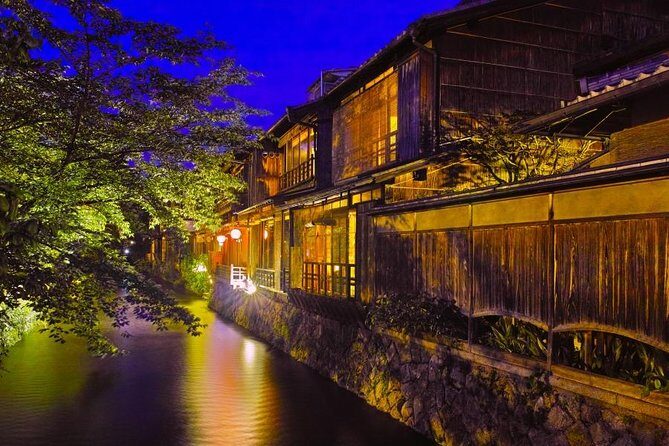
Then you move into Gion, and the change is immediate. You’ll see the neighborhood as a maze of old wooden buildings, teahouses, and traditional-style streets, with areas known for very exclusive restaurants. The point is not to hunt for a specific celebrity scene. The point is to understand why Gion works as a cultural district: it’s built around time-honored entertainment and refined hospitality.
A lot of people expect the tour to feel like a checklist. This one leans more toward orientation. You get “where you are and why it matters” while you’re walking, so your dinner doesn’t feel random.
Strolling Gionmachi, Shirakawa, and Hanamikoji for real Kyoto atmosphere
The heart of the experience is the guided wander through Gion and the surrounding lanes. You’ll spend time in major areas like Gionmachi, and you’ll also pass through Gion Shirakawa, plus classic viewpoints such as Hanamikoji Street and nearby landmarks.
Here’s what this kind of walk does for you as a visitor: it teaches you how to look. When you’re in Kyoto without context, back alleys can look like just… back alleys. With a guide, you start noticing details that explain the area’s character—street layout, building style, the rhythm between shops and teahouses, and why some spots feel quieter than others.
You’ll also visit a few specific landmarks in the Shirakawa area, including:
- Tatsumi Daimyojin Shrine
- Statue of Izumo-no-Okuni
- Kyomizu Temple
- Hōkanji Temple and Yasaka Pagoda
- Tatsumi Bridge
- Hanamikoji Street
Not every stop is about “major sights” in the big-tour sense. Some are about geography and culture—places that help you understand what you’re seeing as you move.
One small drawback of a walking-heavy evening: you’ll be covering ground at dusk. The tour information notes strong physical fitness is recommended, and with a 3-hour window, the pacing can stay steady. Plan for that. If you’re prone to sore feet, consider bringing a blister-prevention kit.
Spotting Gion’s entertainment culture without turning it into a hunt
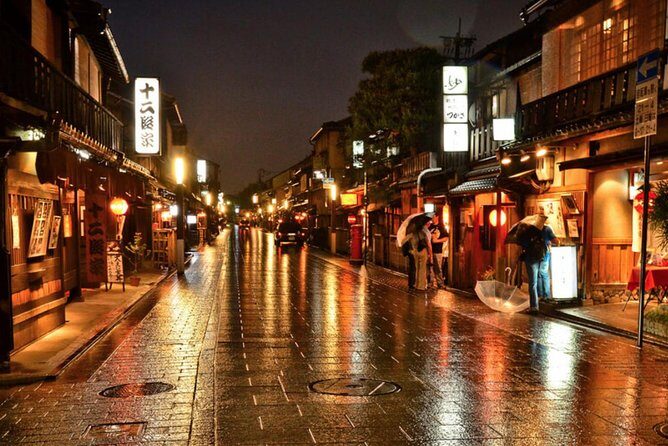
This tour spends real time on the idea of Gion as a historic entertainment district—home to teahouses, traditional arts, and the famous world of geisha culture. You’ll learn about Maiko and Geiko, plus the etiquette and structure that shaped how this neighborhood works.
A useful reality check: you’re not guaranteed to see a geisha up close every minute. The tour’s value isn’t a photo lottery. It’s the education that helps you recognize what you’re looking at when you do spot someone walking between teahouses in traditional kimonos.
Also, you’ll hear stories tied to the neighborhood’s role. Even the names of streets and landmarks matter here. That’s why the guide’s narration lands: it turns geography into meaning.
If you’re going with family or first-timers, this is one of the best ways to give context fast. Kids often remember the stories and the vibe more than the exact course descriptions.
Pontocho and kaiseki: what the 10-course dinner experience actually gives you
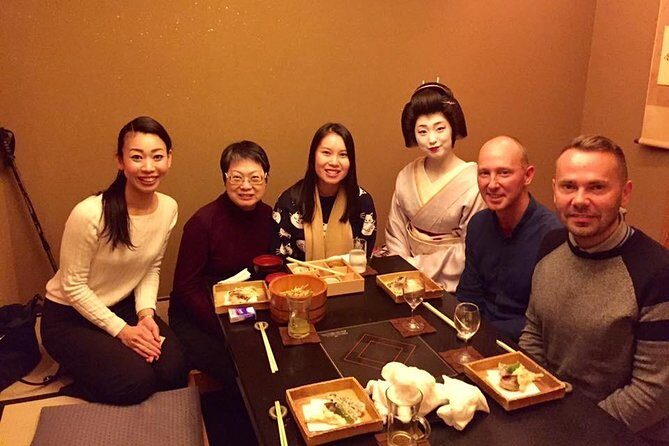
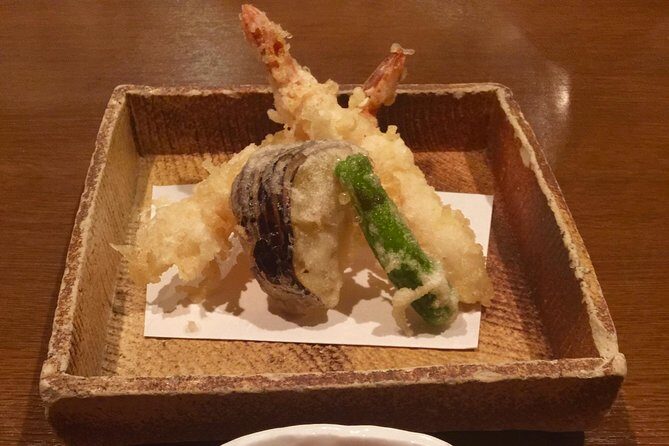
After the walk, you sit down in the Pontocho area for your kaiseki meal. The ending point is listed as Pontocho Idumoya (173-2 Kashiwayachō, Nakagyo Ward). If you’re thinking kaiseki is just “a fancy dinner,” you’ll be close—but not quite there.
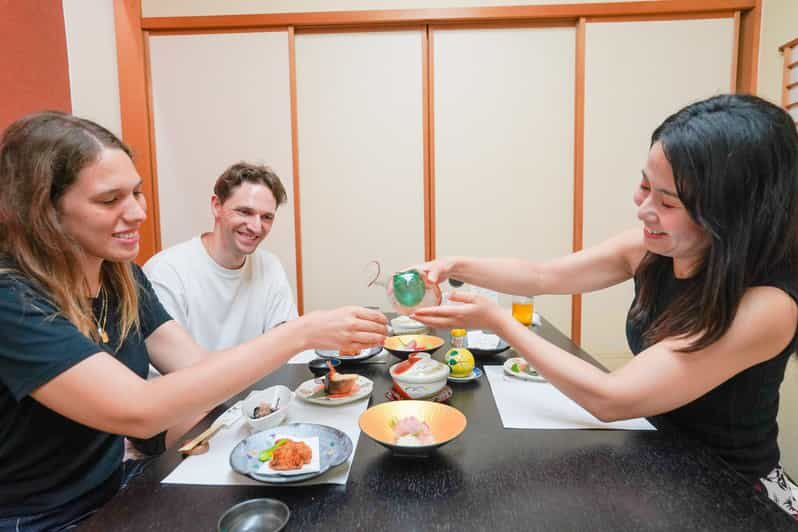
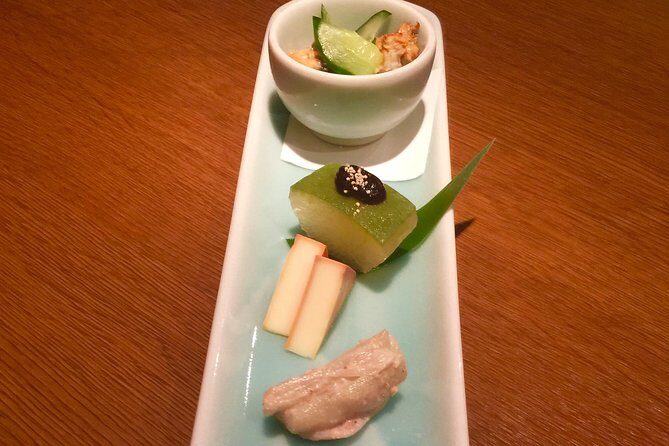
Kaiseki is a structured meal designed around seasonal ingredients and harmony of flavors. You get a 10-course dinner plus green tea and dessert, and you also have one drink included. That structure matters. It slows you down on purpose, which is exactly what you need after walking Gion streets.
What you’ll likely notice over the meal:
- Each course is portioned for tasting, not stuffing.
- Flavors are layered rather than heavy.
- The meal feels like it’s following a theme of seasons and balance.
In past experiences of this kind, people often advise going in with an open appetite, because the courses build. One caution from the tone of guest feedback is that the meal can feel like “a lot of dinner,” even if it isn’t the typical restaurant plate-and-dessert setup. So yes, you should eat before the tour is over—but don’t arrive expecting a quick, filling burger-style dinner.
A few more Kyoto tours and experiences worth a look


How the food tastings during the walk set you up for the meal
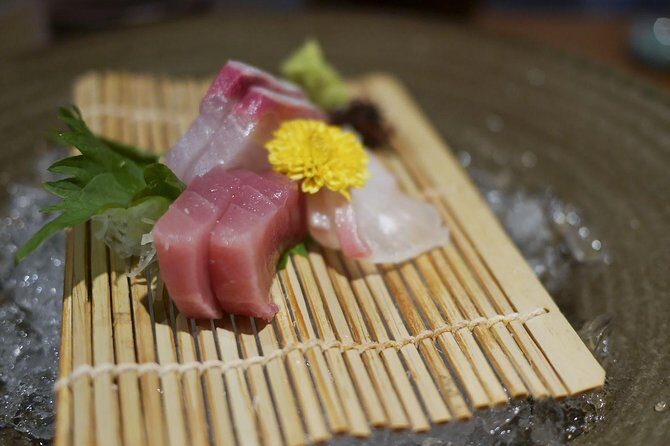
You’ll stop for tastings along the way while you head from the river area toward Gion and Shirakawa. The exact treats can vary depending on the day and what shops are available, but the purpose is consistent: give you a sample of Kyoto food culture so you recognize flavors and traditions during the kaiseki portion.
This also helps explain why the tour price is higher than a basic walking tour. You’re not just paying for dinner. You’re paying for the full arc: atmosphere first, then tastings, then an explained formal meal.
I like this approach because it makes the evening feel connected. Without the walk tastings, kaiseki can feel like a separate event you attend for one night. With the tastings, it feels like one continuous story.
Dietary options, green tea, and the one-included-drink rule
The tour lists meal flexibility: Vegetarian, Pescatarian, Gluten-Free Friendly. That’s a big deal on kaiseki nights, since traditional cooking can be ingredient-specific. If you have dietary needs, this is one of the reasons to seriously consider booking rather than trying to piece together a kaiseki reservation on your own.
Drinks are also clearly defined: you get one drink included, and the minimum drinking age is 21. So if you’re under 21, you can still enjoy the dinner, but you’ll want to rely on included non-alcohol options like green tea.
Practical move: if you’re gluten-free or vegetarian, message or note your needs at booking time. The more specific you are, the more likely you are to get a meal that actually matches what you can eat.
Group size, walking pace, and why weather matters
This tour caps at 10 travelers, which is a sweet spot. Large groups make guides talk “at you.” Small groups let the guide move with you and respond to questions more naturally. It also helps the walking route feel less crowded, especially in dense lanes like those around Gion.
Timing-wise, you’re looking at about 3 hours total. That’s short enough to fit into a Kyoto itinerary, but long enough that you’ll be on your feet for a meaningful portion of the evening.
Weather is the other big variable. The tour requires good weather. If it’s canceled due to poor weather, you’re offered a different date or a full refund. That matters because a rainy evening can turn “cute alley stroll” into “cold, wet, and slow.” If you’re visiting in rainy season, bring a compact umbrella and plan to dress in layers.
Also keep expectations realistic: this is a walking tour. There’s no mention of hotel pickup, so you’ll want to get yourself to the meeting point near public transportation.
Price and value: is $276 worth a kaiseki dinner plus walking context?
Let’s talk money without pretending it’s “cheap.” At $276 per person for roughly 3 hours, you’re paying for three things:
- A structured 10-course kaiseki dinner (plus green tea and dessert).
- A guided night walk through Gion and Shirakawa.
- Tastings during the stroll, plus a guide who explains what you’re seeing.
If you compare this to booking a standalone kaiseki dinner, the additional value here is the “before dinner” experience: the guide helps you understand the neighborhood’s role and the meaning behind what you see. That’s hard to recreate on your own unless you already know Gion well.
If you’re the kind of traveler who likes to snack, read street signs, and connect food to culture, this cost can feel fair because the night is designed as one package. If you only want a general Gion photo stroll and would rather pick your own casual dinner nearby, you may feel the price more.
My practical advice: treat it as a formal culinary event with a guided cultural preface. That framing makes the price feel more honest.
Who this Kyoto evening Gion food tour suits best
This tour is a strong fit if:
- You want Gion context fast, not after you’ve already eaten and wandered.
- You enjoy food that’s explained as part of the craft and seasonality.
- You like walking, and you can handle a steady evening pace.
- You’re traveling with first-timers and want an “easy win” introduction to Gion and traditional arts.
- You have dietary needs listed as Vegetarian, Pescatarian, or Gluten-Free Friendly.
It may be less ideal if:
- You hate formal multi-course meals and prefer simpler, heavier portions.
- You’re looking for a long, slow museum-style tour rather than a moving evening stroll.
- You need very limited walking time.
A final note on solo travel: the tour information says solo travelers can email the provider. So if you’re traveling alone and want clarity on how the group will form, it’s worth reaching out early.
Should you book this Kyoto Evening Gion Food Tour with Kaiseki Dinner?
I’d book it if you want one Kyoto evening that ties together place and food—Kamo River to Kamogawa bridge, Gion streets and Shirakawa landmarks, then a real kaiseki meal in Pontocho with green tea and dessert. The small group size and the tastings during the walk make it feel like more than just dinner with a short briefing.
Skip it (or rethink) if $276 feels risky for you and you mainly want a casual wandering experience. This isn’t a budget stroll. It’s a curated night that prioritizes traditional dining and cultural orientation.
If you can handle a steady walk and you’re excited about seasonal Japanese cuisine, this is a very solid way to spend your Kyoto evening.
FAQ
What time does the tour start?
The tour starts at 5:00 pm.
How long is the Kyoto Evening Gion Food Tour?
It runs for about 3 hours.
Where do we meet and where does it end?
Meet at Japan Kanji Museum & Library (551 Gionmachi Minamigawa, Higashiyama Ward, Kyoto). It ends in the Pontocho area at Pontocho Idumoya (173-2 Kashiwayachō, Nakagyo Ward, Kyoto).
What’s included with the kaiseki dinner?
You get a 10-course dinner plus green tea and dessert, along with one drink included.
Are there dietary options available?
Yes. The tour is listed as Vegetarian, Pescatarian, Gluten-Free Friendly.
Is there an age requirement for drinking?
Yes. The minimum drinking age is 21.
Is the group size limited?
Yes. The tour has a maximum of 10 travelers.