Kyoto gets easier on two wheels. This Kyoto e-bike tour strings together Gion streets and quieter sacred spots with a small English guide. Names like Ben and Yuki come up often, because they explain what you’re seeing, not just where to look.
I like the balance here: electric assist means you can enjoy the ride instead of white-knuckling every hill, and the pacing includes frequent stops for photos and quick breaks. I also like the lineup—Nanzen-ji, Heian Shrine, the Philosopher’s Path, Shimogamo-jinja, and the Kyoto Imperial Palace area—so you get more “Kyoto feeling” per hour than a simple sightseeing loop.
One thing to consider: it’s not for everyone. You need to be over 145 cm, and it isn’t suitable for kids under 10. Also, insurance isn’t included, so if you rely on it, double-check your own coverage before you go.
In This Review
- Key things that make this Kyoto e-bike tour worth your time
- Why a Kyoto E-Bike Tour Beats the Usual Grind
- Meeting in Gion: Where Your Morning Actually Starts
- Gion for 20 Minutes: Quick Taste, Not a Marathon
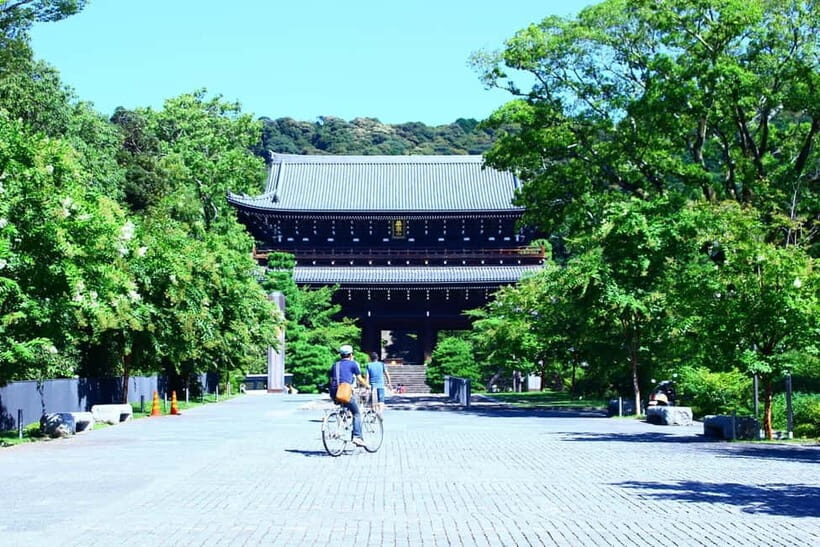
- Nanzen-ji Temple in 30 Minutes: Big Atmosphere, Manageable Time
- Heian Shrine for 30 Minutes: Why This Stop Matters
- The Philosopher’s Path for 30 Minutes: Pedal to the Water, Not the Stress
- Shimogamo-jinja for 20 Minutes: A Quieter Shrine Feeling
- Kyoto Imperial Palace Area in 30 Minutes: Royal History, Bike-Friendly Pace
- The E-Bike Ride Itself: Comfort, Power Assist, and Safety
- The Best Part: A Guide Who Actually Explains
- Price and Value: Is $87 Smart for a 4-Hour Kyoto Day?
- When to Go and What to Bring (So You Enjoy It More)
- Who Should Book This Tour (and Who Might Want Another Option)
- Should You Book This Kyoto E-Bike Tour?
- FAQ
- How long is the Kyoto e-bike tour?
- Where does the tour meet?
- What’s included in the price?
- How big is the group?
- Is the tour suitable for children?
- Is free cancellation available?
Key things that make this Kyoto e-bike tour worth your time
- Small group of 8 keeps the ride calm and helps the guide manage traffic and timing.
- Electric assist helps you cover more ground without arriving totally cooked.
- Culture stops you can actually enjoy: temples, shrines, and a classic walking canal area.
- Photo help at scenic points so you’re not wrestling with your camera every ten minutes.
- Local context from the guide—you’ll hear why these places matter, not just facts on a sign.
- You choose the vibe with the option for a more relaxed or more adventurous ride pace.
Why a Kyoto E-Bike Tour Beats the Usual Grind

In Kyoto, the biggest problem is time. The second biggest problem is crowds. A walking day can be charming, but your feet often do the suffering, and you still end up queued outside the most famous gates.
An e-bike route solves that. You’re still doing Kyoto the right way—temples, shrines, old neighborhoods, and ritual spaces—but you’re moving under your own control instead of waiting around. The electric assist is the quiet hero here. Several guides on this tour are known for keeping the group comfortable and moving safely through narrower streets where buses and cars don’t belong.
And because the route runs for about four hours, you avoid the “half-day sightseeing blur.” You’ll have enough momentum to cover multiple areas, yet you can stop, look, and ask questions without feeling rushed.
You can also read our reviews of more cycling tours in Kyoto


Meeting in Gion: Where Your Morning Actually Starts
You start at Kyoto Tourist Lounge Gion, with the guide waiting in front. The facing street is Yamatoooji-dori, so you’re not hunting through maze-like back alleys for a tiny meeting sign.
This matters more than it sounds. Gion can feel like a maze even for people who love getting lost. Starting at a clear, consistent point helps you get into the tour mode fast—grab your bike, get your bearings, then roll.
Once you’re on the e-bikes, you’ll spend the ride doing what Kyoto does best: shifting from lively neighborhood edges into calmer temple and shrine settings. That “change of scenery” is a huge part of why this tour works, especially if it’s your first day in town.
Gion for 20 Minutes: Quick Taste, Not a Marathon
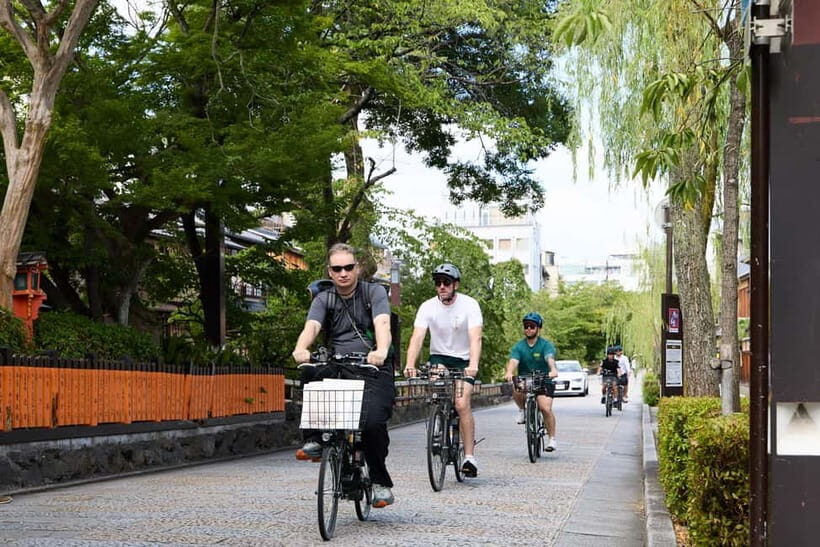
You’ll spend about 20 minutes in Gion. That’s not long enough to do a deep-dive photo walk, and it’s not trying to be. Instead, it gives you a feeling for the neighborhood’s mood before you head toward quieter spiritual spaces.
In that short stop, you’re likely to notice Kyoto’s rhythm right away—street life, traditional architecture cues, and the sense that even well-known areas can feel calmer when you don’t linger at the busiest angles.
Practical tip: treat this first segment like orientation. Watch how people move, where the streets open up, and what type of sights the guide is pointing you toward. You’ll be better prepared for the temple stretches that follow.
Nanzen-ji Temple in 30 Minutes: Big Atmosphere, Manageable Time
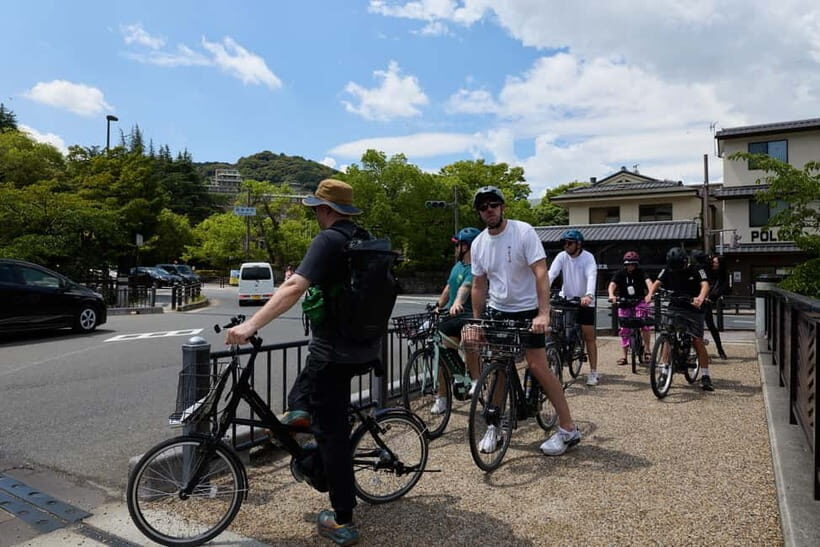
Next up is Nanzen-ji, with about 30 minutes allocated. This is one of those Kyoto locations where scale and serenity both hit. Even when you’re not focused on a single hall, the grounds and paths give you room to breathe.
The time here is a smart compromise. You get enough to walk, look closely, and understand what you’re seeing without turning the stop into a full-on endurance event. A common theme from guides on this route is clear explanations paired with breaks. That means you’re not just transported from one spot to another—you’re given context as you move.
Possible drawback: Nanzen-ji can attract visitors, depending on when you go. If you want the calmest experience, arrive mentally ready to enjoy it in shorter bursts rather than expecting a crowd-free bubble.
Heian Shrine for 30 Minutes: Why This Stop Matters
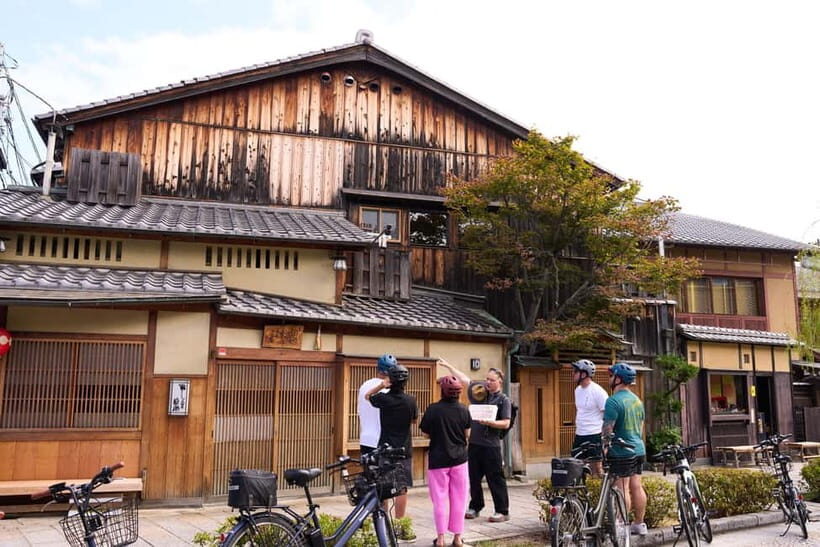
You’ll visit Heian Shrine for about 30 minutes. This stop is valuable because it shifts the feel. You’re not only moving through Kyoto’s classic temple-and-shrine circuit—you’re seeing a different kind of sacred space, and the guided commentary helps tie it to broader cultural patterns.
This is also a good “reset” point. After Nanzen-ji’s grandeur, Heian Shrine gives you a chance to slow down, re-center, and take in the visual layout without feeling like you’re sprinting.
In a four-hour tour, this is the kind of stop that keeps the day from becoming purely checklist sightseeing. You should walk away with at least one clear takeaway about what the place represents and why it’s built the way it is.
A few more Kyoto tours and experiences worth a look



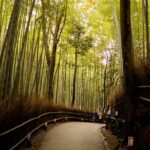
The Philosopher’s Path for 30 Minutes: Pedal to the Water, Not the Stress
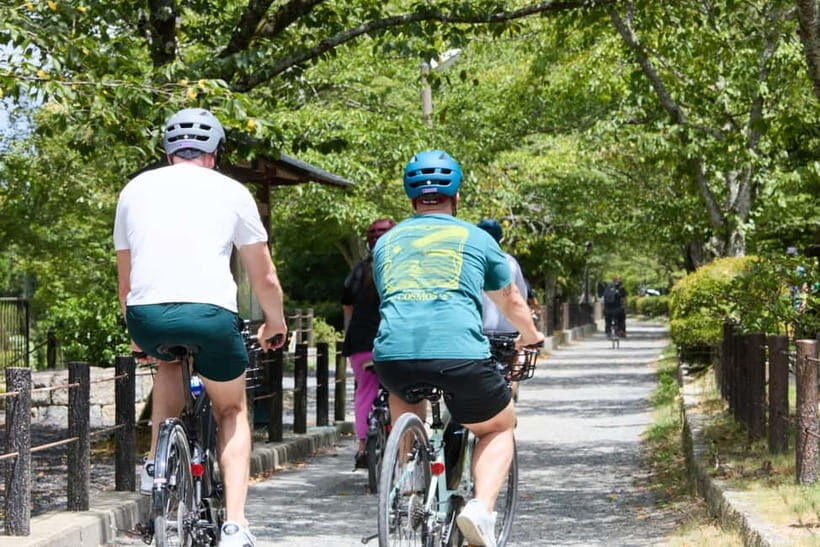
Then comes the stretch most people recognize: the Philosopher’s Path. You’ll spend about 30 minutes here, which is just enough time to enjoy the canal-side atmosphere without turning it into a bottleneck.
Why the timing works: you’re traveling with an e-bike route and a guide who’s managing the flow. That tends to mean you spend less time stuck and more time moving at a human pace.
Practical expectation: this part of Kyoto can be photogenic, but it can also be crowded. The tour’s whole selling point is avoiding the worst queues by steering you toward calmer timing and less frantic movement. Still, plan on treating this as a “slow look + a few key photos” stop, not a long lingering stroll.
Shimogamo-jinja for 20 Minutes: A Quieter Shrine Feeling
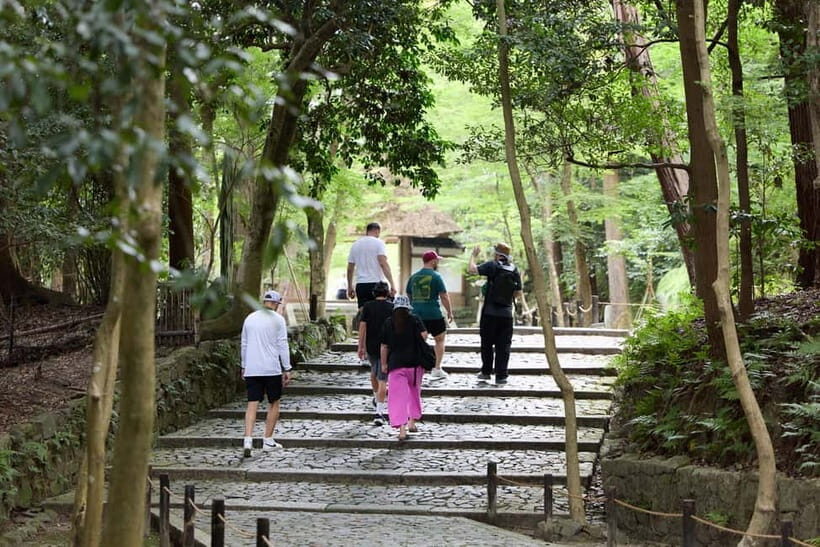
After the Philosopher’s Path stretch, you’ll head to Shimogamo-jinja, with about 20 minutes. This is a shorter stop, which is exactly why it’s effective. You get the sense of the place without turning it into another long walking commitment.
Shimogamo-jinja also tends to feel less like a headline attraction and more like a shrine with everyday presence. That change of tone is what makes the tour feel local. You’re experiencing Kyoto as a lived-in city, not a theme park.
Small caution: it’s easy to underestimate short shrine stops if you’re tired. If you’re the type who wants to read every sign and photograph every gate, 20 minutes can feel fast. If you’re more interested in atmosphere and guided context, you’ll find the time just about right.
Kyoto Imperial Palace Area in 30 Minutes: Royal History, Bike-Friendly Pace
The final major stop is the Kyoto Imperial Palace area for about 30 minutes, before you return to Kyoto Tourist Lounge Gion.
This segment is valuable because it rounds out the day. Temples and shrines give you spirituality and tradition, but the Imperial Palace area adds a different layer—Kyoto’s role in governance, court culture, and historical identity.
The four-hour structure is perfect here. You get enough time to make the stop meaningful, yet you still finish your day without feeling like you’ve been walking since breakfast. It’s also a nice way to end: you’ll likely leave with a stronger sense of how Kyoto’s power, religion, and daily life all connect.
The E-Bike Ride Itself: Comfort, Power Assist, and Safety
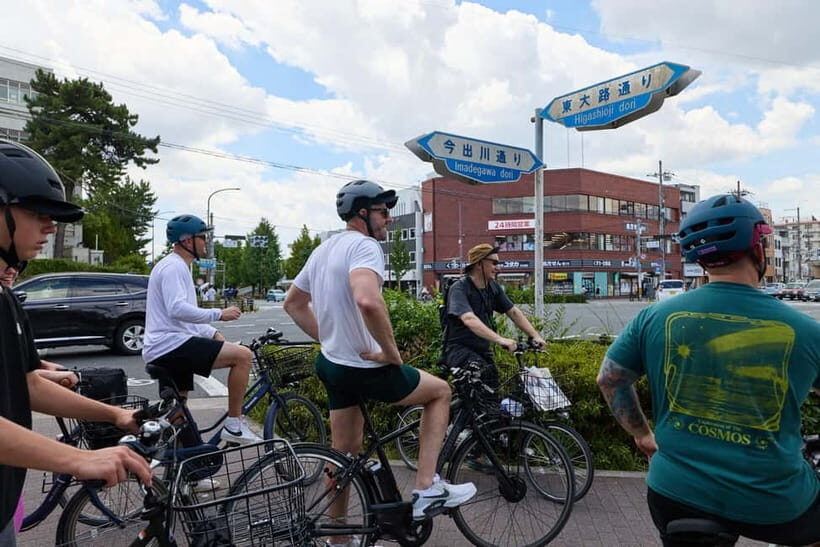
E-bikes are the reason this tour feels doable, especially if your Kyoto itinerary includes other walking-heavy days. You’ll have comfortable e-bike rental included, and the group size is limited to keep it manageable.
A couple of points I’d keep in mind:
- There may be spots where you’ll use more power assist than you expect, depending on your comfort level and the route conditions. This isn’t a problem, but it’s good to go in knowing it’s not always “pure pedal mode.”
- Even with electric help, you still need basic situational awareness—Kyoto streets can be narrow, and you’ll ride in a group. The guides are generally careful about making sure everyone follows along safely, and many guests highlight that the ride is handled with patience.
If you’re nervous about cycling in a new country, you’ll probably relax once you see how the guide spaces the group and sets the pace.
The Best Part: A Guide Who Actually Explains
This tour’s biggest differentiator isn’t the bike. It’s the guiding.
You’ll get English live tour guidance, and the commentary is aimed at helping you understand what you’re looking at—religious meaning, local customs, and why specific details matter. In the guide lineup, Ben, Yuki, Kenji, and others come up repeatedly for being friendly, patient, and very willing to answer questions.
What I really like is the style described by many participants: essential information without long lectures, plus time to explore on your own in small pockets. That approach keeps the tour from feeling like you’re being marched through photo stops. You get structure, then freedom.
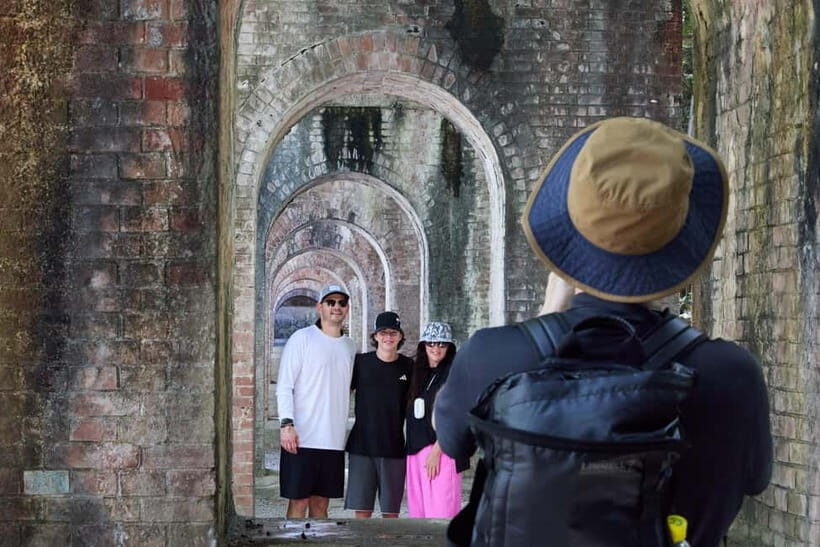
Also, photo support is part of the experience. You’ll have photo opportunities at scenic locations, and some guides are known for taking photos for the group so everyone gets in a few shots that don’t look like accidental selfies.
Price and Value: Is $87 Smart for a 4-Hour Kyoto Day?
At $87 per person for about four hours, you’re paying for three things at once:
1) the e-bike rental,
2) an expert guide in English,
3) a route that connects multiple high-value areas with less wasted time.
If you were doing this independently, you’d still spend money on transit and still lose time managing routing, entrances, and timing—especially if you’re aiming for quieter streets rather than the main crowd channels.
The value really shines for two kinds of travelers:
- First-time Kyoto visitors who want a strong orientation across different neighborhoods
- People who want “sightseeing with context,” not just landmarks
The only real cost-risk is if you find the biking portion stressful or you’re picky about long stays. The stops are well-paced for a half-day, not a multi-hour wander marathon.
When to Go and What to Bring (So You Enjoy It More)
Kyoto’s weather can be tricky, and a bike tour doesn’t stop because it’s annoying outside. If you’re going in mosquito season or warmer months, bring bug repellent—one guest specifically mentioned wishing they’d had it.
For gear:
- Wear comfortable shoes that work for short walks at temples and shrines.
- Bring a light layer for early morning or cooler evenings.
- If you’re prone to dry skin or sensitive eyes, pack basic travel comfort items. Cycling and temple air can feel different from walking-only days.
And do keep a small water plan. The tour is only four hours, but you’ll feel better if you don’t start under-hydrated.
Who Should Book This Tour (and Who Might Want Another Option)
This Kyoto e-bike tour fits best if you:
- want to see multiple major areas in one day,
- prefer calmer routes over the busiest tourist corridors,
- like guided cultural explanations,
- and you’re comfortable riding an e-bike at a relaxed pace.
You should probably skip it if:
- you’re under the 145 cm height requirement,
- you’re traveling with children under 10,
- or you simply don’t want a cycling component at all.
It’s also not suitable for alcohol or drugs, so keep it straightforward and bring a clear head for the cultural stops.
Should You Book This Kyoto E-Bike Tour?
I’d book it if you want a smarter, calmer Kyoto half-day. The route connects Gion to major temple and shrine areas without turning your day into a sweaty sprint. The small group size (up to 8) helps the guide keep things safe and personal, and the repeated praise for guides like Ben and Yuki points to real storytelling, not just directions.
I’d hesitate only if you’re worried about biking comfort, you’re traveling with anyone who doesn’t meet the height and age guidance, or you need long stays at each site. In those cases, you might prefer a more traditional walking tour or a slower day focused on fewer places.
FAQ
How long is the Kyoto e-bike tour?
It lasts 4 hours.
Where does the tour meet?
The guide meets you in front of Kyoto Tourist Lounge Gion on Yamatoooji-dori Street. Check the exact meeting point via Google Map.
What’s included in the price?
You get the comfortable e-bike rental, an expert local guide (English), visits to the listed top sights and quieter spots, cultural commentary, and photo opportunities at scenic locations.
How big is the group?
It’s a small group limited to 8 participants.
Is the tour suitable for children?
No. It’s not suitable for children under 10, and it requires a rider height over 145 cm.
Is free cancellation available?
Yes. You can cancel up to 24 hours in advance for a full refund.