REVIEW · KYOTO
Kyoto: Japanese Calligraphy Class in 150 years old townhouse
Book on Viator →Operated by Tea Ceremony & Cultural Experience Kangetsu Kyoto 日本文化体験教室 寒月 · Bookable on Viator
Brush ink in Kyoto, quietly magical. This Japanese calligraphy class in the historic Ninenzaka area pairs a calm setting with patient, instructive teachers who guide you through classic techniques at a relaxed pace. I love that you get both the hands-on practice and a little context about what you’re actually writing.
The main thing to consider is time. This lesson is about 50 minutes, so you’ll want to treat it like focused practice, not a long casual art hangout.
In This Review
- Key Things You’ll Notice Right Away
- Kyoto’s Ninenzaka: Why This Neighborhood Works for Calligraphy
- Inside a 150-Year-Old Townhouse Workshop
- What You Actually Learn: Beginner Techniques That Make Sense
- The Teacher and Assistant Dynamic (And Why It Helps)
- A Peaceful Hour, With Real Focus Required
- English Every Day: How to Make the Most of the Explanation
- Cost and Value: Why $43 Can Be a Good Deal in Kyoto
- Meeting Point: Plan Your Walk Into Higashiyama
- Socks, Age Rules, and Other Practical Stuff That Trip People Up
- Weather Matters: When Kyoto Changes the Plan
- Who This Calligraphy Class Is Best For
- The Bottom Line: Should You Book Kangetsu’s Calligraphy Class
- FAQ
- How long is the calligraphy class?
- What is the price per person?
- Where does the class start?
- Is the class offered in English?
- Do I need to bring socks?
- Are children allowed?
- What group size should I expect?
- What happens if the weather is bad?
Key Things You’ll Notice Right Away
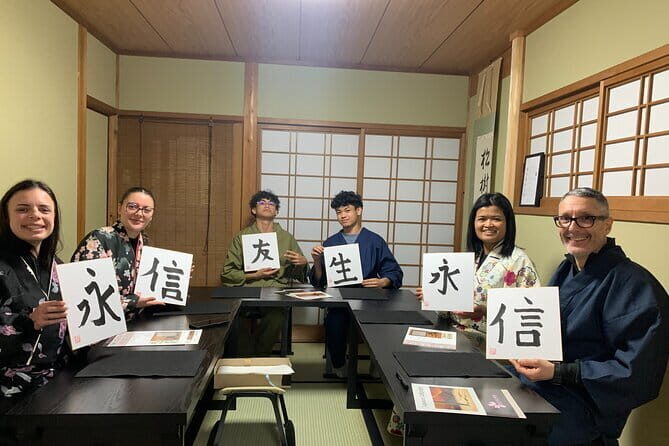
- Ninenzaka setting: You learn calligraphy in one of Kyoto’s most atmospheric historic lanes.
- 150-year-old townhouse: The workshop is set inside an old home, not a modern classroom.
- English instruction daily: You can expect lessons in English every day.
- Beginner-friendly approach: The class is designed so you can start from scratch.
- Small group feel: Limited to a maximum of 18 people.
- Take-home result: You’ll leave with your own calligraphy piece.
Kyoto’s Ninenzaka: Why This Neighborhood Works for Calligraphy
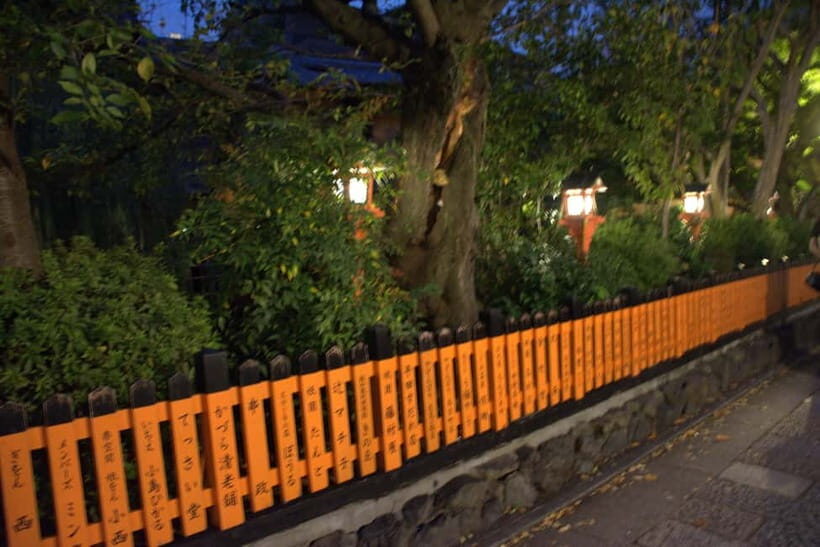
Ninenzaka is one of those Kyoto areas where the streets feel like they were made for walking slowly. That matters for this class. Calligraphy isn’t the kind of activity where you want to rush mentally; you do better when your body and attention are already in a calmer rhythm.
You’ll start near the meeting point at Tea Ceremony & Cultural Experience Kangetsu Kyoto (日本文化体験教室 寒月 京都二年坂349-19, Masuyachō, Higashiyama Ward). From there, the vibe of the neighborhood helps set expectations: you’re not just learning strokes, you’re stepping into a tradition that belongs to everyday Kyoto life, not a distant museum display.
A few more Kyoto tours and experiences worth a look


Inside a 150-Year-Old Townhouse Workshop
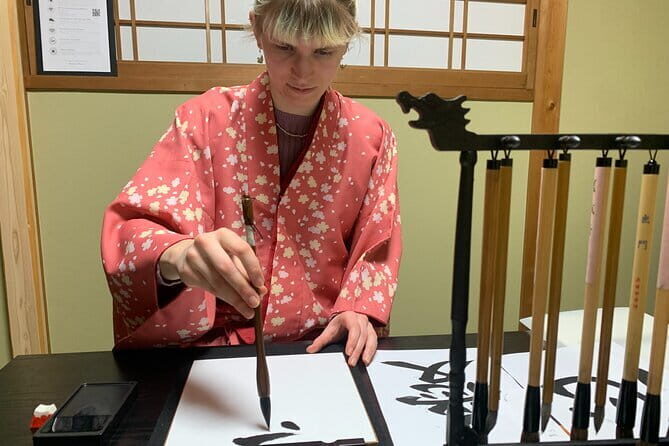
The class takes place in a historic townhouse environment. That “old home” factor is more than decoration. Wooden rooms, traditional atmosphere, and a small teaching space help keep the session grounded in the real feel of arts like this.
You’ll also notice the practical side of a workshop like this: it’s close and personal. With a class capped at 18, you’re not disappearing into a huge room. The teachers can watch what your hand is doing and correct small things that make a big difference in calligraphy.
What You Actually Learn: Beginner Techniques That Make Sense
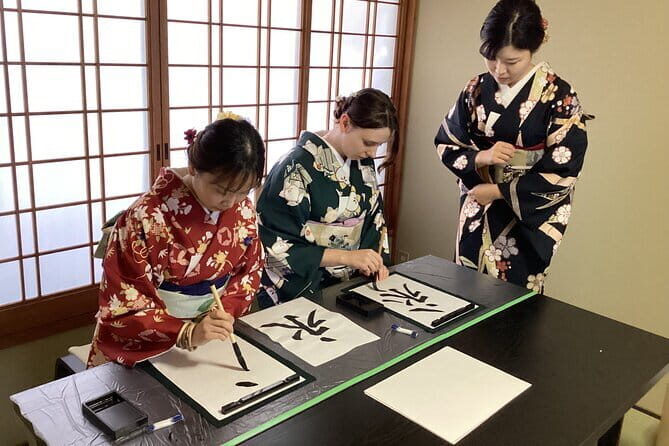
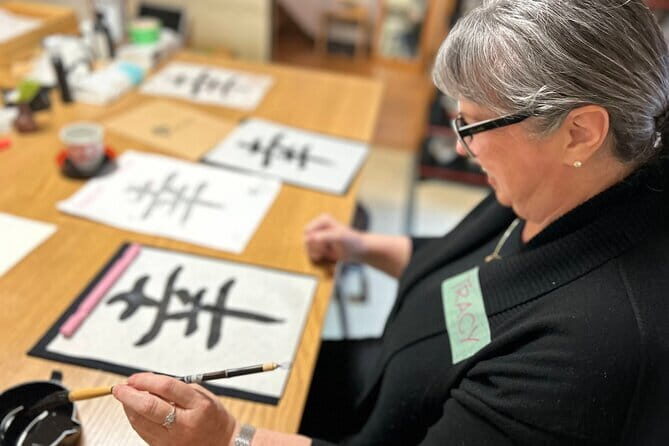
This is a beginner Japanese calligraphy course, and that’s exactly how it’s taught. Instead of assuming you know the logic of brushes and characters, you’re guided through essential techniques step-by-step.
Here’s what I like about how the lesson is framed: it’s not only about producing something pretty. You also learn the meaning behind what you’re doing. In the class, you’ll get a brief but informative history of Japanese calligraphy, which helps your writing feel connected to culture rather than just copying shapes.
You create your own unique piece. That matters because the goal isn’t perfect handwriting on a first try. It’s learning enough control to make a satisfying result you can take home.
The Teacher and Assistant Dynamic (And Why It Helps)
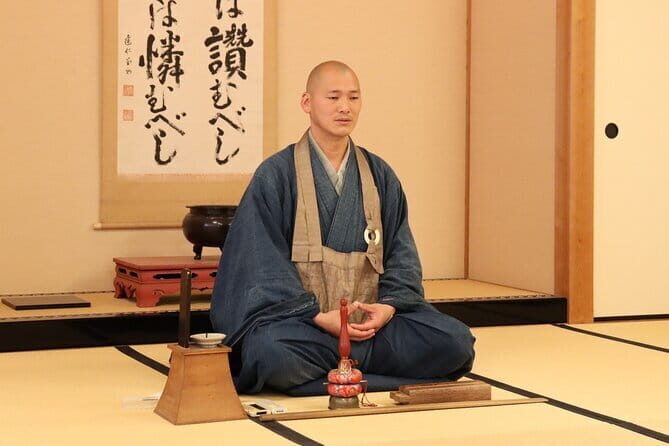
One theme from the experience is the teaching style: the master instructor is patient and kind, and the assistant is helpful. In a practical sense, that pairing improves your odds.
Calligraphy is one of those skills where small adjustments help immediately—angle of the brush, pressure, and rhythm. When you’ve got both the main teacher and an assistant watching for common mistakes, corrections come faster. The instruction feels supportive rather than “now figure it out.”
If you’re the type who needs a few attempts (even multiple ones), this class structure works well. The pace may be short, but the help isn’t vague.
A Peaceful Hour, With Real Focus Required
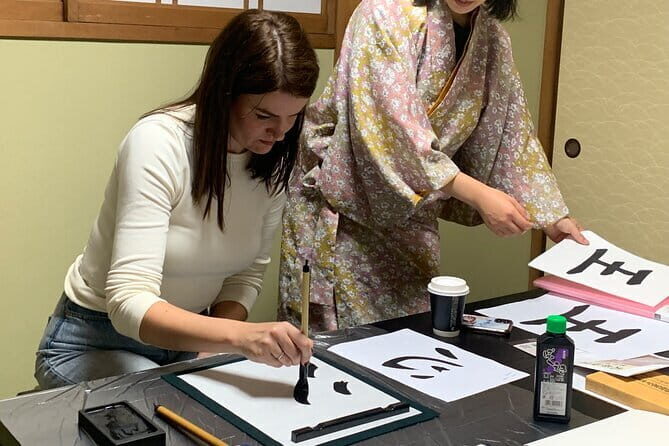
It’s easy to think of calligraphy as relaxing, and it is. But it’s also concentrated work. Your mind can’t be wandering if you want smooth strokes.
Most sessions run about 50 minutes. For many people, that’s the sweet spot: long enough to learn the basics and make something you’re proud to show, but short enough that you won’t burn out. The tradeoff is what one feedback point highlights: it can feel slightly rushed if you wanted more time to polish.
My advice: treat it like a single focused workshop block. Go in ready to pay attention for that hour, and you’ll get more out of it.


English Every Day: How to Make the Most of the Explanation
The class is offered in English every day. That’s valuable because calligraphy has details that don’t translate well if you only copy visually. When you understand the reasoning—why a stroke changes, what to watch for—you stop guessing and start controlling.
You’ll also likely benefit from the brief historical context. Knowing a little about calligraphy traditions helps you appreciate the aesthetic choices, so your final piece feels intentional, not accidental.
If you’re traveling with friends or family, English instruction also makes it easier to stay together as a group, rather than leaving the “non-Japanese-speaking” members to figure everything out alone.
Cost and Value: Why $43 Can Be a Good Deal in Kyoto
$43 per person for a guided, beginner-friendly cultural workshop in a historic setting is fairly reasonable—especially in Kyoto, where “nice activities” can creep higher quickly.
What makes it good value isn’t just the price tag. It’s the combination:
- a real teaching session (not just a photo stop),
- a small group size (maximum 18),
- English instruction,
- and a take-home calligraphy souvenir.
In other words, you’re paying for guidance and the outcome. You’re not leaving with just memories; you leave with a physical piece of your work.
Meeting Point: Plan Your Walk Into Higashiyama

You’ll meet at Tea Ceremony & Cultural Experience Kangetsu Kyoto / 日本文化体験教室 寒月 京都二年坂349-19. The ending point returns you back to where you started.
That matters because you don’t want a confusing “drop-off in a different place” setup on your first day in Kyoto’s older streets. Here, it’s straightforward: you show up, you learn, and you finish near the same spot.
The area is near public transportation, which helps if you’re building a day with other Higashiyama sights. Still, expect some walking on your way in—Kyoto’s best neighborhoods rarely mean zero steps.
Socks, Age Rules, and Other Practical Stuff That Trip People Up
This class has a couple of rules that are easy to miss until you’re standing there.
- Wear socks. If you forget, you’ll need to purchase socks on site.
- Children under 12 years old are not allowed.
If you’re traveling with kids, this is a big deciding factor. If your group includes teens or adults, the beginner approach tends to work well across ages, as long as everyone can sit, listen, and focus through the lesson.
Also, remember that “near public transportation” still means you should plan to arrive a few minutes early. In a historic neighborhood, getting your bearings and finding the right front door can take a bit longer than expected.
Weather Matters: When Kyoto Changes the Plan
This experience requires good weather. If it’s canceled due to poor weather, you’ll be offered a different date or a full refund.
That’s important in Kyoto because rain happens. So if you have a tight schedule, you’ll want a little flexibility around the day you choose for this workshop.
Who This Calligraphy Class Is Best For
This is an especially good match if you:
- want a calm, creative break during a busy Kyoto itinerary,
- enjoy cultural activities where you make something tangible,
- prefer small-group instruction,
- and appreciate learning context, not only copying a final product.
It’s also great for couples or solo travelers who want a quiet hour with guidance. If you’re the type who likes structure—someone showing you what to do and how to do it—that’s exactly how this class is set up.
The Bottom Line: Should You Book Kangetsu’s Calligraphy Class
I think this is a strong booking if you want a short, high-quality cultural activity in Kyoto’s classic historic lanes.
Book it if:
- you like hands-on learning,
- you can commit to focused attention for 50 minutes,
- and you want an English-taught beginner lesson with a take-home souvenir.
Skip it if:
- you were hoping for a longer, more leisurely art session, or
- you’re traveling with children under 12 who need to participate.
If you’re in Kyoto and you want something that feels authentic—made in a real old townhouse, taught with patience, and focused on craft—this is a smart use of your time.
FAQ
How long is the calligraphy class?
The class runs about 50 minutes.
What is the price per person?
It costs $43.00 per person.
Where does the class start?
The meeting point is Tea Ceremony & Cultural Experience Kangetsu Kyoto (日本文化体験教室 寒月 京都二年坂349-19, Masuyachō, Higashiyama Ward, Kyoto).
Is the class offered in English?
Yes. Experiences are provided in English every day.
Do I need to bring socks?
You should wear socks. If you forget, you can purchase socks.
Are children allowed?
Children under 12 years old are not allowed to participate.
What group size should I expect?
The experience has a maximum of 18 travelers.
What happens if the weather is bad?
This experience requires good weather. If it’s canceled due to poor weather, you’ll be offered a different date or a full refund.