REVIEW · TOKYO
Mount Fuji, Hakone and Owakudani One Day Bus Tour from Tokyo
Book on Viator →Operated by F Trip · Bookable on Viator
One day, two lakes, a sulfur valley, and Fuji. This Tokyo-to-Hakone day trip strings together the big natural hits—Lake Ashi, Hakone Ropeway, Owakudani—and then finishes on Enoshima Island by the sea. I like the way the day mixes volcanic drama with calm water views, and I really like the built-in rhythm of cruise + gondola + short stops instead of rushing forever in a city.
One consideration: your Mount Fuji views depend on weather, and clear skies aren’t something a tour can control.
What makes this tour feel especially manageable is the human factor. Many guides—people like Augustine, Sandy, Brewster Chisei, Jimmy/Jimmylin, Pin, Winnie, Nakajima, Jackson, Lucy, Terri—were praised for staying on schedule, explaining what you’re seeing, and handling small changes (like toilet stops). Still, there are occasional complaints about English comfort, bus comfort, and rough driving, so it’s worth going in with realistic expectations for a group day.
In This Review
- Quick Hits Before You Go
- The Big Picture: What This One-Day Plan Really Delivers
- Timing and Fuji Reality: Clear-Day Views Are a Bonus, Not a Promise
- Lake Ashi and the Hakone Cruise: Short, Sweet, and Good for Photos
- Hakone Ropeway: Gondola Panoramas That Keep the Day Moving
- Owakudani Sulfur Valley and Black Eggs: The Most Memorable Stop
- Enoshima Island: Shrines, Sea Views, and a Shopping Street Walk
- The Enoshima Island stop
- Enoshima Shrine (three main shrines)
- Benzaiten Shopping Street
- Price and Value: The $59 Base Plus Two Real Add-Ons
- Guide Quality and Comfort: Why Your Day Can Vary
- Who Should Book This Tour (and Who Might Not Love It)
- Should You Book This Mt. Fuji, Hakone and Enoshima One-Day Bus Tour?
- FAQ
- How long is the Mount Fuji, Hakone and Owakudani day tour from Tokyo?
- What does the tour include in the price?
- Is lunch included?
- Do I need extra tickets for the cruise and ropeway?
- Will I definitely see Mount Fuji?
- Where does the tour depart from?
- What is the maximum group size?
- What is the cancellation policy?
Quick Hits Before You Go
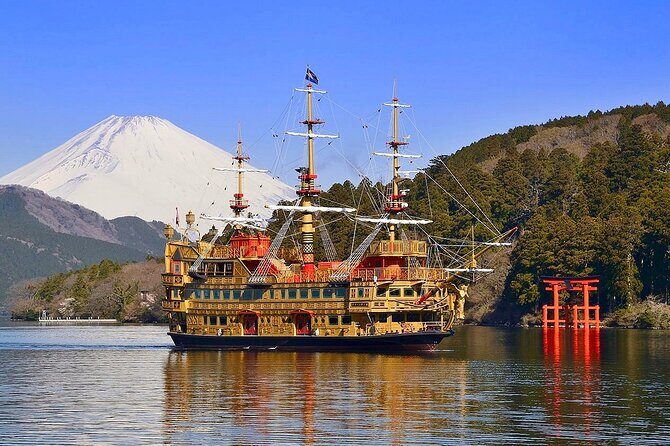
- Lake Ashi cruise (pirate-ship style): a short ride with real-time views of the Hakone caldera and, on clear days, Mt. Fuji in the distance.
- Hakone Ropeway over Owakudani: gondola panoramas plus the volcanic valley vibe people come for.
- Owakudani black eggs: the classic hot-spring snack stops being a gimmick and turning into a memorable moment.
- Enoshima in the same day: shrine complex + sea views + Benzaiten Shopping Street.
- Small group feel for a big day: capped at 45 travelers, with an air-conditioned bus and a guide.
The Big Picture: What This One-Day Plan Really Delivers
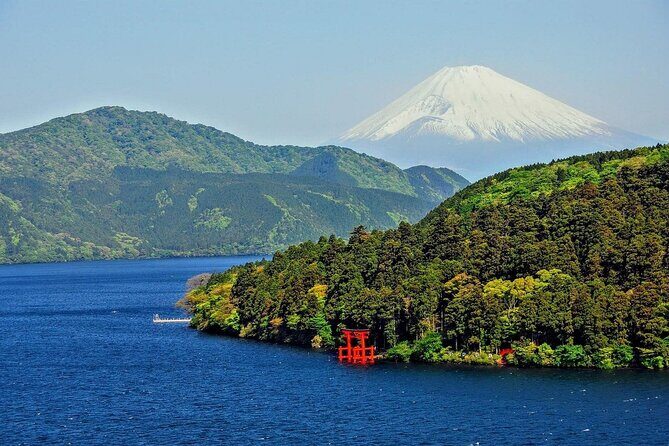
This is the kind of trip I’d call efficient, not effortless. You’ll spend most of the day moving between regions just outside Tokyo, using a bus as the backbone. Then you swap bus time for “real” experiences: time on the water at Lake Ashi, a gondola-style Hakone Ropeway crossing, and walking at Enoshima.
If your goal is to maximize one-day access to iconic scenery around Hakone and Mt. Fuji, this route makes sense. You’re not just chasing one photo spot; you’re getting a blend: volcanic terrain at Owakudani, a water view session on Lake Ashi, and a coastal shrine and shopping alley on Enoshima Island.
The flip side is that it’s still one long day. About 10 hours overall means you should treat meals as flexible and your expectations as “good, not perfect.” And if the sky is cloudy, Fuji may be faint—or you might not see it at all.
A few more Tokyo tours and experiences worth a look



Timing and Fuji Reality: Clear-Day Views Are a Bonus, Not a Promise
Your best chance for Mt. Fuji is when visibility cooperates. The tour is built around viewpoints where you can often see Fuji on clear days, especially from Lake Ashi and during the ropeway crossing area.
In practice, this matters for two reasons:
First, you’ll feel the difference. When Fuji shows up, it’s the kind of sight that turns the whole day into a theme. When it doesn’t, the route can still be worth it because you’re getting Lake Ashi views, volcanic steam, and Enoshima’s sea life energy—but the emotional payoff shifts.
Second, the weather can affect pacing and which side routes you actually experience. The tour notes that traffic conditions may affect the order of stops while keeping the same number of places. That’s common in the region and not a scam—just build patience into your plan.
Lake Ashi and the Hakone Cruise: Short, Sweet, and Good for Photos
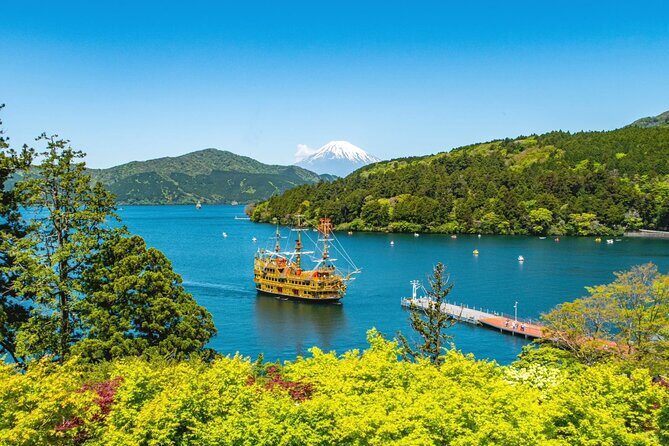
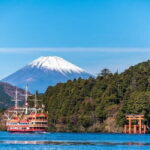
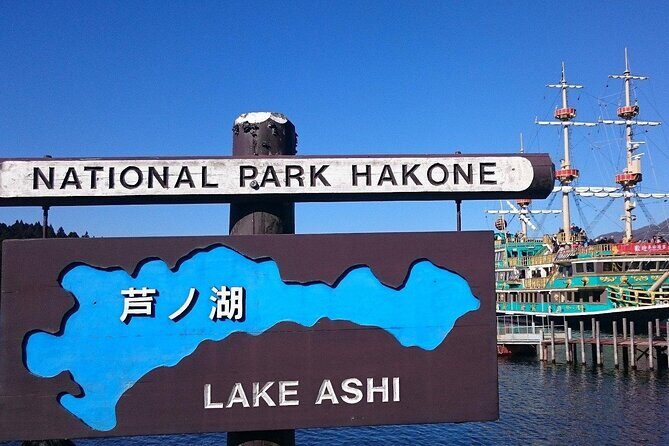
Lake Ashi (Hakone’s iconic caldera lake) is your first “slow down” moment. You’ll start with a stop by Lake Ashinoko / Lake Ashi—a volcanic lake formed around 3,000 years ago after eruptions in the area. It’s also where the water stays unfrozen thanks to volcanic springs, which helps explain why it feels like a consistent part of Hakone’s identity.
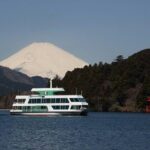
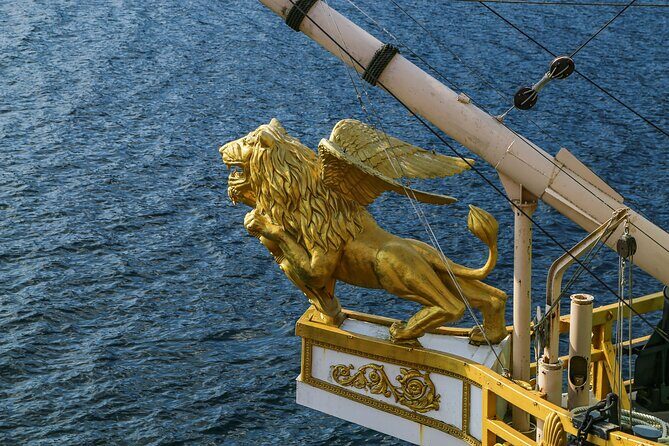
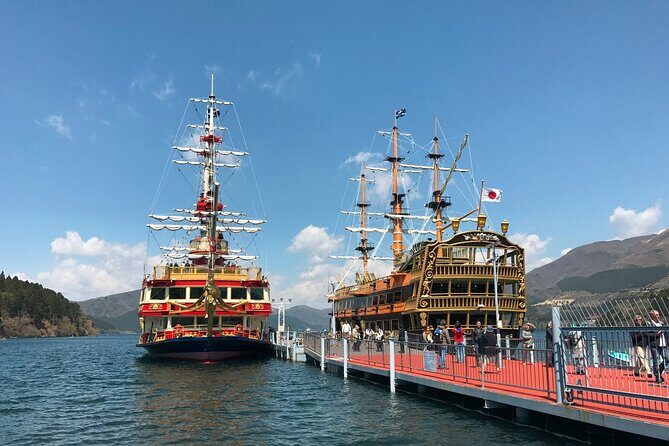
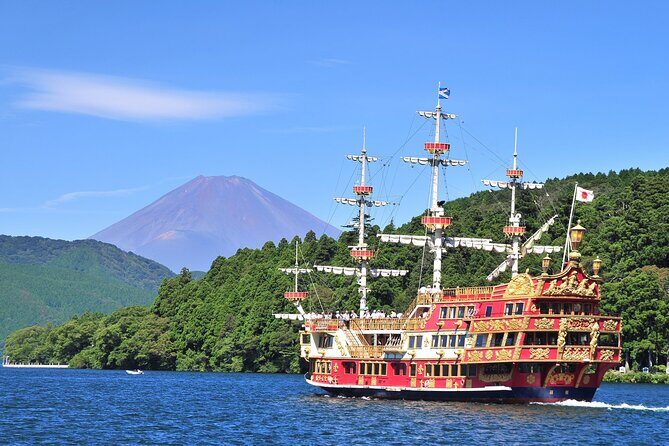
Then comes the Hakone Sightseeing Cruise, a short 25-minute ride on a boat inspired by European battleships (the pirate-ship vibe people talk about). This is one of those activities that’s worth doing even if you’re not obsessed with boat rides, because:
- The boat gives you an uninterrupted view angle across the lake.
- It buys you a break from the bus without losing the scenery thread.
- It’s one of the best moments to spot Mt. Fuji in the distance if the sky is cooperative.
A key detail: the cruise ticket is not included. You’ll pay extra (listed as 1,200 yen) at/for the cruise itself. If you’re trying to keep total spending tight, mentally add it from the start.
Hakone Ropeway: Gondola Panoramas That Keep the Day Moving
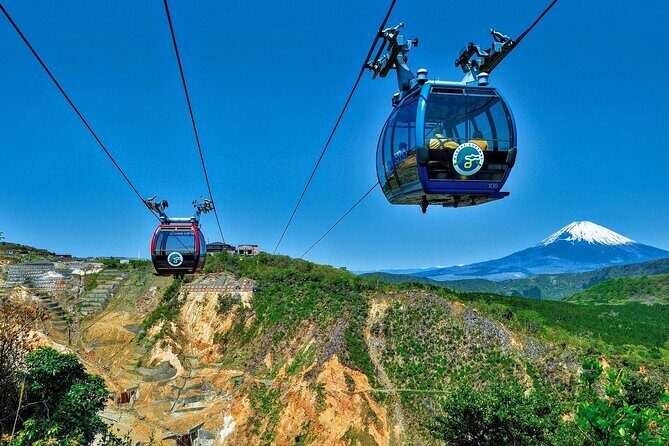
After the cruise, the day shifts into “up and over” mode. The Hakone Ropeway is a major part of how people experience this region because it connects viewpoints with dramatic angles.
You’ll head toward the Owakudani / Owaku-dani Valley area first, then continue by ropeway. The ropeway is described as passing through the Owakudani area, which is exactly what you want: you get volcanic terrain below you, plus wide sightlines out across the caldera.
The ropeway ticket is not included, listed as 1,500 yen. This is one of those add-ons that feels reasonable because it’s not just transportation; it’s the view mechanism. Think of it like paying for “scenery time,” not just a ride.
On clear days, the ropeway is also one of the moments when Mt. Fuji can appear in the same visual story as the lake and volcanic features. On cloudy days, you still get the ropeway’s signature effect: you’re elevated, you’re moving, and the air feels different from the street-level paths.
Owakudani Sulfur Valley and Black Eggs: The Most Memorable Stop
Owakudani is where this day trip earns its keep. The valley is volcanic, formed roughly 3,000 years ago, and it’s known for ongoing volcanic activity and sulfur activity—so expect steam, strong smells, and that very specific “Earth is working under our feet” feeling.
This stop is also where the tour’s signature snack lands: black eggs cooked in the hot spring waters. The idea is simple, but it becomes memorable because the setting is so unusual. You’re not eating something random; you’re eating a local food tied to the active volcanic site.
Time-wise, you get a short window—about 30 minutes listed for Owaku-dani Valley. That can be perfect if you’re there to see the sulfur valley, take photos, and eat one thing. If you want long walks, deeper exploration, or extra cave time, you may wish you had more.
I also took note of how often guides helped people handle the physical reality here. One guide was credited with making a fun, smooth day possible even for people needing small breaks and extra care. If you’re sensitive to stairs or crowded paths, this is a good place to move at your own pace and not feel pressured by the group energy.






Enoshima Island: Shrines, Sea Views, and a Shopping Street Walk
After Hakone’s volcanic mood, Enoshima delivers a totally different vibe. Enoshima is an island near Kamakura, connected by a bridge for both vehicles and pedestrians. It’s a nice change of pace after ropeways and steam.
The day includes:
The Enoshima Island stop
You’ll have about 30 minutes to get your bearings and catch views toward Sagami Bay and, again on clear days, Mt. Fuji from a coastal perspective.
Enoshima Shrine (three main shrines)
You’ll spend about 50 minutes at Enoshima Shrine, described as three main shrines: Hetsumiya, Nakatsumiya, and Okutsumiya. It started as a place tied to fishing and maritime transport deities, and that maritime angle still makes sense once you’re standing near the coast.
This shrine stop is often the calm part of the day. It’s less about thrill and more about atmosphere: stone steps, ocean air, and the feeling that you’ve shifted from volcano country to old coastal Japan.
Benzaiten Shopping Street
Then you’ll stroll about 40 minutes on Benzaiten Shopping Street. This is where you can snack, browse, and walk at an easy pace under the old bronze torii gate.
If you’re the type who likes to end a day with something casual and human-scale, this is the right finish. It’s not just “more sightseeing”—it’s where the day becomes a memory you can taste.
Price and Value: The $59 Base Plus Two Real Add-Ons
The tour price is listed as $59.00 per person and the day runs about 10 hours. The package includes an air-conditioned vehicle and a guide, which matters here because the day is long and movement-heavy.
What’s not included is where you need to do a quick mental budget:
- Hakone Sightseeing Cruise: 1,200 yen
- Hakone Ropeway: 1,500 yen
- Lunch: not included
So you’re paying a low base price for the structure (bus + guide + key stops), then topping up for the two “view engines” (cruise and ropeway). If that sounds like extra cost, that’s fair—but it’s also the reason the tour can hit multiple major areas in one day.
My practical take: if you’re the kind of traveler who would pay separately for a cruise + ropeway anyway, the value feels strong. If you only want one of those experiences, you might feel nickel-and-dimed by the missing inclusions.
Also note the tour uses a mobile ticket, and the group max is 45 travelers, which helps keep the day from turning into total chaos.
Guide Quality and Comfort: Why Your Day Can Vary
This is the part I want you to pay attention to, because a day trip lives or dies by execution.
On the strong side, several guides were praised for:
- staying friendly and accommodating
- being informative in a way that helped people know where to go and what mattered
- adapting quickly for small needs, including bathroom breaks and minor timing changes
- keeping the group moving so you reach locations on time
Specific guide names that came up positively include Augustine, Sandy, Brewster Chisei, Jimmy/Jimmylin, Pin, Winnie, Nakajima, Jackson, Lucy, Terri, and others. That pattern tells me the operator often hires people who can handle a structured day without turning it into a lecture.
On the other hand, there are clear negative points you should consider:
- One guide was criticized for English that was hard to follow.
- A couple of comments mentioned discomfort from a small, cramped vehicle and hard braking.
- A few people felt the day rushed too fast at some stops or that Mt. Fuji views didn’t meet expectations.
None of that means you should skip the trip. It means you should go in with the mindset of a group day: you’ll get a planned set of highlights, but comfort and language clarity can vary depending on the guide assigned and the specific vehicle used.
Who Should Book This Tour (and Who Might Not Love It)
I think this day trip fits best if you:
- want to pack in Hakone + Owakudani + Enoshima without coordinating separate transportation
- are okay with a long day and short stops rather than slow wandering
- want the famous Owakudani black egg moment and the ropeway viewpoint experience
- value a guided route that helps you not waste time finding where to be next
I’d reconsider if you:
- need guaranteed Mt. Fuji views (weather rules everything)
- are very sensitive to vehicle comfort on long rides
- want deep time at fewer locations instead of a “great hits” approach
If you’re traveling as a couple, this can still work well because the stops are interesting and the schedule gives you clear structure. If you’re traveling with family, the air-conditioned bus and guide support can be a real plus—just keep in mind that the day includes stairs and moving between viewpoints.
Should You Book This Mt. Fuji, Hakone and Enoshima One-Day Bus Tour?
I’d book it if your priority is variety and “big sights on a single schedule.” The combo of Lake Ashi cruise, Hakone Ropeway, and Owakudani sulfur valley gives you two very different kinds of scenery in one day, and Enoshima is a smart finish that keeps you from ending in tourist-only zones.
Skip—or choose a different plan—if your main goal is a guaranteed Mt. Fuji photo. Instead, treat Fuji as a bonus, like good lighting.
Before you go, do two things:
- Plan for extra spending on the cruise (1,200 yen) and ropeway (1,500 yen) and bring ideas for lunch.
- Keep your expectations aligned with a long group day: you’ll see a lot, but you won’t linger for hours at each place.
If you can handle that, this tour is a solid way to taste Hakone’s volcanic side and Enoshima’s coastal charm without turning your Tokyo vacation into a logistics project.
FAQ
How long is the Mount Fuji, Hakone and Owakudani day tour from Tokyo?
It runs about 10 hours (approx.).
What does the tour include in the price?
The tour includes an air-conditioned vehicle and a guide. It also uses a mobile ticket.
Is lunch included?
No, lunch is not included.
Do I need extra tickets for the cruise and ropeway?
Yes. The Hakone Sightseeing Cruise ticket (1,200 yen) and the Hakone Ropeway ticket (1,500 yen) are not included.
Will I definitely see Mount Fuji?
Mount Fuji visibility depends on the weather. The tour notes you can view it on clear days, but it’s not guaranteed.
Where does the tour depart from?
You can depart from Tokyo or Shinjuku.
What is the maximum group size?
The tour has a maximum of 45 travelers.
What is the cancellation policy?
You can cancel for a full refund up to 24 hours in advance of the experience start time.