REVIEW · TOKYO
Mount Fuji Sightseeing Private tour w English speaking chauffeur
Book on Viator →Operated by Nipponic Tours · Bookable on Viator
Fuji day trips can be tricky; logistics shouldn’t be. This private Mount Fuji chauffeur tour turns a long journey into a calmer, photo-friendly day with English-speaking guidance and customizable timing. You get a driver who can shape the route around what you want to see, rather than being stuck in a rigid group schedule.
Two big reasons I like this setup: the private car (so you can actually talk, stop for photos, and move at a human pace) and the chance to hit classic Fuji viewpoints like Arakura Fuji Sengen Shrine and Lake Kawaguchiko area spots without fighting trains and transfers. It’s also built to feel easy to navigate, with pickup offered and a mobile ticket.
One consideration: this experience really depends on good weather. Mount Fuji visibility can change fast, and while the provider notes weather issues, you’ll want a little flexibility in your trip dates.
In This Review
- Key highlights worth knowing
- Why a private Mount Fuji chauffeur can be the smartest use of your day
- The daily rhythm: 8–10 hours starting at 8:00 am from Tokyo
- Oshino Hakkai: the easy 1-hour pond walk with big Fuji payoff
- Arakura Fuji Sengen Shrine and the Chureito Pagoda angle
- Saiko Iyashi no Sato Nenba: a traditional village stop with seasonal charm
- Narusawa Ice Cave: a natural lava-cave with year-round chill
- Kitaguchi Hongu Fuji Sengen Jinja: a spiritual gateway to Fuji
- Shiraito Falls: a scenic walk that resets your feet
- Oishi Park on Lake Kawaguchiko: garden views in a tight hour
- Lake Yamanaka (Yamanakako): the largest lake in the Fuji Five Lakes set
- Customization and photo help: where the private part really pays off
- Price and logistics: what you’re paying for, and how to judge value
- Who this tour suits best
- Should you book this Mount Fuji private tour?
- FAQ
- How long is the Mount Fuji private tour?
- What time does the tour start?
- Is pickup included?
- Is this a private tour?
- How many people can the car accommodate?
- What is the price?
- Do I need to buy tickets at the stops?
- Is the ticket mobile?
- What happens if the weather is poor?
- What is the cancellation window?
Key highlights worth knowing
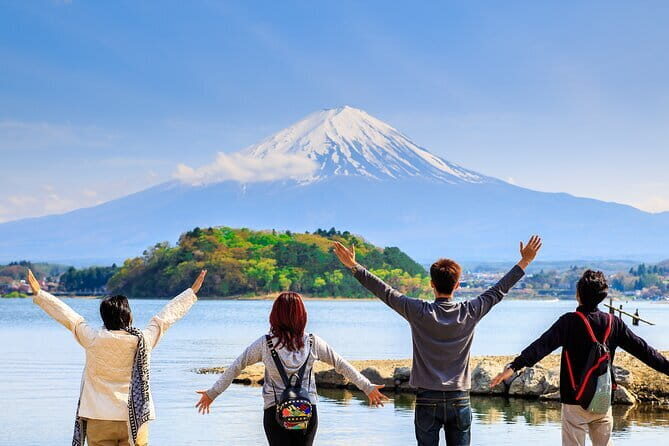
- English-speaking chauffeur who can guide the day and help with photo timing
- Pickup offered and a private car experience that’s smoother than public transit
- Photo stops across the Fuji Five Lakes area, including Chureito Pagoda views
- Multiple car sizes for small groups (the experience can accommodate up to 6 people, with pricing shown per group)
- Some sights cost extra, so budget a bit for paid-entry village and cave stops
Why a private Mount Fuji chauffeur can be the smartest use of your day
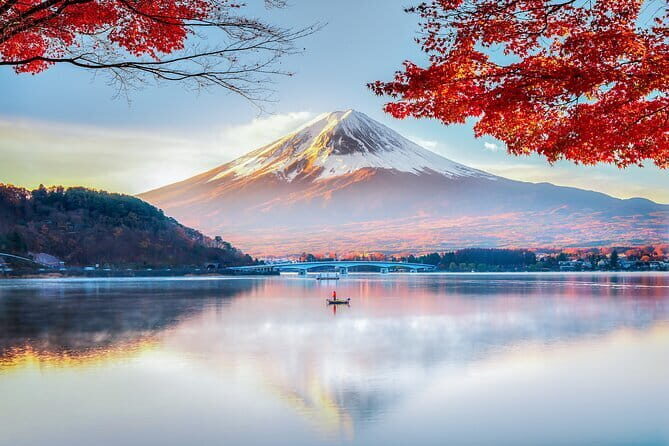
Mount Fuji is famous, which means it’s busy. On a public-transit plan, you’re often managing train times, transfer lines, and the wrong bus route right when the sky finally clears. A private chauffeur approach helps you focus on the views and the moments, not the timetable math.
The other real win is the human factor. In feedback I’ve seen associated with this tour, a driver named John comes up as particularly accommodating: polite, informative, and the kind of person who helps the day feel more like hanging out than rushing through a checklist. Even if you don’t get that exact guide, the overall style is clear: you’re paying for a driver who can be flexible and communicative.
You can also read our reviews of more private tours in Tokyo

The daily rhythm: 8–10 hours starting at 8:00 am from Tokyo
This is scheduled for an early start (8:00 am). That matters because Mount Fuji visibility can be best earlier in the day, and you also want time to reach multiple viewpoints before crowds peak.
Plan on a full day. The visiting windows are listed at about 1 hour per major stop, but the actual time you spend at each place will depend on driving conditions and how the weather and crowds are behaving. The payoff is that you’ll see a “best-of” slice of the Fuji area without feeling trapped in one location.
Oshino Hakkai: the easy 1-hour pond walk with big Fuji payoff
Oshino Hakkai is a set of eight ponds tucked into the village area around the Fuji Five Lakes region. It’s a great early stop because it gives you something calmer than viewpoint-hunting: a short walking loop, reflective water, and classic countryside vibes.
What makes it useful on a day like this is the pace. After the drive out of Tokyo, you get a manageable break: a free-entry stop with enough time to take photos, wander at your own speed, and reset before the more iconic skyline shots.
Practical tip: bring layers even in warmer months. Water-adjacent areas can feel cooler, and photos are easier when you’re comfortable.
Arakura Fuji Sengen Shrine and the Chureito Pagoda angle

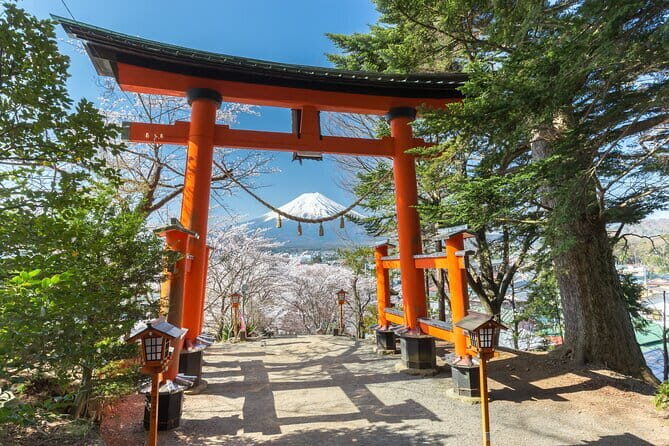
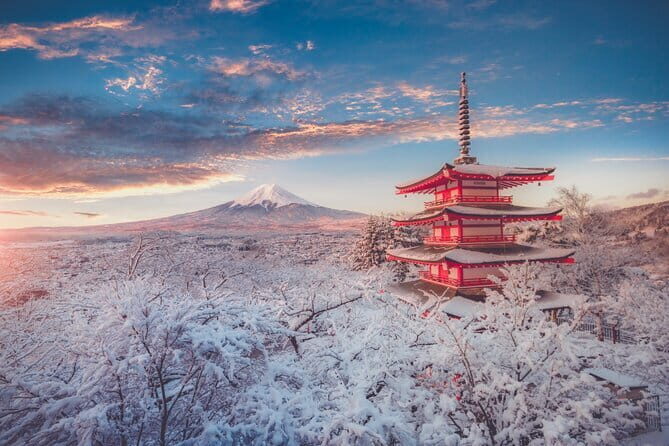
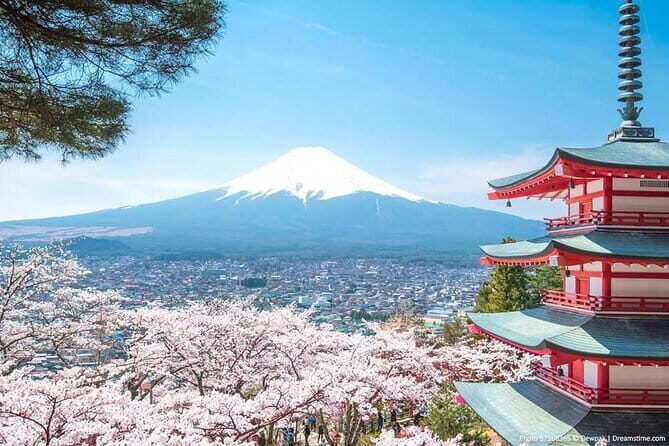
If you want the postcard-style Mount Fuji view, Arakura Fuji Sengen Shrine is the stop you’re aiming for. The main star is the five-story Chureito Pagoda, set on a mountainside with Mount Fuji in the background.
A detail worth knowing: the pagoda was built in 1963 as a peace memorial. That makes the site more than just a photo backdrop. It gives the place a quieter meaning when you pause instead of shooting-and-running.
Photo note: this is exactly the kind of location where a good chauffeur can help you time your shots. If you have someone who can recommend when to move for cleaner views, you’ll get better results without feeling rushed.
Saiko Iyashi no Sato Nenba: a traditional village stop with seasonal charm

Saiko Iyashi no Sato Nenba is a traditional village area on the shores of Lake Saiko. It’s known for open viewpoints toward Mount Fuji, and the vibe changes with the season, from blossoms in spring to different seasonal scenery in other months.
This stop can add variety to your day because it’s not only about a single view. It gives you a sense of place: older-style buildings, a lakeside setting, and an atmosphere that feels distinctly Fuji region rather than just “another viewpoint.”
One downside to plan for: the admission ticket for this stop isn’t included. If you’re budgeting carefully, assume you’ll pay something extra here.
A few more Tokyo tours and experiences worth a look

Narusawa Ice Cave: a natural lava-cave with year-round chill
Narusawa Ice Cave sits near Lake Saiko and is formed by Mt. Fuji’s volcanic activity over a thousand years ago. It’s tucked within the Aokigahara Forest area, and the cave stays icy cold year-round, even during summer.
This is a good stop when you want something different from the usual “stand and look” approach. Instead of only framing the mountain, you get a physical reminder of Fuji’s power through the geology of the lava cave.
Also, because the ice cave experience is inside, it can be a nice mental break if the weather outside is less cooperative. Just note: admission isn’t included for this stop, so factor in extra ticket cost.
Kitaguchi Hongu Fuji Sengen Jinja: a spiritual gateway to Fuji
Kitaguchi Hongu Fuji Sengen Jinja Shrine is a historic Shinto shrine in Fujiyoshida, dedicated to Konohanasakuy… (the shrine honors Konohanasakuya-hime). It’s described as dating back over 1,000 years, which gives the day a deeper layer beyond scenic photo spots.
I like this kind of pause in a busy day. It slows you down just enough to notice that Mount Fuji isn’t only a view. It’s also a living spiritual landmark for many people, and these shrines are part of how locals connect to the mountain.
It’s also a free-entry stop, so it’s a solid value add in an already packed 8–10 hour schedule.
Shiraito Falls: a scenic walk that resets your feet

Near Fujinomiya in Shizuoka Prefecture, Shiraito Falls is listed as one of Japan’s most beautiful waterfalls. The name alone doesn’t tell you what to expect until you see it in motion: white, ribbon-like strands of water flowing down in a way that feels graceful rather than dramatic.
Why it works on this tour: it breaks up the day between lakeside viewpoints and temple/shrine moments. Even if you’re not a waterfall superfan, it’s a satisfying “legs and eyes” stop.
Admission is free for this one as well, which helps your day stay predictable financially.
Oishi Park on Lake Kawaguchiko: garden views in a tight hour
Oishi Park is on the northern shore of Lake Kawaguchi in Yamanashi Prefecture. It’s famous for its landscaped gardens and classic Mount Fuji viewpoints.
This stop is useful for two reasons. First, it’s another chance at a strong Fuji framing, depending on the weather. Second, the gardens give you options for different compositions, so you’re not only waiting for the pagoda-like shot.
Since this is a free-entry location, you can spend more time experimenting with angles instead of feeling pressured by a paid ticket.
Lake Yamanaka (Yamanakako): the largest lake in the Fuji Five Lakes set
Lake Yamanakako is the largest of the Fuji Five Lakes and sits at the third-highest elevation of any lake in Japan. It’s also highlighted as one of the closest lake areas to Mount Fuji, which is exactly why it’s on a “best views” type route.
In practical terms, this final major lake stop is where you often get the payoff for the whole day. If clouds shift, the last place you visit can be the one where the mountain finally looks sharp and clear in the distance.
Admission is free here, so you can focus on the scenery and not worry about extra entry fees at the end.
Customization and photo help: where the private part really pays off
The tour is described as customizable, which matters because Fuji days can change minute to minute. If the sky is clear, you may want more time at the most famous viewpoints. If it’s hazy, you might prefer different angles or cultural stops that are more forgiving.
Your guide can also help with taking photos. That sounds small until you’re at a spot like Chureito Pagoda, where the difference between a good photo and a poor one is often timing and positioning. A chauffeur who understands where people naturally stand can help you avoid awkward photo timing and wasted time.
Also, choosing a car size that fits your group can make the day feel easier. Comfort affects how long you can stay patient on the road, especially on an 8–10 hour day with multiple locations.
Price and logistics: what you’re paying for, and how to judge value
The price listed is $428.28 per group (up to 4). That’s not cheap if you’re traveling solo, but the value changes fast when you split it. With a group of 4, you’re effectively paying a bit over $100 per person for a full day with a private chauffeur, pickup, and English support.
Then there’s the “hidden value” category: you’re paying to avoid the stress and time cost of coordinating public transport during a long intercity day. You also gain flexibility to stop for photos and adjust timing rather than being locked into fixed departure windows.
One detail to keep in mind: the experience states car sizes can accommodate groups up to 6, but the listed pricing is per group (up to 4). When you’re booking, double-check how your exact group size lines up with the car you’ll get. That’s the best way to avoid surprises.
If you want a simple rule: book this when you care about comfort, time, and getting the most out of your single Fuji day. If you’re purely budget-focused and comfortable with public transit juggling, you might find cheaper ways to reach Fuji—but they often cost you energy you’ll miss later.
Who this tour suits best
This private Mount Fuji day trip fits best if you want:
- A low-stress day trip from Tokyo with pickup and an English-speaking chauffeur
- A schedule that hits multiple Fuji Five Lakes and nearby cultural nature spots in one run
- Help with photos, especially at iconic viewpoints where timing matters
It may be less ideal if you:
- Have strict budget limits and aren’t planning for extra paid entries at some stops
- Prefer slow travel and don’t want a packed 8–10 hour schedule
- Have limited date flexibility, since the tour requires good weather
Should you book this Mount Fuji private tour?
I’d book it if your Mount Fuji day is a “we get one shot” situation. The private car, pickup option, and photo-friendly guidance reduce the friction that can turn a dream day into a stressed day.
I’d think twice if your travel style is extremely budget-only or if you hate spending money on paid entrances at a couple of stops. Still, even with those extra costs, the overall structure is designed to maximize a single day outside Tokyo.
If you can, give yourself a weather buffer in your itinerary. Fuji is the star, but the sky calls the shots.
FAQ
How long is the Mount Fuji private tour?
It runs about 8 to 10 hours.
What time does the tour start?
The start time is 8:00 am.
Is pickup included?
Pickup is offered.
Is this a private tour?
Yes. It’s a private experience, and only your group participates.
How many people can the car accommodate?
Car sizes vary, and it can accommodate groups of up to 6 people.
What is the price?
The price is $428.28 per group (up to 4).
Do I need to buy tickets at the stops?
Some stops are listed as free, while others require tickets not included (like Saiko Iyashi no Sato Nenba and Narusawa Ice Cave).
Is the ticket mobile?
Yes, the tour includes a mobile ticket.
What happens if the weather is poor?
The experience requires good weather. If it’s canceled due to poor weather, you’ll be offered a different date or a full refund.
What is the cancellation window?
You can cancel for a full refund up to 24 hours before the experience’s start time. If you cancel less than 24 hours before, the amount paid won’t be refunded.