REVIEW · KYOTO
One-Day Walking Tour of Amazing 8th Century Capital Nara
Book on Viator →Operated by KAMNAVI Tours · Bookable on Viator
One day in Nara, without the stress. This is a focused private guide walking route that pulls together Naramachi, Todai-ji Temple, and Nara Park in one shot. I love how efficiently it hits Nara’s top sights, and I love that you get time to see the freely roaming deer.
The main thing to watch is cost creep: you’ll likely pay extra for entrance fees at Todai-ji and Kasuga, and you’ll be on your feet most of the day.
In This Review
- Key things I’d prioritize before you go
- Why Nara feels different (and this tour helps you get it)
- Your 8-hour walking route: what each stop gives you
- Stop 1: Naramachi, temple-town roots turned merchant streets
- Stop 2: Kasuga Grand Shrine and the Fujiwara clan legacy
- Stop 3: Todai-ji Temple, UNESCO scale under Mt. Wakakusa
- Nara Park deer time: fun, but mind your spacing
- What you pay: tour price vs. the extras that matter
- Guides make or break it: flexibility you can actually feel
- Timing, meeting point, and how not to waste energy
- Is this the right fit for you?
- Should you book this Nara walking tour?
- FAQ
- How long is the Nara walking tour?
- What time does the tour start?
- Is this tour private?
- Which main sights does the tour include?
- Are entrance fees included for Todai-ji and Kasuga?
- Is public transportation included in the price?
- Do I receive a ticket on my phone?
- What if the weather is bad or I need to cancel?
Key things I’d prioritize before you go
- A true private tour: only your group, led by a professional guide
- Built-in navigation help: the guide handles the route so you don’t waste time figuring out directions
- Todai-ji in one day: a UNESCO World Cultural Heritage stop tied to Emperor Shomu and the Wakakusa mountain area
- Kasuga Grand Shrine context: founded in the 8th century by the Fujiwara clan, still connected to that lineage today
- Nara Park deer time: a chance to see deer roaming around as part of the day’s pacing
- Good-weather dependent: the experience requires decent weather, with a reschedule or full refund if conditions cancel it
Why Nara feels different (and this tour helps you get it)
Kyoto can be a lot: temples, crowds, buses, and the constant question of which stop is next. Nara has a calmer rhythm, but it still packs heavyweight historical sites—because it was Japan’s ancient capital. That matters, because this walking day is structured around “old capital” Nara: places tied to the 8th century, plus the spiritual power that comes from shrine and temple traditions.
What makes the day worth doing as a guided walk is the way it strings themes together. You start in Naramachi, move into the shrine world, then finish with Todai-ji’s massive scale. In other words, it’s not just sightseeing; it’s one city’s story told through buildings, streets, and sacred spaces.
You can also read our reviews of more walking tours in Kyoto
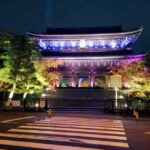

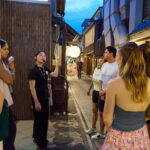
Your 8-hour walking route: what each stop gives you
This is an 8-hour walking tour that starts at 8:30am and ends in a different location. That “different end” detail is useful: it often means you’re not backtracking the same way, which keeps the day from dragging.
Also, this is designed as a private tour, not a free-for-all. Expect a planned sequence with the guide navigating and explaining as you go. Some guides can be flexible with the day’s flow—feedback includes examples like Satomi helping adjust plans for a museum detour, and Emi being accommodating when someone had a bad knee—but the base route is still the backbone.
Stop 1: Naramachi, temple-town roots turned merchant streets
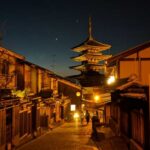
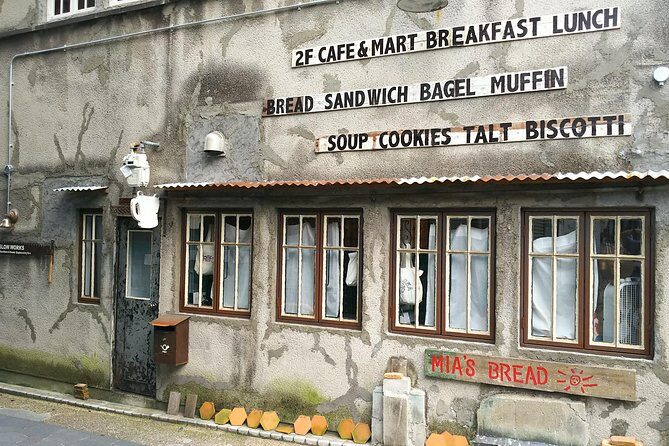
You begin in the Naramachi area, originally founded as a temple town in the 8th century and later turned into a merchant town. That shift is the point: you’re walking through a neighborhood where sacred life and commerce grew up side by side.
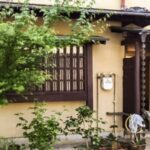
Look for the traditional-style latticed houses, including older buildings said to be 100 years old or more. Even if you just skim the facades, you’ll get a better sense of how everyday life looked when Nara was a real center of power—not only a place for pilgrims.
Practical note: this is the type of area where you can enjoy the street level visuals without needing big museum-style patience. If you like atmospheric neighborhoods, this start sets a nice tone for the rest of the day.
Stop 2: Kasuga Grand Shrine and the Fujiwara clan legacy
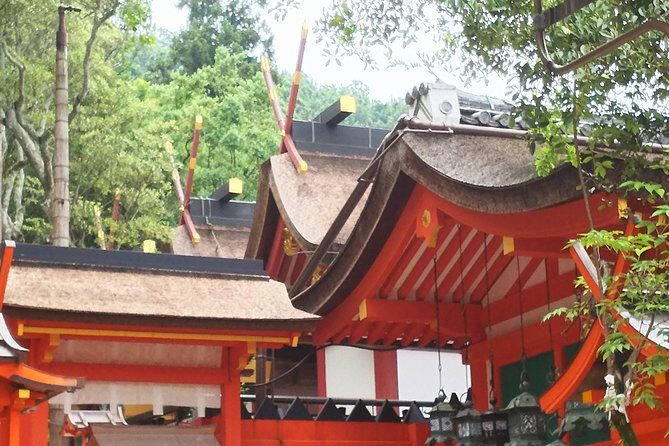
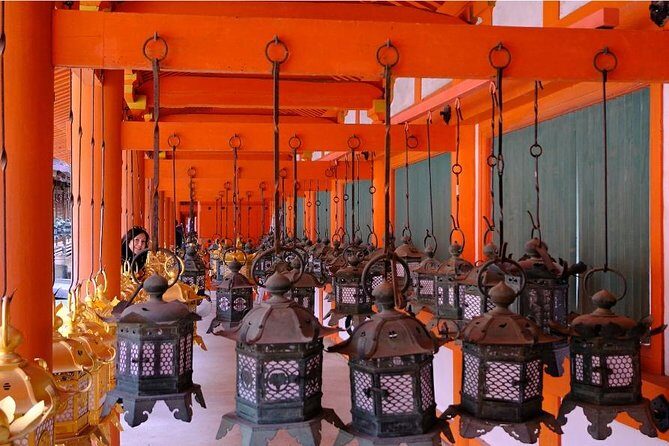
Next comes Kasuga Grand Shrine, founded in the 8th century by the Fujiwara clan—historically one of the most powerful aristocratic families in Japan. Even today, the shrine’s head priest is connected through that lineage, which gives the place a living continuity rather than feeling like a dead monument.
This stop works well if you like cultural context. You’re not just looking at buildings; you’re seeing how political power, religious practice, and long-term tradition can overlap in one location.
Cost note: Kasuga’s entrance fee is not included in the tour price, so budget extra.
Stop 3: Todai-ji Temple, UNESCO scale under Mt. Wakakusa
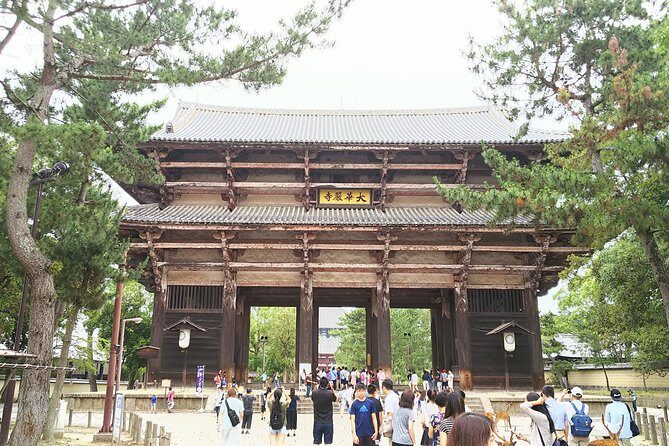
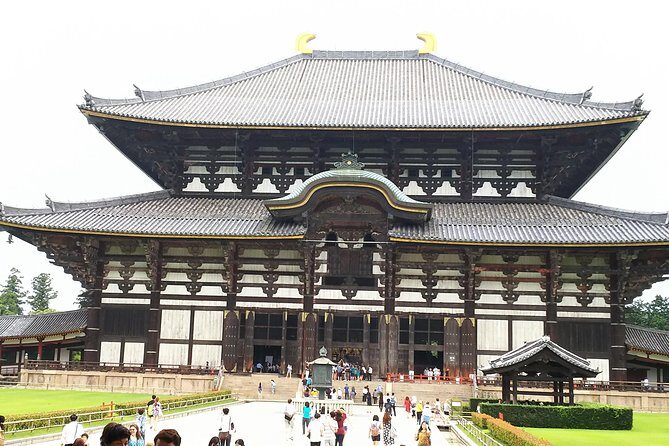
Then you get Todai-ji Temple, founded by Emperor Shomu more than 1,300 years ago and designated UNESCO World Cultural Heritage. Todai-ji is built beneath Mt. Wakakusa, and the temple precincts are huge—meant to be experienced at a pace slower than “check the box.”
In the experience, Todai-ji isn’t described as a quick photo stop; it’s a major highlight of the day, with historical buildings inside a broad precinct. Reviews also point to the emotional wow factor here: the enormous Buddha is the kind of sight that changes how you understand temple scale. It’s one thing to read about ancient power; it’s another to stand where that power was made visible in wood and stone.
Cost note: Todai-ji entrance is also not included in the tour price.
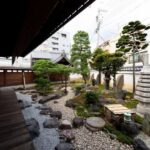
Nara Park deer time: fun, but mind your spacing
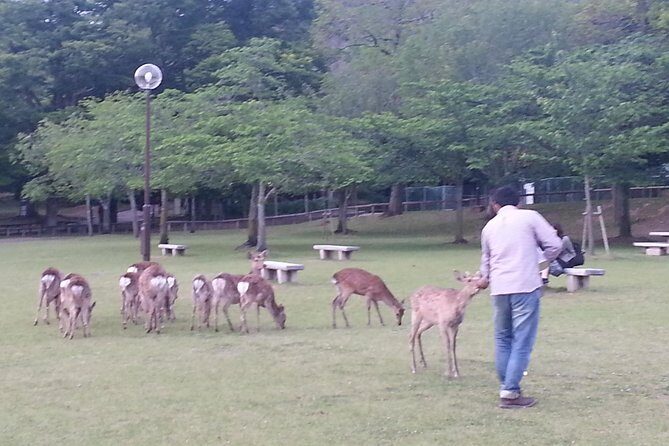
One of the easiest reasons to choose this day tour is the inclusion of Nara Park. The deer aren’t just “there”; they’re part of the day’s movement through the city. That’s why this tour fits people who want something distinctly Nara, not just another temple circuit.
A practical takeaway from feedback: the deer moment can include feeding. That’s memorable, but do it calmly and keep an eye on your belongings and personal space. When you’re on a schedule, you want a quick, respectful interaction—not a long shuffle.
Also, wear shoes you can walk in for hours. Even if you pace yourself, a park stop adds natural detours: you slow down for photos, you stop when deer appear, and you keep walking when the group moves.
What you pay: tour price vs. the extras that matter
The tour price is listed as $137.17 per person, for an approximately 8-hour private walking day with a professional guide. It also includes things like group discounts and a mobile ticket.
But the real value question is what’s not included. You’ll want to plan for:
- Public transportation fare: ¥2,000 per person
- Entrance fees: ¥1,500 per person for Todai-ji and Kasuga Taisha
- Naramachi is free for admission (so you’re not paying to start the day)
So your total day cost is best thought of as:
Tour price + local transit + site entrances.
Why the math is still likely to work: when you hire a guide for a condensed day of major sites, you’re paying for navigation and interpretation. For a city like Nara—where it’s easy to lose time just trying to connect streets and sites—that guide service is often the difference between a satisfying day and a rushed blur.
One more value point: the tour is private. That tends to reduce waiting and confusion, especially if your group asks questions or needs time at viewpoints.
Guides make or break it: flexibility you can actually feel
The most praised aspect across the guide experiences shared is how well the guides handled real-life moments—questions, pace, and detours.
You’ll see names come up like Satomi, who was described as both knowledgeable and extremely flexible, including helping work around a spontaneous diversion to the Nara National Museum. Emi is mentioned for being flexible and supportive, including accommodating a guest with a bad knee. Tomoko comes up for strong historical context and for caring about comfort, too.
Other guides mentioned include Fumiko, Noriko, and Fuji, with feedback that they helped turn the day into something fun and readable rather than stiff. If you care about asking questions in plain language, this tour format gives you that room.
Just keep expectations fair: this is still a planned route. The “private” part means your group gets attention; it does not automatically mean the entire day is fully custom. If you want a totally different set of stops, you’ll need to align with what the guide can realistically adjust on the day.
Timing, meeting point, and how not to waste energy
The start time is 8:30am, and the tour ends somewhere else rather than where you started. That means you should plan your next move before you’re tired—especially if you’re heading toward dinner reservations or another train connection.
The meeting point is described as near public transportation, which is a helpful clue: you’re not stranded in a remote corner. Still, arrive a few minutes early. Early starts can be smooth if everyone’s oriented and ready.
Also, the experience requires good weather. If the forecast looks rough, you’ll want to treat this as a “go/no-go” day.
Is this the right fit for you?
This tour is a strong match if you:
- Want a high-signal, one-day plan for Nara’s biggest sights
- Prefer walking with direction rather than researching every connection
- Like history explained through real places, not just plaques
- Want a distinctly Nara experience with deer in the mix
It may be less ideal if you:
- Plan to move slowly and hate long walking hours (the day is described as roughly 8 hours)
- Expect the entrance fees to be fully covered in the base price (they’re not)
- Want a totally freestyle itinerary unrelated to Todai-ji, Kasuga, and Naramachi (the structure is the core)
Should you book this Nara walking tour?
My take: if you’re short on time and want the best-known Nara power stops without spending your day mapping routes, this is a smart buy. The biggest reason is practical—your guide handles navigation and makes the stops connect, from Naramachi’s temple-town-to-merchant history to Kasuga’s Fujiwara roots and Todai-ji’s UNESCO scale.
Book it if you can walk comfortably for a full day and you’re ready to budget for entrances and transit on top of the tour price. Skip it if you hate extra walking or you’re only interested in one site; in that case, you might do better mixing self-guided time with targeted guide help.
If you do book, keep your expectations aligned: it’s private, and guides can be flexible with how the day flows, but the tour’s spine is the pre-set route through Nara’s key landmarks.
FAQ
How long is the Nara walking tour?
It runs for about 8 hours.
What time does the tour start?
The start time is 8:30am.
Is this tour private?
Yes. It’s a private tour/activity, and only your group participates.
Which main sights does the tour include?
The tour covers Naramachi, Kasuga Grand Shrine, and Todai-ji Temple, with a chance to see the deer of Nara Park.
Are entrance fees included for Todai-ji and Kasuga?
No. Entrance fees for Todai-ji Temple and Kasuga Taisha Shrine are listed as an extra ¥1,500 per person.
Is public transportation included in the price?
No. Public transportation fare is listed as ¥2,000 per person.
Do I receive a ticket on my phone?
Yes. A mobile ticket is included.
What if the weather is bad or I need to cancel?
The experience requires good weather. If it’s canceled due to poor weather, you’ll be offered a different date or a full refund. You can also cancel for a full refund up to 24 hours before the experience’s start time.